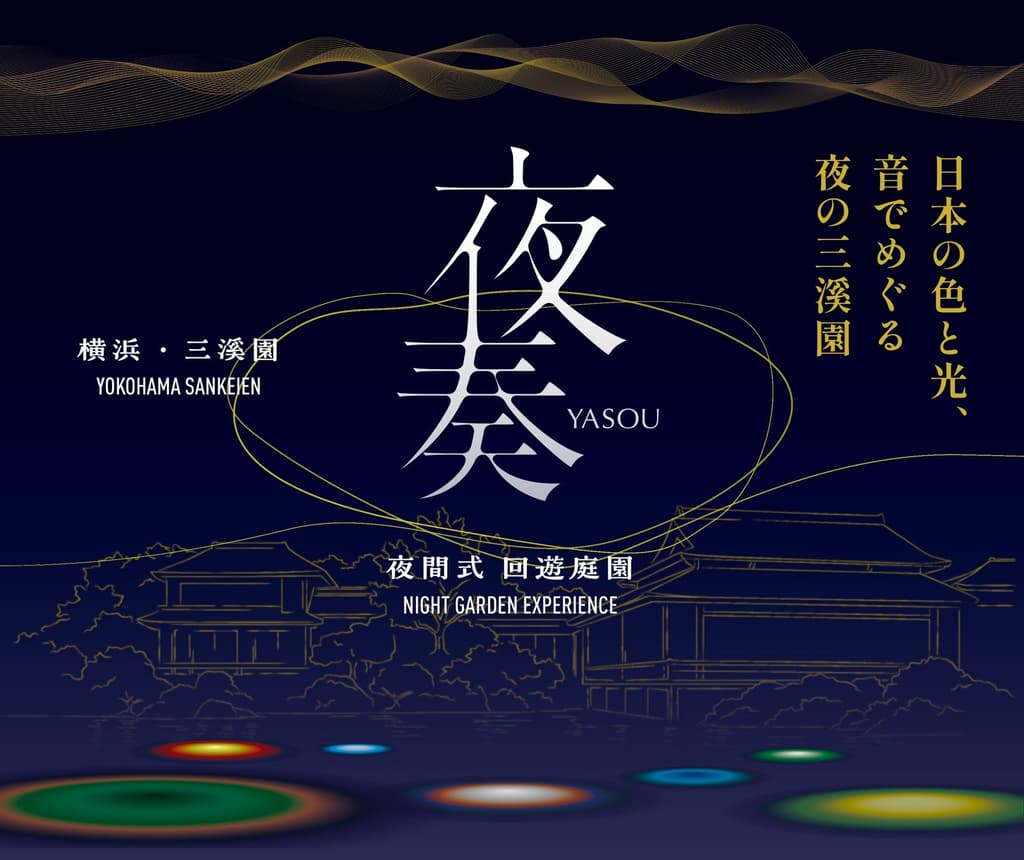
Sankeien Garden (三溪園), a nationally designated Place of Scenic Beauty in Yokohama, is holding a special nighttime event, "Yokohama Sankeien Yasou" (横浜・三溪園 夜奏 -夜間式 回遊庭園-), on Fridays, Saturdays, Sundays, and national holidays from Friday, November 20 to Sunday, December 20, 2026, for a total of 16 days. Held to mark the garden's 120th anniversary, the event adds color, light, and sound to the autumn foliage and historic buildings under the theme "exploring Sankeien at night through Japan's colors, light, and sound."
The planning, design, and direction are by IN-EI (陰翳 IN-EI), a production unit formed by Yamashina Tokichika (山科言親), the 30th head of the Yamashina family, which carries on the tradition of imperial court costume, and Murayama Kazumasa (村山カズマサ) of Kyoto Muramasa (京都村正). A free shuttle bus runs from JR Negishi Station on event days.
Background of the Event
The event is the first initiative since a basic agreement was signed in 2025 among the organizer, Kazeno Heritage (風のヘリテージ株式会社), the Sankeien Preservation Society (公益財団法人三溪園保勝会), and Yokohama City, aimed at contributing to the sustainable operation of Sankeien through content that lets visitors experience the garden's essential value. Under the agreement, Kazeno Heritage handles the planning, production, and operation of some experience programs at the garden, along with their promotion and sales. It is also a project selected for the Japan Tourism Agency's program (観光庁「オーバーツーリズムの未然防止・抑制をはじめとする観光地の面的受入環境整備促進事業」).
Exploring a Night Garden Through Color, Light, and Sound
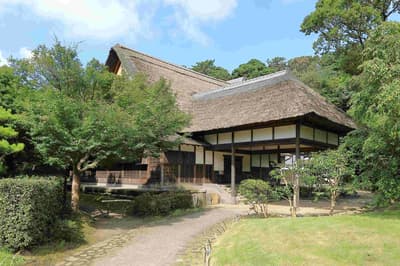
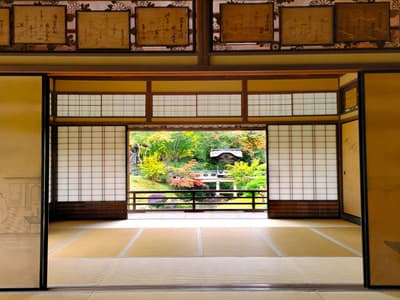
Sankeien Garden opened in 1906 and turns 120 this year. It was created by the businessman Hara Sankei (1868–1939), who was also an artist. He is said to have personally directed the placement of the historic buildings and trees, and his sense of beauty can be felt throughout the grounds. The roughly 17.5-hectare garden has 17 historic buildings, 10 of which are designated Important Cultural Properties, including:
- Rinshunkaku (臨春閣): which was a villa of the Kishu Tokugawa family about 380 years ago
- The former Tenzuiji tomb-covering hall (旧天瑞寺寿塔覆堂): a building that covered the tomb Toyotomi Hideyoshi built while still alive to pray for the long life of his mother, Ōmandokoro
- Chōshūkaku (聴秋閣): said to have been built inside Nijo Castle for Tokugawa Iemitsu's visit to Kyoto and later given to Kasuga no Tsubone
For the event, the garden in its autumn colors is staged at night under the concept "The Seven Eyes of Sankei" (三溪の七つの眼). Visitors walk through the garden and encounter a new view of Sankeien each time their viewpoint changes.
The "Seven Eyes of Sankei"
The main route is a circuit centered on the inner garden (内苑), a carefully created area that was also the private residence of Hara Sankei and his family, where historic buildings and nature blend beautifully. Using the viewpoints Hara Sankei envisioned as a guide, seven striking spots were selected, each with its own color, light, and sound staging.
Visitors enter through the main gate or the south gate, head from the Great Pond (大池) at nearly the center of the garden into the inner garden, pass through it, and return to the Great Pond, tracing a circle. The light colors are based on "kasane irome" (かさね色目), the layered color combinations passed down in the Yamashina family, known as a house of court costume. By layering colors rather than mixing them, the staging brings out the beauty of Sankeien, where historic buildings and nature form layers.
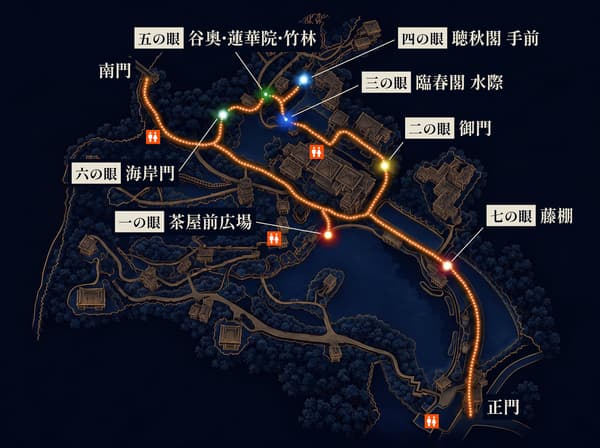
1st Eye: Plaza in Front of the Tea House (茶屋前広場)
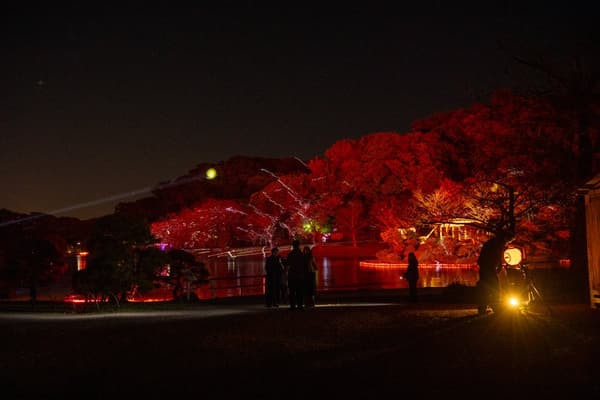
Kasane irome: Kimomiji (黄紅葉)
The layering of colors on the ground, the water, and the trees leads visitors into the inner garden.
2nd Eye: Gomon Gate (御門)
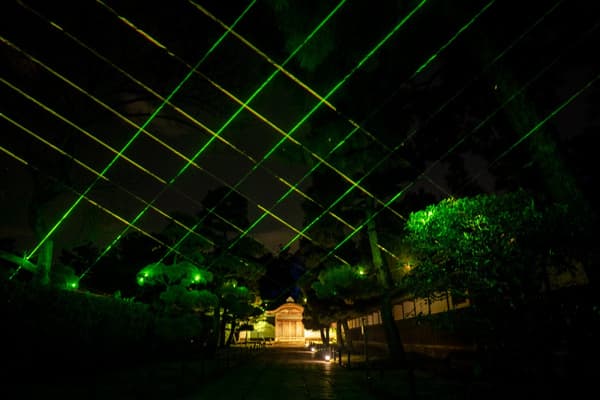
Kasane irome: Kikujin (麹塵織色)
From public to private, toward the former private residence of founder Hara Sankei.
3rd Eye: Rinshunkaku Waterside (臨春閣 水際)
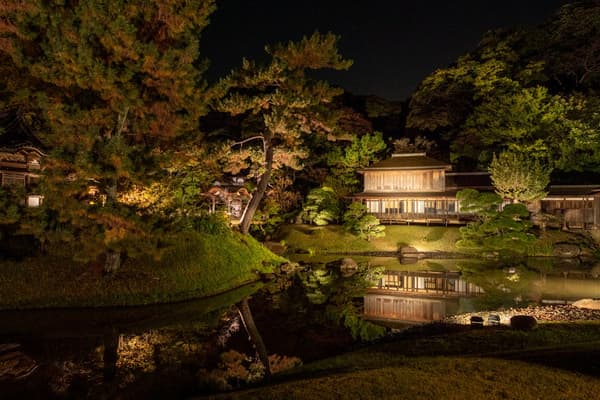
Kasane irome: Tsukikusa (月草)
The elegance of historic buildings relocated from across Japan.
4th Eye: In Front of Chōshūkaku (聴秋閣 手前)
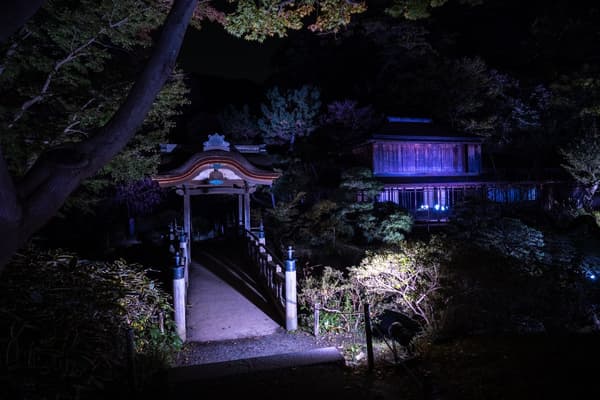
Kasane irome: Shiragiku (白菊)
An appreciation of the craftsmanship that carries on tradition.
5th Eye: Valley, Rengein, and Bamboo Grove (谷奥・蓮華院・竹林)
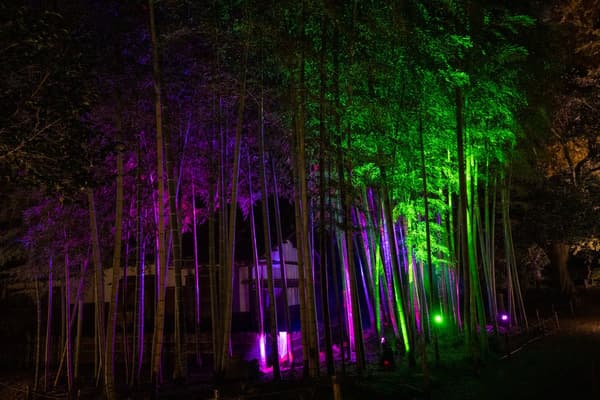
Kasane irome: Matsugasane (松重)
The harmony of flickering light and nature.
6th Eye: Kaiganmon Gate (海岸門)
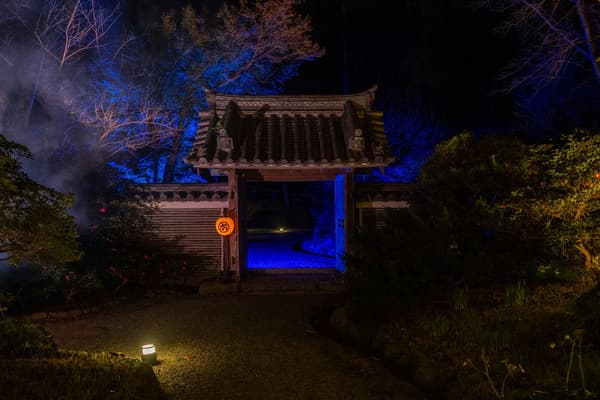
Kasane irome: Hanasusuki (花薄)
This was once the coastline. Visitors can imagine the view that can no longer be seen.
7th Eye: Wisteria Trellis (藤棚)
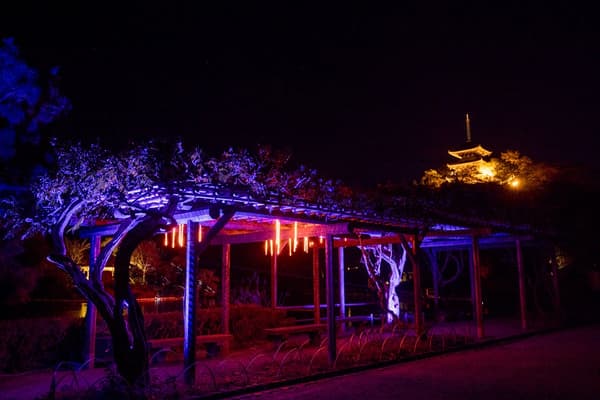
Kasane irome: Kareiro (枯色)
A view of the three-story pagoda across the Great Pond.
Event Details
- Name: Yokohama Sankeien Yasou (横浜・三溪園 夜奏 -夜間式 回遊庭園-)
- Venue: Sankeien Garden, a nationally designated Place of Scenic Beauty (58-1 Honmoku Sannotani, Naka Ward, Yokohama)
- Dates: Fridays, Saturdays, Sundays, and national holidays from Friday, November 20 to Sunday, December 20, 2026 (16 days in total)
- November: 20 (Fri), 21 (Sat), 22 (Sun), 23 (Mon, national holiday), 27 (Fri), 28 (Sat), 29 (Sun)
- December: 4 (Fri), 5 (Sat), 6 (Sun), 11 (Fri), 12 (Sat), 13 (Sun), 18 (Fri), 19 (Sat), 20 (Sun)
- Hours: 5:15 PM to 9:00 PM (last entry 8:30 PM)
- Night admission: An event-specific ticket is required.
- Adults (high school students and older): ¥1,000
- Children (elementary and junior high school students): ¥500
- Preschool children: free
- Online tickets are ¥100 less than the prices above.
- Regular Sankeien admission tickets, annual passports, invitation tickets, and other discount tickets cannot be used.
- Tickets: Available at the ticket counters at Sankeien's main gate and south gate, including same-day tickets. Advance online tickets are sold on Asoview!
- Weather: The event takes place in light rain. It may be canceled in severe weather.
- Official website: https://www.kazenoheritage.jp/special/yokohama-sankeien-yasou/
- Official Instagram: https://www.instagram.com/yokohama_sankeien_yasou/
- Organizer: Kazeno Heritage (風のヘリテージ株式会社)
- Co-organizer: Yokohama City
- Special cooperation: Sankeien Preservation Society (公益財団法人三溪園保勝会)
Access
- Free shuttle bus: On event days, a free shuttle bus runs between the front of JR Negishi Station (Stop No. 9) and the Sankeien South Gate Entrance bus stop, about every 20 minutes.
- From Negishi Station: 4:50 PM to 8:10 PM
- From Sankeien South Gate Entrance: 6:20 PM to 9:20 PM
- City bus: Yokohama City buses also serve the garden from stations such as Yokohama, Sakuragicho, and Motomachi-Chukagai.
- By car: Use the parking lot on the south gate side of the garden (inside Honmoku Citizens' Park).
About Sankeien Garden
Sankeien Garden was opened on May 1, 1906 by Hara Sankei, a businessman who made his fortune in the raw silk trade. The grounds cover about 17.5 hectares, roughly the size of four Tokyo Domes, and hold historic buildings of high value relocated from places such as Kyoto and Kamakura. Of the 17 historic buildings in the garden today, 10 are Important Cultural Properties and 3 are tangible cultural properties designated by Yokohama City.
At its opening, the garden carried the motto "yūran gozui" (遊覧御随意, visit as you please) and kept the outer garden open free of charge around the clock, reflecting Hara Sankei's belief that beautiful things should be enjoyed together. During his lifetime, the garden also served as a place to nurture and support emerging artists, producing figures such as Yokoyama Taikan, Shimomura Kanzan, and Maeda Seison, and it is recognized for its contribution to art. The garden suffered heavy damage in the war. In 1953, the Sankeien Preservation Society was established, and the garden was donated and transferred from the Hara family to the foundation, which continues to manage it today. It was designated a national Place of Scenic Beauty in 2007.
- Official website: https://www.sankeien.or.jp
- Official Instagram: https://www.instagram.com/sankeien_garden
About IN-EI
IN-EI (陰翳 IN-EI) is a production unit of Yamashina Tokichika, the 30th head of the Yamashina family, which carries on the tradition of imperial court costume, and Murayama Kazumasa of Kyoto Muramasa. It works on the theme of expressing the aesthetic values passed down in Japanese culture, namely "in'ei" (陰翳, shadow and shade), color, the seasons, and "yohaku" (余白, empty space), through modern lighting and spatial design.
The unit has worked on productions at Japanese gardens and historic cultural spaces, including Mito's Kairakuen, one of Japan's three great gardens, and the Sanada Residence, a nationally designated historic site in Nagano Prefecture. Rather than simply lighting a subject brightly, it plans and directs productions that bring out landscapes and stories by making use of the history, architecture, and nature of a place, as well as the darkness itself.
For "Yasou," the unit applies the idea of kasane irome handed down in the Yamashina family to layers of light. By layering rather than mixing the terrain, water surfaces, buildings, nature, and darkness of Sankeien, it creates a night garden whose appearance changes with every step.