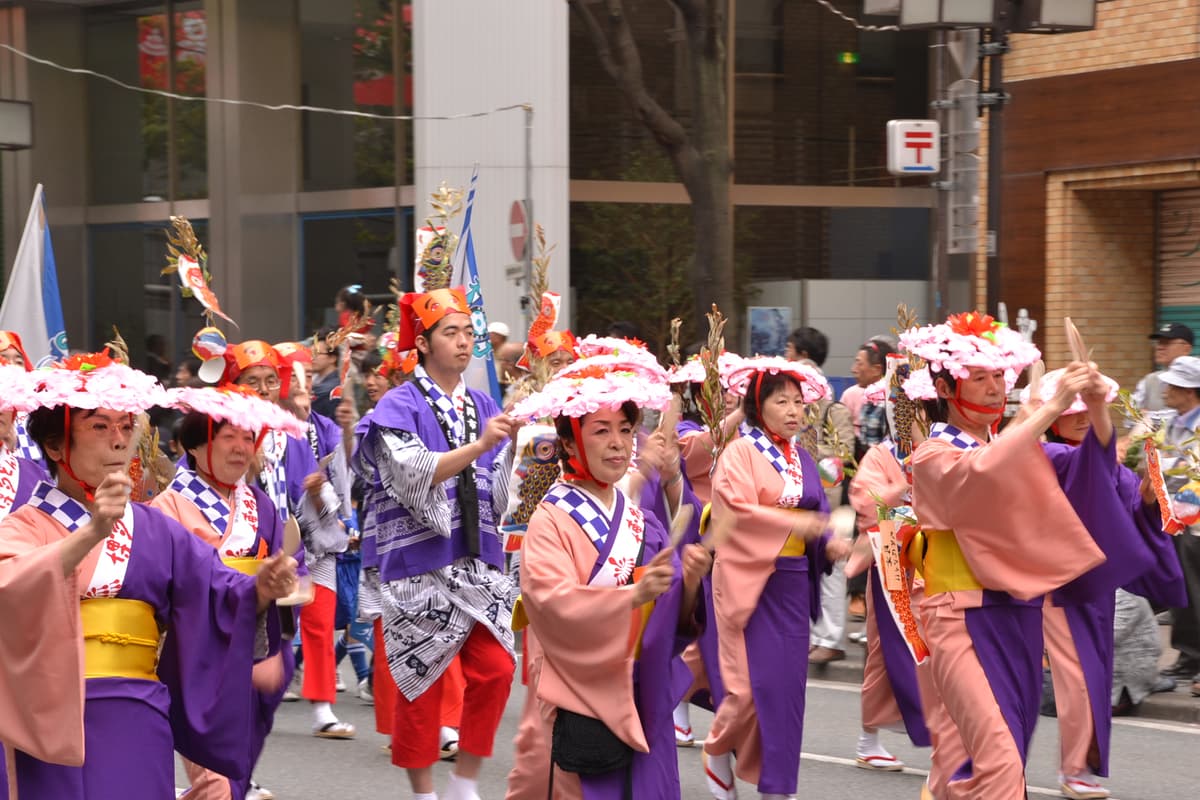
Hakata Dontaku Festival
◆ Event Introduction
The Hakata Dontaku Port Festival (博多どんたく港まつり) is one of Japan's largest and most beloved festivals, held every year on May 3rd and 4th during Golden Week in the heart of Fukuoka City. Typically drawing around two million visitors each year, this spectacular celebration transforms the streets of Hakata and Tenjin into a vibrant stage of parades, dance performances, and traditional processions. As a symbol of Fukuoka's festive spirit and rich cultural heritage, Hakata Dontaku is a must-see experience for anyone visiting Kyushu during spring.
◆ Historical Background
The roots of Hakata Dontaku trace back approximately 840 years to the year 1179, when the traditional folk ritual known as "Hakata Matsubayashi" is said to have begun. Originally a New Year's greeting procession where performers dressed as the Three Gods of Fortune (Fukujin, Ebisu, and Daikoku) visited local lords, shrines, and prominent households, this custom developed throughout the medieval and Edo periods into a grand civic celebration.
The name "Dontaku" is derived from the Dutch word "Zondag," meaning "Sunday" or "holiday." In 1872, the Meiji government temporarily banned the festival, but the spirited citizens of Hakata revived it in 1879 under the new name "Hakata Dontaku." After being suspended during World War II, the festival was passionately restored in 1946, with townspeople parading through the war-torn streets in paper costumes, bringing courage and hope to the community. In 1962, it was reorganized as the "Fukuoka Citizens' Festival: Hakata Dontaku Port Festival," the grand civic celebration it remains today.
◆ Hakata Matsubayashi: The Heart of the Tradition
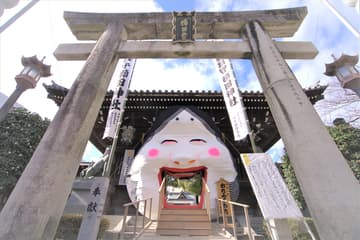
At the ceremonial core of Dontaku lies the Hakata Matsubayashi, designated as a national Important Intangible Folk Cultural Property. This ancient procession features the Three Gods of Fortune riding on horseback through the city, each adorned in distinctive traditional costumes: Fukujin with a long papier-mache head and golden robe, Ebisu carrying a fishing rod and sea bream, and Daikoku bearing a large sack and mallet. Accompanied by children performing elegant dances, the procession travels through various parts of the city, blessing each location with good fortune.
◆ Event Details
📅 Dates: May 3rd and 4th every year (Eve Festival on May 2nd)
📍 Venue: Multiple locations throughout central Fukuoka City (Hakata and Tenjin areas)
◆ Festival Schedule
🎌 May 2nd - Eve Festival (Zenyasai)
The festivities often begin on the evening before the main event with a pre-opening ceremony that may feature preview performances by Dontaku groups, illuminated Nishitetsu Flower Cars, and festive entertainment. The specific content and scale of the Eve Festival may vary from year to year.
🎊 May 3rd and 4th - Main Festival
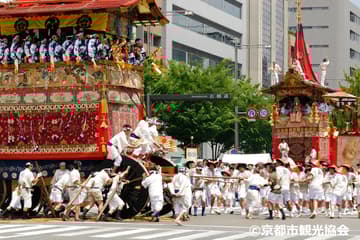
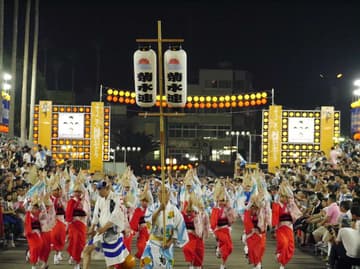
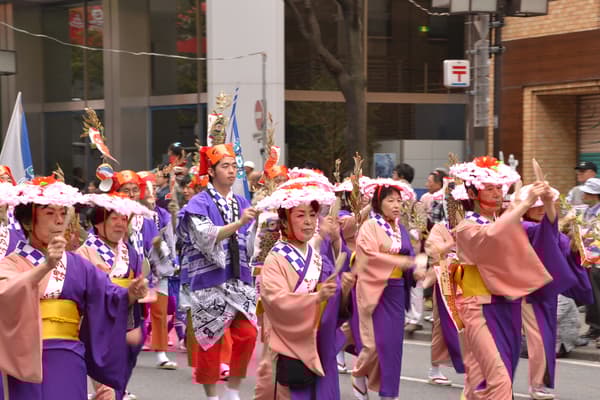
The main event features spectacular parades along Meiji-dori Avenue, where the approximately 1.3 km stretch between Gofukumachi and Tenjin is closed to traffic and transformed into "Dontaku Hiroba" (Dontaku Square). Hundreds of groups, including local companies, schools, neighborhood associations, and international troupes, parade through the streets dancing and playing music while clapping shamoji (wooden rice scoops), the iconic symbol of the festival. Over 30 performance stages (enbutai) are set up throughout the city, from Fukuoka City Hall Plaza and Hakata Station Plaza to Canal City Hakata and beyond.
🏆 Evening of May 4th - Climax "So Odori"
One of the highlights of the festival's climax is the So Odori (Grand Communal Dance) along Meiji-dori, where spectators are invited to join in, dancing together with the parade groups in a joyful celebration that embodies the welcoming spirit of Hakata. The exact format and location may vary each year.
◆ Main Venues
🛣 Meiji-dori Avenue (Dontaku Hiroba)
The main parade route and symbolic center of the festival, stretching approximately 1.3 km from Gofukumachi to Tenjin. This is where the largest and most impressive parade performances take place.
🚉 Hakata-Ekimae-dori (Hakata Station Avenue)
A secondary parade route in front of JR Hakata Station, offering convenient access and a great viewing experience.
🎭 Performance Stages (Enbutai)
Over 30 outdoor stages are set up across the city, including Fukuoka City Hall Plaza, Hakata Station Plaza, Canal City Hakata, and community plazas throughout Tenjin. Acts range from traditional dances and folk songs to pop music, school bands, and international performances.
🚗 Nishitetsu Flower Cars (Hana Jidosha)
Beautifully decorated vehicles adorned with thousands of LED lights cruise through the city streets, creating a dazzling spectacle especially stunning after dark.
◆ The Shamoji Tradition
One of the most charming aspects of Hakata Dontaku is the shamoji (wooden rice scoop), used by participants as a percussion instrument. Legend has it that long ago, when a Dontaku procession passed by a merchant's house, the wife was so captivated by the music that she grabbed the shamoji she was using to cook and joined in the celebration, clapping it rhythmically. This spontaneous act of joy became a beloved tradition, and today shamoji are synonymous with the festival.
◆ Important Notes
⚠️ This page is for event information only. For inquiries about the festival, please feel free to contact us directly.
⚠️ The festival areas can become extremely crowded, with around two million visitors each year. Plan your transportation and accommodation well in advance, especially during Golden Week.
⚠️ Weather conditions may affect the event schedule. The festival is generally held rain or shine, but please check official announcements for updates. Rain is quite common during the festival period, so bringing an umbrella is recommended.
⚠️ Best access is via subway (Hakata, Gion, Nakasu-Kawabata, and Tenjin stations) or city bus. Expect extensive road closures on Meiji-dori and Hakata-Ekimae-dori during parade hours.
Got questions? Let's chat on Instagram!
Send us a DM and we'll help you plan the perfect experience.
Highlights
- One of Japan's largest festivals with over 840 years of history, typically drawing around two million visitors during Golden Week
- Spectacular parades along Meiji-dori Avenue featuring hundreds of groups dancing with shamoji (wooden rice scoops)
- Hakata Matsubayashi, a nationally designated Important Intangible Folk Cultural Property, with the Three Gods of Fortune procession
- Over 30 performance stages (enbutai) across the city with traditional dances, music, and international performances
- Dazzling Nishitetsu Flower Cars illuminated with thousands of LED lights cruising through the streets
- Grand finale So Odori communal dance where everyone is invited to join in the celebration
Contact us for booking details