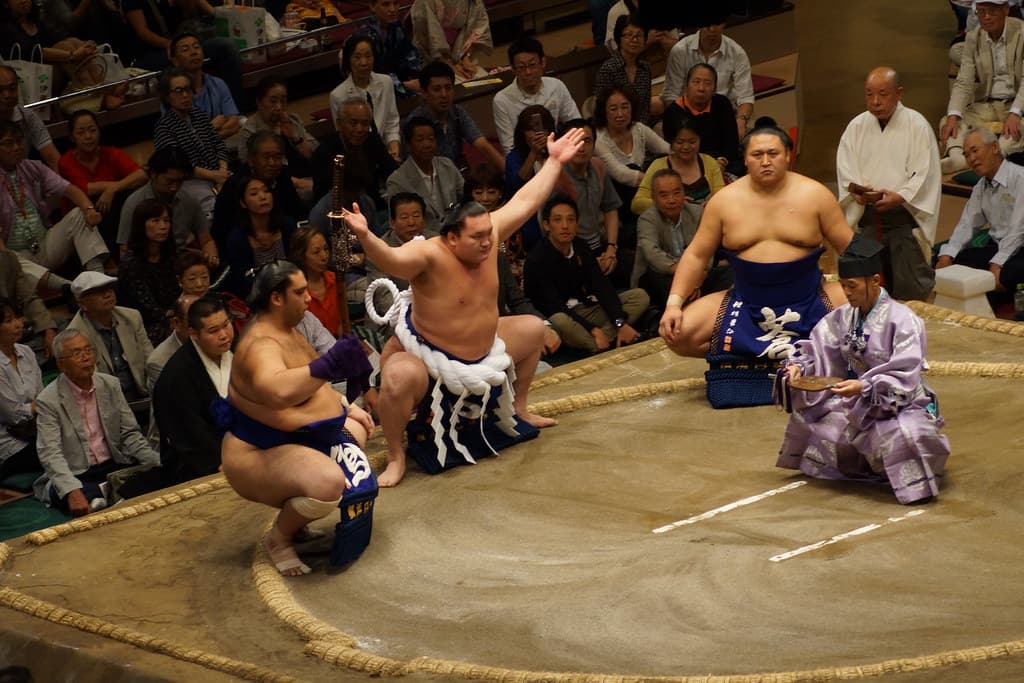
Tokyo Grand Sumo Tournaments
◆ Event Introduction
The Tokyo Grand Sumo Tournaments (honbasho) are among Japan's most iconic and culturally significant sporting events. Of the six annual tournaments held across Japan, three take place at the legendary Ryogoku Kokugikan arena in Tokyo's Sumida ward, showcasing the ancient art of sumo wrestling at its highest level. Each tournament spans 15 consecutive days, featuring hundreds of bouts from the lower divisions in the morning through to the elite makuuchi division matches in the late afternoon. The atmosphere combines intense athletic competition with centuries-old Shinto rituals, making it a truly unique spectacle.
◆ Historical Background
Sumo is believed to have a history of at least 1,500 years in Japan. Ancient chronicles such as the Kojiki and Nihon Shoki contain myths of wrestling bouts among the gods. During the Nara and Heian periods (8th to 12th centuries), sumo was held at the imperial court as part of official ceremonies.
During the Edo period (1603 to 1868), sumo developed into a form of urban entertainment beloved by the common people in Edo (present-day Tokyo). Professional wrestlers began to organize, and many of the ritual elements recognizable today, including the ring-entering ceremonies, the referee's traditional costume, and the salt-throwing purification, were established during this era.
The current system of six annual tournaments (each lasting 15 days) was established in the postwar era and is administered by the Japan Sumo Association. Three of these six tournaments are held in Tokyo, with the remaining three taking place in Osaka (March), Nagoya (July), and Fukuoka (November).
◆ Tokyo Tournament Schedule
📅 January Tournament (Hatsu Basho / New Year Tournament)
Held over 15 days in mid-January, typically starting on the second Sunday of the month. This tournament marks the beginning of the sumo calendar year and is one of the most anticipated events.
📅 May Tournament (Natsu Basho / Summer Tournament)
Held over 15 days in mid-May, typically starting on the second or third Sunday of the month. The summer tournament brings exciting competition as wrestlers aim to build momentum for the year.
📅 September Tournament (Aki Basho / Autumn Tournament)
Held over 15 days in mid-September, typically starting on the second Sunday of the month. The autumn tournament is the final Tokyo honbasho of the year.
◆ Daily Schedule
Matches begin in the late morning with bouts from the lower divisions (jonokuchi, jonidan, sandanme, and makushita). The juryo (second-highest division) matches take place in the mid-afternoon, followed by the highly anticipated makuuchi (top division) bouts in the late afternoon. The final match of the day, known as the musubi no ichiban, typically concludes around 6:00 PM.
The final day of each tournament, called senshuraku, is the climactic conclusion where the tournament champion (yusho) is decided and awarded the prestigious Emperor's Cup along with numerous other prizes and trophies.
◆ Venue: Ryogoku Kokugikan
📍 Location: 1-3-28 Yokoami, Sumida, Tokyo
🚃 Access: 1-minute walk from JR Ryogoku Station (West Exit), or 5-minute walk from Toei Oedo Line Ryogoku Station (Exit A3)
The Ryogoku Kokugikan, often simply called the Kokugikan ("National Sport Hall"), is the spiritual home of professional sumo. This iconic indoor arena seats over 10,000 spectators and features the sacred dohyo (clay ring) at its center, crowned by a suspended shrine-like roof (tsuriyane) that symbolizes sumo's deep connection to Shinto traditions.
Seating options include traditional masu-seki (box seats) near the ring, where spectators sit on cushions in intimate tatami-style compartments, as well as chair seats in the upper levels offering panoramic views of the arena.
◆ What Makes Sumo Special
🎌 Sacred Rituals
Every aspect of sumo is steeped in Shinto tradition. Wrestlers throw salt to purify the ring before each bout, perform ceremonial stomps (shiko) to drive away evil spirits, and participate in elaborate ring-entering ceremonies (dohyo-iri). The yokozuna (grand champion) ring-entering ceremony is a particularly awe-inspiring display of tradition and power.
💪 The Rankings
Sumo wrestlers (rikishi) are ranked in a hierarchical system called the banzuke. The pinnacle of sumo is the rank of yokozuna, the grand champion, a title that carries immense prestige and responsibility. Wrestlers live and train in communal training stables (heya), many of which are located in the Ryogoku neighborhood.
🍲 Sumo Culture in Ryogoku
The Ryogoku area surrounding the Kokugikan is rich with sumo heritage. Visitors can explore chanko-nabe restaurants serving the hearty hot pot stew that forms the staple diet of sumo wrestlers, visit the Sumo Museum inside the arena, and spot rikishi walking through the neighborhood streets in their traditional attire.
◆ Important Notes
⚠️ This page is for event information only. For inquiries about the tournaments, please feel free to contact us directly.
⚠️ The arena can become extremely crowded during tournaments, especially on weekends and the final days. Plan your visit well in advance.
⚠️ Photography rules may apply inside the arena. Please follow the venue's guidelines regarding cameras and recording devices.
⚠️ The Ryogoku area offers many dining options, but popular chanko-nabe restaurants can fill up quickly during tournament periods.
Got questions? Let's chat on Instagram!
Send us a DM and we'll help you plan the perfect experience.
Highlights
- Three annual tournaments at the legendary Ryogoku Kokugikan, the spiritual home of professional sumo
- Over 1,500 years of history rooted in Shinto rituals, from salt purification to the yokozuna ring-entering ceremony
- 15 days of thrilling competition from lower divisions through to the elite makuuchi top division
- Experience the unique atmosphere of masu-seki box seats or panoramic chair seats in the 10,000-capacity arena
- Explore sumo culture in the Ryogoku neighborhood with chanko-nabe restaurants and the Sumo Museum
Contact us for booking details