DINO SAFARI 2026, a live dinosaur entertainment experience presented by DINO-A-LIVE, is scheduled to run at Shibuya Hikarie Hall (9th floor) from April 24 (Friday) through May 6 (Wednesday, public holiday) during the Golden Week period.
Parasaurolophus Cub (approx. 6 m) Makes Its DINO-A-LIVE Debut
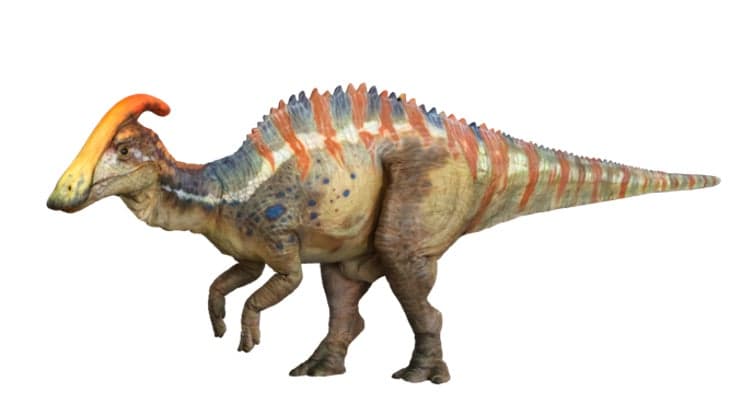
One of the highlights of the show is the first-ever appearance of a Parasaurolophus cub (approximately 6 m in length) in a DINO-A-LIVE production. The dinosaur — instantly recognizable by its distinctive long crest extending behind the skull — will roam the venue at full scale.
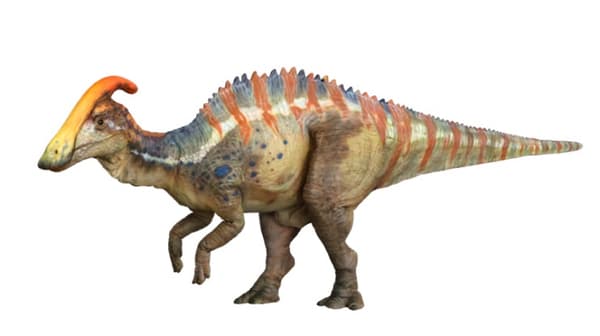
According to recent research, the crest of Parasaurolophus contains elongated, curved nasal passages that may have functioned as resonating chambers, producing low-frequency sounds in the range of approximately 30–300 Hz that could carry over long distances.
Dinosaur Expert Prof. Yoshitsugu Kobayashi Returns as Official Dino Supporter
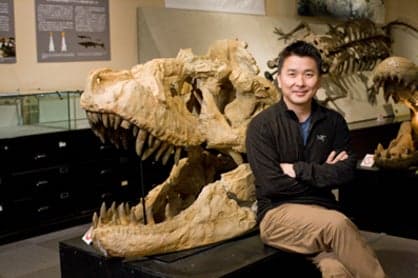
Hokkaido University Museum Professor Yoshitsugu Kobayashi — known internationally as "Dinosaur Kobayashi" — has returned as the Official Dino Supporter for DINO SAFARI 2026, continuing his role from the previous edition.
Prof. Kobayashi's comment:
Dinosaur fossil discoveries continue across Japan, and the story of "Japan's dinosaurs" is still unfolding. Dinosaurs are fascinating in books and films, but nothing compares to witnessing them move right in front of you. DINO SAFARI offers a truly immersive experience — as if you've stepped into the world of dinosaurs. I'm sure it will be an unforgettable, thrilling encounter for dinosaur fans of all ages.
About Prof. Yoshitsugu Kobayashi:
Professor at the Hokkaido University Museum, specializing in the evolution of theropod dinosaurs, the transition from dinosaurs to birds, and the ecology of Arctic dinosaurs. He has been involved in naming numerous Japanese dinosaurs including Kamuysaurus from Hokkaido, Paralitherizinosaurus, Fukuisaurus from Fukui Prefecture, and Yamatosaurus from Hyogo Prefecture, as well as discovering many dinosaur fossils overseas. Recent publications include Tyrannosaurus: A Dissection (Kodansha) and Dinosaurology (University of Tokyo Press).
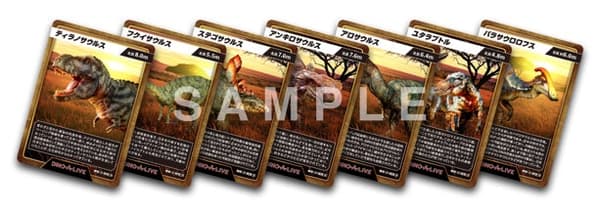
All seats come with a dinosaur card gift!
Every ticket purchaser receives a dinosaur card supervised by Prof. Kobayashi (Hokkaido University Museum) at the venue upon entry on the day of the performance.
"Dino Note" Ticket Now on Sale
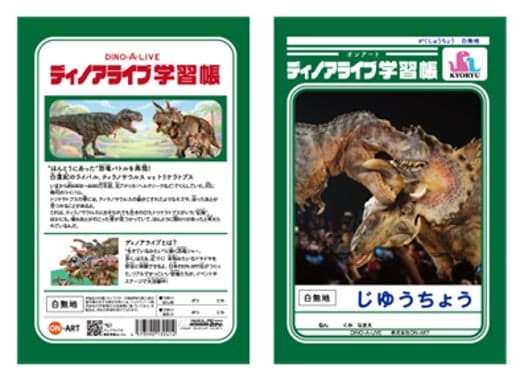
From March 21 (Saturday) at 10:00 AM, tickets bundled with the "Dino Note" — a limited-edition DINO-A-LIVE learning notebook — are available for purchase.
The notebook features a bold dinosaur design on the cover. Visitors are encouraged to record everything they observe during the show — dinosaur battles, surprising discoveries — creating their own "observation journal."
Available via: Ticket Pia / Asoview
DINO SAFARI 2026 Navigators
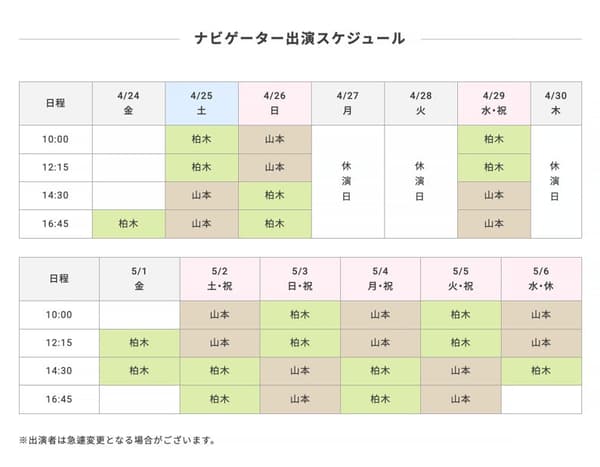
Shoma Yamamoto — returning for his 3rd appearance!
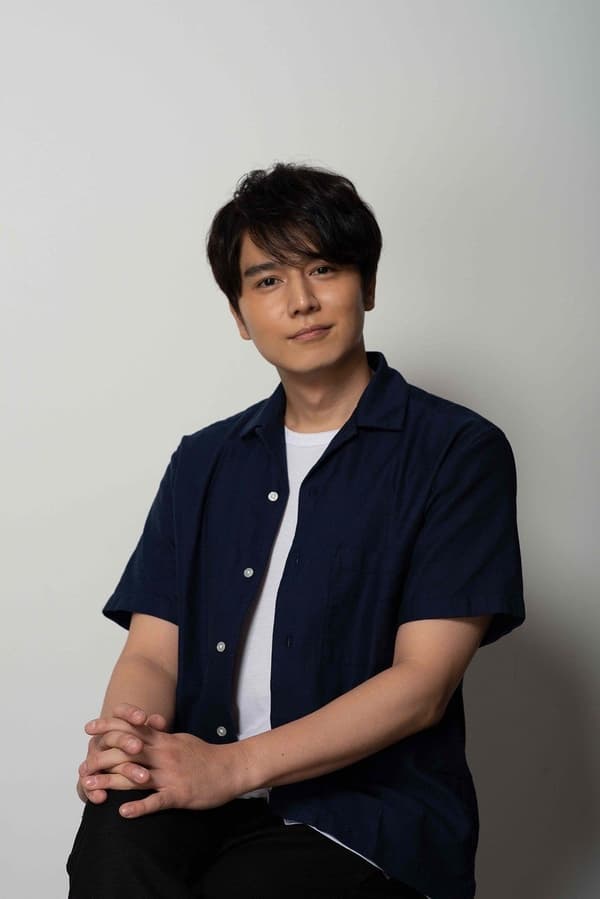
Born in 1983 in Osaka Prefecture. Known for roles in Kamen Rider Kiva (EX), drama GARO Special: Byakuya no Maju, and stage production Katekyo Hitman REBORN! the STAGE -Secret Bullet-. Also active as a voice actor, with credits including Black Clover and Haikyu!! TO THE TOP. Since 2024, he appears as the Wednesday MC on tvk's Neko no Hitai Hodo Wide.
Shoma Yamamoto's comment:
This will be my third time performing in this show. I look forward to once again surprising and impressing audiences! Even with dinosaurs you think you know, learning more about their detailed ecology makes you appreciate their greatness anew. I'll do my best to help bring that wonder to life. Please come and witness the dinosaurs with your own eyes and ears!
Yusuke Kashiwagi — returning for his 3rd consecutive year!

Born October 17, 1989, in Kanagawa Prefecture. Debuted as a child actor, and is known for the lead role of Yamato Takeru in Hojin Yatsuragi (Chiba TV), the role of Shiranui Kyou in the Hakuouki musical series, and stage productions including Osomatsu-san on STAGE ~SIX MEN'S SHOW TIME ('16–'20) and Jingi Naki Bakumatsu -Reiwa Gekito-hen- ('23). Skilled in acrobatics and dance.
Yusuke Kashiwagi's comment:
That time of year has come around again! I'm Yusuke Kashiwagi, returning for the third year as guide Rick in DINO SAFARI 2026. The life-sized dinosaurs that appear right in front of you on the safari field are truly awe-inspiring. As guide Rick, I'll make sure to convey the appeal and characteristics of each dinosaur clearly. Whether you're young or old, you're sure to find yourself gasping out loud. Let's have an unforgettable adventure together at the venue!
Dinosaurs Appearing in the Show
Parasaurolophus (approx. 6 m) — DINO-A-LIVE debut!
A hadrosaur that lived during the Late Cretaceous period in North America and other regions. Its distinctive long crest extending behind the head is widely recognized among dinosaur enthusiasts. Recent research suggests that the crest housed long, curved nasal passages that may have functioned like resonating chambers, producing low-frequency sounds of around 30–300 Hz capable of traveling great distances.
Tyrannosaurus (approx. 8 m)
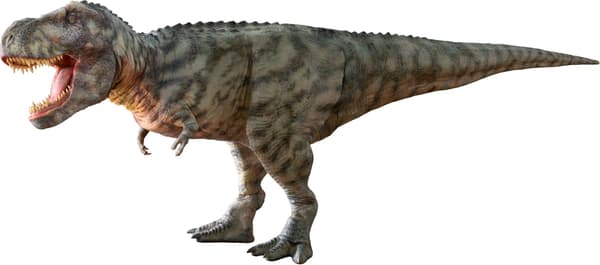
One of the most well-known carnivorous dinosaurs. Approximately 66 million years ago, during the end of the Cretaceous period, it is considered to have been the apex predator of the North American continent. Fossil research has also revealed that tyrannosaurids of similar size once inhabited Japan around the same time.
Fukuisaurus (approx. 5.5 m) — DINO SAFARI debut!
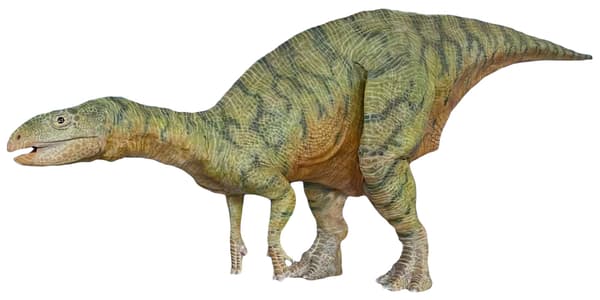
A herbivorous dinosaur discovered in Fukui Prefecture and one of Japan's most iconic dinosaurs. A member of the Iguanodontia group, it lived among the terrestrial ecosystems of its time feeding on plants. Fossils from the same geological layer also include the medium-sized carnivore Fukuiraptor, which may have been its natural predator.
Stegosaurus (approx. 7 m)
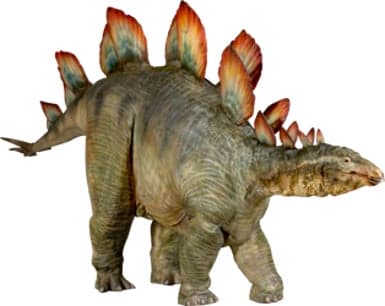
A herbivorous dinosaur known for the large bony plates along its back and the sharp spikes at the tip of its tail. It lived approximately 150 million years ago during the Late Jurassic period in North America and elsewhere. The back plates had a highly vascularized structure, and it has been suggested they may have served not only for thermoregulation but also for signaling to other members of the same species.
Allosaurus (approx. 6.4 m)
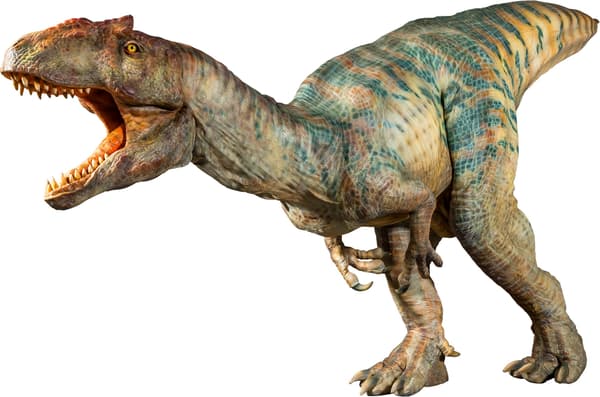
A large carnivorous dinosaur that lived approximately 150 million years ago during the Late Jurassic period in North America and other regions. With an elongated skull and sharp teeth, it was one of the apex predators of its ecosystem. Based on the structure of its skull, some researchers have proposed that it may have hunted by swinging its jaws downward like an axe to slash at prey.
Ankylosaurus (approx. 7.6 m)
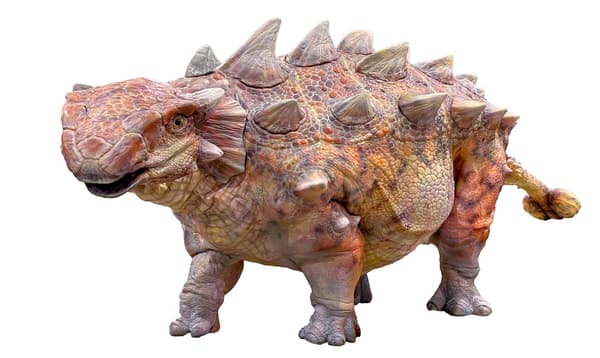
A herbivorous dinosaur covered in thick bony armor across its body, with a hammer-like bone at the end of its tail. It lived during the Late Cretaceous period in North America and elsewhere. Recent research on the structure of its tail bones and joints suggests it may have been capable of delivering powerful lateral blows. Fossils of ankylosaur relatives have also been reported in Japan.
Utahraptor (approx. 4.8 m)
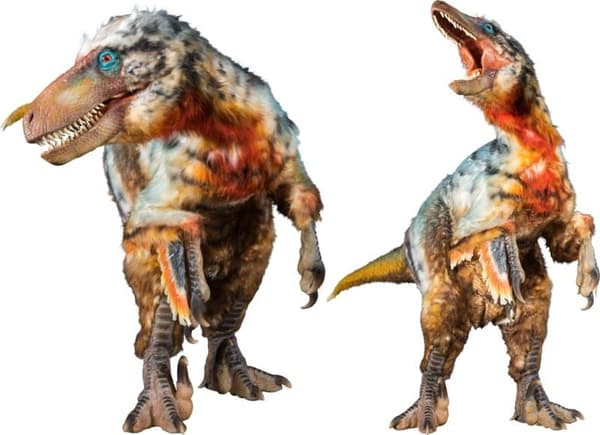
A large dromaeosaurid that lived during the Early Cretaceous period in North America, known for its sharp, sickle-shaped claws. Recent research has found multiple individuals at the same site, sparking discussion about the possibility that it may have lived and hunted in groups. It is considered a fearsome predator rivaling even Tyrannosaurus.
Event Details
Venue: Shibuya Hikarie Hall (9th floor), Hikarie Hall
〒150-8510 2-21-1 Shibuya, Shibuya-ku, Tokyo
Access:
- Direct connection via 2nd-floor walkway from JR Lines and Keio Inokashira Line "Shibuya Station"
- Direct connection via 1st floor from Tokyo Metro Ginza Line "Shibuya Station"
- Direct connection via Exit B5 from Tokyu Toyoko Line, Den-en-toshi Line, Tokyo Metro Hanzomon Line, and Fukutoshin Line "Shibuya Station"
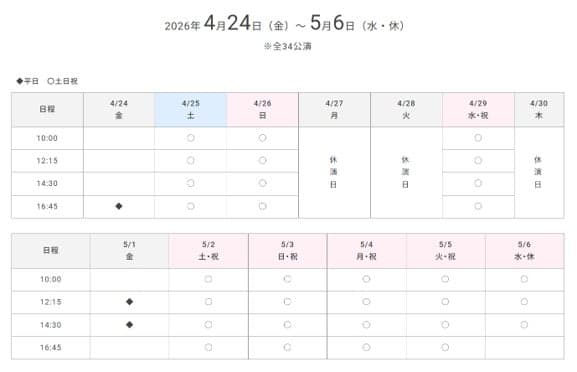
Dates: April 24 (Friday) – May 6 (Wednesday, public holiday), 2026
Show Duration: Approximately 50–60 minutes (complete turnover between performances)
Doors Open: 45 minutes before showtime
Age Restrictions: Children 3 and older require a ticket. Children under 3 may sit on a lap.
Official Website: https://dinosafari.jp/
Inquiries: Sunrise Promotion: 0570-00-3337 (weekdays 12:00 PM – 3:00 PM)
Ticket Prices (All prices tax-included, per ticket)
| Ticket Type | Weekdays | Weekends & Holidays |
|---|---|---|
| Lawn Arena | ¥5,700 | ¥6,000 |
| Hill Arena | ¥4,700 | ¥5,000 |
| Lawn Arena (with Dino Note) | ¥6,000 | ¥6,300 |
| Hill Arena (with Dino Note) | ¥5,000 | ¥5,300 |
| Lawn Arena (Group Discount) | ¥5,200 | ¥5,500 |
| Hill Arena (Group Discount) | ¥4,200 | ¥4,500 |
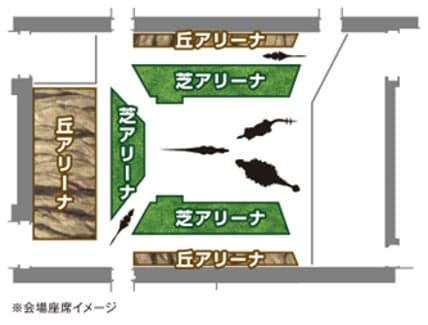
- Lawn Arena seats: Watch from the grass (floor seating). Hill Arena seats: Watch from chairs.
- Dino Note tickets are available from March 21 (Saturday) at 10:00 AM via Ticket Pia / Asoview.
- Group Discount (¥500 off per ticket when purchasing 2 or more tickets) available from February 28 (Saturday) at 10:00 AM via Teleasa Ticket / Ticket Pia / Asoview / Rakuten Ticket / e+ / Lawson Ticket.
- Children under 12 must be accompanied by a guardian.
- Ticket resale and purchase through unauthorized channels is discouraged.
- Photography is permitted; please follow staff instructions. Monopods and tripods are not permitted inside the venue. Short video clips under 1 minute may be shared on SNS, but posting to video platforms including YouTube is not allowed.
- Food and beverages (other than water in bottles or thermoses) are not permitted inside the hall.
- Show content, including dinosaurs featured, is subject to change by performance.
About the DINO-TECHNE Technology
The dinosaurs appearing in the show are life-size, self-propelled mechanical dinosaur suits called "DINO-TECHNE," developed by ON-ART Corp. The technology has received domestic and international patents for its distinctive construction, and has won awards including the Excellence Prize at the 4th "Monodzukuri Nippon Grand Award" (2012) organized by the Kanto Bureau of Economy, Trade and Industry, and the Tokyo Venture Technology Award Special Prize (2009).