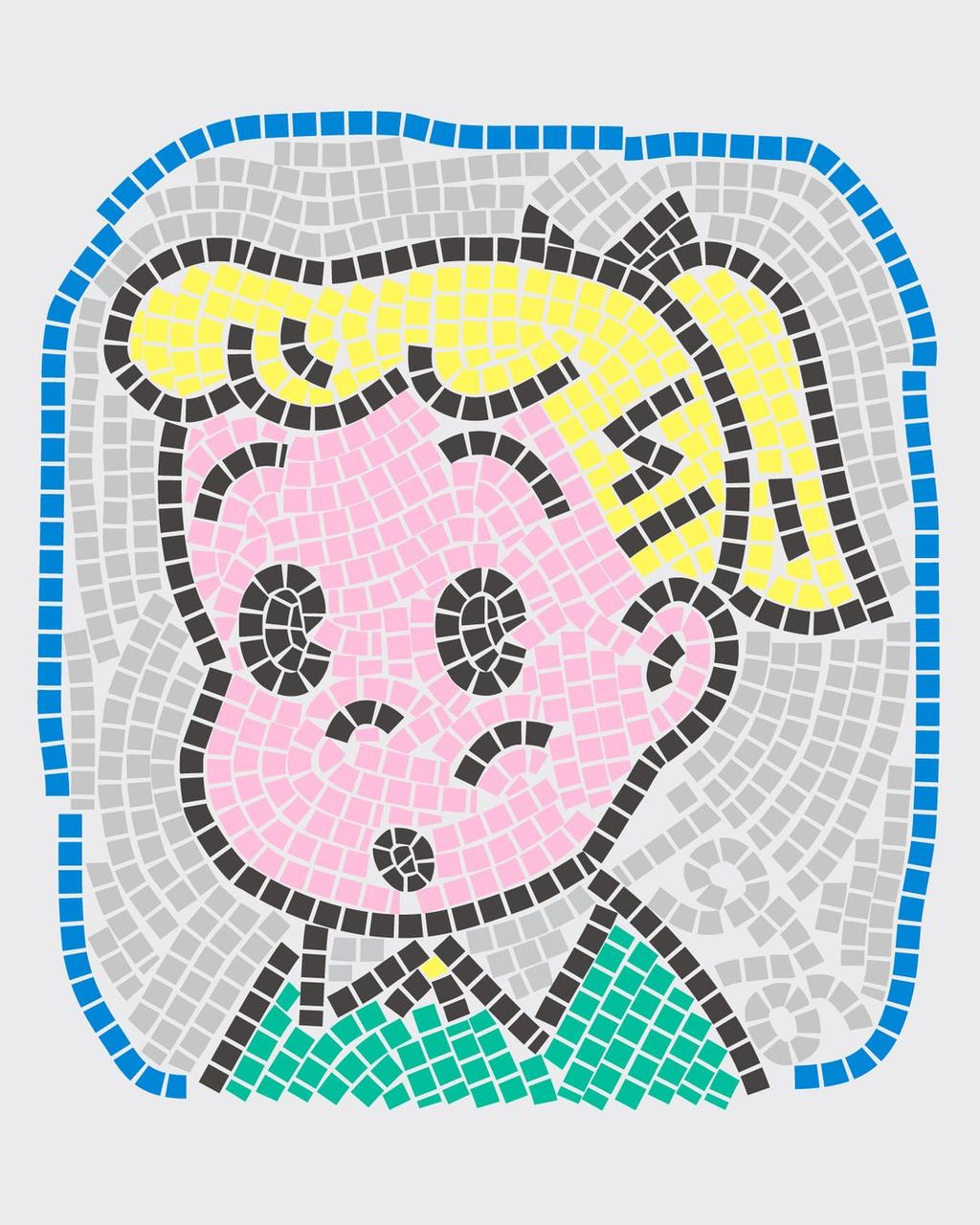
OSAMU GOODS was born in 1976, when illustrator Osamu Harada (1946-2016) drew inspiration from Mother Goose, the traditional English nursery rhymes. Its imagery drew on the girls he saw in 1960s American magazines like Seventeen and the adorable actresses appearing in Hollywood films, along with the small props and everyday items found around them. Harada's own definition of "kawaii" — "a bright, unguarded, healthy expression, with a touch of quiet loneliness or wistfulness folded in as a secret ingredient" — was vividly expressed throughout his work, and OSAMU GOODS won overwhelming popularity, especially among middle and high school students and women in their twenties, from the late 1970s through the 1990s. This exhibition introduces the appeal of OSAMU GOODS as it marks its 50th anniversary in 2026, alongside materials from the era, exploring the background of why it continues to be loved across generations and the design philosophy behind it.
Leading Creators from Japan
Exhibition space design is handled by Lui Igarashi, who has worked on numerous exhibitions that have drawn attention across Japan in recent years. Art direction, from the key visual through graphic design, is handled by Kazunari Hattori. The two previously teamed up on the creative for 『原田治展「かわいい」の発見』, which toured the country to great acclaim from 2019 to 2024, and this exhibition reunites them once again.
Exhibition Space Design: Lui Igarashi
Notable works include 「単位展」 (2015, 21_21 DESIGN SIGHT; toured Taiwan in 2016), 「谷川俊太郎展」 (2018, Tokyo Opera City Art Gallery), 「デザインあ展」 (2018-2021, touring exhibition), 「江戸東京リシンク展」 (2023, Koishikawa Korakuen), 「ヨシタケシンスケ展かもしれない」 (currently touring nationwide), and 『原田治展「かわいい」の発見』.
Art Direction: Kazunari Hattori
Notable works include advertising for Kewpie Half mayonnaise, art direction for the magazines 『流行通信』, "here and there," and 『真夜中』, the visual identity for Mitsubishi Ichigokan Museum, Niigata City Art Museum, and Hirosaki Museum of Contemporary Art, art direction for the Hermès exhibitions "petit hのオブジェたち" and "夢のかたち Hermès Bespoke Objects," artwork for the band quruli, book design for Osamu Harada's 『ぼくの美術ノート』 and 『OSAMU'S A to Z 原田治の仕事』, and a collaboration with 「杉戸洋展 えりとへり」 (2025-2026).
Special Exhibit: Sogo Museum of Art Collection — Shintaro Suzuki Corner
Harada held Western-style painter Shintaro Suzuki in high regard, naming him as a favorite painter in his book 『ぼくの美術帖』 (Misuzu Shobo) and on his blog 「原田治ノート」. This exhibition sets up a special corner featuring a selection of landscapes, still lifes, and other choice works from the Sogo Museum of Art collection.
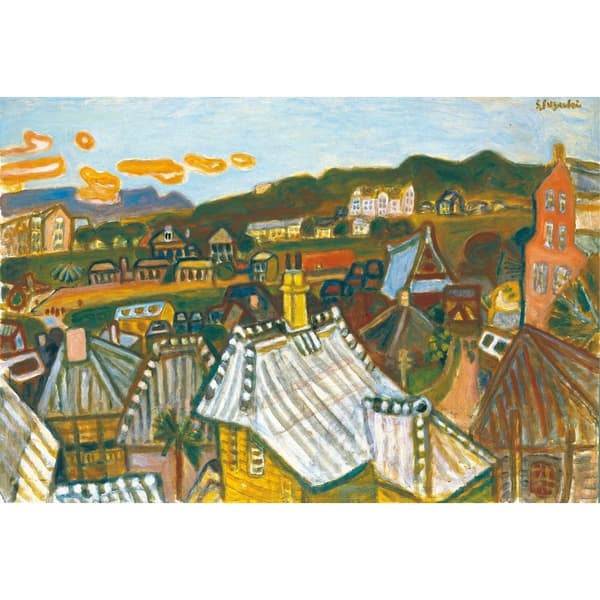
Nagasaki Landscape (View from the Hill), 1957, oil on canvas, 80.3×100.0cm, collection of Sogo Museum of Art
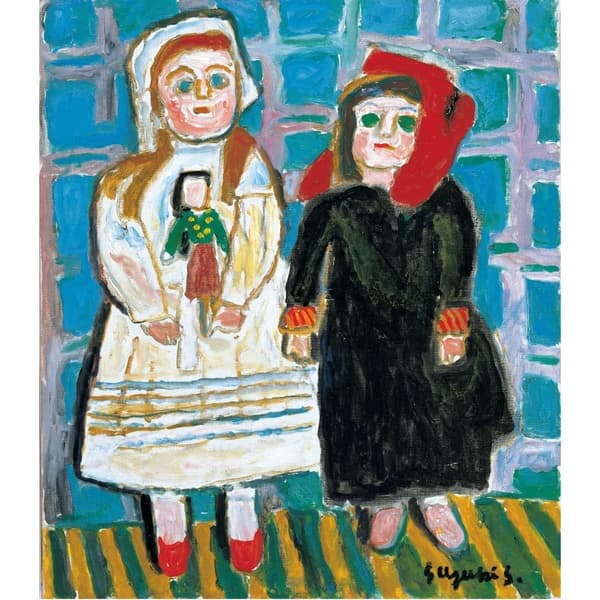
Dolls in White and Black Dresses, 1978, oil on canvas, 53.0×45.5cm, collection of Sogo Museum of Art
Summer Vacation Kids Program: Junior Room
A summer homework space, the "Junior Room (Study Room), Priority for Elementary and Junior High School Students," will be set up inside the exhibition venue.
Visitors are welcome to use it for writing up their thoughts on the exhibition or preparing a visit report.
*For details on how to use the space and its opening hours, please check the Sogo Museum of Art website.
Exhibition Overview
Exhibition: The 50th Anniversary OSAMU GOODS Exhibition
Period: Saturday, August 1 to Monday, August 31, 2026 (open every day during the run)
Hours: 10:00 AM to 8:00 PM (last admission 30 minutes before closing)
*Hours follow those of Sogo Yokohama and are subject to change.
Venue: Sogo Museum of Art (Yokohama Station East Exit, 6th floor of Sogo Yokohama)
2-18-1 Takashima, Nishi-ku, Yokohama, Kanagawa Prefecture 220-8510 / Phone: 045-465-5515 (direct line to the museum)
Admission: General ¥1,400 (¥1,200) / University and high school students ¥1,200 (¥1,000) / Junior high school students and younger free
*Tax included.
*The price in parentheses applies to those who purchase official online tickets, both in advance and during the exhibition period.
*The price in parentheses also applies to those who purchase at Sogo Museum of Art by Friday, July 31, 2026.
*The price in parentheses also applies to those who present a Club On / Millennium Card or Club On / Millennium App at Sogo Museum of Art during the exhibition period.
*Visitors with a disability certificate of any kind, plus one companion, are admitted free of charge.
*Before visiting, please check "Requests When Visiting" on the Sogo Museum of Art website and posted at the venue entrance.
*The exhibition or event may be cancelled or postponed, or its content partially changed. Please check the Sogo Yokohama and Sogo Museum of Art websites for the latest information.
Sogo Museum of Art website: https://sogo-museum.jp/ (X, formerly Twitter: @sogomuseum)
Official online tickets: https://www.e-tix.jp/sogo-museum/
Sogo Yokohama website: https://www.sogo-seibu.jp/yokohama
Koji Honpo "OSAMU GOODS": https://www.osamugoods.com/
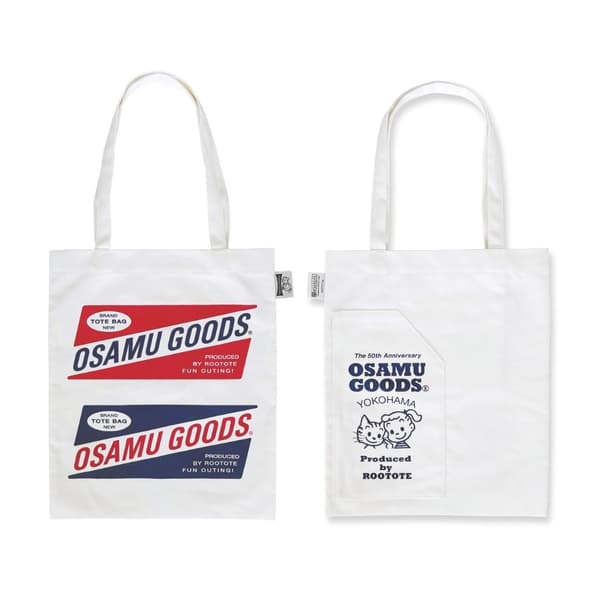
Ticket with Original Museum Tote Bag — ¥3,500 (tax included)
A special-value ticket bundling admission with an A4-size "Museum Bag" (not for sale separately), a collaboration between OSAMU GOODS®, ROOTOTE, and Sogo Museum of Art. It's exclusive merchandise available nowhere else.
Available only with official online tickets, only at the Yokohama venue, and in limited quantity (sales end once the planned quantity is reached).
*Image shown is for illustrative purposes.
Merchandise details: ROOTOTE — https://rootote.jp/osamu-goods-202608/
©Osamu Harada/Koji Honpo
More About OSAMU GOODS
Do you know OSAMU GOODS?
Ask people that question, and answers like "Oh, the prize goods!," "I had those back in school," and "I've seen them before" tend to come back.
While many people recognize OSAMU GOODS, the goods actually fall into two broad categories.
One is illustrations that Osamu Harada provided at the request of companies, with product planning and design handled by the requesting company itself. The brand collaborations and campaign giveaways that many people feel most familiar with are typical examples of this category.
The other is goods for which Harada handled the planning, illustration, and design himself, produced by "DUSTY MILLER." Koji Honpo, a long-established maker of cosmetics accessories and the first company in Japan to develop false eyelashes, branched out into a new industry in 1976 and launched DUSTY MILLER within Koji Honpo to produce and sell OSAMU GOODS. This year marks 50 years since that venture began.
What Is OSAMU GOODS
OSAMU GOODS began in 1976, turning characters drawn by illustrator Osamu Harada into merchandise manufactured by Koji Honpo Co., Ltd. and sold through its affiliated company, DUSTY MILLER. For the products released at the time, Harada handled every aspect of the design himself, from choosing each item down to its materials and shape, and the lineup grew to more than 4,000 items. The color palette and sophisticated design, reminiscent of imported goods, became a hot topic, and the brand set off a major boom among female students as an aspirational item that stood apart from other fancy goods — something people felt made them look more grown-up just by owning it.
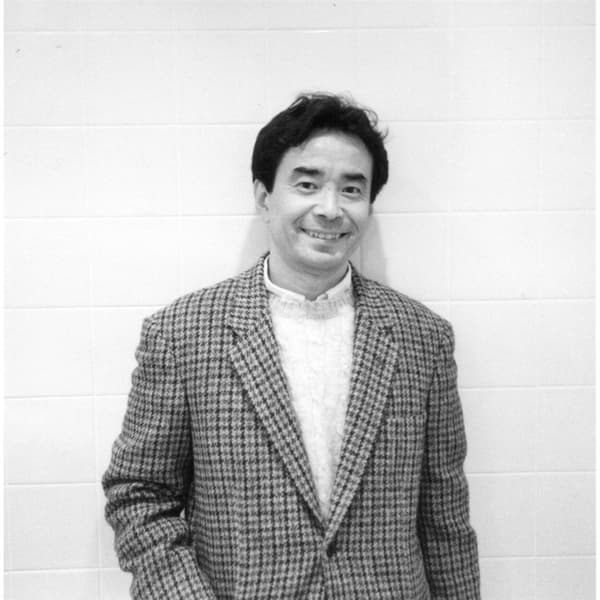
Osamu Harada (1946-2016)
©OSAMU HARADA
In Harada's own words on OSAMU GOODS:
"I think OSAMU GOODS is a bit like flowers arranged in a room. It's not something you absolutely need in daily life, but doesn't having it around put you in a really good mood? For me, OSAMU GOODS is something like a message that takes the place of words."
Born in 1946 in Tsukiji, Tokyo, Harada attended the junior and senior high schools of Aoyama Gakuin before graduating from the graphic design department of Tama Art University. He made his debut as an illustrator in 1970, at age 24, in the debut issue of the magazine an·an (Magazine House), and went on to work across a wide range of fields including magazines and advertising. "OSAMU GOODS," born from the motif of the English nursery rhyme Mother Goose, has been turned into merchandise since 1976 and remains beloved by many to this day without ever fading. He left behind many well-loved works, including the character "Potato Boy" (ポテト坊や, nickname) for Calbee's "Potato Chips" (1976), premium illustrations for Mister Donut (from 1984), and the "Hyo-chan" soy sauce container for Kiyoken (1988), and is known as one of Japan's leading illustrators. In 1997, at age 51, he founded the Palette Club School in Tsukiji to train illustrators. His major books include the new edition of 『ぼくの美術帖』 (Misuzu Shobo), 『ぼくの美術ノート』 (Akishobo), and the picture book 『かさ』 (written by Masako Matsuno, Fukuinkan Shoten).
Harada's Commitments
1. The Characters of OSAMU GOODS
OSAMU GOODS was born from the motif of "Mother Goose," a traditional nursery rhyme originating in England. Published in 1976, 『OSAMU'S MOTHER GOOSE』 can be described as a manual book explaining every OSAMU GOODS character. Based on this picture book's publication, the cute characters went on to be developed into a wide range of merchandise.
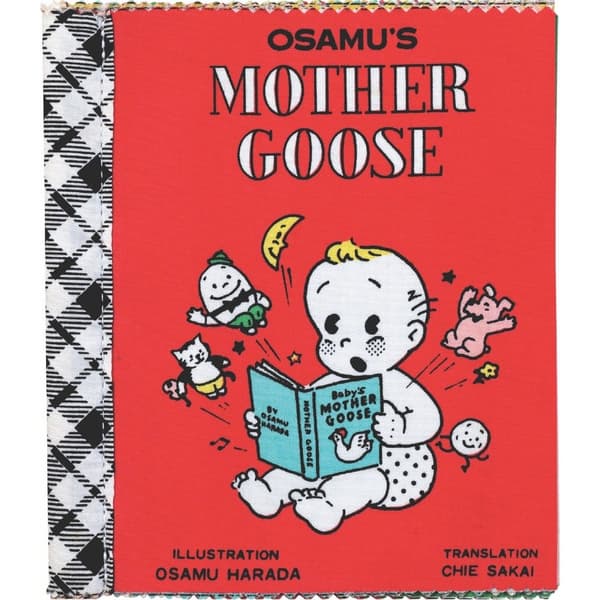
『OSAMU'S MOTHER GOOSE』, cloth picture book (Koji Honpo), 1976
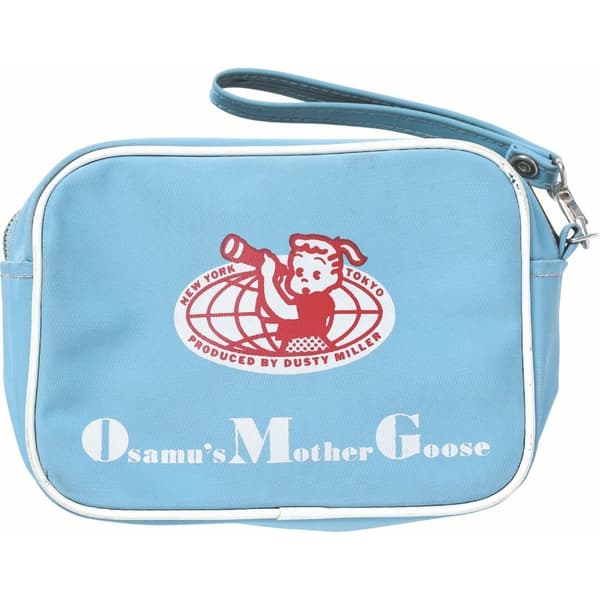
Pouch, 1980
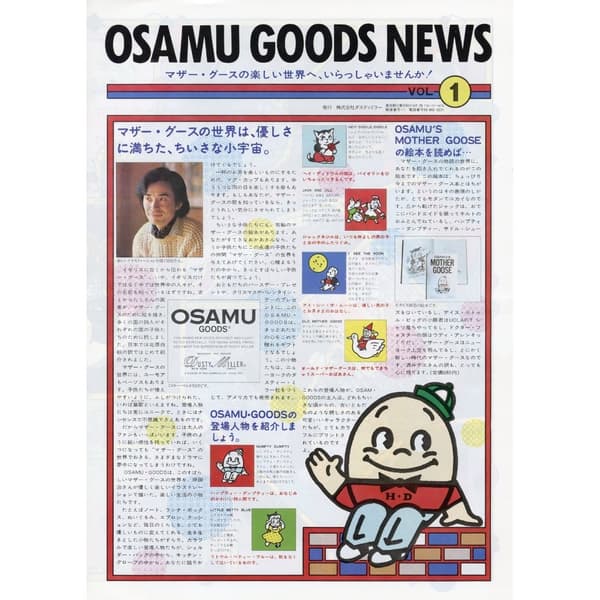
"OSAMU GOODS NEWS VOL1," the debut issue of the fan club newsletter, 1991
2. The Target Audience
OSAMU GOODS started as a project to build a lineup of products aimed at women from middle and high school age through their twenties. The design imagery drew on the girls seen in 1960s American magazines like Seventeen and the adorable actresses appearing in Hollywood coming-of-age films, along with the small props and everyday items placed around them. Harada's own definition of "kawaii" — "a bright, unguarded, healthy expression, with a touch of quiet loneliness or wistfulness folded in as a secret ingredient" — was vividly expressed throughout his work and won overwhelming popularity.
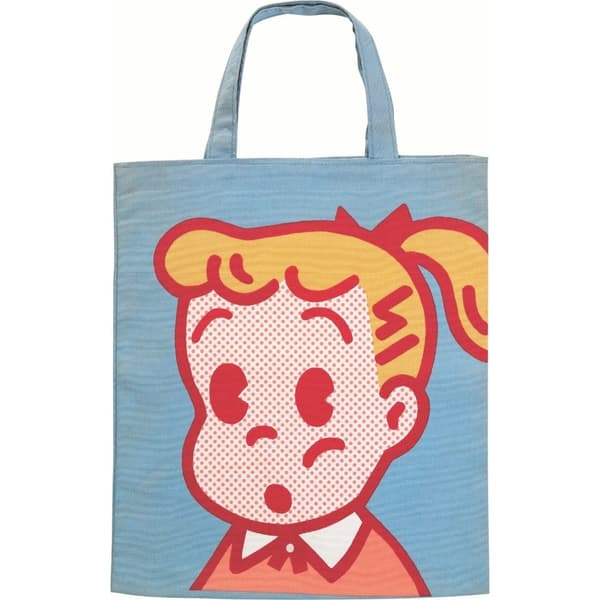
School bag, 1982
The school bag that represents OSAMU GOODS.
At the time, it became fashionable to hang the bag from the handle of a leather school satchel. Whether carried in matching sets or different colors with friends, or worn with the character silhouette bearing a Mother Goose verse deliberately turned to face outward, the bag became merchandise that expanded the fun of student life. Various characters appear across the bags, offered in a rich range of colors, and the faces were redrawn around four times. A distinguishing feature of the early OSAMU GOODS characters is their oval eyes with a notch cut into them. This incorporated a technique seen in old American animation known as the "Sliced Eye" (an eye shaped like a slice cut from a pie). However, since this technique could only depict the expressions of young children, notch-free eyes eventually came into use instead.
3. Design Concept
Born into a family running an imported foods wholesaling business in Tsukiji, Tokyo, Harada grew up in an environment where "Made in USA" felt close at hand. His youth was spent chasing the exoticism and nostalgia of 1950s-60s American culture. However, as his longing for America shifted over time into a sense of nostalgia, when he set out to create OSAMU GOODS in 1975, he set its design concept as "a lost, good old America."
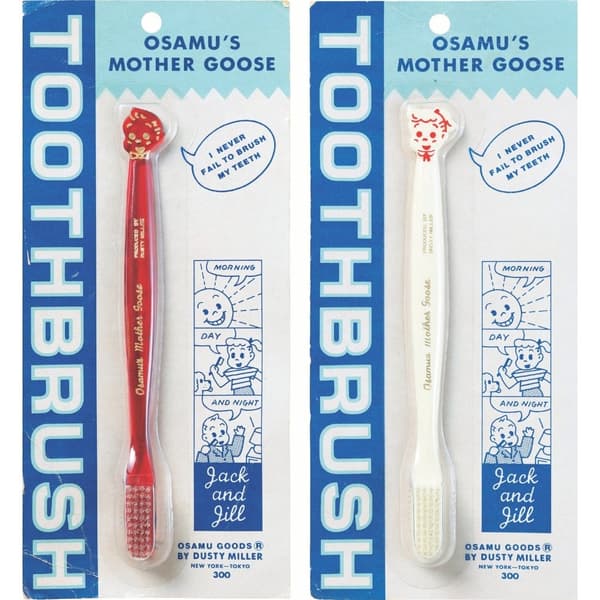
Toothbrush, late 1970s to early 1980s
From childhood, Harada was said to be more interested in American comics and Hanna-Barbera TV cartoons than in Japanese manga. The design concept he pursued can also be glimpsed in packaging resembling imported goods, printed with comic strips (stories told through a sequence of panels and illustrations).
4. Logo Design
Harada was involved in product design overall, not just in providing illustrations. He was especially particular about logos, creating logos to match each item himself.
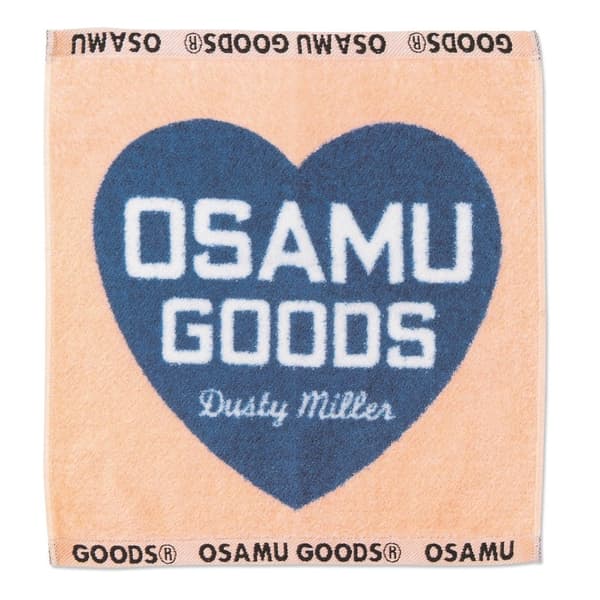
Towel, 1991
Products featuring only a logo, with no illustration, also appeared. Among the episodes that influenced his logo design are how, from his student days, he frequented "AMERICAN PHARMACY," an imports-only drugstore in Hibiya, Tokyo, becoming absorbed in the logos and package designs of imported goods, and how, having been a film buff since childhood, he was drawn to the title design of foreign films. His maternal grandfather was the film director Buntaro Futagawa (whose representative work was Orochi, starring Tsumasaburo Bando), who designed logotypes in the title department of a film company in his younger days, and Harada has said, "I suppose I was genetically inclined to love title design."
5. Craftsmanship
With the temperament of a true craftsman, Harada was thoroughly particular not only about design but also about the physical "things" themselves. For notebooks, he drew on the image of American stationery, inserting a thin sheet of red paper inside the back cover; for mugs, glasses, and even a single pencil, he pursued his preferred shape and quality to the fullest. The goods were somewhat pricier than other fancy goods, but through these "things," fans absorbed a great deal of sense and values.
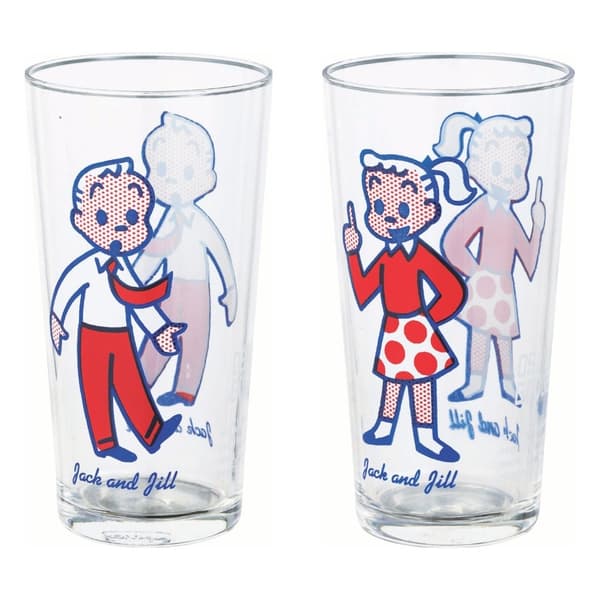
Glass, 1991
6. Treasures for Fans
OSAMU GOODS valued not only making and selling products but also service to fans and points of connection with them.
"OSAMU GOODS STYLE"
A fan club newsletter first published in 1992, the year OSAMU GOODS marked its 16th anniversary. Filled from cover to cover with Harada's aesthetic sense and playful, adult sensibility, it ran to eight issues. Its design, pairing black-and-white with touches of red, pays homage to the American magazine LIFE, which Harada loved. Harada handled the editing and design himself and even shot the cover photos on his own. Its content, expressing a longing for the good old America through both visuals and writing, comes across as sophisticated and engaging. Its inside pages present OSAMU GOODS scenes shot with meticulous care given even to the furniture and small items paired with the merchandise.
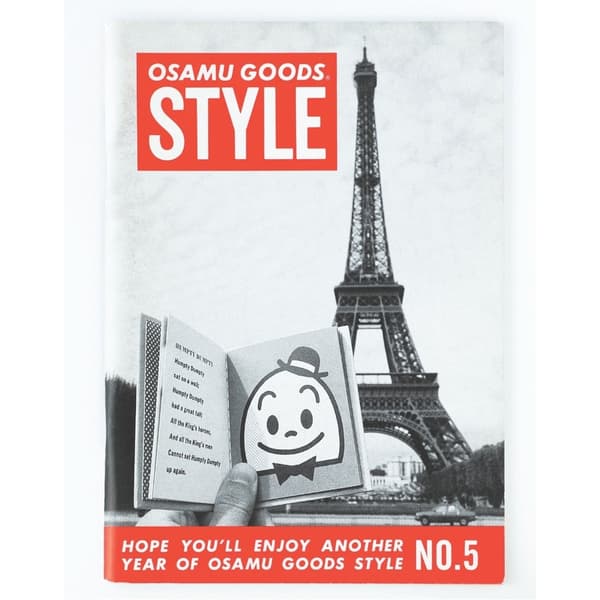
The quarterly booklet "OSAMU GOODS STYLE" No. 5, 1993
The cover of issue No. 5 is a photo Harada took himself in a park in front of the Eiffel Tower, holding a miniature OSAMU GOODS book he'd carried in his pocket. While composing the layout with the red square logo planned for the upper left corner, a car happened to approach from the right, and he decided to include it in the frame too, successfully capturing a decisive moment in the shot.
Shop Bag
When you bought OSAMU GOODS, the shop would put your purchase in a shop bag. Some people bought the goods just to get the bag, and it wasn't unusual for people to buy an item and still carry the bag home separately, without putting the product inside it. The back was styled like an English-language newspaper, carrying seasonal recommendations, fashion articles, essays, and other tips for honing one's sense of style.
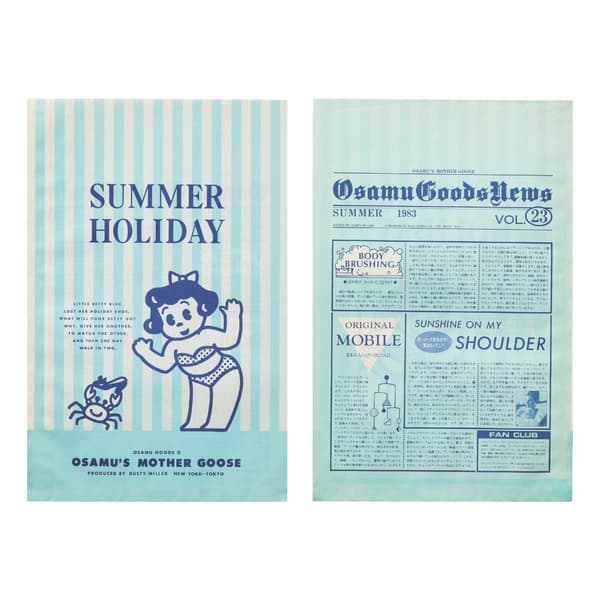
Shop bag, vol. 23, 1983
©Osamu Harada/Koji Honpo
The 50th Anniversary OSAMU GOODS Exhibition × イー・エー・グラン Collaboration Menu
During the exhibition period, a collaboration menu commemorating the exhibition will appear at the 10th-floor restaurant イー・エー・グラン.
*Images in this release are for illustrative purposes, and all prices include tax.
Available: Saturday, August 1 to Monday, August 31, 2026
Location: イー・エー・グラン, inside "ダイニングパーク横浜" on the 10th floor of Sogo Yokohama
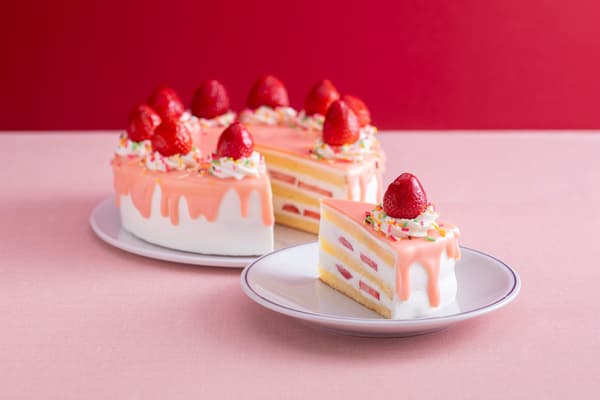
Strawberry Pink Melty Shortcake — [Limited to 30 servings per day] ¥1,300 per piece
Fluffy sponge cake sandwiched with strawberries and fresh cream.
Designed around an American pop image, finished with pink glaze and colorful sprinkles.
Cream Soda (Strawberry / Pineapple / Melon) — ¥720 per glass
Cream soda finished with a pop of style, topped with popping candy.
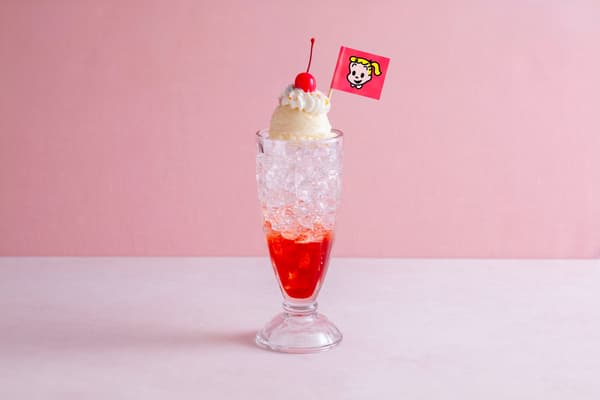
Strawberry
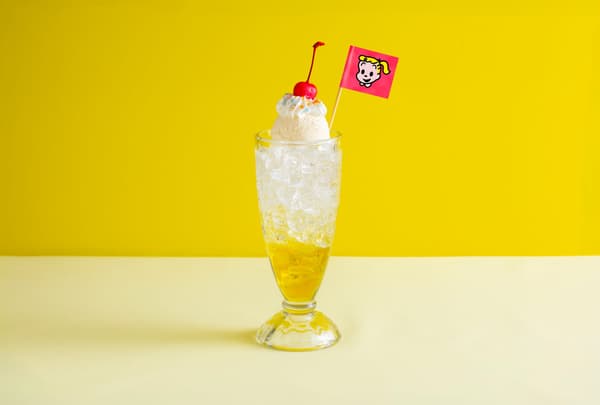
Pineapple
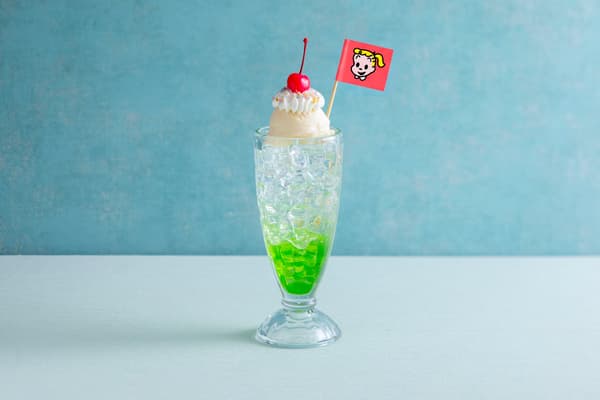
Melon