Tokyo Jazz Club will be held in a former capsule hotel in Kanda-Nishikicho, Tokyo, from Sunday, November 1 to Sunday, November 8, 2026. The exhibits on all eight floors and the highlights of the performance program have now been released.
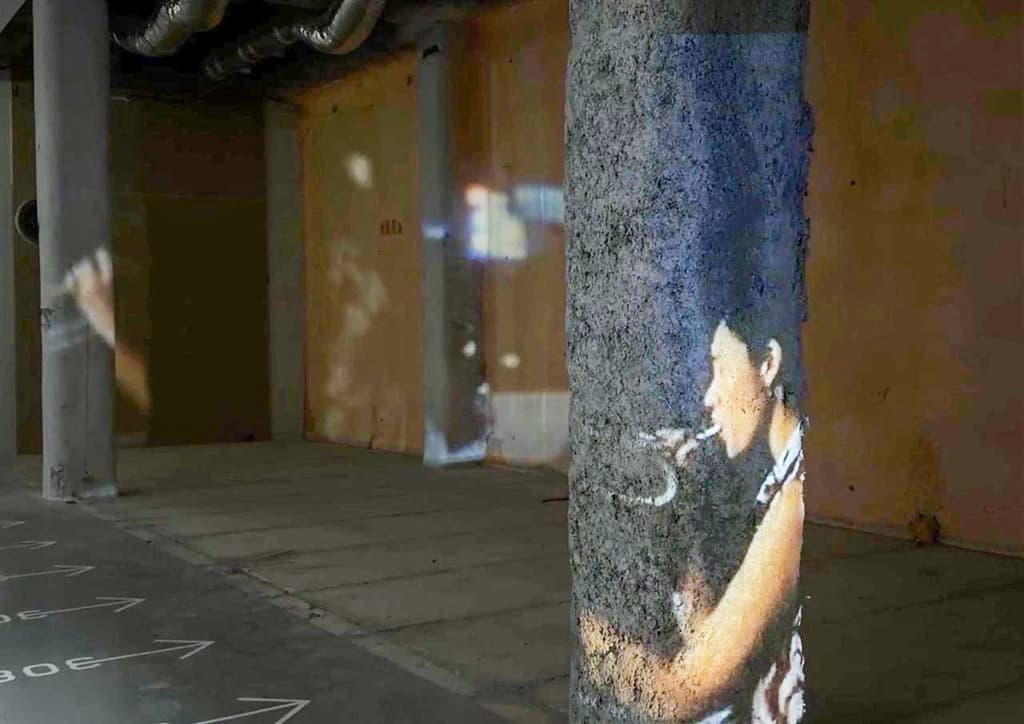
The event brings together contemporary art, music, live performances, and encounters between people. It makes use of the building's features, such as the former sleeping capsules, lounges, and locker rooms, to present a variety of exhibits and experiences.
Each floor has its own theme, with works and installations by artists from Japan and abroad. Concerts, DJ sets, listening sessions, talks, and more take place on different days throughout the run, so the venue looks different with every visit. It is a cultural space that exists for only eight days.
Held to coincide with Art Week Tokyo, Tokyo Jazz Club offers a new kind of cultural experience. Visitors can view art, listen to music, meet other people, and even buy works.
Tickets are available through ArtSticker. See the "Tickets" section below for details.
A Journey Through Eight Floors
1F — Entrance and Large-Scale Installations
On the first floor, visitors are greeted by a large-scale installation by GILLOCHINDOX☆GILLOCHINDAE (exhibited by CON_) and a wall-sized mural by Tomonari Nakayashiki (exhibited by ANTHRACITE). They open an experience in which art and music intersect across all eight floors.
2F — Capsule Art Floor
The capsules once used for sleeping have been turned into places for encounters with art. Inside the capsules, Goki Muramoto (exhibited by Nguyen Wahed) and Jan A. Eckert (in cooperation with Swissnex) present interactive works, and a work by Maurizio Cattelan (exhibited by Three Star Books) is also on view.
A special exhibition by Arab Bank Switzerland introduces Transaction Sculpture by 0xfff. The piece is a digital work that turns the transfer of value carried out through smart contracts on the Ethereum blockchain into a unique visual form. Its imagery keeps changing in response to the movement of transactions.
3F — Vinyl and Whisky Listening Lounge
The third floor is a listening lounge where visitors can spend a relaxed time while listening to music.
The floor offers records selected by VDS (Vinyl Delivery Service) and a whisky tasting experience by Sakazuki (Suntory Group, in cooperation with Glimmer DAO). It also hosts a special exhibition of prints, books, records, and tarot cards by Keiichi Tanaami x Fujio Akatsuka (exhibited by Shueisha Manga-Art Heritage). In the café booth, solo-show style exhibitions by artists including Gabriel Orozco (exhibited by kurimanzutto) and Ishikawa Kyuyoh (exhibited by Shibunkaku) are also held.
4F — Quiet Floor
The fourth floor offers a space away from the bustle of the building, where visitors can face art quietly. In this calmer atmosphere, each work can be viewed at length. Works by a range of artists are on display, including Rivane Neuenschwander (exhibited by Fortes D'Aloia & Gabriel), one of Brazil's leading artists, and contemporary ceramic artist Kentaro Kawabata (exhibited by Nonaka-Hill).
5F — Video Art Floor
The fifth floor focuses on moving-image work and shows a monumental video work by Arthur Jafa (exhibited by Sadie Coles HQ). Through its powerful imagery, it draws visitors into the artist's own visual world.
In the locker room, Paris-based concept store Item Idem presents limited-edition works by a wide range of artists, from Barbara Kruger to Yoko Ono.
6F — Live Performance Floor
The sixth floor is the center of the performance program held throughout the building during the event.
Live performances by a variety of artists take place against the backdrop of a large mural by Christine Sun Kim (exhibited by François Ghebaly). It is a dynamic space where art and music intersect, and it shows a different side of itself throughout the run.
7F — Interactive Game Floor
The seventh floor is an immersive game floor that crosses the boundaries between art, play, and participation.
Interactive and generative works are gathered here, and visitors can enjoy new art experiences by engaging with the works themselves. They include OXO by the pioneering artist duo JODI (in cooperation with FARO, smalltokyo Inc., and Mondriaan Fund). In the shower booth, Hardcore Freedom, a long-duration performance by Esben Weile Kjær (exhibited by Andersen's Contemporary), is also presented.
8F — Sound Bar
On the top floor, the eighth, a sound bar serves as a place where people gather and mingle through art and music. A cocktail bar by Bar Phase is the center of the space. Around it are a work by Theaster Gates that serves as the symbol of the space (in cooperation with Horii Shichimeien Co., Ltd.), a site-specific installation by Yoko Terauchi (exhibited by HAGIWARA PROJECTS), and a light installation by Kwangho Lee (exhibited by Parcel). Visitors can enjoy music, conversation, and drinks while viewing the works in a social space unique to Tokyo Jazz Club.
Performance Program
"What matters in improvisation is not to repeat." — Keiji Haino (from an interview with Kaput Mag)
A building that resonates like an instrument. Across the exhibition space spanning all eight floors, the performance program brings new movement and energy to the whole venue. During the run, a variety of programs, including concerts, listening sessions, talks, long-duration performances, and DJ sets, take place throughout the building. One floor may host a live performance, another may ring with the sound of records, and another may feature a talk by artists, so visitors encounter different music and culture each time they change floors.
The program is co-curated with Cyrus Goberville and Blank Forms. It treats jazz not simply as a music genre but as a methodology that produces improvisation, collaboration, exchange, and free expression that is not bound by repetition. Over the run, artists perform across genres and forms. As their expressions overlap and influence one another, the atmosphere of the whole building changes from day to day.
The compact spaces of the former hotel bring artists and visitors closer together and create intimate exchange. By making use of the building's vertical structure across eight floors, moving through the building itself becomes a performance experience.
Over the eight days, 49 acts will take part in the program in total. The main performers and programs are as follows.
Standing On The Corner | November 1 (Sunday)
A New York ensemble led by Gio Escobar. On opening day, November 1, they perform their new album II as a four-piece.
Keiji Haino (in cooperation with Blank Forms) | November 3 (Tuesday, national holiday)
Also called the "poet of noise," Keiji Haino received the Golden Lion for Lifetime Achievement at Biennale Musica 2026, held in October 2026. A leading figure in Japanese experimental music who works across a wide range of expression, including free improvisation, noise, and drone, he debuts a new electronics set at this event.
Sophye Soliveau | November 3 (Tuesday, national holiday) and 5 (Thursday)
French harpist and singer Sophye Soliveau makes her Japan debut. Carrying on the musical lineage of Dorothy Ashby and Alice Coltrane, she performs INITIATION, which consists of only harp and voice.
Arthur Jafa and Theaster Gates | November 3 (Tuesday, national holiday) and 5 (Thursday)
A listening session by Arthur Jafa, winner of the Golden Lion at the 2019 Venice Biennale, is held on November 3. On November 5, a conversation with Theaster Gates is scheduled. Through the practice of Afro-Mingei, Gates connects Black American aesthetics with Japanese craft culture.
Geinoh Yamashirogumi | November 8 (Sunday)
On November 8, the final day of the run, a listening session focusing on the music of Geinoh Yamashirogumi, which has about 100 members, is held.
For the full list of exhibitors and artists, as well as details and the latest schedule of the performance program, see the official website (tokyojazzclub.jp).
Tickets
Tickets are on sale through ArtSticker and are also sold at the venue entrance during the event. For detailed ticket conditions and admission times, see the linked page.
- Club Pass — ¥4,000 (tax included): Unlimited entry on all days, November 1 to 8. For ages 20 and over.
- General Pass — ¥2,500 (tax included): Admission for a selected date and time slot, with re-entry allowed on the same day. For ages 20 and over.
- Youth Pass — Free: Free admission for a selected date and time slot, for visitors aged 19 and under.
Event Details
- Dates: November 1 (Sunday) to November 8 (Sunday), 2026
- Venue: 3-11-15 Kanda-Nishikicho, Chiyoda City, Tokyo (former nine hours Otemachi)
- Access: 4-minute walk from Jimbocho Station, 9-minute walk from Otemachi Station, 3-minute walk from Takebashi Station
- Organizer: Tokyo Jazz Club Executive Committee
- In partnership with: Art Week Tokyo
- Supported by: Arts Council Tokyo (Grant for Artistic City)
- In cooperation with: Yasuda Real Estate Co., Ltd.
- Official website: https://tokyojazzclub.jp/
- Instagram: https://www.instagram.com/tokyo.jazz.club/
Opening hours
- November 1 (Sunday): 2:00 PM to 11:00 PM
- November 2 (Monday): 5:00 PM to 11:00 PM
- November 3 (Tuesday, national holiday): 2:00 PM to 11:00 PM
- November 4 (Wednesday): 5:00 PM to 11:00 PM
- November 5 (Thursday): 5:00 PM to 11:00 PM
- November 6 (Friday): 5:00 PM to 11:00 PM
- November 7 (Saturday): 2:00 PM to 11:00 PM
- November 8 (Sunday, final day): 2:00 PM to 6:00 PM
About Tokyo Jazz Club
Tokyo Jazz Club is a new, limited-time cultural event held in Tokyo from November 1 (Sunday) to November 8 (Sunday), 2026. Set across all eight floors of a former capsule hotel near Jimbocho, it presents a variety of contemporary art exhibition spaces, interwoven with performances, artist programs, food experiences, and social spaces such as bars.
Each floor creates a different rhythm, and the whole venue keeps changing through encounters and exchange among people and the atmosphere unique to Tokyo. The event creates a place that crosses the boundaries between an exhibition, a social space, and a reimagined marketplace.
Continuing the path of Basel Social Club and inspired by Japan's rich jazz culture, Tokyo Jazz Club rethinks the exhibition as a place to listen, meet people, and interact. The project was conceived together with local partners and responds to the cultural environment of Tokyo, where tradition and experimentation coexist in a unique balance. It was born as Tokyo's presence as an international hub of contemporary art grows. The inaugural edition is held in partnership with Art Week Tokyo and made possible with the support of Arts Council Tokyo.