"Weaving Time: NUNO – Textiles of Tradition and Transformation," an exhibition by NUNO, led by textile designer Reiko Sudo, opened on Saturday, October 3, 2026 at Portland Japanese Garden in Oregon, USA. It runs through Sunday, February 14, 2027.
Portland Japanese Garden is one of the leading Japanese gardens in the United States and is known as a hub for sharing Japanese culture. The exhibition takes place in two galleries within the garden and introduces NUNO textiles born from collaborations with makers across Japan, together with the spatial expression of the displays. In the Pavilion Gallery, a new version of the installation NUNO Cubes, created through a collaboration between NUNO and we+, focuses on eight Japanese dyeing and weaving regions. In the Calvin and Mayho Tanabe Gallery, NUNO Byobu, a new work inspired by traditional folding screens, is on view, created in collaboration with master woodworker Chuzo Tozawa. The spatial design of the entire exhibition was handled by Masafumi Tashiro.
An opening reception was held to coincide with the opening, along with an artist talk and lecture for the garden's patrons. Through the exhibition and dialogue, they introduced NUNO's innovative cloth-making together with the Japanese dyeing and weaving culture behind it.
Visitors to Portland can enjoy NUNO's textiles in the light, wind, and natural setting of the city, together with a stroll through a Japanese garden that is beautiful in every season.
NUNO Cubes, With Exhibition Design by we+: A New Version Focusing on Eight Regions
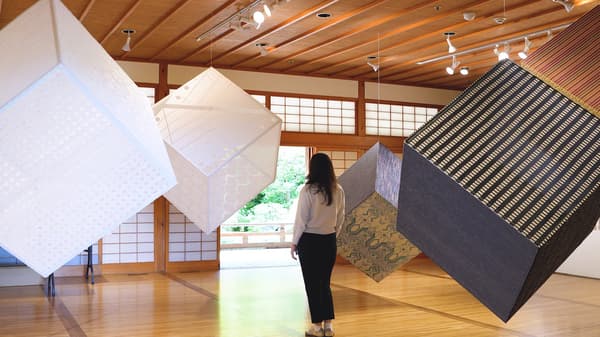
NUNO Cubes slowly rotating in the light. Photo: Portland Japanese Garden
NUNO Cubes is an installation in which three-dimensional forms, made by wrapping one-meter-square frames in NUNO textiles, float gently in the air. The exhibition design is by we+. It began with the exhibition "nuno nuno" at AXIS Gallery in Roppongi, Tokyo, in 2021, and has since traveled to Kyoto, Akita, and other locations.
As a new approach, this exhibition focuses on eight Japanese dyeing and weaving regions: Yamagata, Gunma, Saitama, Yamanashi, Fukui, Shiga, Kyoto, and Fukuoka Prefectures. Each cube is wrapped in six types of textiles made in its region, so the display consists of 48 textiles in total.
Many of NUNO's designs begin by closely examining the materials, techniques, and production processes rooted in each region. Through repeated dialogue and experimentation with artisans, NUNO has expanded the possibilities of cloth by combining inherited methods with new technologies, unexpected materials, and resources that had previously been overlooked. These collaborations bring artisans new creative challenges and also help open up the future of the regional dyeing and weaving industries.
At the venue, a video by Seiichi Saito, head of Panoramatiks, and video director Muryo Homma (Abstract Engine) also introduces the people who support cloth-making and the production sites in each region. Textile samples that visitors can touch are also on display, so visitors can learn about the background of cloth-making while checking the textures and differences in weave.
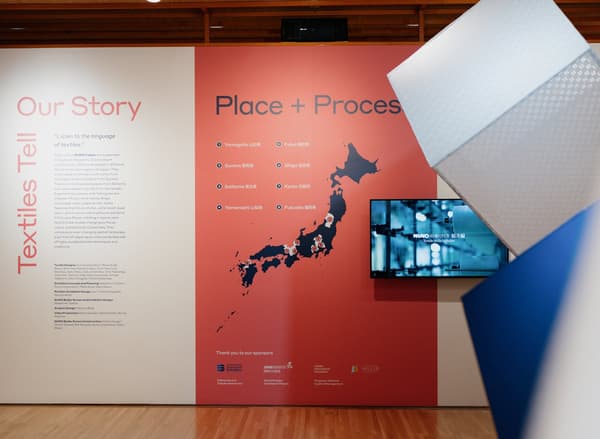
The eight regions are introduced with panels and video in the gallery. Photo: Arthur Hitchcock
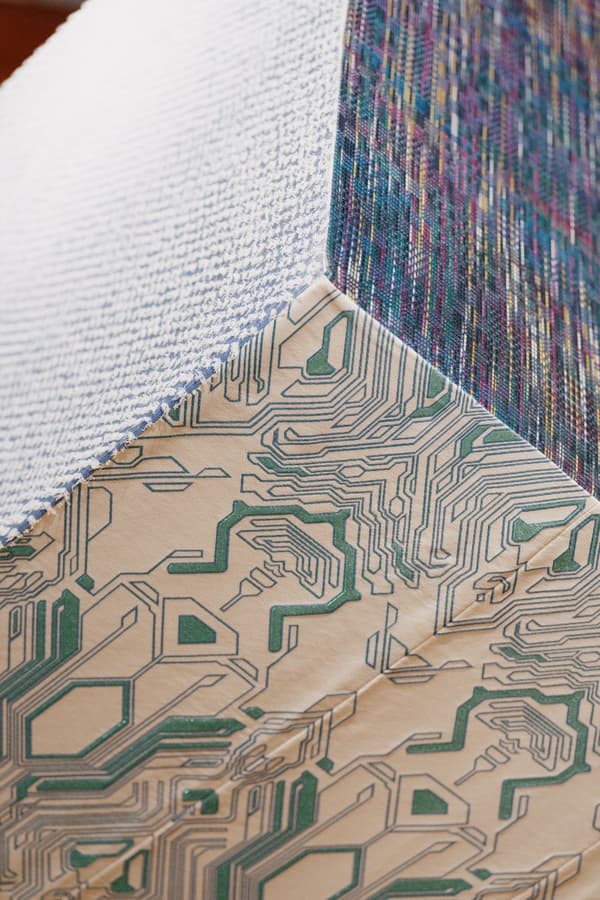
The Kyoto cube presents textiles that expand the possibilities of silk. Photo: Arthur Hitchcock
NUNO Byobu: A New Work Connecting Space With Textiles and Bamboo
Since ancient times, byobu (folding screens) have been used as fittings that divide a room while flexibly changing the space according to people's movements and activities. The new NUNO Byobu reinterprets that role with contemporary textiles and a bamboo frame.
Inspired by the rain that nourishes Portland, the work uses sheer fabric on the theme of "rain." The light, supple bamboo frame and its meticulously finished details were realized in collaboration with Chuzo Tozawa of Hinoki Kougei, who has deep knowledge of wood and outstanding skill. The fabric and frame become one, creating a light boundary that gently connects "inside and outside" and "the artificial and the natural."
The light that passes through the cloth and the silhouettes of people walking by give the space a changing character. By not revealing everything and instead suggesting a presence beyond, the work is intended to evoke yugen, a Japanese aesthetic.
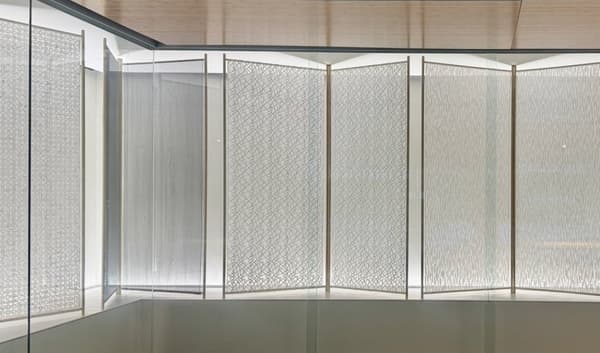
Exhibition view at the Calvin and Mayho Tanabe Gallery. Photo: Portland Japanese Garden
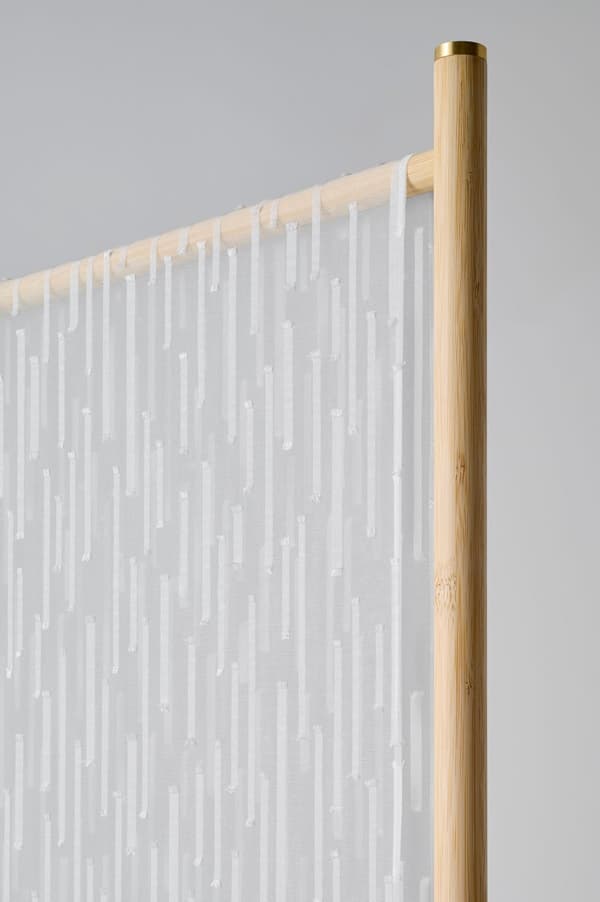
NUNO Byobu, finished with fine detail. Brass is used for the metal fittings. Photo: Masayuki Hayashi
An Artist Talk Unpacking NUNO's Cloth-Making With Extensive Materials
At the artist talk held for the opening, Reiko Sudo showed design drawings, raw materials, tools, and mock-ups while introducing NUNO's way of making, in which traditional techniques and materials are combined with original ideas to create innovative cloth. Many questions came from the audience, showing strong interest in NUNO's distinctive creativity and the Japanese dyeing and weaving culture that supports it.
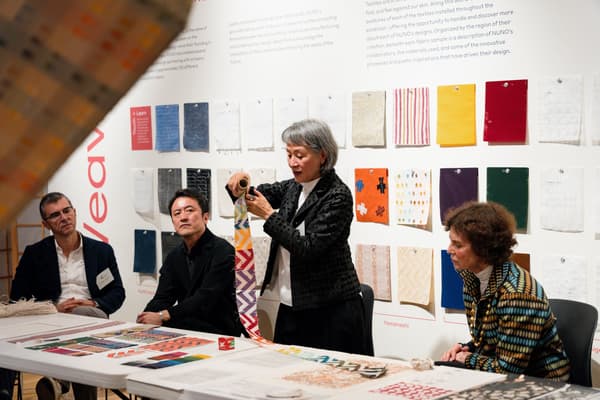
From right: Naomi Pollock, who moderated the artist talk; Reiko Sudo; and 中西玲人, co-representative of Portland Japanese Garden. Photo: Arthur Hitchcock
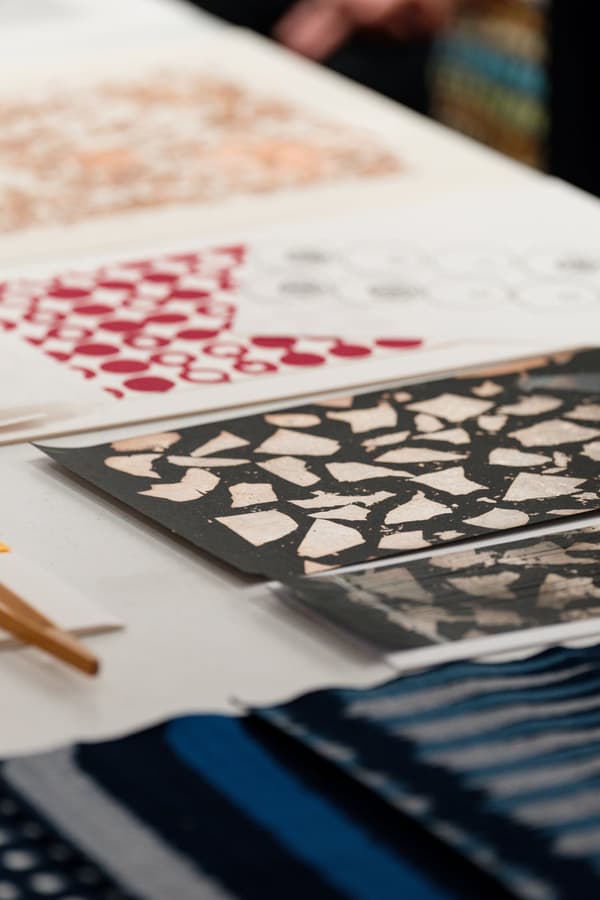
Material samples and design drawings introduced at the artist talk. Photo: Arthur Hitchcock
About Portland Japanese Garden
Portland Japanese Garden was established in 1963 as a place to deepen mutual understanding between Japan and the United States after World War II and to foster peace. Located in Washington Park in Portland, Oregon, it has eight gardens in different styles on 12.5 acres, roughly the size of Tokyo Dome. With a mission of nurturing harmony and peace, it welcomes about 430,000 visitors a year from more than 90 countries and is a leading hub for Japanese culture in North America. It also introduces Japanese art, crafts, and aesthetics through exhibitions and cultural programs.
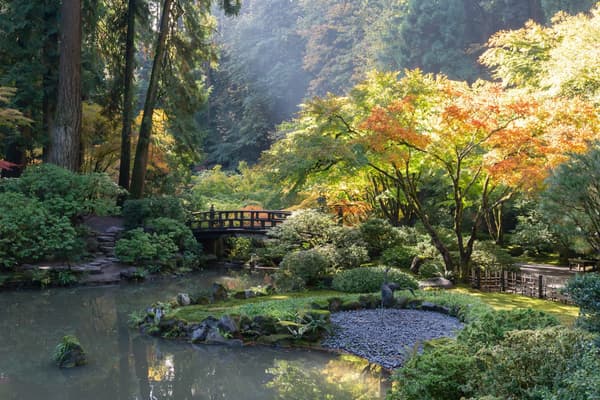
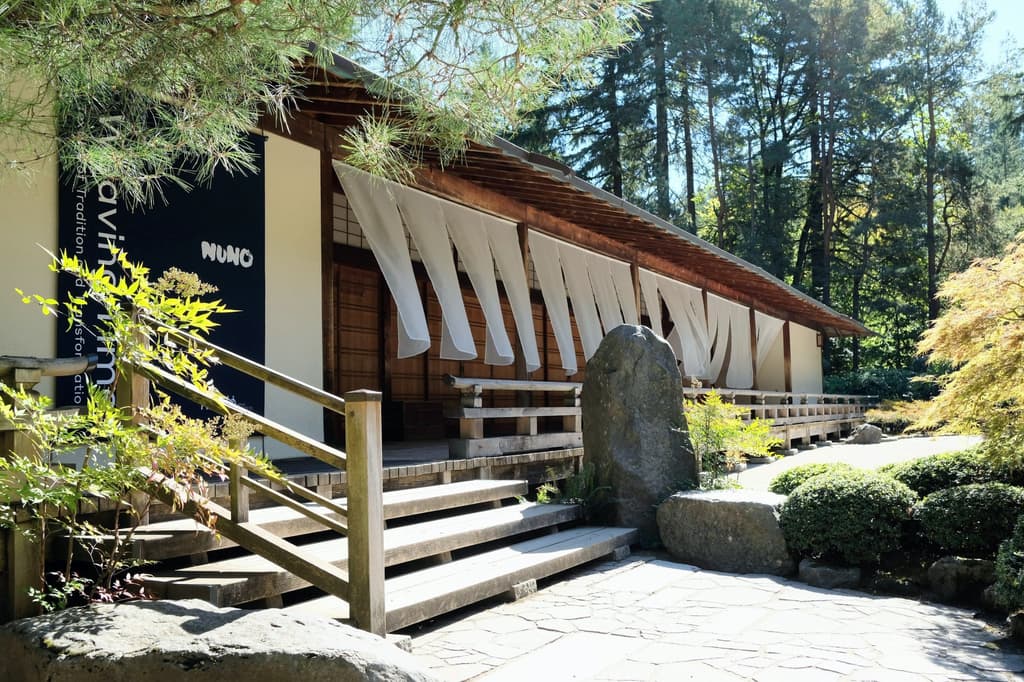
Portland Japanese Garden. Photo: Portland Japanese Garden
Exhibition Overview
Exhibition Title: Weaving Time: NUNO – Textiles of Tradition and Transformation
Period: Saturday, October 3, 2026 to Sunday, February 14, 2027
Venue: Portland Japanese Garden (Pavilion Gallery and Calvin and Mayho Tanabe Gallery)
Address: 611 SW Kingston Avenue, Portland, OR 97205, USA
Admission: Included with garden admission
Official Website: https://japanesegarden.org/pjg-events/weaving-time-nuno-textiles-of-tradition-and-transformation/2026-10-03/