Asakusa, Kuramae, Oshiage × Festivals & Events Tour

Discover amazing Festivals & Events experiences in areas.Asakusa, Kuramae, Oshiage

Showing 2 experiences
Sumida River Fireworks Festival

Sumida River Fireworks Festival

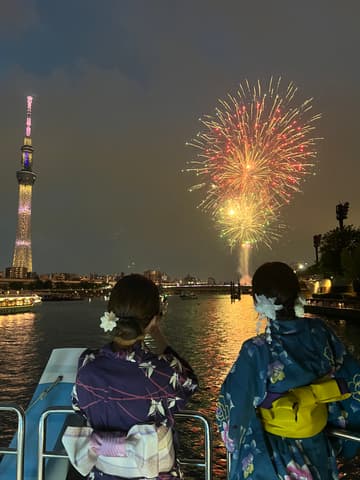
◆ Event Introduction The Sumida River Fireworks Festival (Sumidagawa Hanabi Taikai) is one of Tokyo's most iconic and beloved summer events, and one of the oldest fireworks festivals in Japan with historical records. Held annually along the banks of the Sumida River in the Asakusa and Mukojima areas, this spectacular fireworks display attracts nearly one million visitors each year. Approximately 20,000 fireworks illuminate the Tokyo night sky from two launch sites along the river, creating a breathtaking panorama that has captivated audiences for centuries. ◆ Historical Background The origins of the Sumida River Fireworks Festival trace back to 1733 (Kyoho 18) during the Edo period. In 1732, Japan was devastated by a severe famine that claimed countless lives, compounded by a widespread epidemic. To console the souls of the deceased and to ward off evil spirits, the eighth Tokugawa shogun, Yoshimune, held a water god festival (Suijinsai) along the banks of the Okawa (the historical name for the Sumida River). Restaurants near Ryogoku Bridge were granted permission to set off fireworks during the river-opening ceremony (Kawabiraki), and this became the origin of what was known as the "Ryogoku Kawabiraki" fireworks tradition. For over two centuries, the Ryogoku fireworks remained a cherished summer tradition, deeply intertwined with Edo culture. The famous rivalry between the two legendary fireworks makers, Kagiya and Tamaya, became a celebrated part of this history. However, the event was suspended due to worsening traffic conditions and other factors, leading to a hiatus from 1962 onward. In 1978, the festival was revived under its current name, "Sumida River Fireworks Festival." The launch sites were relocated further upstream, and a second venue was added, allowing even more spectators to enjoy the display. ◆ Event Details 📅 Date: Late July every year (typically the last Saturday of July) 🕖 Time: Approximately 7:00 PM to 8:30 PM 📍 Location: Along the Sumida River, in the Asakusa and Mukojima areas of Tokyo (Taito Ward and Sumida Ward) ◆ Launch Venues 🎆 First Venue (Dai-ichi Kaijo) Located between Sakurabashi Bridge and Kototoibashi Bridge on the Sumida River, the First Venue is famous for the fireworks competition (Hanabi Concours), where top pyrotechnicians from across Japan showcase their finest creations. This venue features artistic and innovative fireworks designs that draw particular attention from fireworks enthusiasts. 🎇 Second Venue (Dai-ni Kaijo) Located between Komagatabashi Bridge and Umayabashi Bridge, the Second Venue is known for its powerful and large-scale starmine displays (rapid-fire sequential fireworks). The continuous bursts of color and light from this venue create a dramatic and awe-inspiring spectacle. ◆ Viewing Areas and Access 🚃 For the First Venue The nearest stations include Asakusa Station (Tokyo Metro Ginza Line, Toei Asakusa Line, Tobu Skytree Line), Oshiage Station (Tokyo Metro Hanzomon Line, Toei Asakusa Line, Keisei Line, Tobu Skytree Line), Tokyo Skytree Station (Tobu Skytree Line), and Hikifune Station (Tobu Skytree Line). 🚃 For the Second Venue The nearest stations include Asakusa Station, Kuramae Station (Toei Asakusa Line, Toei Oedo Line), Ryogoku Station (JR Sobu Line, Toei Oedo Line), and Asakusabashi Station (JR Sobu Line, Toei Asakusa Line). ◆ What Makes This Festival Special 🏆 Fireworks Competition (Hanabi Concours) The First Venue hosts a prestigious fireworks competition where skilled pyrotechnicians from across Japan compete, showcasing innovative and artistic fireworks. This is a unique opportunity to see cutting-edge fireworks artistry. 🌃 Tokyo Skyline Backdrop The fireworks burst above the Sumida River with the illuminated Tokyo Skytree and the historic Asakusa cityscape as a stunning backdrop, creating a uniquely Tokyo experience. 🎎 Centuries of Tradition With roots stretching back to 1733, the Sumida River Fireworks Festival is one of Japan's oldest and most historically significant fireworks events, embodying the spirit of Edo-period summer culture. ◆ Important Notes ⚠️ This page is for event information only. For inquiries about the festival, please feel free to contact us directly. Please note that availability of nearby accommodation may be limited during the festival period. ⚠️ The festival is held in an urban area; visitors watch while walking along designated one-way routes. There are no seated viewing areas on the streets. Movement is slow due to extreme crowding. Plan your arrival and departure well in advance. ⚠️ Shops and restaurants in the area are extremely crowded, and securing rest areas or drinks may be difficult. Please prepare your own beverages and cooling supplies in advance. ⚠️ Late July in Tokyo is very hot and humid. Heat-related illness is common during the event, especially when wearing yukata or consuming alcohol. Please bring plenty of water, sun protection, and cooling supplies. ⚠️ The event may be postponed or canceled due to severe weather. Please check official announcements for the latest updates. ![](https://assets.hldycdn.com/b4709cb1-3a92-40cd-a378-1a8ede3cdd05.jpg)

Asakusa, Kuramae, Oshiage Festivals & Events Fireworks Seasonal Experience
Tokyo Grand Sumo Tournaments

Tokyo Grand Sumo Tournaments

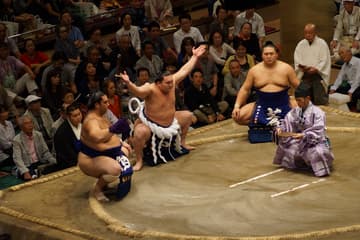
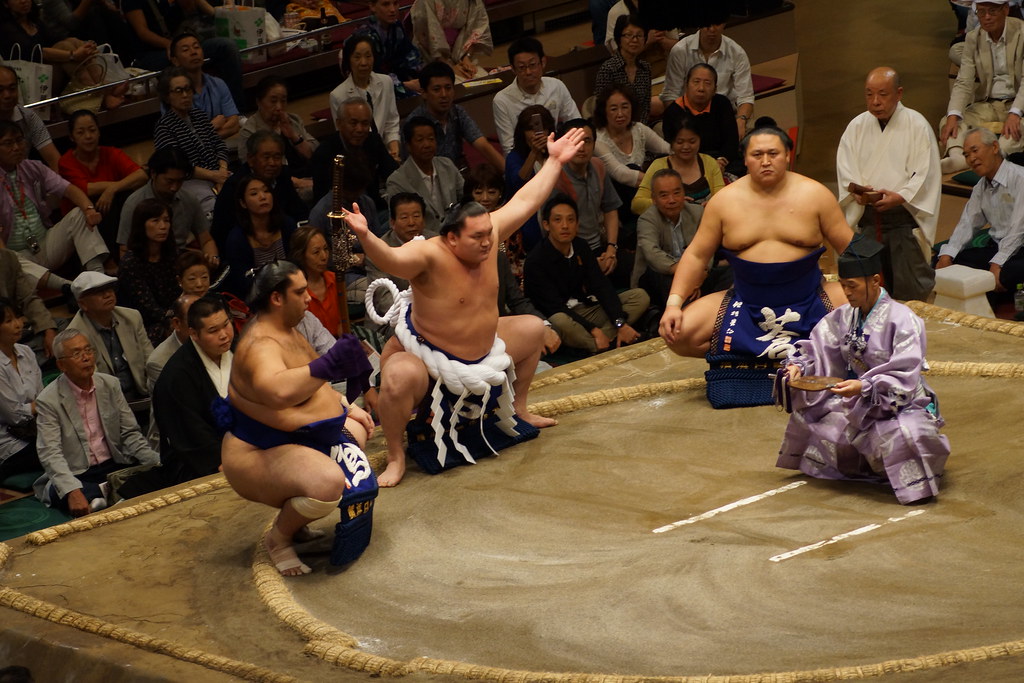
◆ Event Introduction The Tokyo Grand Sumo Tournaments (honbasho) are among Japan's most iconic and culturally significant sporting events. Of the six annual tournaments held across Japan, three take place at the legendary Ryogoku Kokugikan arena in Tokyo's Sumida ward, showcasing the ancient art of sumo wrestling at its highest level. Each tournament spans 15 consecutive days, featuring hundreds of bouts from the lower divisions in the morning through to the elite makuuchi division matches in the late afternoon. The atmosphere combines intense athletic competition with centuries-old Shinto rituals, making it a truly unique spectacle. ◆ Historical Background Sumo is believed to have a history of at least 1,500 years in Japan. Ancient chronicles such as the Kojiki and Nihon Shoki contain myths of wrestling bouts among the gods. During the Nara and Heian periods (8th to 12th centuries), sumo was held at the imperial court as part of official ceremonies. During the Edo period (1603 to 1868), sumo developed into a form of urban entertainment beloved by the common people in Edo (present-day Tokyo). Professional wrestlers began to organize, and many of the ritual elements recognizable today, including the ring-entering ceremonies, the referee's traditional costume, and the salt-throwing purification, were established during this era. The current system of six annual tournaments (each lasting 15 days) was established in the postwar era and is administered by the Japan Sumo Association. Three of these six tournaments are held in Tokyo, with the remaining three taking place in Osaka (March), Nagoya (July), and Fukuoka (November). ◆ Tokyo Tournament Schedule 📅 January Tournament (Hatsu Basho / New Year Tournament) Held over 15 days in mid-January, typically starting on the second Sunday of the month. This tournament marks the beginning of the sumo calendar year and is one of the most anticipated events. 📅 May Tournament (Natsu Basho / Summer Tournament) Held over 15 days in mid-May, typically starting on the second or third Sunday of the month. The summer tournament brings exciting competition as wrestlers aim to build momentum for the year. 📅 September Tournament (Aki Basho / Autumn Tournament) Held over 15 days in mid-September, typically starting on the second Sunday of the month. The autumn tournament is the final Tokyo honbasho of the year. ◆ Daily Schedule Matches begin in the late morning with bouts from the lower divisions (jonokuchi, jonidan, sandanme, and makushita). The juryo (second-highest division) matches take place in the mid-afternoon, followed by the highly anticipated makuuchi (top division) bouts in the late afternoon. The final match of the day, known as the musubi no ichiban, typically concludes around 6:00 PM. The final day of each tournament, called senshuraku, is the climactic conclusion where the tournament champion (yusho) is decided and awarded the prestigious Emperor's Cup along with numerous other prizes and trophies. ◆ Venue: Ryogoku Kokugikan 📍 Location: 1-3-28 Yokoami, Sumida, Tokyo 🚃 Access: 1-minute walk from JR Ryogoku Station (West Exit), or 5-minute walk from Toei Oedo Line Ryogoku Station (Exit A3) The Ryogoku Kokugikan, often simply called the Kokugikan ("National Sport Hall"), is the spiritual home of professional sumo. This iconic indoor arena seats over 10,000 spectators and features the sacred dohyo (clay ring) at its center, crowned by a suspended shrine-like roof (tsuriyane) that symbolizes sumo's deep connection to Shinto traditions. Seating options include traditional masu-seki (box seats) near the ring, where spectators sit on cushions in intimate tatami-style compartments, as well as chair seats in the upper levels offering panoramic views of the arena. ◆ What Makes Sumo Special 🎌 Sacred Rituals Every aspect of sumo is steeped in Shinto tradition. Wrestlers throw salt to purify the ring before each bout, perform ceremonial stomps (shiko) to drive away evil spirits, and participate in elaborate ring-entering ceremonies (dohyo-iri). The yokozuna (grand champion) ring-entering ceremony is a particularly awe-inspiring display of tradition and power. 💪 The Rankings Sumo wrestlers (rikishi) are ranked in a hierarchical system called the banzuke. The pinnacle of sumo is the rank of yokozuna, the grand champion, a title that carries immense prestige and responsibility. Wrestlers live and train in communal training stables (heya), many of which are located in the Ryogoku neighborhood. 🍲 Sumo Culture in Ryogoku The Ryogoku area surrounding the Kokugikan is rich with sumo heritage. Visitors can explore chanko-nabe restaurants serving the hearty hot pot stew that forms the staple diet of sumo wrestlers, visit the Sumo Museum inside the arena, and spot rikishi walking through the neighborhood streets in their traditional attire. ◆ Important Notes ⚠️ This page is for event information only. For inquiries about the tournaments, please feel free to contact us directly. ⚠️ The arena can become extremely crowded during tournaments, especially on weekends and the final days. Plan your visit well in advance. ⚠️ Photography rules may apply inside the arena. Please follow the venue's guidelines regarding cameras and recording devices. ⚠️ The Ryogoku area offers many dining options, but popular chanko-nabe restaurants can fill up quickly during tournament periods. ![](https://assets.hldycdn.com/f779a839-425a-4641-97e6-1ea33b0bf7a3.jpg)
Asakusa, Kuramae, Oshiage Festivals & Events Japanese Culture