"Kubota Sake Brewery Garden" and the "Sakai Family Residence"
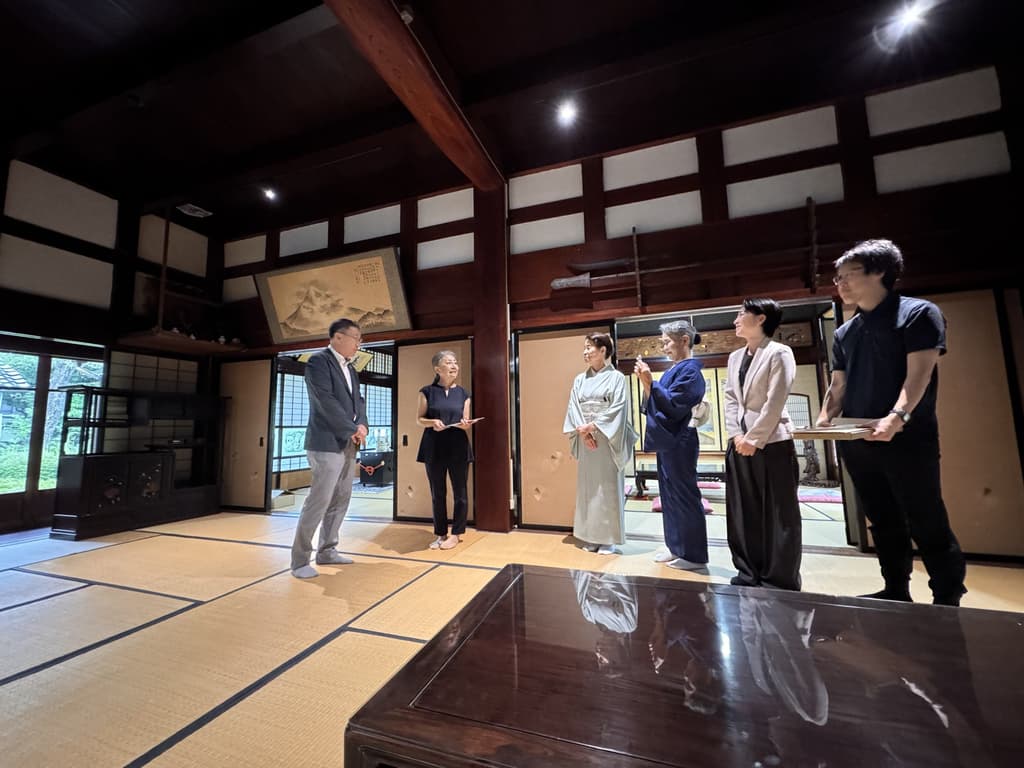
Based on the "Sakai City Historic Character Preservation and Enhancement Plan," formulated in March 2024 and certified by the national government, Sakai City in Fukui Prefecture has designated two sites — Kubota Sake Brewery Garden (Yamakubo, Maruoka-cho) and the Sakai Family Residence (楽間, Maruoka-cho), also a nationally registered tangible cultural property — as "Buildings Forming Historic Character." On July 28, certificates of designation were presented to each owner. This marks the first such designation in Fukui Prefecture.
Easier Access to National Subsidies for Building Preservation and Repair
Sakai City's plan, based on Japan's historic townscape development law (歴史まちづくり法), aims to support community development that makes the most of the area's historic atmosphere and character. The plan, formulated by the city, was certified in March 2024 by the ministers of Land, Infrastructure, Transport and Tourism; Education, Culture, Sports, Science and Technology; and Agriculture, Forestry and Fisheries. Sakai City is the only municipality in Fukui Prefecture certified under this system. The plan organizes the historic character to be preserved and enhanced into six themes — including "the achievements of Emperor Keitai," "Mikuni, which prospered alongside the sea," "the mountain village of Takeda," and "Maruoka Castle" — and includes 15 projects. It designates the area around Maruoka Castle (about 2,687 hectares) and the Mikuni area (about 240 hectares), which includes Mikuni Port and Tojinbo, as priority zones.
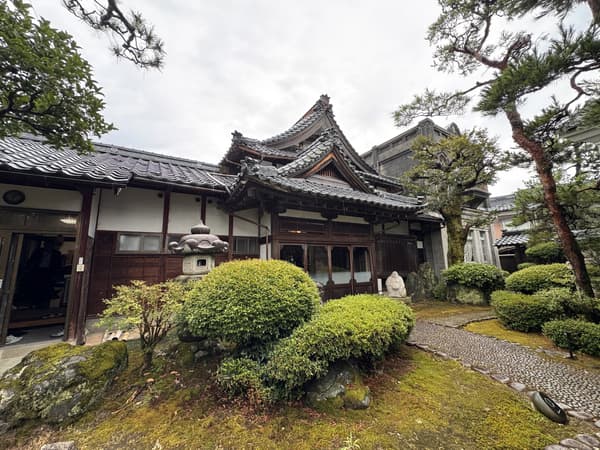
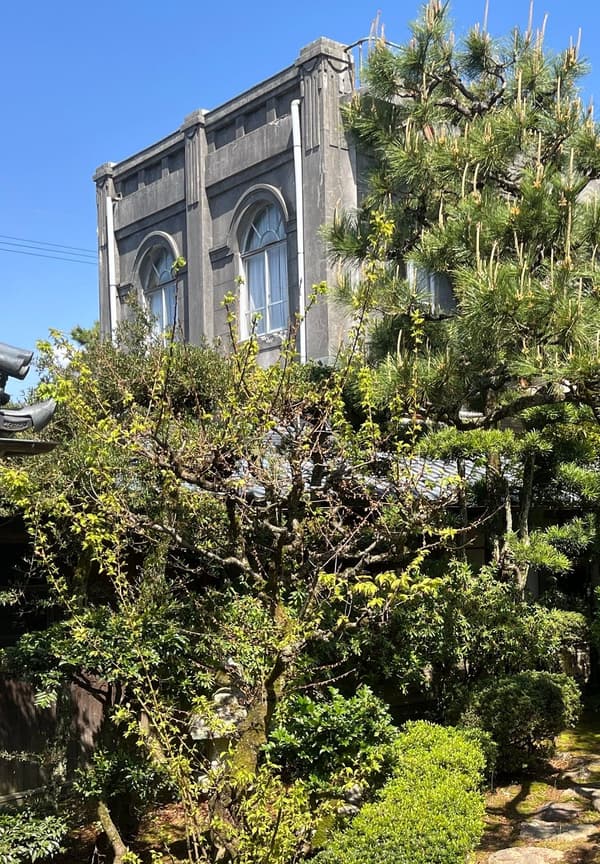
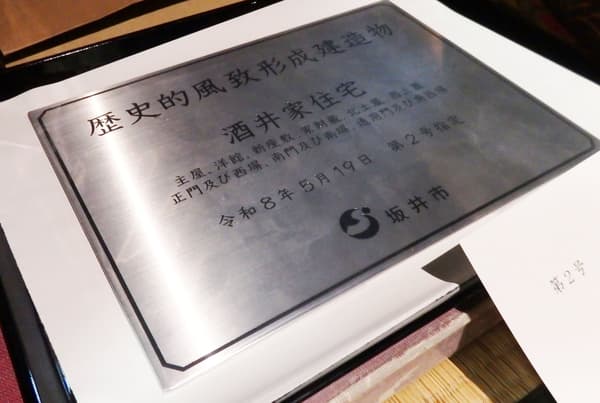
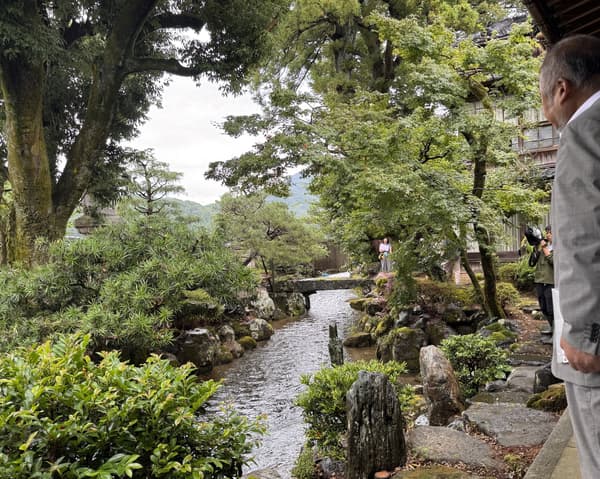
The two sites were officially designated as the city's first and second "Buildings Forming Historic Character" — Kubota Sake Brewery Garden (No. 1) and the Sakai Family Residence (No. 2) — effective May 19 this year, and commemorative designation plaques were presented to each owner at the July 28 ceremony.
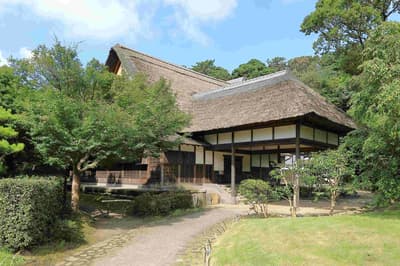
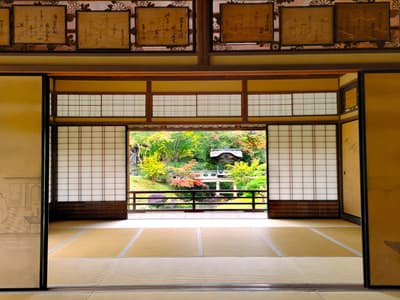
Kubota Sake Brewery Garden, the city's first designation, is the garden of Kubota Sake Brewery's main residence. Founded in 1753 (Horeki 3), the brewery is the only sake producer in the city. A channel about three to four meters wide, fed by agricultural irrigation water, flows through the garden past plantings and stone lanterns, its clear water pleasant to behold. Kubota (65), the brewery's 11th-generation head, says, "I've heard that around the mid-Edo period, the lord of the Arima family of Maruoka Domain would stop here to rest on his way back from cooling off upstream on the Takeda River." The Sakai Family Residence, meanwhile, is a valuable structure also registered as a national Tangible Cultural Property. It comprises nine buildings, including a Japanese-style main house, storehouse, and gate, with a distinctive Western-style building on the west side. The main house, built in the late Meiji era, was relocated in 1923 (Taisho 12) as a modern Japanese-style residence, and its interior — including a tatami room with exposed ceiling beams — has a solid, evocative character. The Western-style building, meanwhile, was built around 1930 (Showa 5) with a reinforced concrete structure; because the head of the family was a successful businessman, it is thought to have been an unusually rare Western-style building for the region at the time.
The Historic Character Plan Also Covers Area-Wide Projects Beyond Individual Buildings
The designation ceremonies were held inside each building, with Mayor Ikeda presenting the certificates and commemorative plaques to each owner. "This designation is meant to carefully preserve and make use of these buildings with their history, culture, and tradition, while connecting them to future vitality in the community," Mayor Ikeda said. "The city will continue to provide solid support, so we ask the owners to keep preserving and using these buildings so they carry on well into the future." He expressed his pleasure at the prefecture's first designation under the program.
According to the city's General Policy Department Planning Policy Division, the nationally certified "Historic Character Preservation and Enhancement Plan" (Historic Townscape Plan) will carry out 15 projects over 10 years starting in fiscal 2024. Beyond these two Buildings Forming Historic Character, 13 other candidates — centered on the priority areas of Mikuni and Maruoka, including the "Former Morita Bank Head Office," 大木道具店, and 白道寺庭園 — have been proposed and will be designated one by one going forward. Designated buildings become eligible for priority allocation of national support. The program also covers area-wide projects beyond individual buildings, such as townscape improvement and historic site development: at Maruoka Castle, plans include excavation surveys of the castle hill along with the preservation, use, and restoration of remains, while at Mikuni Port, plans include burying utility poles underground and conducting a comprehensive survey of the Mikuni Festival.
Voices of Joy from the Designated Building Owners
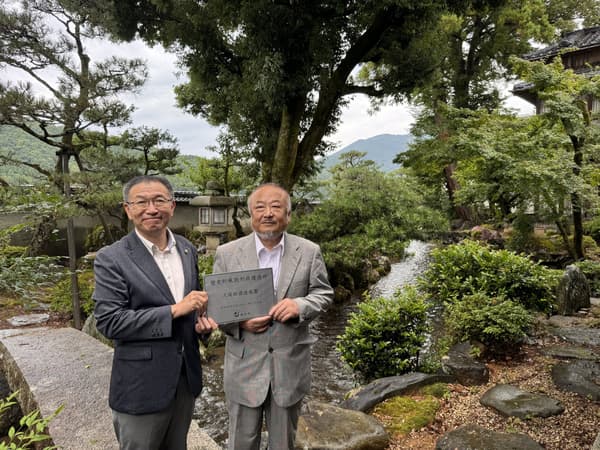
Kubota Sake Brewery Garden
Kubota (65), head of Kubota Sake Brewery — Yamakubo, Maruoka-cho, Sakai City
Being designated as Sakai City's first Building Forming Historic Character is a great honor. I want to properly maintain and manage this building and garden, which I've been familiar with since childhood, so it can be passed down through generations to come. I also hope Sakai City will continue to provide support, such as subsidies, for its preservation.
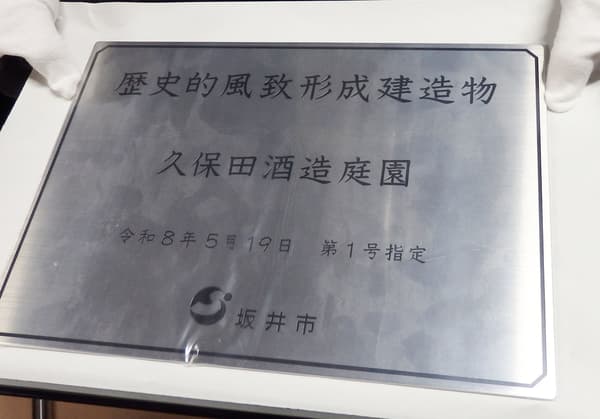
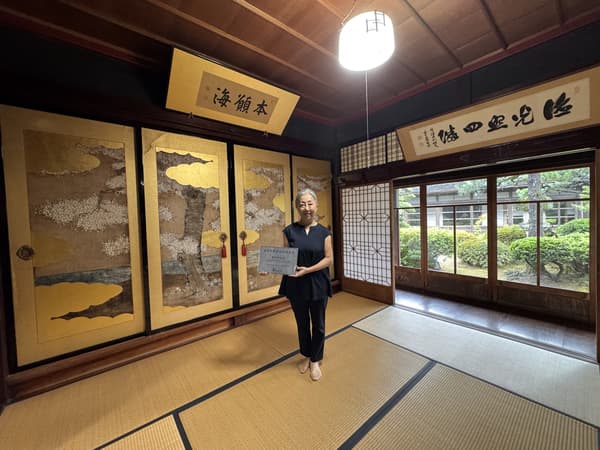
Sakai Family Residence
Rie Sakai (63), resident of Kiryu City, Gunma Prefecture
Receiving this honorable designation makes me feel a real sense of responsibility. Since I usually live in Gunma, over the past decade or so, coming back here has made me increasingly feel the weight of this house. I'm truly grateful for the warmth of the people in the Hokuriku region who look after the house for us. I hope that, with this designation as a starting point, we can draw on the wisdom and energy of many young people so that this house becomes a place where everyone can feel the passage of time while still living each day with vitality.