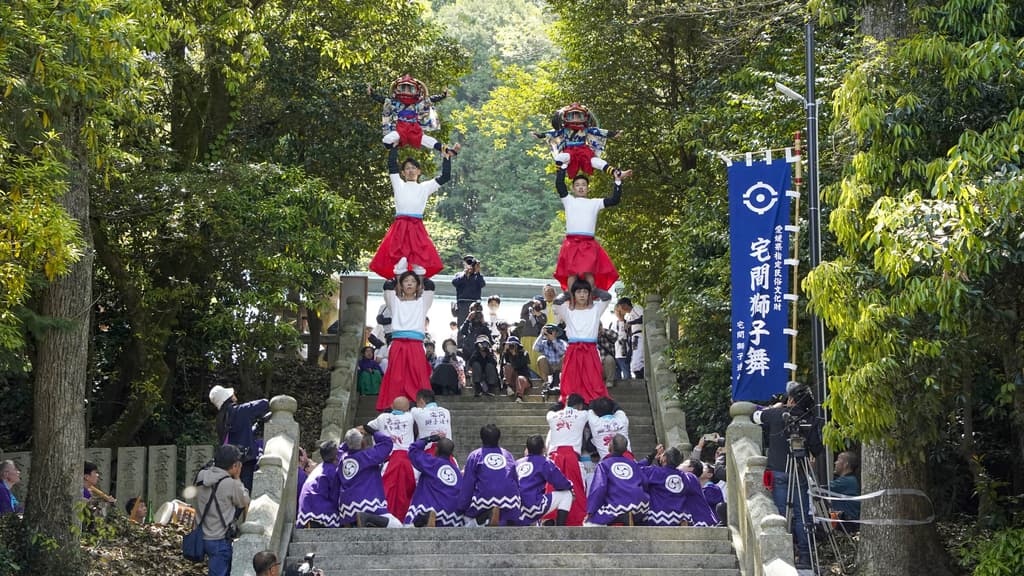
At Imabari City in Ehime Prefecture, the traditional performing art of Tsugizishi (Imabari Human Pyramid Lion Dance) is set to be showcased at spring festivals held throughout the city, beginning in Golden Week. Performers stand atop one another's shoulders in three or four tiers, rising ever higher toward the sky — a sight that is rare across Japan and commands awe from all who witness it. This tradition has been handed down for more than 300 years since the Edo period and has been designated an Ehime Prefecture intangible folk cultural property, making it a beloved symbol of Imabari's spring. This year, performances are scheduled sequentially at shrines across various districts from May 3 through late May.
Tsugizishi (Imabari Human Pyramid Lion Dance): A Traditional Art Rooted in the Community
Tsugizishi (Imabari Human Pyramid Lion Dance) is a distinctive form of lion dance unique to Imabari, in which performers climb one atop another and a child at the summit — known as the "shishiko" — dons a lion mask and dances. The art form is an inseparable part of spring festivals across the Imabari region.
Its origins date back to the mid-Edo period, and local communities have carefully preserved and passed it down for over 300 years. In 2000, it was designated an Ehime Prefecture intangible folk cultural property, reflecting its high cultural value.
As the drumbeats ring out and the human tower rises higher and higher, the scene becomes an iconic symbol of spring's arrival in Imabari — one that leaves a lasting impression on both residents and visitors alike.
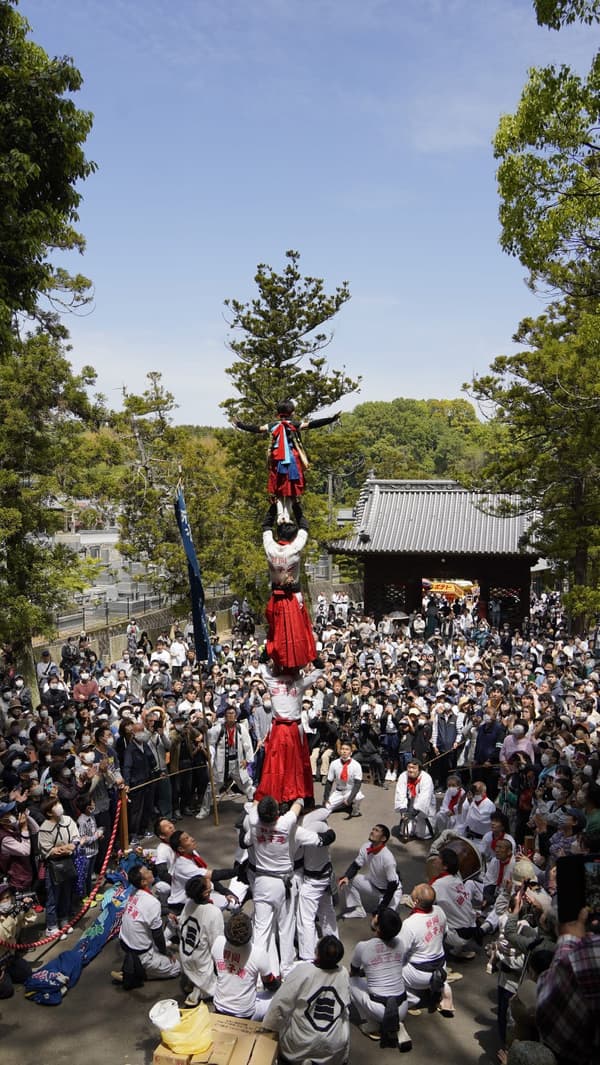
A 5-Meter Tower of Courage and Prayer
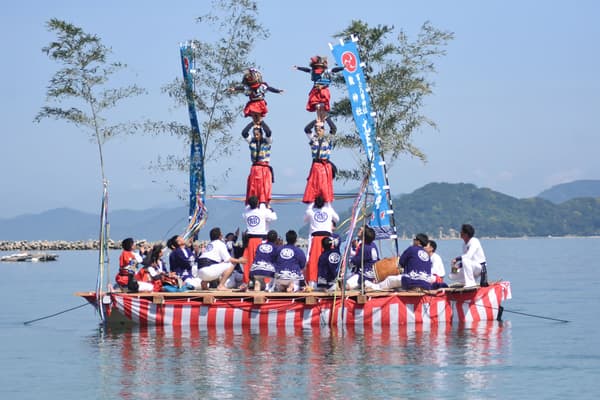
The most dramatic element of Tsugizishi is the sheer spectacle of three or four layers of performers stacking on top of one another, reaching heights of approximately 5 meters. The shishiko at the very top — typically children aged around 4 years old to early elementary school age — perform advanced techniques using a fan and bell on an unstable platform. The moment they climb into position, a hush falls over the crowd, and the atmosphere takes on an almost prayer-like quality.
It is said that the performance was born from a wish to "get as close as possible to the gods," and it represents far more than entertainment — it is a living expression of a culture that the community has passed down through the generations. Each district has its own unique staging and choreography, which is one of the defining charms of Imabari's Tsugizishi.
Imabari's Pride, Shared with the World and Carried into the Future
As one of Japan's rarest traditional events, Tsugizishi has been gaining greater exposure beyond Imabari. Last year, it was performed at the Panama National Day event at the Osaka-Kansai Expo, attracting significant attention both domestically and internationally as a symbol of Imabari's cultural heritage. Reaching such stages was made possible by rigorous daily practice and the power of a community that supports one another across generations.
This spring, Tsugizishi will be performed across various neighborhoods of Imabari through festivals beginning in Golden Week. Experiencing this traditional art in person offers a rare opportunity to feel the depth of local culture and the spirit of its transmission to future generations.
Imabari City PR Program: Traditional Arts Connect Imabari and Panama at the Osaka-Kansai Expo (Official Imabari City YouTube Channel)
Event Schedule
May 3 (Sunday, Holiday)
- Noma District: Jinguno Mano-Jinja 8:30 AM / Akata Shimizutenmangu 9:00 AM
- Hashihama District: Takabe Itsukushima-Jinja 7:00 AM / Hashihama Ryujinja 10:00 AM
- Asakura District: Yahagi-Jinja 9:30 AM
May 4 (Monday, Holiday)
- Noma District: Takuma Araki Hachimanodaijin 8:00 AM / Noma Hiyo-Jinja 9:00 AM / Yata Mishima-Jinja 9:00 AM / Engi Tenmangu 9:30 AM
- Hashihama District: Somada Manai-Jinja 9:00 AM
May 5 (Tuesday, Holiday)
- Sakurai District: Sakurai Tsunashiki Tenmangu 8:00 AM
- Asakura District: Tagi-Jinja 9:30 AM
May 9 (Saturday)
- Former City Area: Betsumiya Oyamazumi-Jinja 8:00 AM / Fukiage-Jinja 9:30 AM
May 10 (Sunday)
- Torioi District: Torioi Mishima-Jinja 9:00 AM
- Tamagawa District: Shimomikado-Jinja 8:30 AM / Yonaka-Jinja 11:00 AM
May 16 (Saturday)
- Onishi District: Oi Hachimanodaijinja 10:00 AM
May 17 (Sunday)
- Onishi District: Kifune-Jinja 8:00 AM / Kamo-Jinja 8:30 AM / Ryujinja 9:00 AM / Ikarikakettenmangu 9:00 AM / Kyaku Daimyojinja 9:00 AM / Oyama Hachimanodaijin 10:00 AM
May 24 (Sunday)
- Namikata District: Yoroi Itsukushima-Jinja 7:00 AM / Higuchi Shiohaya-Jinja 8:30 AM / Obe Shiratama-Jinja 9:30 AM / Namikata Tamao Hachimanjinja 10:00 AM / Morigami Hamada Hachimanjinja 10:30 AM
Imabari Tsugizishi Map
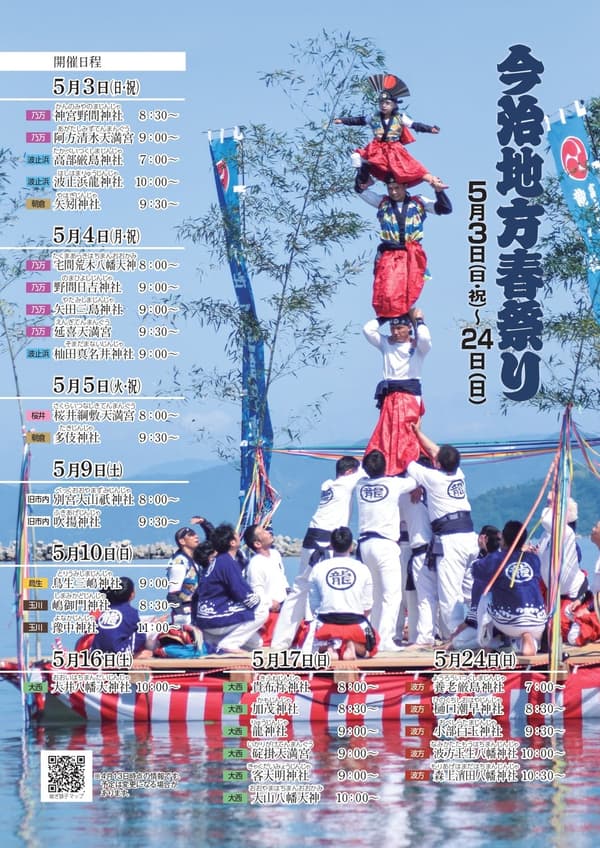
For the full schedule of the 2026 Imabari Spring Festivals, visit the official Imabari City website.