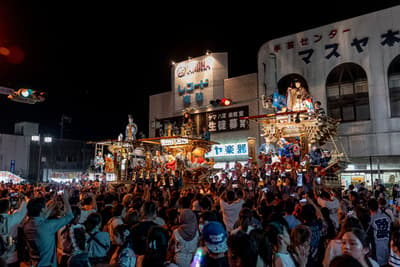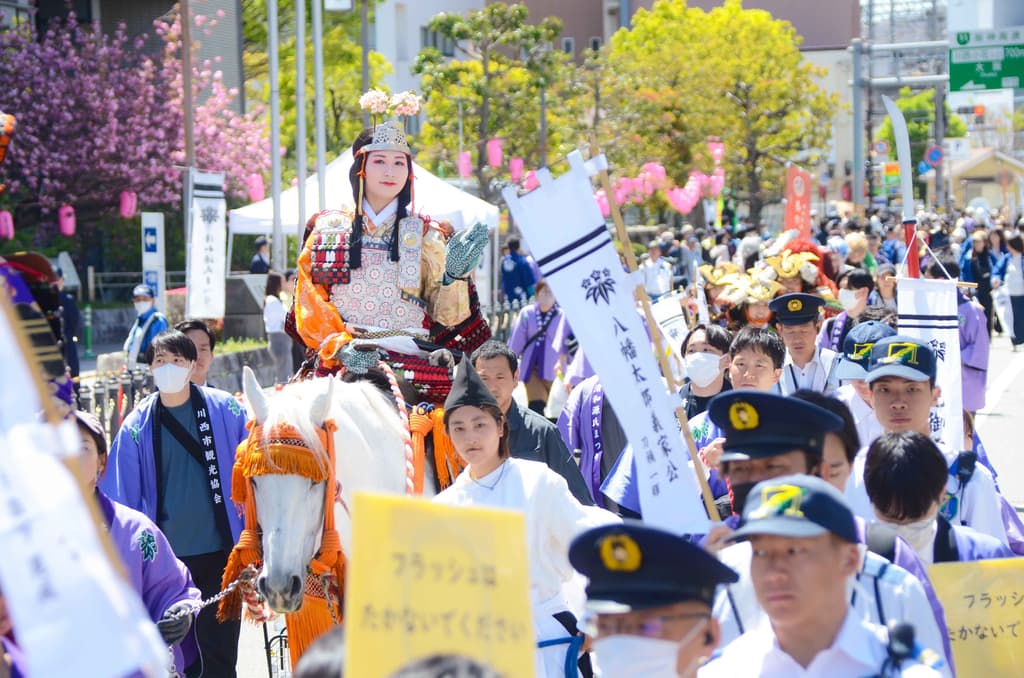
On April 12, the 62nd Seiwa Genji Festival was held in Kawanishi City — known as the "birthplace of the Seiwa Genji clan." Around 250 participants, including armored mounted warriors, young warriors, the Three Court Ladies, and children in traditional attire, took part in a magnificent historical procession that attracted approximately 23,000 visitors from across the region.
The festival was held around Kisera Kawanishi Sesaragi Park (1 Hiuchi, Kawanishi City) and the streets near Hankyu/Nose Electric Railway's Kawanishi-Noseguchi Station.
Opening Ceremony
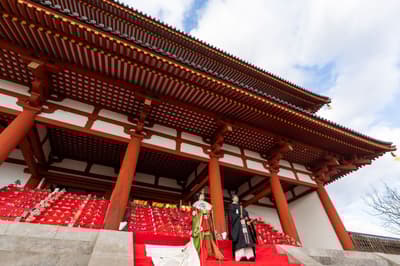
Stage events began with a performance by the Waseda Osaka Senior High School Wind Band. At the opening ceremony at 10:30 AM, Mayor Kenjiro Koshida appeared in full armor portraying Minamoto no Mitsunaka. Joining him were performers in the roles of three iconic women from Japan's medieval era: Tomoe Gozen (Manami Okunishi, 25), Tokiwa Gozen (Tsubasa Hori, 28), and Shizuka Gozen (Rinka Isobe, 23), as well as Kazuaki Tone (24) as Hachiman Taro Yoshiie. Each character delivered a formal address to the assembled crowd.
The Grand Retro Procession
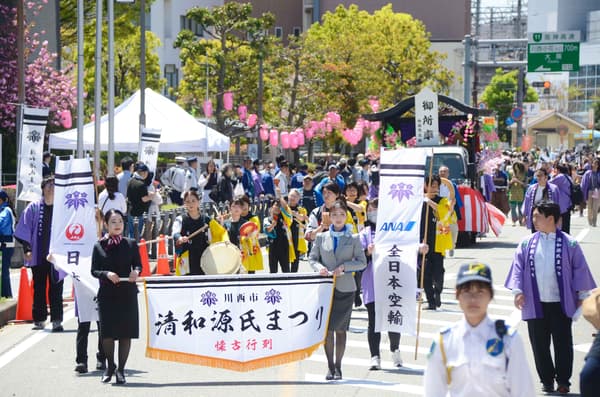
The centerpiece of the festival, the retro procession (懐古行列), departed from Kisera Kawanishi Sesaragi Park at 11:00 AM. Warriors associated with the Genji clan, along with the Three Court Ladies and Hachiman Taro Yoshiie, marched on foot and on horseback from the park to the east exit of Hankyu Kawanishi-Noseguchi Station and back. Including children, young warriors, oni (demons), and foot soldiers, the procession totaled 250 participants in all. Crowds gathered along the park and roadside to witness the dazzling display.
Events at the Main Venue
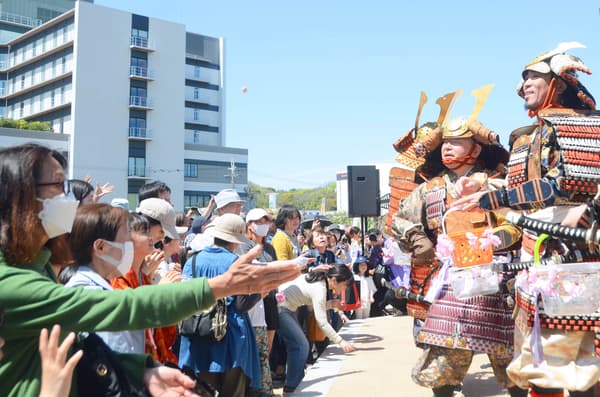
Kisera Kawanishi Sesaragi Park hosted a lively market area with food trucks and vendor stalls. The stage program featured live performances by local enka singer Rinne Satono and other area artists, a Shinto Muso-ryu Jo-jutsu martial arts demonstration, and dance performances by the Kawanishi City Dance Association. New additions this year included a candy-throwing event and a sword-fighting (chanbara) contest, which brought the audience and performers together in lively fashion.
Pre-Festival Prayers at Tada Shrine
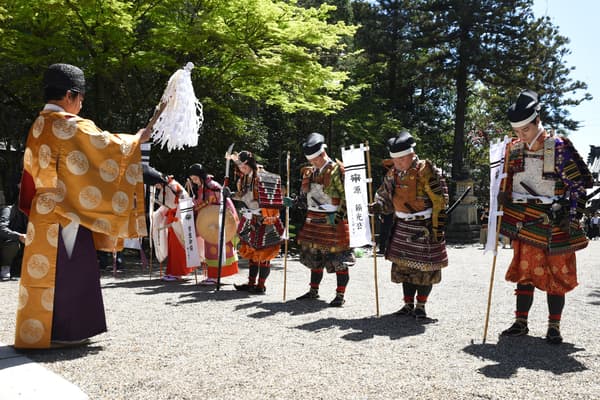
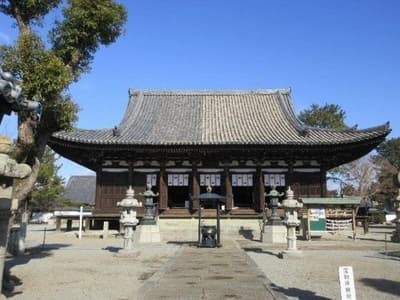
On the eve of the festival, April 11 (Saturday), some of the warriors and the Three Court Ladies gathered at Tada Shrine to pray for the safe and successful running of the event. They were given a rare opportunity to view the Main Hall — a nationally designated Important Cultural Property — and heard about the shrine's history from a shrine representative. The participants also joined the "Tada no Ichi" market and "Genji Festa" events held around Tada Shrine, extending the celebrations across two days.
The History Behind the Festival
Over a thousand years ago, Minamoto no Mitsunaka — great-grandson of Emperor Seiwa, the 56th emperor — settled in the Tada basin in what is now Kawanishi City and founded Tada-in (present-day Tada Shrine) in 970 CE, laying the foundations of the Seiwa Genji clan. Minamoto no Yoritomo, who established the Kamakura Shogunate, and many celebrated samurai leaders throughout Japanese history were descendants of Mitsunaka. Kawanishi City is recognized as the "birthplace of the Genji clan and the samurai culture." The Seiwa Genji Festival is held annually to honor Mitsunaka's legacy and to celebrate the history, culture, and tourism of the city.