Kobe sits between the Rokko mountain range and Osaka Bay, about 30 minutes by train from Osaka. It is a port city with a distinct identity shaped by over 150 years of international trade. The city is compact enough to cover the main sights in a day, but there is plenty to keep you busy for two or three.
Unlike many Japanese cities where the appeal comes mainly from temples and shrines, Kobe draws visitors with European-style residences on hillsides, one of Japan's oldest Chinatowns, a waterfront that lights up after dark, and of course, the beef that shares its name. Below are 15 things worth doing when you visit.
Walk Through Kitano Ijinkan (Foreign Houses District)
The Kitano area, perched on the slopes above Sannomiya Station, is where foreign merchants and diplomats built their homes after Kobe's port opened to international trade in 1868. About twenty of these Western-style houses survive today, and several are open to visitors.
The Weathercock House (Kazamidori no Yakata) is the most photographed, with its distinctive rooster-shaped weathervane. It is open from 9:00 to 17:00 and costs 500 yen for adults. Moegi House next door charges 400 yen, or you can get a combination ticket for both at 650 yen.
If you plan to visit multiple houses, the 3-building combination ticket at 1,300 yen or the 7-building ticket at 3,000 yen offers decent savings. Rhine House is free to enter.
The best approach here is to walk rather than rush through every museum. The hillside atmosphere, with its mix of Japanese and European architecture, old cafes, and views back over the city, is the real draw. Wear comfortable shoes since these streets go uphill.
Getting there: Walk about 15 minutes north from JR Sannomiya Station, or take the City Loop Bus to Kitano Ijinkan.
If you want to capture great photos of this area, a private photoshoot lets you hit the best angles without the guesswork:
Eat Your Way Through Nankinmachi (Kobe Chinatown)
Kobe's Chinatown is one of three major Chinatowns in Japan, alongside Yokohama and Nagasaki. It is smaller than Yokohama's — roughly 270 meters by 110 meters — but the food is excellent and the pace is fast.
The smart play is to graze rather than sit down for one big meal. Start with a pork bun (butaman) from Roushouki, one of the area's most established shops. Then move to YUN YUN for sheng jian bao (pan-fried soup buns with a crispy bottom) and bifun rice noodles, a Kobe Chinatown specialty. If you still have room, grab braised pork buns (kakuni bao) from Kouran Nankinmachi Honten.
For dessert, Tenfuku Meicha does good douhua (tofu pudding) and almond jelly with Chinese tea.
Lines get long on weekends and holidays, especially at the pork bun shops. Going before noon on a weekday is the easiest way to avoid crowds.
Getting there: 5-minute walk from JR or Hanshin Motomachi Station. The area is also close to the Former Foreign Settlement (Kyu-Kyoryuchi), which has handsome stone buildings and is worth a short detour.
See the Waterfront at Meriken Park and BE KOBE Monument
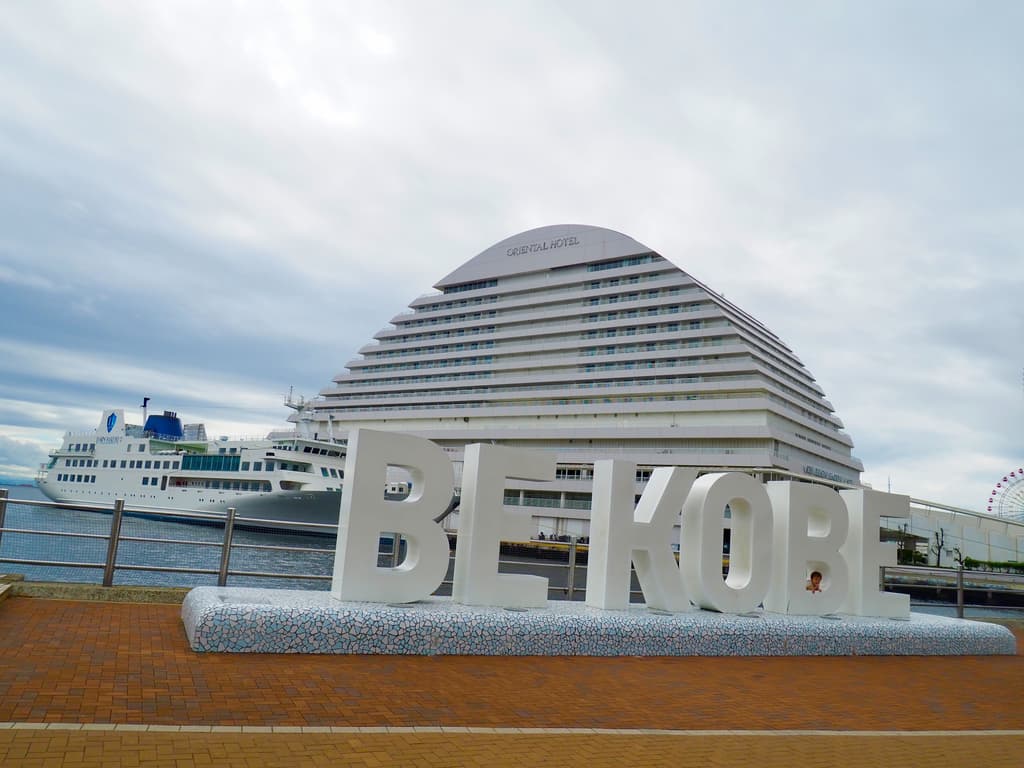
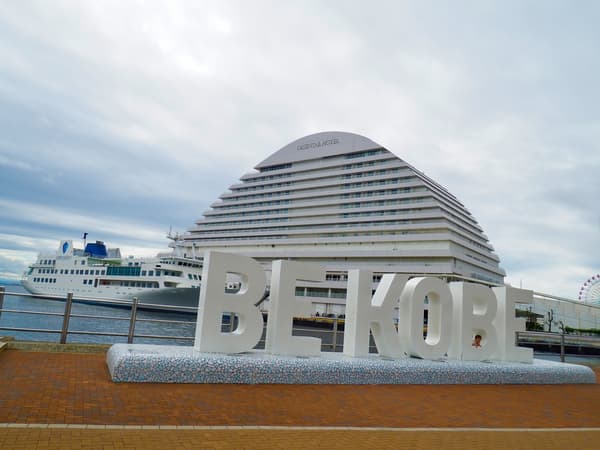
Meriken Park is where Kobe feels most like a modern port city. The BE KOBE monument, white letters framing the harbor behind them, has become the city's signature photo spot.
The Kobe Port Tower, reopened after renovation, stands at the edge of the park. Observation floors and a rooftop deck give you wide views over the harbor and the city backed by mountains. Hours are 9:00 to 23:00, with last admission at 22:30. Timed tickets are required for the observation areas.
The best time to come is late afternoon through the evening. Arrive in time for sunset, photograph the BE KOBE letters at blue hour, then stay for the port lights after dark.
Getting there: Walk about 15 minutes south from Motomachi Station, or ride the Port Loop bus.
Spend an Evening at Harborland and Umie MOSAIC
Harborland picks up where Meriken Park leaves off. The umie MOSAIC shopping complex sits right on the waterfront, with restaurants, shops, and a Ferris wheel (800 yen, operating 10:00 to 22:00) that gives you a different angle on the illuminated port.
The brick warehouse area adds texture to the walk. Dining options range from casual to mid-range, and the terraces with views across the water to Port Tower are hard to beat after dark.
If you are visiting between November and February, the MOSAIC Winter Illumination lights up the waterfront area with seasonal decorations.
Getting there: 5-minute walk from JR Kobe Station, or walk along the waterfront from Meriken Park (about 10 minutes).
Try Kobe Beef Teppanyaki
Kobe beef needs no introduction, but where you eat it matters. The prices vary wildly, and lunch is consistently cheaper than dinner at the same restaurant.
For a budget-friendly option, Steakland Kobe-kan near Sannomiya serves a 150g Kobe beef steak lunch for around 3,500 yen. It is casual, popular with tourists, and no-frills, but the beef is genuine.
Kobe Beef Teppan Steak Iwasaki offers a step up in quality. Lunch prices start at about 6,600 yen for 110g of Kobe beef lean cut, served at a teppanyaki counter with a more polished feel.
Mouriya Sannomiya is an established name, with lunch starting from around 8,020 yen for a 120g Kobe beef round steak.
One tip: if you want Kobe beef without the full steak price, Bifteck Kawamura offers a Kobe beef hamburger lunch for 3,300 yen at their Sannomiya location.
To confirm a restaurant uses certified Kobe beef, check the official list on the Feel Kobe tourism website.
Ride the Ropeway to Nunobiki Herb Gardens
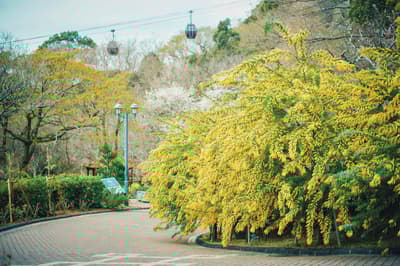
Just five minutes on foot from Shin-Kobe Station, the Nunobiki Ropeway carries you up the mountainside to the Herb Gardens, one of the largest herb gardens in Japan. The views of the city and harbor below get better as you climb.
The round-trip ropeway plus garden admission costs 2,000 yen for adults and 1,000 yen for children. One-way is 1,400 yen for adults. An evening ticket (available during extended-hours periods) is 1,500 yen.
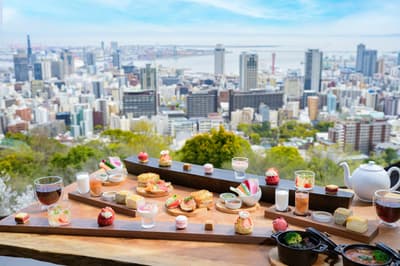
Up top, there are themed gardens, a greenhouse, and a cafe with a terrace overlooking the bay. In spring, look for the lavender and rose blooms. The Herb Gardens also hosts seasonal events throughout the year.
Getting there: Walk 5 minutes from Shin-Kobe Station (Shinkansen stop) to the ropeway's lower station.
Visit Kobe Suma Sea World
Opened in its current form in 2024, Kobe Suma Sea World is on the city's western coast. The aquarium features dolphin shows, orca performances, and an open-water design that uses the Seto Inland Sea as a backdrop.
Adult admission is 2,900 to 3,700 yen depending on the date, with hours typically 10:00 to 18:00. Some dates are closed for maintenance, so check the official calendar before visiting.
The complex also includes a hotel and restaurants, making it possible to spend a half-day or more here.
Getting there: Take the JR Kobe Line to Suma Station, then walk about 15 minutes along the coast. Direct shuttle buses also run from Sannomiya.
Explore the Nada Sake District
Kobe's Nada district has been producing sake for over 400 years, thanks to local water from the Rokko Mountains (known as miyamizu) and proximity to the port for shipping. The Nada Gogo (Five Villages of Nada) area is home to some of Japan's largest sake breweries.
Two museums stand out for visitors:
Hakutsuru Sake Brewery Museum — Free admission. Open 9:30 to 16:30 (last entry 16:00). The museum walks you through the traditional brewing process with life-size dioramas, and there is a tasting area with fresh unpasteurized sake. Located at 4-5-5 Sumiyoshi Minami-machi, Higashinada-ku.
Sawanotsuru Museum — Also free. Open 10:00 to 16:00, closed Wednesdays. The museum shop offers free tasting of brewery-only nama genshu (undiluted draft sake). Located at 1-29-1 Oishi Minami-machi, Nada-ku.
Both are easy to visit by train. Plan about 2 to 3 hours if you want to see both museums and taste at each one.
Take the Kobe City Loop Bus
If your legs need a break from Kobe's hills, the City Loop Bus is a retro-styled green bus that circuits the main sightseeing areas: Sannomiya, Kitano, Meriken Park, Harborland, and the old foreign settlement.
A one-day pass costs 700 yen for adults. Individual rides are 260 yen each, so the pass pays for itself after three rides.
The bus is not the fastest way to get around (traffic can slow things down), but it covers the tourist-heavy areas well and drops you right at most of the spots in this guide.
Shop and Stroll the Motomachi and Sannomiya Shopping Streets
Sannomiya is Kobe's central hub, with the highest concentration of shops, restaurants, and nightlife in the city. The area around the station has several covered shopping arcades, department stores, and side streets worth exploring.
Motomachi Shopping Street (Motomachi Shouten-gai) runs about 1.2 km east to west and has a mix of local boutiques, import shops, and old-school kissaten cafes. The Former Foreign Settlement (Kyu-Kyoryuchi) district between Motomachi and the waterfront has upscale fashion brands in restored stone buildings.
For Kobe souvenirs, look for Kobe pudding, Morozoff chocolates (a Kobe-born brand), and sake from Nada.
Head Up to Mount Rokko for the View
Mount Rokko rises to about 931 meters and offers panoramic views across Osaka Bay, Kobe city, and on clear days, as far as Awaji Island.
The usual way up is via the Rokko Cable Car from Rokko Cable-shita Station. The ride takes about 10 minutes. Adult fares are 800 yen one-way or 1,550 yen round trip.
Important for 2026 visitors: The Rokko Cable is suspended from January 5 to April 10, 2026 for construction. During this period, replacement buses operate between the cable car stations.
At the top, there are several facilities spread around the mountain, each with its own admission. Rokko Garden Terrace is a good stop for food and views. The Rokko-Shidare Observatory is a unique lattice-dome structure designed by architect Hiroshi Sambuichi.
Access: Take Kobe City Bus 16 from Hankyu Rokko, JR Rokkomichi, or Hanshin Mikage stations to Rokko Cable-shita.
Go Bar Hopping in Kobe's Backstreets
Kobe has a strong drinking culture shaped by its port-town roots. The areas around Sannomiya and Motomachi have a dense network of small bars, standing bars (tachinomi), and izakayas that you will not find in guidebooks.
If navigating the local bar scene feels daunting — many of these places have Japanese-only menus and no English signage — a guided bar-hopping tour takes the uncertainty out of it. A local guide brings you to 2 to 3 spots, handles the ordering, and gets you into places you would not walk into on your own.
Beyond beer and highballs, Kobe's proximity to the Nada sake district means many izakayas stock local sakes that you will not find outside the region.
Walk Through the Former Foreign Settlement (Kyu-Kyoryuchi)
Between Nankinmachi and the waterfront, the Former Foreign Settlement is an area of stately Western-style stone buildings that once housed foreign trading companies after the port opened in the 1860s.
Today the buildings host fashion boutiques, restaurants, and cafes. The area has a quieter, more European feel than most Japanese city centers. On weekdays especially, you can walk these streets with few other tourists around.
The district connects naturally to a walk between Nankinmachi (lunch) and Meriken Park (evening), making it easy to fit into a day's route.
Watch the Sunset from Kobe Port
Kobe's geography — mountains directly behind the city and open water in front — means sunset here is reliably good. The best vantage points include:
- Meriken Park — The BE KOBE monument frames the sunset nicely. Stay for the harbor lights that follow.
- Kobe Port Tower rooftop deck — Higher perspective, 360-degree views.
- MOSAIC Ferris Wheel — A slow rotation with sunset and city lights. 800 yen.
- Kobe Seabus (boh boh KOBE) — A short harbor cruise that runs in the evening.
The blue-hour window, roughly 20 to 40 minutes after sunset, is when the port looks its best, with building lights and water reflections at their strongest.
Book a Private Photoshoot
Kobe's mix of European architecture, harbor scenery, and mountain backdrops makes it one of the more photogenic cities in the Kansai region. A private photoshoot lets you get professional-quality photos at spots like Kitano, Meriken Park, or the Former Foreign Settlement.
Sessions run about one hour, and photographers can accommodate English, Chinese, or Korean. You receive over 100 original photo files within a week, plus 10 retouched selects. Pricing starts at 19,000 yen.
Getting to Kobe and Getting Around
From Osaka: JR Special Rapid from Osaka Station to Sannomiya takes about 21 minutes (420 yen). Hankyu Railway from Umeda to Kobe-Sannomiya is about 27 minutes (330 yen).
From Kyoto: JR Special Rapid from Kyoto Station to Sannomiya takes about 50 minutes (1,110 yen).
From Kansai International Airport: The Kobe-Kansai Airport Bay Shuttle (high-speed ferry from Kansai Airport to Kobe Airport) takes about 30 minutes and costs 1,880 yen. From Kobe Airport, the Port Liner monorail reaches Sannomiya in about 18 minutes.
Within Kobe: The main sightseeing areas (Sannomiya, Kitano, Nankinmachi, Meriken Park, Harborland) are all walkable from each other in 10 to 20 minutes. The City Loop Bus covers the route if you prefer not to walk. For the Nada sake district or Suma Sea World, use JR or private rail lines.
The KOBE Tourism Smart Passport, available for purchase at tourist information centers, bundles admission to multiple attractions and can save money if you plan to visit several paid sights.