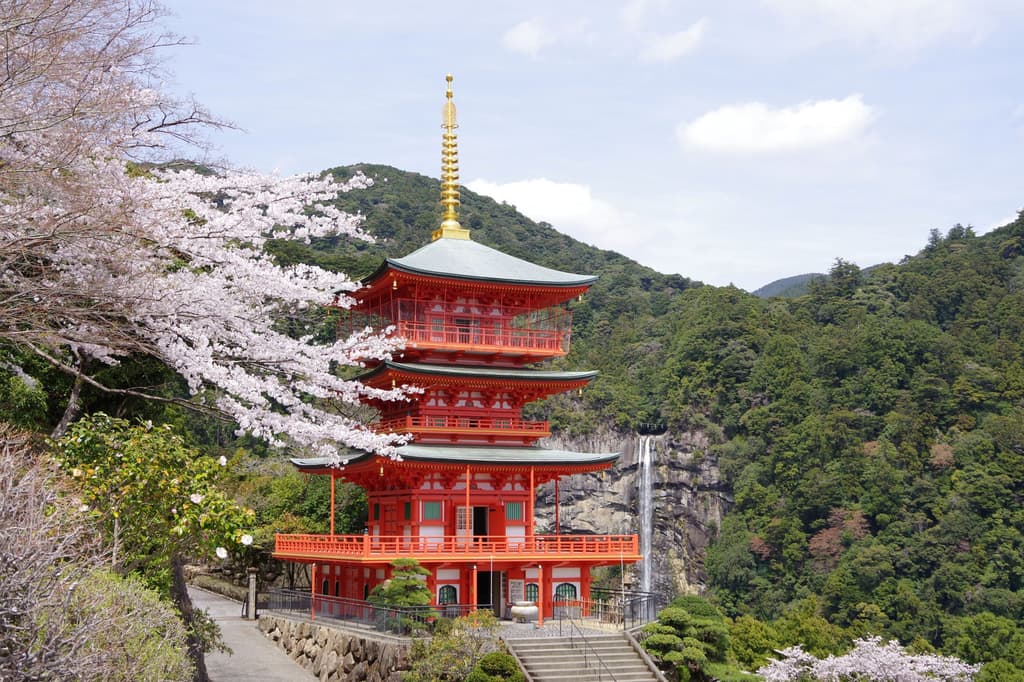
From late March, cherry blossoms come into bloom on the grounds of Seigantoji Temple in Nachikatsuura, Wakayama, creating a brief but breathtaking view: the temple's three-storied pagoda and the towering Nachi Falls framed by pink blossoms. This seasonal scene is only visible for a short window each spring.
Kumano Sanzan in Spring
The Kumano Sanzan — a collective term for Hongu Taisha, Hayatama Taisha, Nachi Taisha, and Seigantoji Temple — is registered as a UNESCO World Heritage Site. Pilgrims have walked the Kumano Kodo trails for centuries, believed to attain peace for the past, present, and future through the journey.
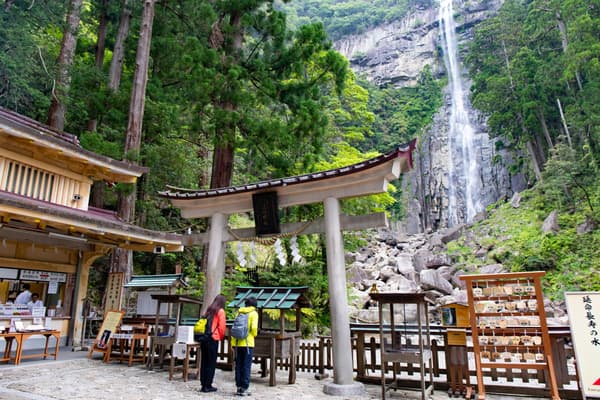
World Heritage Walk: Kumano Kodo Daimon-zaka
Among the various routes of the Kumano Kodo, the Daimon-zaka course — known for its beautiful stone-paved path winding through deep forest — is considered the most popular. A guided tour called the "World Heritage Walk Kumano Kodo Daimon-zaka" is offered year-round from the Kyukamura Nanki-Katsuura resort hotel in the area.
The tour is conducted in small groups, keeping an intimate atmosphere where guests can stroll at a relaxed pace. Local guides share stories and insights not found in guidebooks or signs, offering a perspective that only someone deeply familiar with the area can provide. The tour consistently draws high satisfaction from participants, with over 700 guests having joined during the previous year.
From late March, cherry blossoms bloom on the grounds of Seigantoji Temple, creating a striking contrast alongside the three-storied pagoda and Nachi Falls.
Tour Details: World Heritage Walk Kumano Kodo Daimon-zaka
- Period: Year-round
- Price: 1,700 yen (from May 1: 6,000 yen)
- Capacity: 10 guests (minimum 2)
- Reservation: Required by 8:00 PM the day before
- Itinerary:
Meet at Daimon-zaka Parking Lot at 8:50 AM (approximately 20 minutes by car from Kyukamura Nanki-Katsuura; a shuttle bus departs from the hotel at 8:00 AM for guests without private transportation). Join the local guide for a walk from Daimon-zaka through Kumano Nachi Taisha, Seigantoji Temple, and on to Nachi Falls (approximately 2 hours 30 minutes). Disperse at the Nachi Falls area at around 11:30 AM. Guests can return to Daimon-zaka Parking Lot by local bus (those without private transport may take a local bus to Kii-Katsuura Station).
Collecting Power Items Before the New Season
Many visitors to the Kumano Sanzan also seek out goshuin (temple stamps) and special amulets. Steeped in centuries of devotion, these items carry a particular significance. The Daimon-zaka walk passes through Kumano Nachi Taisha and Seigantoji Temple — two of the three Kumano Sanzan sites.
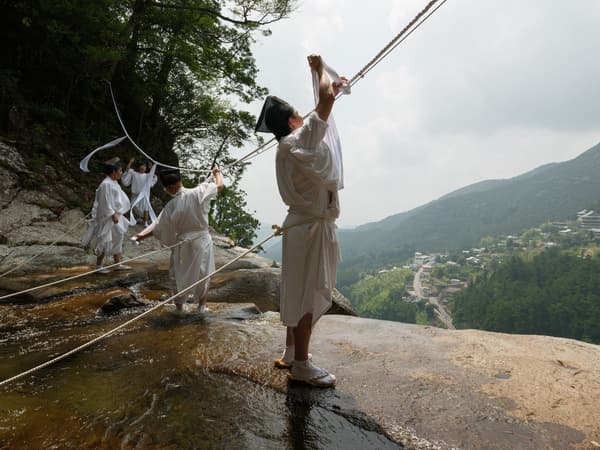
Shimenawa Sacred Rope Charm (Kumano Nachi Taisha)
The sacred rope (shimenawa) that hangs at the mouth of Nachi Falls is replaced every year before the July annual festival "Nachi no Ogi Matsuri." A charm made from the cloth used in that shimenawa is offered as a special amulet, with prayers for the removal of misfortune inspired by the powerful flow of Nachi Falls.

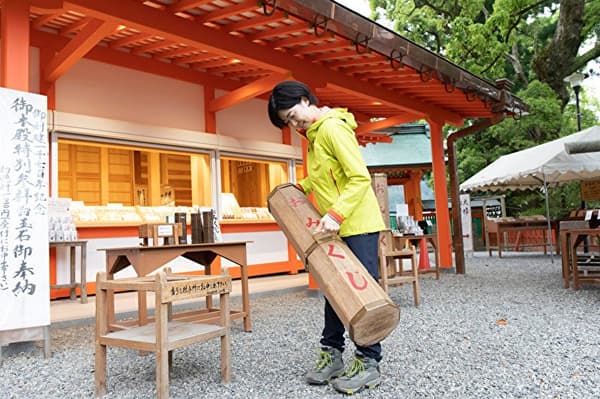
Japan's Largest Jumbo Omikuji (Kumano Nachi Taisha Grounds)
Named after the height of Nachi Falls (133 meters), this is Japan's largest omikuji fortune slip, with a container measuring 133 centimeters tall.
Goshuin (Temple Stamps) at Seigantoji Temple
Seigantoji Temple holds a dual distinction as one of the Kumano Sanzan and as the first temple on the Saigoku 33-Temple Pilgrimage route, which means it offers a rich variety of goshuin. A wide range of goshuin stamp books are available in different colors and styles, along with limited-time goshuin offered throughout the year.


Kyukamura Nanki-Katsuura
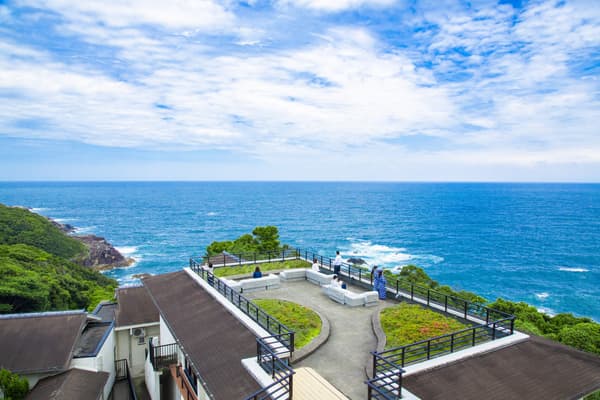
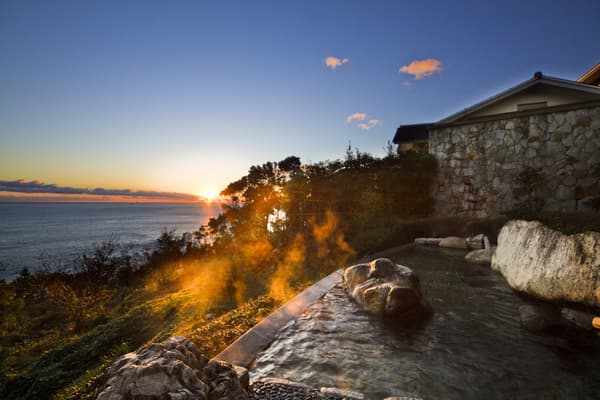
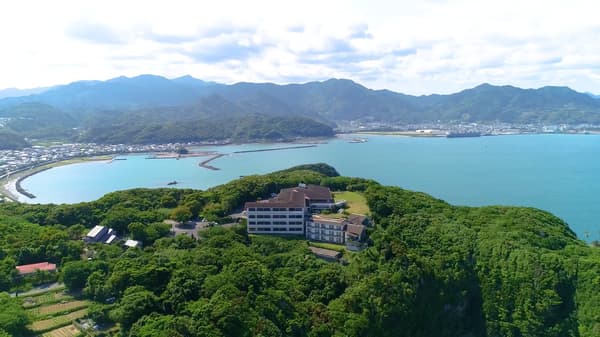
Kyukamura Nanki-Katsuura is a resort hotel perched on a hilltop overlooking Kumano-nada Sea on the southeastern coast of the Kii Peninsula in Wakayama — the southernmost resort hotel of its kind on Honshu. Set against a backdrop of lush evergreen hills with the Kuroshio Current coastline in view, the area has a distinctly subtropical atmosphere. The hotel serves as an ideal base for exploring the UNESCO World Heritage sites of the Kumano Sanzan and the Kumano Kodo pilgrimage trails.