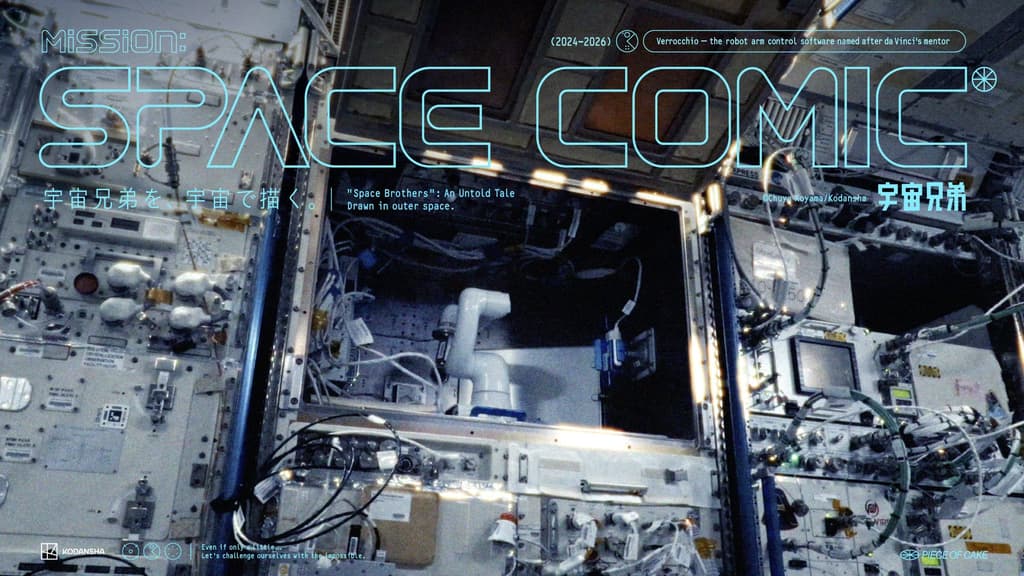
Kodansha Ltd. (Headquarters: Bunkyo-ku, Tokyo) has released a special video documenting "Mission: SPACE COMIC," humanity's first attempt to draw manga in space.
The mission made use of JAXA's (Japan Aerospace Exploration Agency) fee-based utilization program for the Kibo Japanese Experiment Module aboard the International Space Station (ISS), an unprecedented undertaking to draw manga in orbit. By remotely operating a robotic arm mounted inside the Kibo module from the ground, and overcoming a series of difficulties posed by the microgravity environment, the project spent more than two years bringing to life a demonstration that drew "Chapter 425.5" — an episode of Space Brothers never told in the main story — in space.
The Special Edition of Space Brothers Volume 46, the series' final volume, goes on sale July 22, 2026 (Wednesday), and includes a full-color version of Chapter 425.5 to mark the completion of the roughly 18-year story. The episode was drawn exclusively for this project by Chuya Koyama, the manga's creator. The video documents the full story behind this unprecedented undertaking, which brought together the expertise of private companies, engineers, and creators to open up new possibilities at the intersection of storytelling and space technology.
Mission: SPACE COMIC URL: https://morning.kodansha.co.jp/spacecomic/
(JAXA's Kibo Utilization Fee-based Service, non-standard service: https://humans-in-space.jaxa.jp/kibouser/provide/more/)
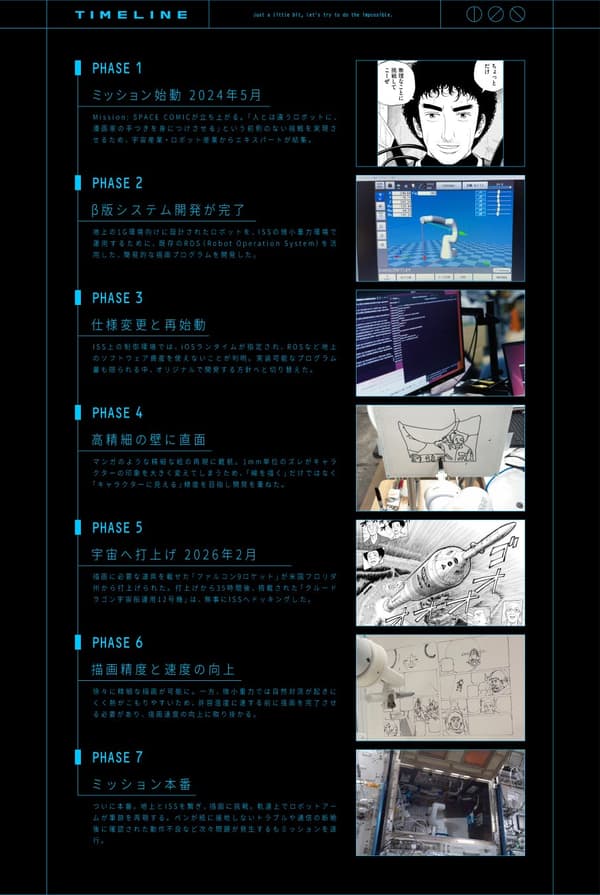
Mission: SPACE COMIC Project Timeline
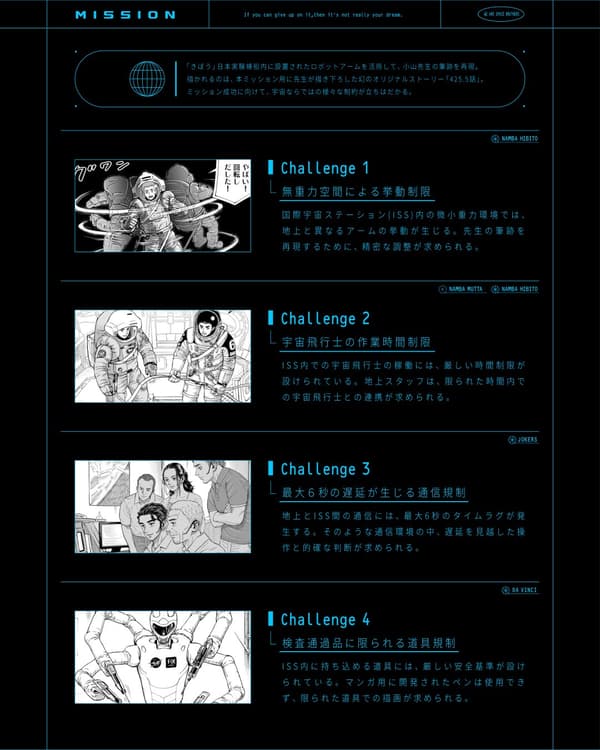
From the initial concept on the ground to the actual drawing in space, this mission was the product of more than two years of trial and error. The team faced a series of obstacles not encountered on the ground: changes in the robotic arm's behavior under microgravity, communication delays of up to six seconds, limits on astronauts' available working time, and restrictions on the tools that could be used. Overcoming these challenges one by one, the team worked through system development, specification changes, and improvements to drawing precision and speed after launch.
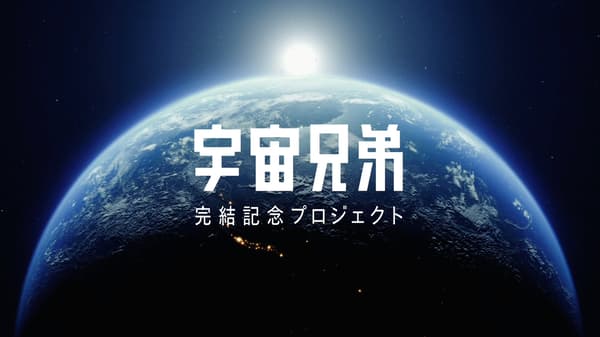
About the Special Video Marking the Completion of Space Brothers: "Mission: SPACE COMIC"
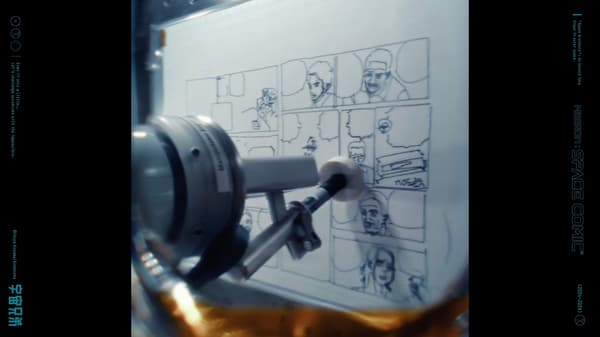
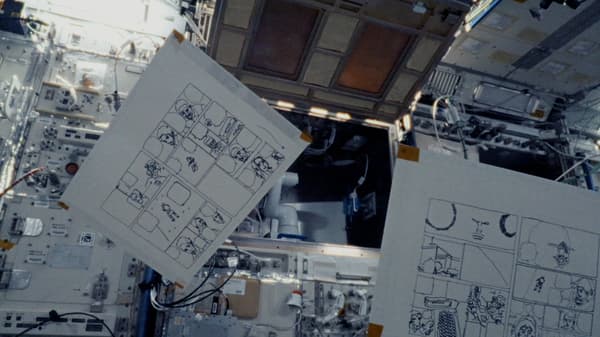
The special video documents the process of transmitting Chuya Koyama's handwriting data from the ground to a robotic arm in space, roughly 400 km away, to remotely draw the "phantom episode" (Chapter 425.5) that was never told in the main story. It captures the project's full trajectory: facing a series of constraints not found on the ground — changes in the arm's behavior under microgravity, communication delays of up to six seconds, limits on astronauts' working time, and restrictions on usable tools — and, through repeated adjustments, ultimately bringing to life the unprecedented feat of drawing manga in space.
Video URL: https://youtu.be/nJrrGPspvyQ?si=vMsg4nmrXgXDaKuo
Project Member Comments
スペースエントリー株式会社, COO, 松本 翔平
I am deeply proud to have taken part in this historic Space Brothers project — humanity's first attempt to draw manga in space. Over the course of this mission, we repeatedly faced unexpected obstacles unique to the extreme environment of space, including subtle changes in the robotic arm's behavior under microgravity and challenges with the communication environment. Even so, through millimeter-level trajectory corrections via remote operation from the ground and team-wide troubleshooting, we were able to overcome numerous difficulties. We were unable to complete the planned number of pages as originally scheduled, but responding to unpredictable events that occurred in space and solving problems along the way to bring the work to completion produced demonstration data of tremendous value for future remote robotics operations in space. Drawing on the valuable knowledge gained through this mission, our company will continue to push forward with the technology development that supports Japan's space activities.
メノー株式会社, Representative Director, Masato Nemoto
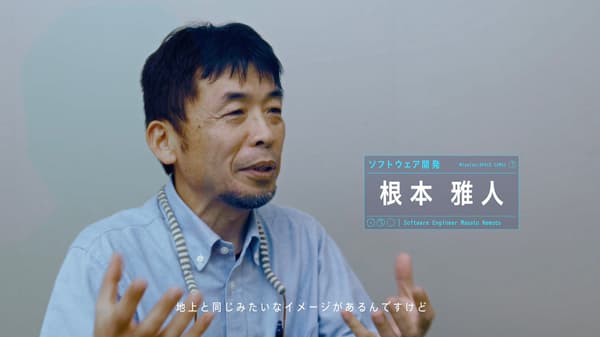
This mission involved a range of difficulties and unexpected events, but by working through each challenge as a team, we were able to see the mission through to completion. In the process, I was reminded that success in space development depends not only on technical skill but, more than anything, on trusting your teammates and never giving up until the end — a feeling that overlaps with how Mutta and Hibito face hardship in Space Brothers. Drawing on this experience, we will continue to take on new challenges and contribute to Japan's space development.
三井物産エアロスペース株式会社, 天田 剛 ・ 本村 日香留
Under a contract from JAXA, which serves as the commissioned body for this mission, our company was responsible for coordinating with the various parties involved in safety evaluation and for managing the schedule across the entire process, from safety evaluation through to full operation. Facing an unprecedented challenge, there were numerous hurdles to clear — from formulating operational plans to prepare for unforeseen circumstances to securing the schedules of astronauts, whose time is extremely valuable — and it was a race against time all the way up to the day of the mission. That we were able to guide this mission to success was due entirely to the solid teamwork of everyone involved, each bringing their own expertise, and above all, a shared and passionate determination to see this mission through no matter what. We hope that "Mission: SPACE COMIC" helps even one more person feel that space is a little closer to home, and that it serves as a first step toward the further development of Japan's use of space going forward.
Celsys, Inc., App Development Department, Department Manager, 小田 直矢
Celsys provided technical support to export the pen-stroke data that Chuya Koyama drew using CLIP STUDIO PAINT as vector data and hand it off for drawing by the robotic arm. The exported stroke data could be used almost as-is as the robotic arm's coordinate information and drawing order, keeping the adjustments needed for the space environment to a few percent or less of the overall data. We are deeply honored that the digital technology we have continually refined to support creative work was able to play a part in this unprecedented challenge in the environment of space. With respect to everyone who worked to make this a reality, we will continue to refine the technology that supports creators' expression and to pursue new possibilities for creation.
Space Brothers Author, Chuya Koyama
What surprised me most after the project wrapped up was that the artwork that came back from space had, in a good way, a lot of character to its lines. The slight tremor unique to the robotic arm resembled the kind of hand tremor I sometimes bring out deliberately when drawing by hand, and I ended up really liking the resulting artwork. At the same time, I was reminded all over again just how difficult it is to reproduce the subtle pressure and spacing of a human hand. I think that the very act of clearing one difficult condition after another in space development holds the potential to create things that could never be conceived on Earth alone. And I believe the technology cultivated along the way eventually finds its way back into life here on Earth. That's exactly why continuing to take on the challenge of space always seems to connect to something new. I'm looking forward, as one fan, to whatever unknown discoveries space has in store for us next.
What's Next for the Mission
What was drawn for this mission is Chapter 425.5, an episode bridging Chapters 425 and 426 that was never told in the main story of Space Brothers. The full-color version of this special chapter, which no one has read yet, will be included in the Special Edition of Space Brothers Volume 46, the series' final volume, on sale July 22, 2026 (Wednesday), reaching readers alongside the story's completion. A making-of video following the two-year journey to realize the mission is also planned for release soon. In addition, starting July 28 (Tuesday), an advertisement for "Mission: SPACE COMIC" will be displayed at Tsukuba Station. Tsukuba is home to JAXA's Tsukuba Space Center, where this remote-drawing mission was actually operated, and the project's results will be shared from this location in gratitude for the support received and in anticipation of what comes next.
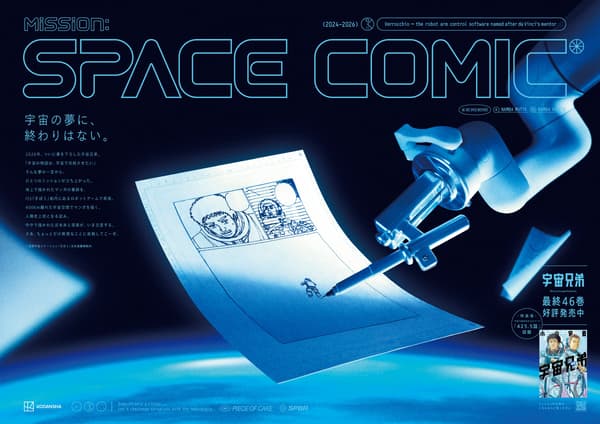
Space Brothers Volume 46 Product Information
Book title: Space Brothers (46) Special Edition, with Miura-fold Booklet
Author: Chuya Koyama
Release date: July 22, 2026
List price: ¥2,140 (¥1,945 before tax)
Format: B6
Pages: 304
Book title: Space Brothers (46)
Author: Chuya Koyama
Release date: July 22, 2026
List price: ¥1,131 (¥1,028 before tax)
Format: B6
Pages: 304
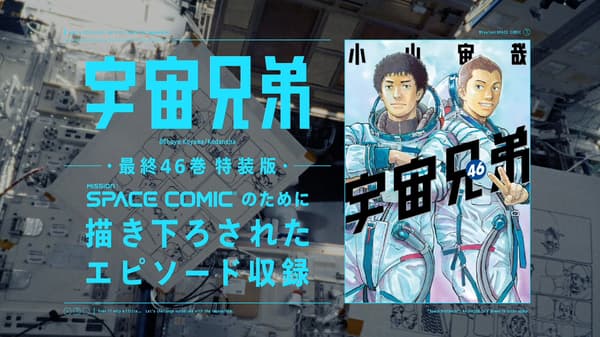
Synopsis: As children, brothers Mutta and Hibito Nanba made a promise to each other while gazing up at the night sky. In 2025, Hibito, true to that promise, became an astronaut and joined the first long-term crew stationed on the lunar surface. Meanwhile, his older brother Mutta was let go from his job and left unemployed. A single email from his brother sets Mutta on a path back toward space.
Ongoing updates are planned on the official site: https://koyamachuya.com/
Space Brothers merchandise and commemorative items are also available at the official store: https://corkshop.jp/c/koyachu/
"Mission: SPACE COMIC" Overview
| Name | Special video marking the completion of Space Brothers, "Mission: SPACE COMIC" |
| Participating organizations | Kodansha (publisher), コルク (creative agency), Celsys (software development), スペースエントリー / メノー / インテリジェント・ロボット・テクノロジー (robotics development, operation, and testing), TBWA HAKUHODO (planning and production), 東京アドデザイナース / 博報堂プロダクツ / コントラスト (graphics), Y's (video production), Sketch (PR), SSHY and The SSHY (music) |
| Cooperation | 三井物産エアロスペース株式会社 (coordinated with the parties involved in safety evaluation and managed the schedule from safety evaluation through full operation, under contract from JAXA, the commissioned body) |
| Location | International Space Station (ISS) Kibo Japanese Experiment Module (using JAXA's Kibo utilization fee-based program) |
| Drawing method | Drawing via remote operation of a robotic arm inside the ISS Kibo Japanese Experiment Module |
| Manga content | "Chapter 425.5," an episode never told in the main story of Space Brothers |
Mission logo (©Chuya Koyama / Kodansha)
About Space Brothers
Space Brothers is a manga by Chuya Koyama, serialized in Kodansha's Morning magazine since 2007. It follows brothers Mutta and Hibito Nanba as they each pursue their dream of becoming astronauts. In 2011, the series won both the 56th Shogakukan Manga Award (General category) and the 35th Kodansha Manga Award (General category). With cumulative circulation surpassing 35 million copies, it has also been adapted into an anime series and a live-action film. Serialization came to an end in June 2026 after roughly 18 years, with the final volume, Volume 46, going on sale July 22, 2026 (Wednesday).