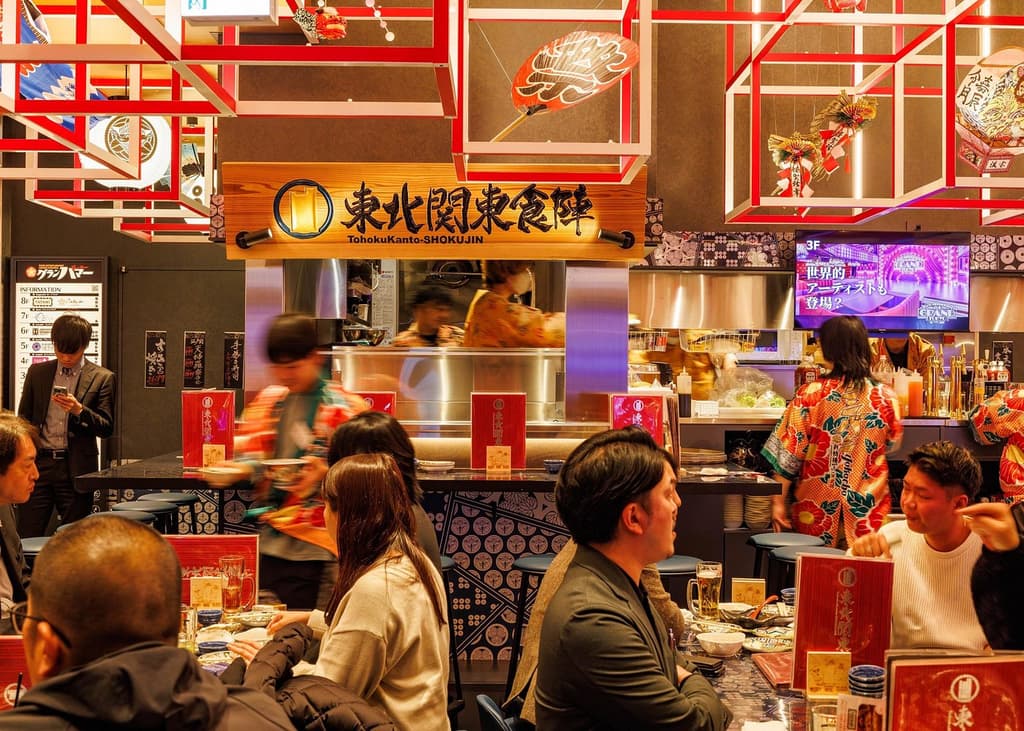
Tokyo's street food scene is not about a single night market or one famous alley. Instead, the best snacks are scattered across different neighborhoods, each with its own flavor and personality. A grilled seafood skewer at Tsukiji tastes different from a korokke in Togoshi Ginza, not just because the recipes differ but because the entire atmosphere around you changes.
This guide covers six neighborhoods that are worth a half-day trip each. Some are well-known among travelers; others are places where you will be one of the few non-Japanese visitors on the street. All of them will leave you full and satisfied.
Quick Etiquette Note Before You Go
In Japan, eating while walking (known as tabearuki) is generally considered poor manners. At most street food spots, you will see small standing areas or benches near the shop where you are expected to finish your food before moving on. Some streets, like Nakamise-dori in Asakusa, have signs asking people not to walk and eat.
That said, certain market areas and shopping streets are more relaxed about this rule, especially when the food is designed to be eaten on the go. The general principle: eat near the shop where you bought your food, dispose of your trash properly (carry it with you if there is no bin), and avoid eating on trains or buses.
Tsukiji Outer Market
Even though the wholesale fish auction moved to Toyosu in 2018, Tsukiji's outer market is still very much alive. Around 400 shops and stalls pack into a compact grid of narrow lanes, selling everything from dried seaweed to uni (sea urchin) on a stick.
What to Eat
Tamagoyaki (Japanese rolled omelet): Two shops have been competing for decades: Marutake and Yamacho. Both sell thick, slightly sweet egg omelets on wooden sticks for around 100 to 200 yen per piece. Marutake's version is softer and sweeter; Yamacho's is a bit firmer with a more savory edge. Get one from each and decide for yourself.
Fresh sushi and sashimi: Several small sushi counters line the market's inner alleys. A set of 8 to 10 pieces of seasonal nigiri typically costs between 2,000 and 5,000 yen, depending on what the chef selects.
Grilled seafood skewers: Look for stalls selling grilled scallops (hotate), king crab legs, and eel (unagi) on sticks. A single scallop skewer runs about 500 to 800 yen. Crab legs are pricier, usually 1,500 to 2,500 yen depending on size.
Menchi katsu: Deep-fried minced beef patties with a crunchy panko coating. Around 300 to 500 yen each, and best eaten immediately while the outside is still crackling.
Practical Info
- Access: 1-minute walk from Tsukiji Station (Hibiya Line) or Tsukijishijo Station (Oedo Line). About 15 minutes on foot from JR Shimbashi Station.
- Hours: Most shops open between 6:00 and 9:00 AM and close by 2:00 PM. Go before 10:00 AM if you want to avoid crowds.
- Closed: Sundays, Wednesdays, and some holidays. During holiday weeks, Wednesday closures may be skipped. Check the official Tsukiji Outer Market website calendar before visiting.
Want to go deeper into the area? Our Ginza and Shinbashi food tour covers some of the best local spots nearby:
For a complete guide to the new Toyosu Market facility, check out our detailed article:
Asakusa: Nakamise-dori and the Back Streets
Nakamise-dori, the 250-meter shopping street leading to Sensoji Temple, is one of Tokyo's oldest commercial strips and has been selling snacks and souvenirs since the Edo period. The main street can get packed during peak hours, but the back alleys (known as ura-Asakusa) hide smaller, less crowded shops that are just as good.
What to Eat
Ningyo-yaki: Small sponge cakes filled with sweet red bean paste, shaped into cute figures like doves, lanterns, or pagodas. A bag of 10 costs around 500 to 700 yen and makes a great snack to share.
Jumbo melon pan: Several shops along Nakamise sell oversized melon bread, a sweet bun with a cookie-crust topping, for about 300 yen. You can also get it sliced open and stuffed with soft-serve ice cream (matcha or vanilla) for around 700 yen.
Kibi dango: Tiny, chewy mochi dumplings dusted with kinako (roasted soybean flour), sold in sets of five for about 350 yen. The shop Kaminarimon Kaminari Okoshi on Nakamise's side street has been making these for decades.
Age-manju: Deep-fried manju buns with fillings like sweet potato, matcha, or red bean. The crispy outer shell and soft sweet interior make them hard to put down. About 200 yen each.
Back-street yakitori and skewers: Head behind Sensoji toward Hoppy Street (Hoppy-dori) for cheap yakitori, grilled offal, and beer. This area comes alive in the late afternoon and evening. A stick of yakitori runs about 100 to 200 yen, and a mug of beer starts at 300 to 500 yen.
Practical Info
- Access: 5-minute walk from Asakusa Station (Ginza Line, Asakusa Line, or Tsukuba Express). Also reachable from Asakusa Station on the Tobu Skytree Line.
- Hours: Most Nakamise shops open around 9:00 or 10:00 AM and close by 5:00 to 7:00 PM. Hoppy Street restaurants open in the afternoon and stay open until late.
- Tip: Visit Nakamise early in the morning (before 10:00 AM) to browse the stalls without the midday crowds. Then come back in the evening for Hoppy Street's casual izakaya atmosphere.
For a deeper look at the neighborhood, see our full station guide:
If you want to extend your Asakusa evening into a bar-hopping adventure:
Yanaka Ginza
Yanaka Ginza is a 170-meter shopping street tucked into one of Tokyo's most atmospheric old neighborhoods. Unlike the flashy commercial areas in Shibuya or Shinjuku, Yanaka still feels like a small-town high street. The shops are family-run, the pace is slow, and cats wander freely along the street. The famous Yuyake Dandan staircase at the west end of the street is one of Tokyo's best spots for watching the sunset.
What to Eat
Menchi katsu from Suzuki: This butcher shop has been drawing lines for years with its hand-formed menchi katsu (deep-fried minced meat patty). Each one is made fresh and costs around 250 yen. The outside is golden and crunchy, the inside juicy. Eat it standing by the shop counter.
Cat-tail doughnuts: Yanaka is known as a "cat town," and several shops sell cat-themed treats. The most popular is the cat-tail doughnut, a long, thin doughnut shaped like a stretched cat tail, available in flavors like plain sugar, cinnamon, and chocolate.
Yakitori and skewers: A couple of small yakitori stands near the center of the street sell chicken skewers for about 100 to 200 yen. Simple, well-seasoned, and perfect for an afternoon snack.
Kakigori (shaved ice): In summer (roughly June through September), several shops bring out shaved ice machines and pile bowls high with flavored syrup and condensed milk. Flavors change with the season.
Practical Info
- Access: 5-minute walk from JR Nippori Station (West Exit) on the Yamanote Line, Keihin-Tohoku Line, or Joban Line. Also a 3-minute walk from Sendagi Station on the Tokyo Metro Chiyoda Line.
- Hours: Most shops open around 10:00 AM and close by 6:00 or 7:00 PM. Some close on Mondays.
- Tip: Walk down the Yuyake Dandan staircase to enter the street from the Nippori side. The view of the shopping street rooftops and the western sky in the late afternoon is one of the best free views in Tokyo.
For a night-time taste of the neighborhood, our Yanesen bar-hopping tour covers nearby Ueno and Yanaka:
Togoshi Ginza
At 1.3 kilometers, Togoshi Ginza is Tokyo's longest shopping street, and it runs through a residential neighborhood in Shinagawa Ward that most tourists never hear about. The street has about 400 shops, ranging from old-school fishmongers to trendy boba tea stores. Its biggest claim to fame in the food world is the korokke (croquette): around 20 different shops each make their own original version, turning the whole street into an unofficial croquette competition.
What to Eat
Korokke (croquettes): This is non-negotiable. Start with the classics like potato and minced meat, then try the more creative varieties: gyoza-flavored croquette, oden croquette, curry croquette, or the popular cheese croquette. Most are priced between 100 and 300 yen.
Animal doughnuts: A small bakery near the center of the street sells mini doughnuts shaped like dog, cat, and raccoon faces, decorated with icing. They are as cute as they sound and cost about 200 to 300 yen each.
Yakitori: Multiple yakitori shops serve grilled chicken and pork skewers for about 100 to 200 yen per stick. Follow the smell of charcoal smoke and soy sauce.
Gyoza: A few shops along the street specialize in pan-fried gyoza dumplings with crispy bottoms and juicy pork filling. A plate of 5 to 6 pieces costs around 300 to 500 yen.
Practical Info
- Access: Togoshi Ginza Station on the Tokyu Ikegami Line (directly on the shopping street). Also walkable from Togoshi Station on the Toei Asakusa Line.
- Hours: Individual shop hours vary, but the street is generally active from 10:00 AM to 8:00 PM. The street is car-free Monday through Saturday from 3:00 to 6:00 PM, and on Sundays and holidays from 2:00 to 7:00 PM.
- Tip: Togoshi Ginza is about a 20-minute train ride from central Tokyo (Shinagawa or Gotanda). Consider visiting in the afternoon when the car-free hours begin and the street becomes a comfortable pedestrian zone.
Ameyoko (Ueno)
Ameyoko is the 500-meter open-air market stretching along the JR tracks between Ueno and Okachimachi stations. It started as a black market after World War II, and that raw, energetic atmosphere has never really faded. Vendors shout prices, fresh seafood sits on ice out front, and the side alleys lead to small restaurants serving food from China, Korea, Thailand, Turkey, and more.
What to Eat
Fresh fruit on sticks: Near the Ueno Station end of the market, a couple of fruit stalls sell pineapple, melon, mango, and strawberry slices on sticks for 100 to 300 yen. A quick, refreshing snack, especially in summer.
Takoyaki: The takoyaki stalls in Ameyoko are less polished than the ones in Osaka but still deliver crispy-outside, gooey-inside octopus balls. At some shops, you can add your own toppings from a self-serve condiment bar.
Menchi katsu: Niku no Ohyama, a butcher shop on the main drag, is known for its deep-fried minced beef patties. There is almost always a line, but it moves quickly.
Chinese and Korean snacks: Head into the Ameyoko Center Building basement for steamed pork buns, xiaolongbao (soup dumplings), grilled lamb skewers, spicy stir-fried rice cakes (tteok-bokki), and other Asian street food. This underground food hall feels like a completely different world from the street above.
Chocolate and candy: Ameyoko also has a long tradition of selling sweets and snacks in bulk. Several shops pile boxes of imported and domestic chocolates, crackers, and dried fruits on outdoor display tables at discounted prices.
Practical Info
- Access: JR Ueno Station (Shinobazu Exit) or JR Okachimachi Station. Also reachable from Ueno-Okachimachi Station on the Oedo Line, or Ueno-Hirokoji Station on the Ginza Line.
- Hours: Most shops open around 10:00 AM and close by 7:00 or 8:00 PM. Some close on Wednesdays.
- Tip: The market is at its liveliest on weekends and in the lead-up to New Year (late December), when vendors sell heavily discounted seafood, dried goods, and snacks for osechi (New Year's feast) preparation.
Our Ameyoko bar-hopping tour takes you to some of the area's best hidden izakayas after dark:
Shimokitazawa
Shimokitazawa is known as Tokyo's indie neighborhood, home to vintage clothing shops, small theaters, live music venues, and a food scene that leans toward curry, craft coffee, and baked goods rather than traditional street food. It does not have a single market street like the other spots on this list; instead, the snacks are scattered through a maze of narrow lanes where every turn reveals a new cafe or takeout window.
What to Eat
Curry: Shimokitazawa is Tokyo's unofficial curry capital. The neighborhood hosts the annual Shimokitazawa Curry Festival every October, where over 100 restaurants, cafes, bars, and even clothing stores serve their own original curry dishes. Year-round, you will find soup curry, keema curry, Sri Lankan curry, and Thai-style curry at small restaurants throughout the area.
Soufflé pancakes: A well-known pancake shop in the area serves thick, jiggly soufflé pancakes with seasonal toppings. Expect a wait on weekends.
Craft doughnuts and baked goods: Several bakeries in Shimokitazawa specialize in handmade doughnuts, cinnamon rolls, and bread. Prices are typically 300 to 500 yen per item.
Onigiri: A few small shops sell freshly made rice balls with creative fillings beyond the standard tuna mayo or salmon. Look for seasonal specials like miso-marinated egg yolk or grilled maitake mushroom.
Practical Info
- Access: Shimokitazawa Station on the Odakyu Line or Keio Inokashira Line. About 3 minutes from Shibuya by express train on the Keio Inokashira Line.
- Hours: Shops and restaurants generally open from 11:00 AM. Cafes close around 6:00 or 7:00 PM, while restaurants and bars stay open until 10:00 PM or later.
- Tip: Shimokitazawa is a great neighborhood to visit on a rainy day. Many of the best food spots are indoors, and the covered walkways between buildings keep you relatively dry. Combine a food crawl with some vintage shopping for a full afternoon.
For an evening out in Shimokitazawa, our bar-hopping tour covers the best local spots:
Planning Your Street Food Day
Here are a few ways to combine these neighborhoods into a full day of eating:
Morning-to-afternoon route: Start at Tsukiji Outer Market for an early-morning seafood breakfast (arrive by 8:00 AM). Take the Hibiya Line to Ueno (about 15 minutes), walk through Ameyoko for mid-morning snacks, then take the JR Yamanote Line one stop to Nippori for an afternoon at Yanaka Ginza.
Afternoon-to-evening route: Head to Togoshi Ginza for a late lunch of korokke and yakitori (arrive by 2:00 PM). Then take the Tokyu Ikegami Line to Gotanda, transfer to the JR Yamanote Line to Shibuya, and ride the Keio Inokashira Line to Shimokitazawa for evening curry and drinks.
All-in-one classic: If you have just one day and want a bit of everything, do Tsukiji in the morning, Asakusa for lunch and Nakamise browsing, and Ameyoko in the late afternoon before dinner.
A prepaid Suica or Pasmo IC card will make hopping between neighborhoods quick and painless since all these areas are connected by subway or JR lines.
What to Bring
- Cash: While more shops in Tokyo accept credit cards and IC card payments than before, many small street food vendors are still cash-only. Carry at least 3,000 to 5,000 yen in small bills and coins.
- A small bag for trash: Public trash bins are rare in Tokyo. Bring a small plastic bag to carry your wrappers and sticks until you find a bin or return to your hotel.
- An empty stomach: Budget around 2,000 to 4,000 yen per neighborhood if you plan to try three or four items at each stop.
Please note that prices and opening hours listed in this article are subject to change. We recommend confirming the latest details on each shop's official website or directly with the venue before your visit.