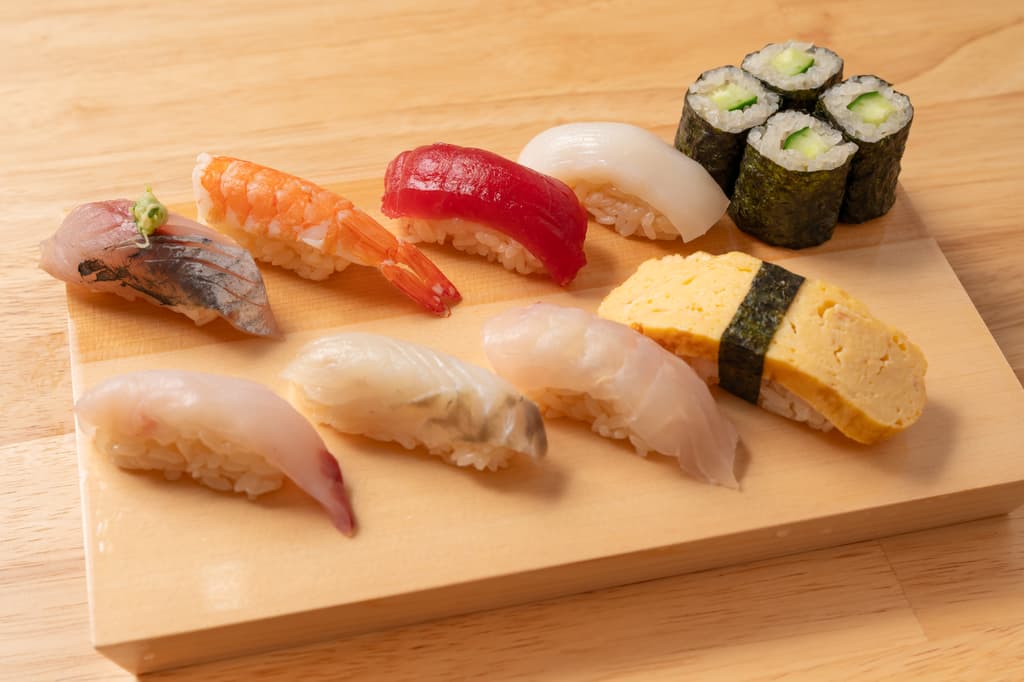
Sushi in Japan is nothing like what you find overseas. The rice is warmer, the fish is cut differently, and each piece is put together with a level of care that changes the way the whole thing tastes. Even a simple plate at a conveyor belt chain can catch you off guard if you are used to the international version.
This guide covers what to expect when eating sushi across Japan, from affordable neighborhood spots to high-end counter seats, along with practical tips on ordering, etiquette, and how to get the most out of every meal.
What Makes Sushi in Japan Different
The biggest difference is freshness and technique. Japanese sushi chefs source fish daily from local markets and auctions. In many cases, the fish arrives at the restaurant within hours of being caught. But freshness alone does not explain it.
Edomae sushi, the style that originated in Tokyo during the early 1800s, relies on preparation techniques developed before refrigeration existed. Chefs cure, marinate, steam, or lightly sear the fish to draw out deeper flavors. A piece of kohada (gizzard shad) cured in vinegar and salt, or maguro marinated in soy-based tare, tastes completely different from raw fish on rice.
The rice itself is another factor. Sushi rice (shari) is seasoned with a mix of vinegar, salt, and a small amount of sugar. At traditional Edomae restaurants, chefs often use akazu, a red vinegar made from aged sake lees, which gives the rice a slightly deeper, more savory flavor compared to the bright white rice used at most restaurants outside Japan.
Then there is the concept of shun -- seasonal peak. Japanese diners pay close attention to which fish is at its best in a given month. Buri (yellowtail) is richest in winter. Katsuo (bonito) hits its stride in early summer and again in autumn. Sanma (Pacific saury) signals the arrival of fall. Eating with the seasons is part of what makes sushi in Japan feel so different from a fixed menu abroad.
Types of Sushi You Will Find in Japan
Nigiri
Nigiri is the form most people picture when they think of sushi: a small mound of rice topped with a slice of fish or seafood. The chef presses the rice by hand and places the topping (called neta) on top, sometimes adding a thin smear of wasabi between them.
Common nigiri toppings include maguro (tuna), sake (salmon), ebi (shrimp), ika (squid), hotate (scallop), and tamago (sweet egg omelet). At higher-end restaurants, you will also find options like uni (sea urchin), otoro (fatty tuna belly), and nodoguro (blackthroat seaperch).
Maki and Temaki
Maki rolls are cylindrical sushi wrapped in nori (seaweed) with rice and fillings inside, then sliced into bite-sized pieces. In Japan, maki tends to be simpler than the elaborate rolls popular abroad -- think tuna and cucumber rather than cream cheese and avocado.
Temaki are hand rolls shaped into a cone. They are best eaten immediately because the nori gets soggy fast. Temaki bars where you pick your own fillings are a fun and casual way to eat sushi in Japan.
Chirashi
Chirashi means "scattered." It is a bowl of sushi rice topped with an assortment of sashimi, tamago, vegetables, and garnishes. Chirashi is popular as a lunch option at sushi restaurants because it is filling, relatively affordable, and gives you a variety of toppings in one dish. A typical chirashi-don at a market restaurant runs about JPY 1,500 to JPY 3,000.
Gunkan
Gunkan-maki, or "battleship" sushi, is a piece of rice wrapped in a strip of nori with the topping placed inside the cup-shaped pocket on top. This style works for soft or loose toppings that would slide off regular nigiri -- ikura (salmon roe), uni, negitoro (minced fatty tuna with scallion), and tobiko (flying fish roe) are all common gunkan options.
Oshizushi (Pressed Sushi)
Oshizushi is a regional specialty from Osaka and the Kansai area. Rice and toppings are pressed together in a wooden mold (oshizushi-bako) and cut into neat rectangular pieces. Battera, a type of oshizushi made with cured mackerel, is one of Osaka's signature foods. You can find battera at department store food halls (depachika) and train station shops across Kansai.
Narezushi (Fermented Sushi)
Narezushi is the oldest form of sushi in Japan, predating all other styles by centuries. Fish is packed with rice and salt and fermented for months or even years. The most famous version is funazushi from Shiga Prefecture near Lake Biwa, made with nigorobuna (a type of crucian carp). The flavor is strong, funky, and acidic -- an acquired taste, but worth trying if you are curious about sushi's origins.
Where to Eat Sushi in Japan
Kaiten-zushi (Conveyor Belt Sushi)
Kaiten-zushi restaurants are the most accessible and budget-friendly option. Plates of sushi travel along a conveyor belt, and you grab what looks good. Most chains also let you order specific items from a touchscreen tablet, often with English or multilingual support.
The major chains are Sushiro, Kura Sushi, Hama Sushi, and Kappa Sushi. Plate prices at these chains typically start around JPY 110 to JPY 150 per plate (two pieces), with premium items running JPY 300 to JPY 500. A satisfying meal usually costs between JPY 1,000 and JPY 2,500 per person.
Kura Sushi and Sushiro both have locations near major tourist areas in Tokyo, Osaka, and Kyoto. Many locations offer tablet ordering in English, Chinese, and Korean, making it easy to order even without Japanese.
Omakase Sushi Counters
Omakase means "I'll leave it to you." At an omakase counter, the chef selects and prepares each piece based on what is freshest that day. You sit at the counter directly in front of the chef and receive each piece one at a time.
This is where sushi becomes a personal experience. The chef may adjust the menu based on your reactions or ask about your preferences. A lunch omakase at a mid-range restaurant typically costs JPY 5,000 to JPY 10,000. Dinner at a well-regarded counter runs JPY 20,000 to JPY 50,000, and top-tier restaurants can exceed JPY 60,000 per person.
Lunch is almost always the better deal. Many high-end sushi restaurants offer lunch courses at a fraction of their dinner price.
Market Sushi
Eating sushi near a fish market is a classic Japan experience. Tsukiji Outer Market in Tokyo is the most popular destination for visitors. The inner wholesale market moved to Toyosu in 2018, but the outer market stayed put and remains packed with sushi counters, seafood stalls, and small restaurants.
Most shops at Tsukiji Outer Market open between 6:00 AM and 9:00 AM, with the busiest visitor hours from 9:00 AM to 2:00 PM. Many shops close on Sundays and some Wednesdays, so check the market calendar before you go.
For a guided experience of Tsukiji Outer Market, this food tour covers the highlights with a local guide:
Another option combines deeper cultural context with the market visit:
Standing Sushi Bars (Tachi-gui Sushi)
Standing sushi bars offer a quick, affordable sushi meal without the formality of a sit-down restaurant. You stand at a counter, order a few pieces, eat, and leave. Prices are typically lower than sit-down sushi restaurants, and there is no pressure to order a full course.
You will find standing sushi bars near major train stations and in business districts. They are popular with office workers grabbing a quick lunch, and the turnover keeps the fish moving fast.
Regional Sushi Styles Across Japan
Edomae (Tokyo)
Tokyo's Edomae style is the template for modern sushi worldwide. Chefs here emphasize technique -- aging, curing, and marinating fish to concentrate flavor. Red vinegar rice is common at traditional Edomae counters. The Ginza and Nihonbashi neighborhoods have the highest concentration of respected sushi restaurants in Tokyo.
If you are exploring the Ginza and Tsukiji area, a guided food and drink tour is a good way to try local favorites beyond sushi:
Kansai-style (Osaka and Kyoto)
Osaka is known for oshizushi (pressed sushi) and battera (pressed mackerel sushi). Kyoto has its own tradition called kyo-sushi, which features seasonal fish prepared with refined techniques. Sabazushi (mackerel sushi wrapped in kelp) is a Kyoto specialty you will find at many traditional shops.
Osaka's food scene goes far beyond sushi. For a taste of the city's street food culture:
Hokkaido
Hokkaido's cold waters produce some of Japan's best seafood. Uni from Rishiri and Rebun islands, ikura from autumn salmon runs, and fresh scallops from Saroma Lake are all standouts. Otaru, a port city about 40 minutes by train from Sapporo, has a stretch known as Sushi Street (Sushiya-dori) lined with sushi restaurants serving local catches.
Kanazawa and the Japan Sea Coast
Kanazawa's Omicho Market is another destination for sushi lovers. The Japan Sea provides excellent white-fleshed fish, sweet shrimp (ama-ebi), and snow crab in season (November through March). The market is about a 15-minute walk from Kanazawa Station and has several sushi counters where you can eat fresh seafood on the spot.
How to Order Sushi Like a Local
At a conveyor belt restaurant, ordering is straightforward -- grab plates from the belt or use the touchscreen tablet. But at a counter restaurant, knowing a few basics helps.
Useful phrases:
- "Omakase de onegaishimasu" (I'll leave it to the chef) -- the simplest way to order at a counter
- "Osusume wa nan desu ka?" (What do you recommend?) -- good when ordering a la carte
- "Kore o kudasai" (This one, please) -- pointing at the display case
- "Okanjo onegaishimasu" (Check, please)
Ordering tips:
When ordering a la carte, start with lighter fish (white fish, squid) and work toward richer ones (tuna, fatty tuna, uni). Order a few pieces at a time rather than everything at once. This pacing lets the chef prepare each piece fresh.
Lunch sets (ranchi setto) are available at most sushi restaurants, even upscale ones. A lunch set typically includes 8 to 12 pieces of nigiri, miso soup, and sometimes a small appetizer, at a price well below the dinner menu. Lunch at a restaurant that charges JPY 30,000 for dinner might offer a set for JPY 5,000 to JPY 8,000.
For a guided food tour through Shinjuku that includes an omakase sushi course alongside other Tokyo specialties:
Sushi Etiquette: Dos and Don'ts
Japanese sushi etiquette is not as strict as some guides make it sound, especially at casual restaurants. But knowing the basics shows respect and can improve the eating experience.
Hands or chopsticks: Nigiri can be eaten with your fingers or with chopsticks. Both are perfectly acceptable. At a high-end counter, using your hands is common and even preferred.
Soy sauce: Dip the fish side of the nigiri into soy sauce, not the rice side. Rice soaks up too much soy sauce and can fall apart. A light touch is all you need -- the goal is to complement the fish, not drown it.
Wasabi: At mid-range and high-end sushi restaurants, the chef places the right amount of wasabi between the rice and the fish. Adding extra wasabi or mixing wasabi into your soy sauce is generally unnecessary and, at higher-end places, can be seen as overriding the chef's choices. At conveyor belt restaurants, though, nobody will mind if you add wasabi to your soy sauce.
Ginger: The pickled ginger (gari) served alongside sushi is a palate cleanser. Eat a small piece between different types of sushi to reset your taste buds. Do not place ginger on top of the sushi itself.
Timing: Eat each piece soon after the chef places it in front of you. The rice is served at body temperature and the balance between warm rice and cool fish is intentional. Letting pieces sit changes the texture and temperature.
One bite: Each piece of nigiri is sized to be eaten in one bite. If a piece is too large, two bites is fine, but try not to put a half-eaten piece back on the plate.
Price Guide: From Budget to High-End
Kaiten-zushi and Chain Restaurants (JPY 1,000 to JPY 3,000)
Chain conveyor belt restaurants like Sushiro, Kura Sushi, Hama Sushi, and Kappa Sushi offer the best value. Plates start at around JPY 110 to JPY 150 for two pieces. Even at these prices, the quality is solid -- the major chains have strong supply chains and high turnover that keeps fish fresh.
A typical meal runs JPY 1,000 to JPY 2,500 depending on how much you eat and whether you add side dishes like miso soup, edamame, or dessert.
Mid-Range Sushi Restaurants (JPY 3,000 to JPY 10,000)
Independent sushi restaurants without Michelin stars or long reservation lists fall in this range. You get a quieter setting, better fish selection, and more personal attention from the chef. Lunch sets at these restaurants are the sweet spot for quality and value -- expect to pay JPY 3,000 to JPY 5,000 for a lunch course.
High-End Omakase (JPY 20,000 to JPY 60,000+)
Top-tier sushi restaurants offer a fully curated omakase experience with seasonal fish, aged neta, and careful pacing. Dinner courses at well-known counters in Ginza, Roppongi, and Nihonbashi typically range from JPY 30,000 to JPY 50,000. A few restaurants charge JPY 60,000 or more.
Lunch at these same restaurants is often available for JPY 5,000 to JPY 10,000. If you want to try high-end sushi without the high-end price, lunch is the way to go.
Tips for Booking Sushi Restaurants
Casual sushi restaurants and conveyor belt chains accept walk-ins. For mid-range and high-end restaurants, a reservation is strongly recommended -- and for top counters, it is absolutely required.
Reservation platforms:
- TableCheck -- Wide coverage of mid-range to high-end restaurants across Japan. English interface, credit card hold required for some bookings.
- OMAKASE -- Specializes in premium sushi and Japanese cuisine counters. Many hard-to-book restaurants use this platform. Expect prepayment or reservation fees.
- Pocket Concierge -- Curated selection of high-end restaurants with English support, geared toward international visitors.
Practical tips:
- Create accounts and add your credit card before your trip. Some bookings require immediate payment or a card hold.
- Check cancellation policies carefully. Late cancellations and no-shows at high-end restaurants often incur a full charge.
- Arrive on time. Some counters have only 6 to 10 seats, and late arrivals can disrupt the entire service.
- Ask your hotel concierge for help. High-end hotels in Tokyo and Kyoto often have connections with sushi restaurants and can secure reservations that are difficult to get independently.
- Consider weekday lunches. They are easier to book and significantly cheaper than weekend dinners.
Making the Most of Sushi in Japan
The best approach to sushi in Japan is to eat across the full range. Start with a conveyor belt chain to see how even budget sushi here differs from what you know. Hit a market like Tsukiji for the atmosphere and a quick chirashi bowl. Book one lunch omakase at a counter restaurant for the chef's personal touch. If your budget allows, a dinner omakase becomes one of those meals you remember for years.
For a food tour that combines sushi with other local specialties in different Tokyo neighborhoods, these guided experiences pair well with a sushi-focused trip:
Sushi in Japan is not one thing. It is an entire spectrum, from a JPY 110 plate grabbed off a moving belt to a JPY 50,000 dinner where the chef remembers your name. All of it is worth trying.