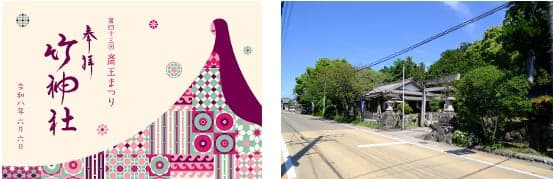
A limited-edition goshuin stamp designed by graphic artist Yuki Koishikawa will be distributed at Takejinja Shrine in Meiwa Town, Mie Prefecture, to commemorate the Saio's tamagushi offering during the 43rd Saio Festival procession on June 6, 2026.
Local Revitalization Centered on Takejinja Shrine
Many shrines across Japan have faced challenges due to declining parishioner numbers and weakening community ties. Takejinja Shrine (located at 2757-2 Saiku, Meiwa Town, Taki District, Mie Prefecture) was similarly quiet until 2020, with its administrative office remaining closed. From that year onward, however, local community members began taking an active role in revitalizing the shrine, taking on responsibilities such as maintaining the grounds, managing the hana-chozuya (flower-decorated water basin), and distributing goshuin stamps. This community-led effort gradually drew visitors from outside the prefecture.
From 2022, efforts expanded to include goshuin planning, information sharing, and making use of the shrine's surrounding forest — all aimed at sustaining the shrine's operations while deepening connections between the shrine and people beyond the immediate community.
Takejinja Shrine Worship During the Saio Procession
During this year's 43rd Saio Festival, the Saio will perform a tamagushi offering at Takejinja Shrine as part of the Saio Gunko procession. Historically, ritual ceremonies at the Saiku (the Saio's imperial residence) are believed to have been held at the former Takejinja Shrine site, located approximately 1 km to the west of the current shrine. Furthermore, the current shrine grounds are thought to have once been the site of the Saio's palace. In light of this historical connection, the special goshuin stamp has been designed to invite visitors to reflect on the bond between the Saio and Takejinja Shrine.
Limited-Edition Goshuin Designed by Yuki Koishikawa
The limited-edition goshuin is designed by Yuki Koishikawa, a pattern designer, graphic artist, art director, and photographer who works across a wide range of creative fields including shrine votive designs. Koishikawa attended the "Saiku Dedicated Torch Noh" performance in November 2023 and visited Takejinja Shrine, where she was deeply moved by the history and tranquil atmosphere of the Saiku grounds. She has previously designed the "Saiku Ema" votive tablet for the shrine.
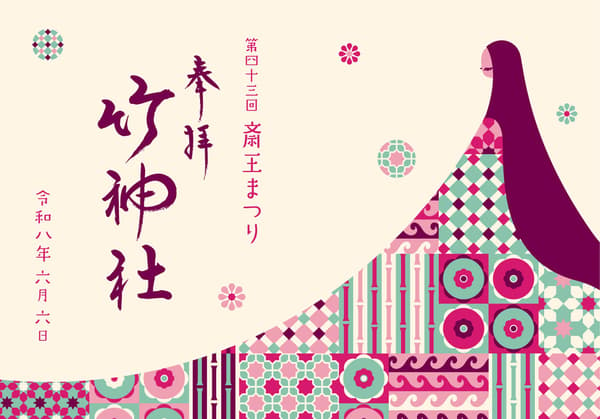
Koishikawa shared the following about her design:
"When I first visited Takejinja Shrine, I was deeply moved by the quiet, sacred presence that still breathes on the Saiku grounds.
For this goshuin, I aimed to express the graceful world of the Saio Festival and the prayers and traditions that Takejinja Shrine has carried through the ages, in a way that feels approachable to visitors today.
I hope that through this single goshuin, those who visit the shrine will feel a connection to the story of the Saio and Takejinja Shrine, and discover the beauty of the history and culture of Meiwa Town."
Takejinja Shrine — Saio Festival Goshuin
- Period: Saturdays, Sundays, and full moon days from June 6, 2026 (while supplies last)
- Location: Takejinja Shrine administrative office
- Hours: 10:00 AM to 3:00 PM (on the day of the Saio Festival, Saturday June 6, and the Full Moon Prayer on Tuesday June 30, hours extend to 10:00 AM to 7:00 PM)
About Takejinja Shrine
Takejinja Shrine was established in 1911 (Meiji 44) through the merger of 25 deities enshrined throughout the former Saiku Village. Originally located in Takekawa, the shrine was later relocated to its current site, which had previously housed a nonomiya (sacred grove). Archaeological excavations in the surrounding area have uncovered remnants of large-scale fence rows and raised-pillar buildings from the Heian period, suggesting that the site may have once been the Saio's palace. The shrine also preserves a votive tablet connected to the Noh chant "Ema," originally housed in the shrine's ema-den (votive tablet hall).