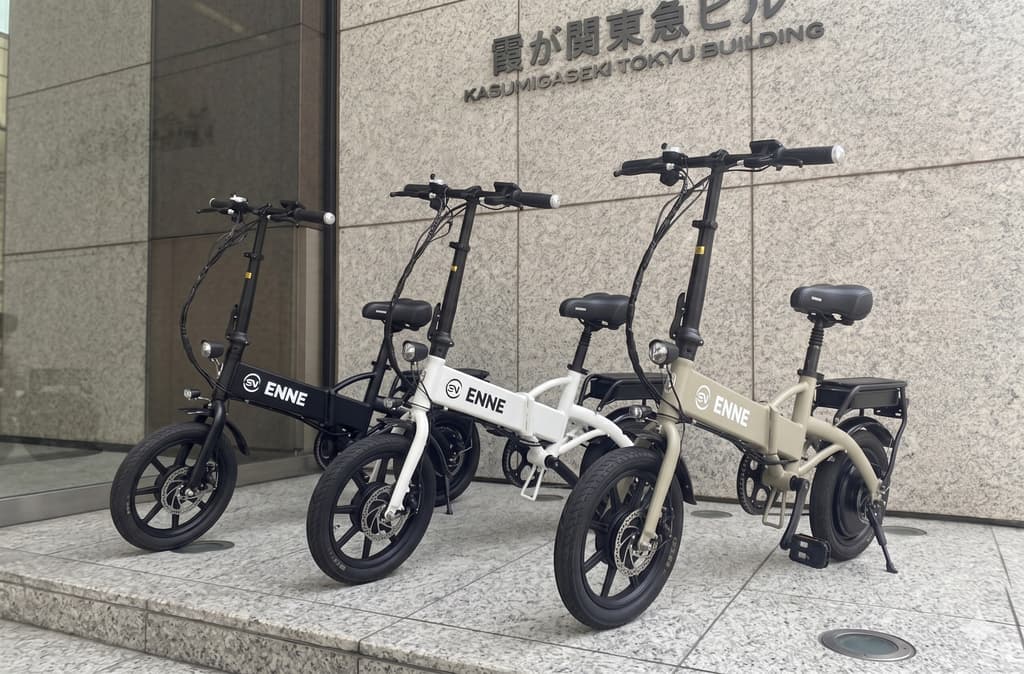
ENNE is launching the ENNE ZERO, a pedal-equipped specific light electric vehicle (特定小型原付), in a limited pre-sale beginning at 12:00 PM on April 18. The starting price is ¥150,000 (tax excluded), with a manufacturer suggested retail price of ¥330,000. Delivery is scheduled for around July 2026.
Battery Upgrade: 48V 10.5Ah Now Standard
With this release, the ENNE ZERO comes standard with a 48V 10.5Ah battery unit. The battery uses Panasonic lithium-ion cells combined with a BMS (Battery Management System) developed from technology cultivated in grid-scale power storage applications. According to ENNE, the upgrade improves not only range but also long-term durability.
Pre-Sale Pricing and Schedule
Sales open on the company's official shop at 12:00 PM on April 18. The pre-sale is quantity-limited and may close early.
| Units | Price |
|---|---|
| 50 units | ¥150,000 |
| 50 units | ¥160,000 |
| 100 units | ¥169,000 |
New color options are also being announced alongside the launch. The rear box seen on prototype units has been redesigned with a wave-fin design, achieving a 40% reduction in thickness and a lighter weight compared to the prototype.
Key Specifications
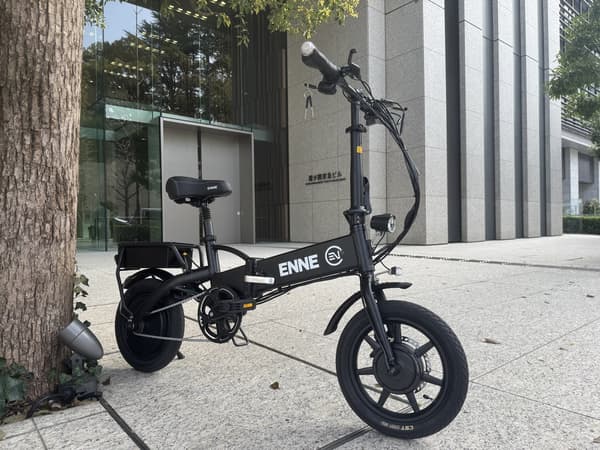
The ENNE ZERO uses a 14-inch tire size for maneuverability in urban environments. The frame is based on the X303 frame from the ENNE T600GR, refined into a slimmer design for the ZERO model.
| Item | Specification |
|---|---|
| Speed Mode | 20 km/h (5-level assist ratio) |
| Assembled Size (mm) | 1360 × 570 × 1040 |
| Folded Size (mm) | 750 × 500 × 600 |
| Weight (kg) | 22 |
| Tire Size (inches) | 14 × 1.95 |
| Range (throttle only, km) | 50 |
| Range (pedal mode, km) | 142 to unlimited |
| Max Load (kg) | 150 |
| Compatible Height (cm) | 140 to 210 |
| Rated Output (W) | 600 |
| Peak Power (W) | 1,500 |
| Terrain | Urban / Hilly |
| Battery | Panasonic et al., 48V 10.5Ah |
| Frame Material | Aluminum alloy |
| Water Resistance | IP54 |
| Warranty | Frame: 2 years / Battery & Motor: 1 year |
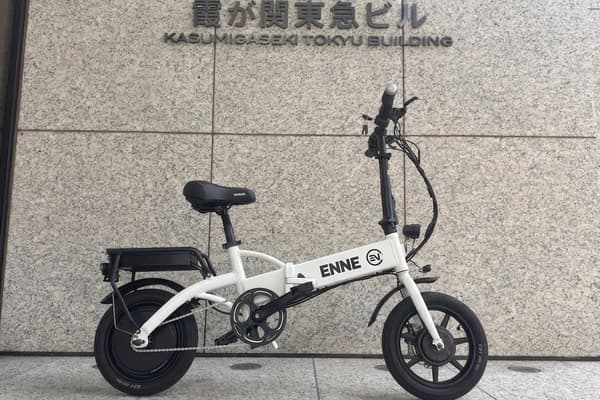
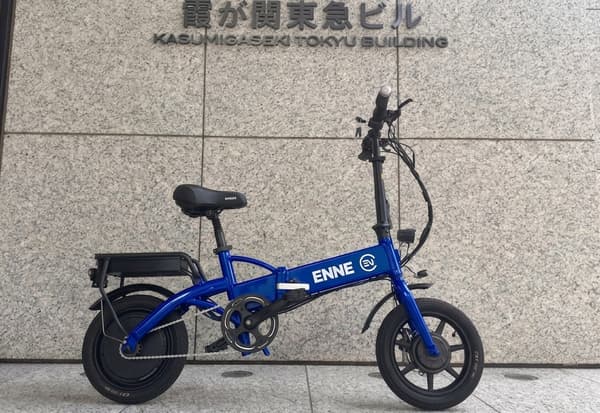
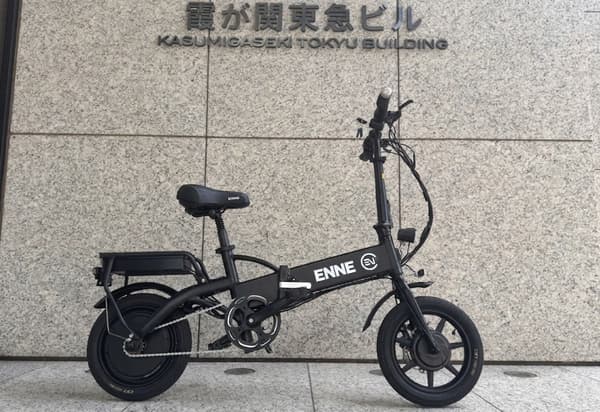
| Colors | Sand Rock / Snow White / Warlock / Destiny |
| Brake Type | Disc brake |
| Lighting | LED |
Color Variations
The Technical Challenges Behind the Pedal Design
The pedals on the ENNE ZERO are not a generator input device. They are a drive mechanism that transmits human pedaling force directly to the rear wheel — making it a true drive pedal rather than a cosmetic addition.
The key challenge in achieving this within the specific light EV category is maintaining the 20 km/h speed cap with a system where human power can be added to motor output. To address this, ENNE developed the vehicle structure and control logic simultaneously.
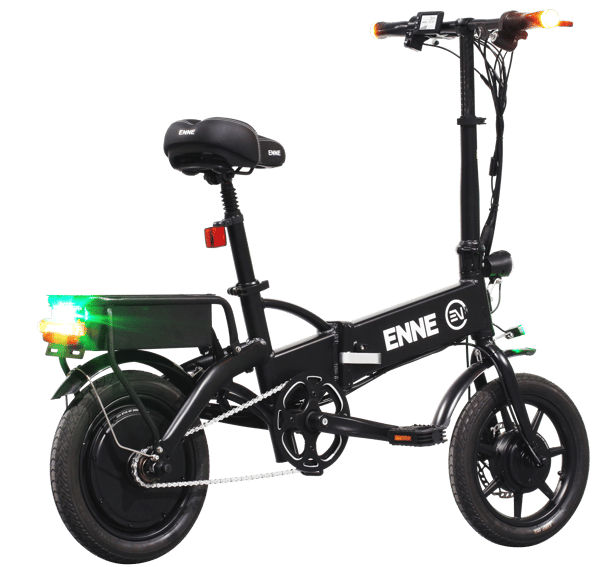
One of the core technologies supporting the 20 km/h cap is dynamic braking — a form of electromagnetic braking. ENNE describes the effect as a smooth, gradual speed suppression rather than an abrupt stop. The dynamic brake control is managed by the ENNE ZERO System AI, which handles the following tasks:
- Comprehensive judgment of vehicle speed, pedal rotation, riding conditions, and power status
- Calculation of the control output needed to maintain the 20 km/h cap
- Optimization of dynamic brake intervention
- Wake-up function triggered by movement detection when the power is off
- Maintenance of control states required by safety standards
The system functions more like an acceleration suppressor than a traditional brake — in practice, the resistance is released quickly for most riders, meaning vehicle speed rarely drops noticeably.
Running Out of Battery? You Can Still Ride Home
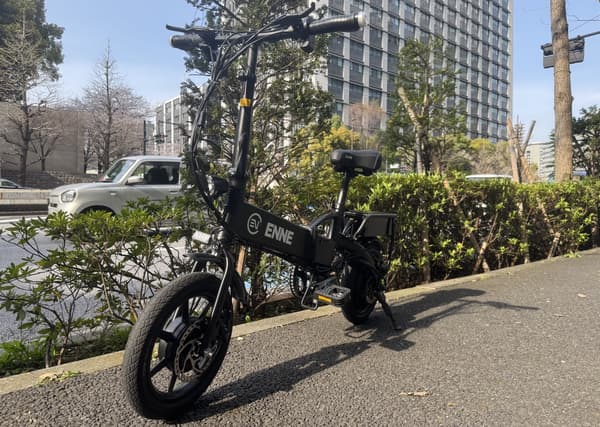
One common concern with specific light EVs is being stranded when the battery runs out. The ENNE ZERO addresses this by including drive pedals that allow the rider to continue moving even on low charge. When the vehicle detects movement, the ENNE ZERO System AI automatically wakes up, starts the necessary control systems, and maintains speed management and safety functions.
Handling Hills
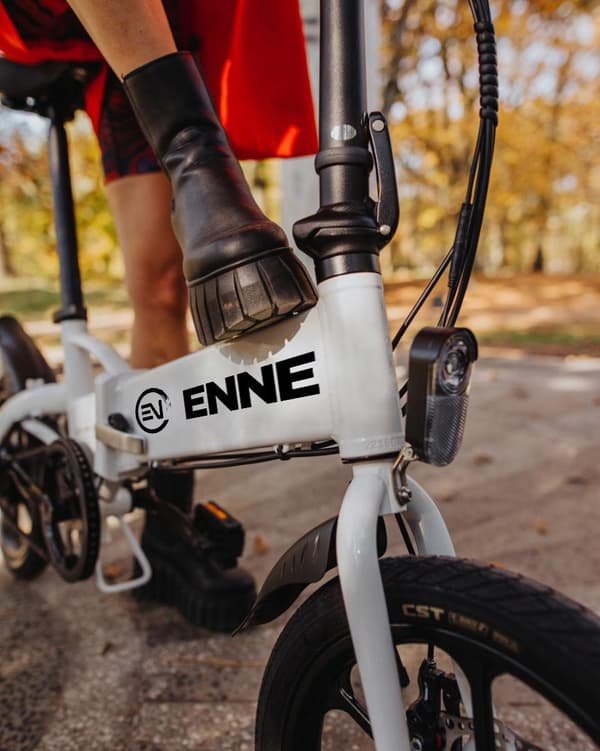
Conventional specific light EVs tend to slow down — or require the rider to dismount — on steep inclines, since motor output alone may be insufficient. The ENNE ZERO's drive pedals allow the rider to add human power to supplement the motor, reducing the likelihood of stopping on hills.
Extended Range Through Pedaling

Standard specific light EVs rely entirely on battery power, meaning range is limited by battery capacity. Because the ENNE ZERO can be ridden like an electric-assist bicycle, its potential range extends significantly compared to battery-only competitors with the same capacity — reaching up to 142 km in pedal-assisted mode, with theoretically unlimited range if the rider continues pedaling.
A True Alternative to Electric-Assist Bicycles
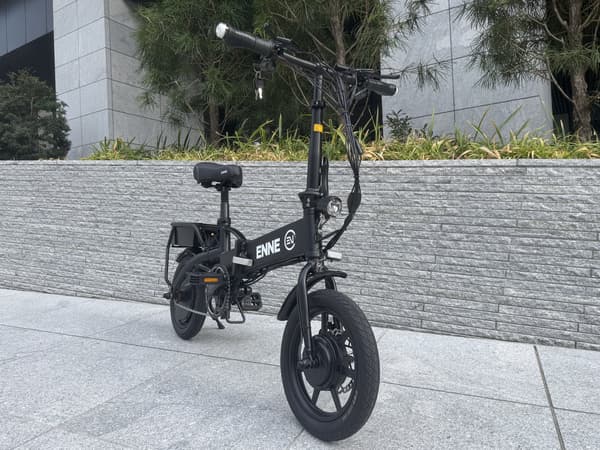
ENNE describes the underlying challenge: specific light EVs in the past have struggled to serve as real alternatives to electric-assist bicycles, not because they lacked the form, but because making a vehicle with functional drive pedals comply with the 20 km/h speed cap required solving complex engineering problems. Simply attaching pedals was not enough — speed management, braking, power-off control, and safety functions all had to be designed as an integrated system.
The ENNE ZERO combines four elements — drive pedals, ENNE ZERO System AI, dynamic braking, and wake-up functionality — to deliver what the company describes as a "properly usable pedal-equipped specific light EV."
1:5 Assist Ratio Target
ENNE is also announcing a development direction for a "1:5 assist ratio" — aiming to deliver an assist feel of approximately 5 times the rider's pedal input. The focus is not on top speed but on making starting, climbing, and carrying loads noticeably easier within the 20 km/h practical speed range. ENNE notes this is a development concept for future tuning and that final specifications will be determined through further development and testing.
Practical for City Use at 20 km/h

A common question about 20 km/h vehicles is whether that speed is practical as a bicycle replacement. According to Japanese real-world cycling data cited in the release, the average bicycle speed for students and adults is 14.6 km/h, and 11.4 km/h for children and elderly riders. In urban environments with traffic signals, intersections, and pedestrians, maximum speed matters less than ease of starting, re-acceleration, and consistent hill performance.
Starting April 1, 2026, bicycle traffic violations in Japan are also subject to ticketed enforcement (青切符制度), including violations such as riding on sidewalks. This change is expected to shift more cyclists onto the road, where the ENNE ZERO's 20 km/h capability fits the practical urban speed range.
Who the ENNE ZERO Is Suited For
According to ENNE, the ENNE ZERO is particularly suited for those who:
- Want an easier commute to stations or for short-distance travel
- Find current electric-assist bicycles insufficient in hilly areas
- Want easier starting and hill climbing even with heavy loads
- Prefer not to worry about battery level during rides
- Prioritize strong assist feel over speed or throttle performance
Note: The "1:5 assist ratio" is a development concept and direction for future specifications. Final specifications are subject to change based on development and testing. Battery cells are planned to use Panasonic, but equivalent cells from other manufacturers (LG, Samsung, etc.) may be used depending on material availability. Range figures vary based on rider weight and road conditions and are not guaranteed. Riders must carry compulsory automobile liability insurance documentation. Helmet use is recommended (not mandatory). Minimum age for operation is 16 years. No license required. Always follow applicable traffic laws and regulations.