"Being paired with Ms. Hori comes with the good fortune of always being a hit, and we ended up becoming close friends."
(Jakucho Setouchi, from the essay Jakuan Koyomi)
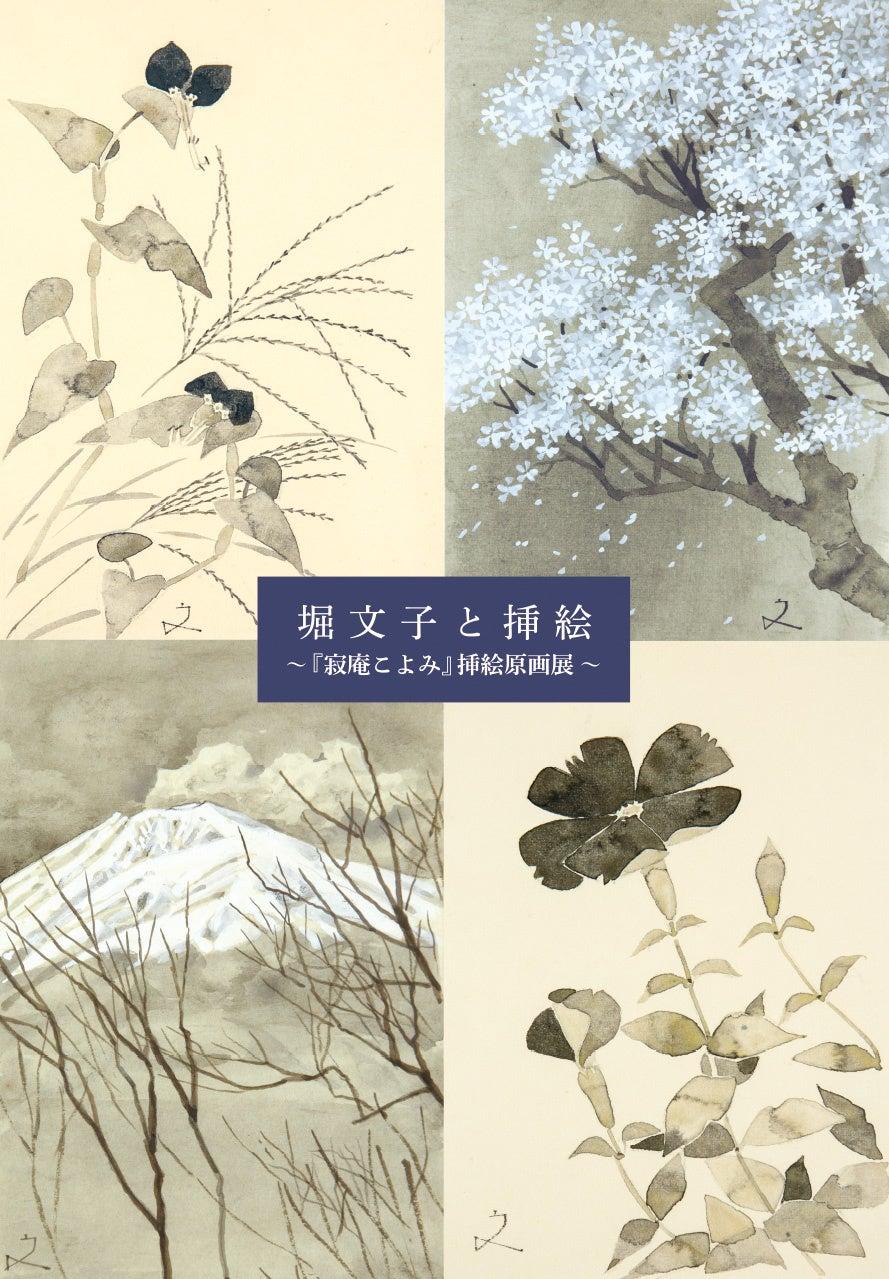
An exhibition titled "Fumiko Hori and Illustration: Jakuan Koyomi Original Illustrations Exhibition" (「堀文子と挿絵 ~『寂庵こよみ』挿絵原画展~」) will be held at Nakajima Art (ナカジマアート), a gallery in Ginza, Tokyo, from Thursday, November 5, 2026.
Fumiko Hori was born in 1918 and lived through the turbulent Showa era. She kept working as a painter during and after the war, and to support her family she began taking illustration work in the period known as the "golden age of illustration," when newspapers and magazines for the general public were booming. Writer Jakucho Setouchi's serialized essay Jakuan Koyomi ran with more than 90 seasonal illustrations that Hori, then known as a "painter of flowers," drew especially for it. More than 50 of these original works will be shown to the public for the first time.
Jakuan Koyomi began its run in the newspaper Tokyo Shimbun in 1985. For it, Hori drew Japanese flowers such as bellflowers, narcissus and camellias, as well as Karuizawa scenery and wild plants, using shades of ink and gofun (white pigment). Through works born from her long friendship with Setouchi, the exhibition introduces Hori's career from the viewpoint of illustration.
The exhibition is part of the series "The Work of Fumiko Hori" (「堀文子の仕事」), which traces the roughly 80 years of work by Hori, who died in 2019 at the age of 100.
First Public Showing of the Jakuan Koyomi Originals
Jakucho Setouchi (1922-2021), a writer who had a long friendship with Hori, began the essay series Jakuan Koyomi in the Tokyo Shimbun on September 17, 1985. The exhibition shows the original illustrations Hori drew for the series to the public for the first time.
The illustrations are carefully drawn in shades of ink and gofun, and their subjects are the Japanese flowers Hori excelled at, such as bellflowers, narcissus and camellias, along with the scenery and wild plants of Karuizawa, where she then had her studio. They show the delicate expression that is unique to Hori.
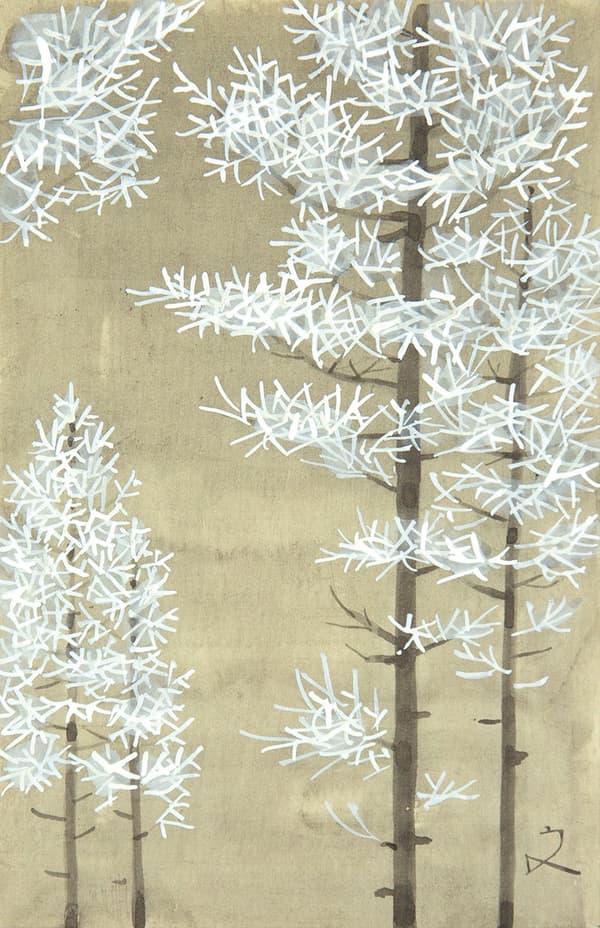
Original illustration for Jakuan Koyomi (installment 55, 1987) © 一般財団法人堀文子記念館
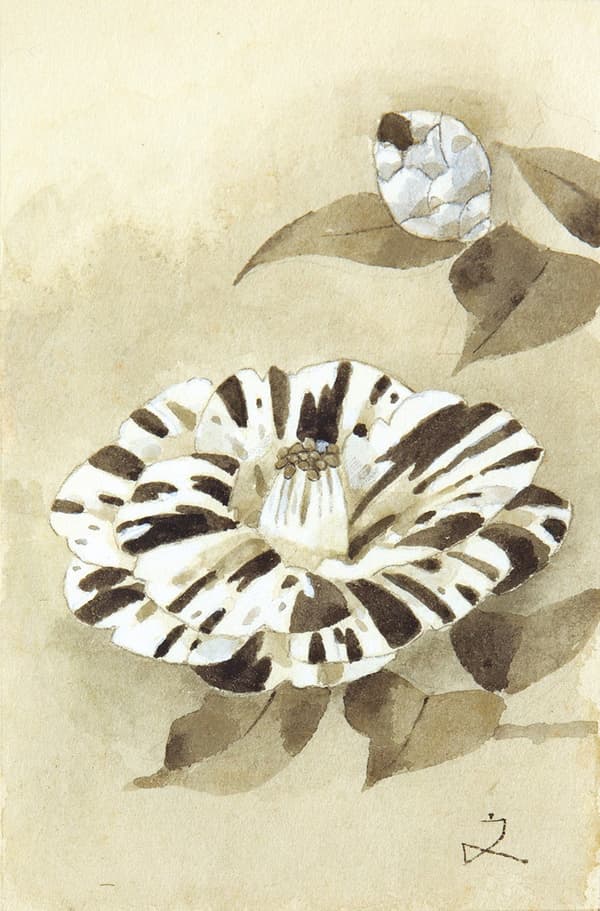
Original illustration for Jakuan Koyomi (installment 57, 1988) © 一般財団法人堀文子記念館
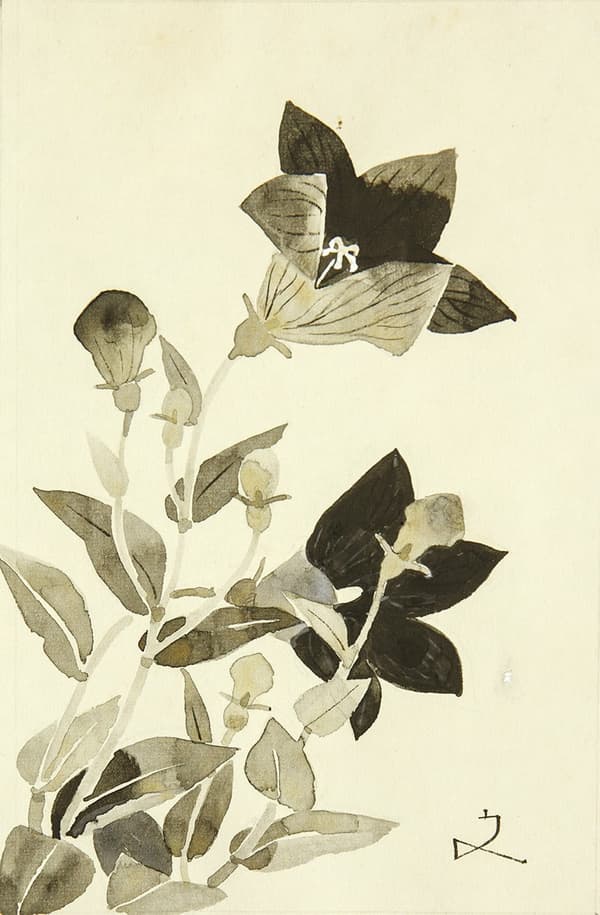
Original illustration for Jakuan Koyomi (installment 94, 1989) © 一般財団法人堀文子記念館
Jakucho Setouchi and Fumiko Hori
The friendship between Setouchi and Hori began in the 1960s with a trip to Shikoku planned by a newspaper company. Later, from the days when Setouchi was active under the name Harumi Setouchi, Hori made illustrations for novels, book cover art and spot illustrations for essays, and the two deepened their relationship over many years.
In 1974, Setouchi opened Mandarayama Jakuan in Sagano, Kyoto. Hori is said to have introduced the architect for its construction.
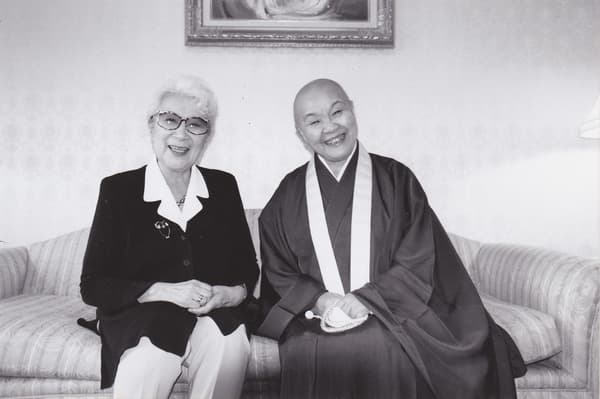
A conversation in the January 1998 issue of Fujin Gaho (婦人画報) © 一般財団法人堀文子記念館 Photo: 広瀬祐子
Hori's Expression, Nurtured in the "Golden Age of Illustration"
In postwar Japan, newspapers and magazines for the general public boomed as never before, in a period called the "golden age of illustration." In the black-and-white pages of a newspaper, illustrations drawn in shades of ink had to be of high quality to draw the reader's eye. Hori worked energetically to meet that demand, and in her later years she said, "Illustration work was important work that influenced my later creations."
At the exhibition, the main venue on the 3rd floor shows the Jakuan Koyomi original illustrations. The 5th-floor gallery presents a variety of other original illustrations, including illustrations of Japanese flowers published in women's magazines such as Utsukushii Kimono (美しいキモノ) and Fujin Gaho.
These illustrations were created in a print culture that predates digitization, and they convey the warmth of handwork.
Exhibition Overview
Exhibition: Fumiko Hori and Illustration: Jakuan Koyomi Original Illustrations Exhibition (堀文子と挿絵 ~『寂庵こよみ』挿絵原画展~)
Dates: Thursday, November 5 to Wednesday, November 25, 2026
Hours: 11:00 AM to 6:30 PM
Closed: Sunday, November 15
Venue: Nakajima Art, 3rd and 5th floors, Abe Building, 5-5-9 Ginza, Chuo-ku, Tokyo 104-0061
Works on display: About 50 (planned), including ink paintings and Nihonga
Cooperation: 一般財団法人堀文子記念館 (Fumiko Hori Memorial Hall Foundation)
- Nakajima Art: https://www.nakajima-art.com/
Fumiko Hori Calendar 2027
The Fumiko Hori Calendar 2027 (堀文子暦2027) has been completed again this year. In the more than 20 years since it went on sale, the calendar has never used the same picture twice. This edition features Hori's specialties, the peony and the red plum blossom, as well as scenery of Tuscany, Italy, a place with which she had a connection, and alpine plants of Karuizawa, so that her world can be enjoyed throughout the year.
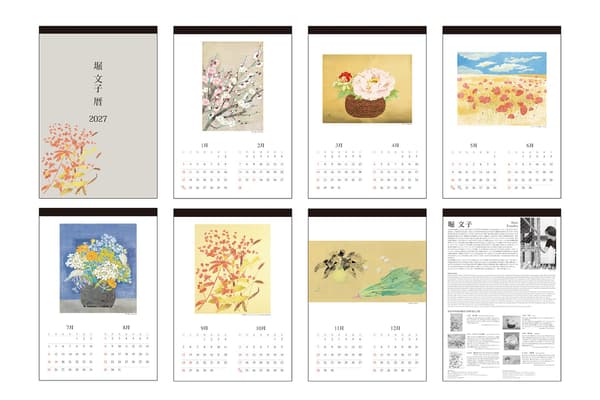
- Price: ¥2,200 (tax included)
- Size: 53.0 cm tall × 36.4 cm wide
- Format: 8 sheets, bound
Picture-and-Text Collection Fumiko Hori's Sumi-e
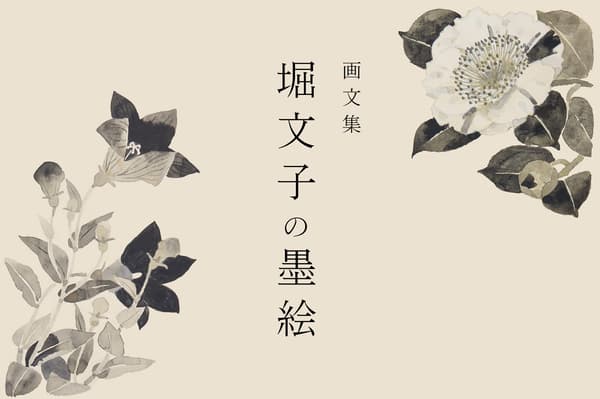
Pre-orders have started for the picture-and-text collection Fumiko Hori's Sumi-e (堀文子の墨絵). It compiles about 60 ink paintings that Hori drew as illustrations for Jakuan Koyomi, the series Jakucho Setouchi serialized in the Tokyo Shimbun from 1985. It is a long-requested collection of Hori's ink paintings.
The book brings together works in which familiar motifs such as garden flowers and vegetables are carefully drawn in shades of ink and gofun, along with words Hori spoke on various occasions.
- Price: ¥1,980 (tax included)
- Size: 15 × 22.5 cm
- Pages: 56
Fumiko Hori Exhibitions Across Japan in 2026
Seven years after Hori's death, exhibitions of her work are held across Japan every year. This year offers many ways to enjoy the 80 years of her career.
- Joshibi Art Museum (女子美アートミュージアム), Hori's alma mater: "Fumiko Hori's Starting Point: Sketchbooks, Preliminary Drawings and Finished Works Beginning at Joshibi" (「堀文子の出発点 女子美からはじまる写生帖・下図・本画」), May 22 to June 27
- Karuizawa Kogen Bunko (軽井沢高原文庫): "Fumiko Hori Exhibition: Connections of Life" (「堀文子展 いのちのつながり」), July 18 to October 12
- Nakamuraya Salon Museum (中村屋サロン美術館): "Fumiko Hori Exhibition: The Sparkle of Life" (「堀文子展 生命の煌めき」), currently on view through December 6
- Chihiro Art Museum Azumino (安曇野ちひろ美術館): "Chihiro Iwasaki and Fumiko Hori: The World of Children's Pictures" (「いわさきちひろと堀文子 童画の世界」), currently being held, the first joint showing of Hori and Iwasaki, who was born in the same year, 1918, and lived through the turbulent Showa era
Official sites:
- Chihiro Art Museum Azumino: https://chihiro.jp/azumino/
- Nakamuraya Salon Museum: https://www.nakamuraya.co.jp/museum/
About Fumiko Hori
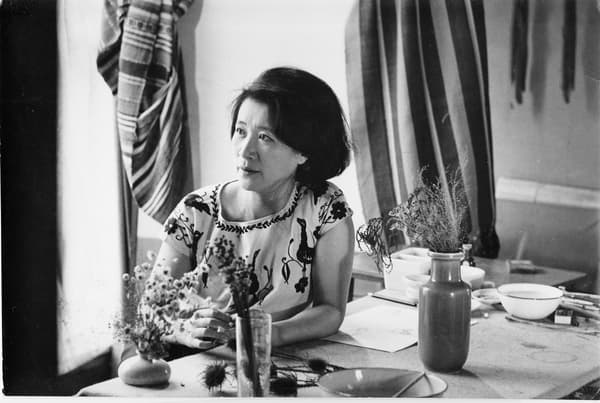
Fumiko Hori in her Aoyama studio, around 1964 © 一般財団法人堀文子記念館
Fumiko Hori was born in 1918 in Hirakawacho, Kojimachi, Tokyo. She graduated from Joshibi Specialized Art School (女子美術専門学校, now Joshibi University of Art and Design). While still a student she exhibited with the Shin Bijutsujin Kyokai (新美術人協会), and after the war she continued to work with groups including Sozo Bijutsu (創造美術), the Nihonga division of the Shinseisaku Association (新制作協会日本画部), and Sogakai (創画会).
After graduating, she married diplomat Saburo Minowa. While active as a member of the Shinseisaku Association (now Sogakai), she also made illustrations for magazines and picture books in order to care for her sickly husband and support the household.
In 1952 she received the 2nd Uemura Shoen Prize, and from then on she drew attention as an innovative Nihonga painter.
In 1961 she set out on a roughly two-year journey abroad. After that, taking "Isshofujū" (一所不住, her own coinage) as her creed, she moved her base to Oiso in Kanagawa, Karuizawa in Nagano, and, at the age of 69, Arezzo in Italy, and she spent her later years working in Oiso, Kanagawa. Committed to working throughout her life, she held the annual exhibition "Fumiko Hori: Ima (Now)" (「堀文子 現在(いま)」) at Nakajima Art every year from 1997 (age 78) to 2016 (age 98). Not only as a painter, her way of life and her words continue to resonate with many people. Holding on to awe of nature and wonder at life, she created a wide variety of works with her own sensibility. She died in 2019 at the age of 100, and retrospectives have been held across Japan in recent years.
- 一般財団法人堀文子記念館 (Fumiko Hori Memorial Hall Foundation): http://www.horifumiko-foundation.jp/