HOSHINOYA Taketomi Island (星のや竹富島), a cultural resort that protects a paradise on Taketomi Island, the island of "Utsugumi" (ウツグミ, meaning united cooperation), will serve a winter edition of its "Island Terroir" (島テロワール) course dinner from December 1, 2026 to March 31, 2027. The resort serves course dishes built on the concept of Island Terroir, which expresses the unique "terroir" born from the weather, climate, and daily life of Taketomi Island.
The winter course focuses on the character and flavor of the seasonings that have long been treasured on the island, and prepares them with French and other techniques. It is a course where dishes shaped by the blessings of the sea and land of a remote island made of coral reefs come together with the gentle pace of island time, offering gastronomy found only at HOSHINOYA Taketomi Island.
Island Terroir: Reflecting the Island's Time, Culture, and Spirit in the Food
Under the concept of Island Terroir, HOSHINOYA Taketomi Island serves course dishes that express the unique "terroir" (note 1) of Taketomi Island, born from its weather, climate, and the daily life of its people. The island's ingredients and food culture, refined with French cuisine and various other techniques, combine with a stay on the island to create a new kind of gastronomy.
Note 1: Terroir is a French word meaning "land" or "climate." It refers to a concept that covers both the natural environment where crops grow (climate, soil, topography, and so on) and human factors such as cultivation methods and the people involved.
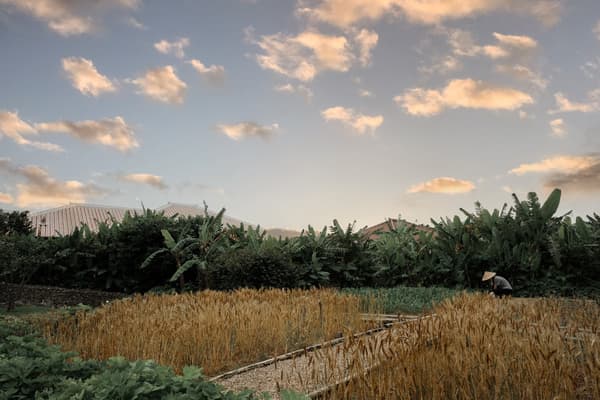
The fields of HOSHINOYA Taketomi Island, where mugi (麦, barley or wheat) and awa (粟, millet), which have become difficult to find on the island, are grown
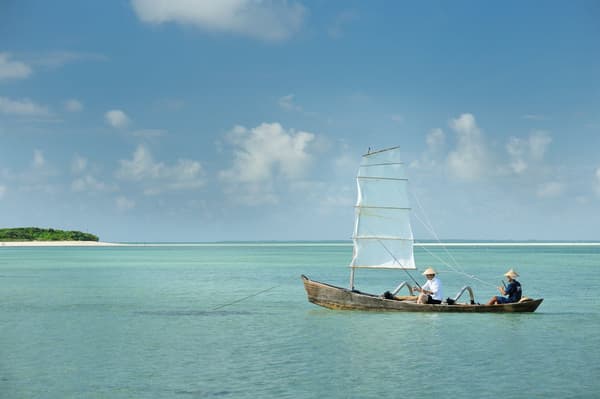
The sabani, a wooden boat that was also used to travel to Iriomote Island to grow rice, because rice could not be grown in the soil of Taketomi Island
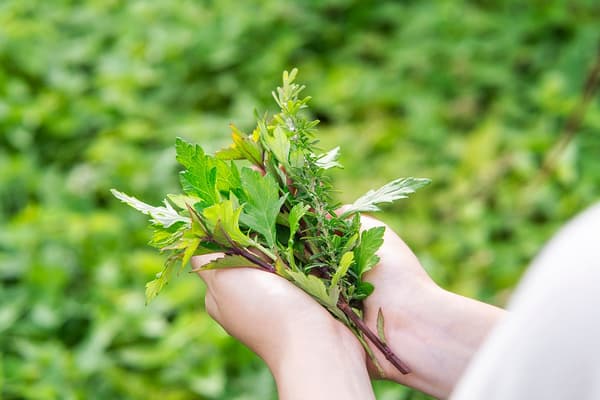
Nuchigusa (命草), a medicinal herb that has supported the health of the people of Taketomi Island, which has no doctor
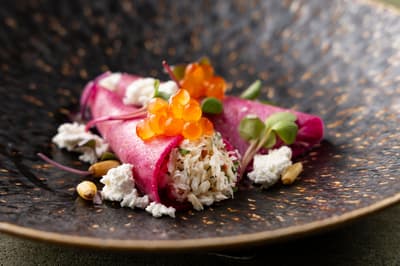
Tuna and Wagyu Tartare, Khao Yam Style
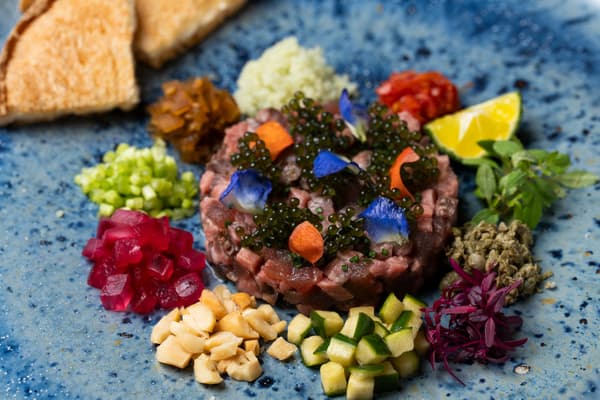
The tuna and wagyu tartare, an appetizer in which the island's ingredients are mixed together
The first dish of the course is a tartare that expresses Island Terroir on a single plate. Nuchigusa, which is at its most fragrant in winter, and tuna, a winter delicacy from the sea, represent "the island's sky" (島の天). Wagyu beef and vegetables, gifts of the land, represent "the island's earth" (島の地). Jijiki (ジージキ), a sweet and salty brown sugar pickle made in Okinawan homes, represents "the island's people" (島の人). Guests mix all of these together before eating. The mixture is served on shio senbei (塩せんべい), a traditional Okinawan dagashi (inexpensive snack) made mainly from wheat flour, which brings out the varied textures and flavors born of Taketomi Island's food culture.
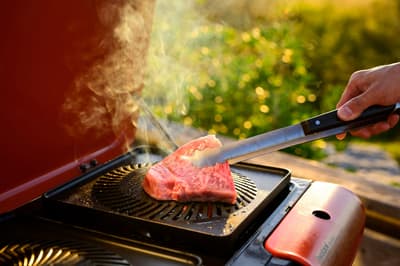
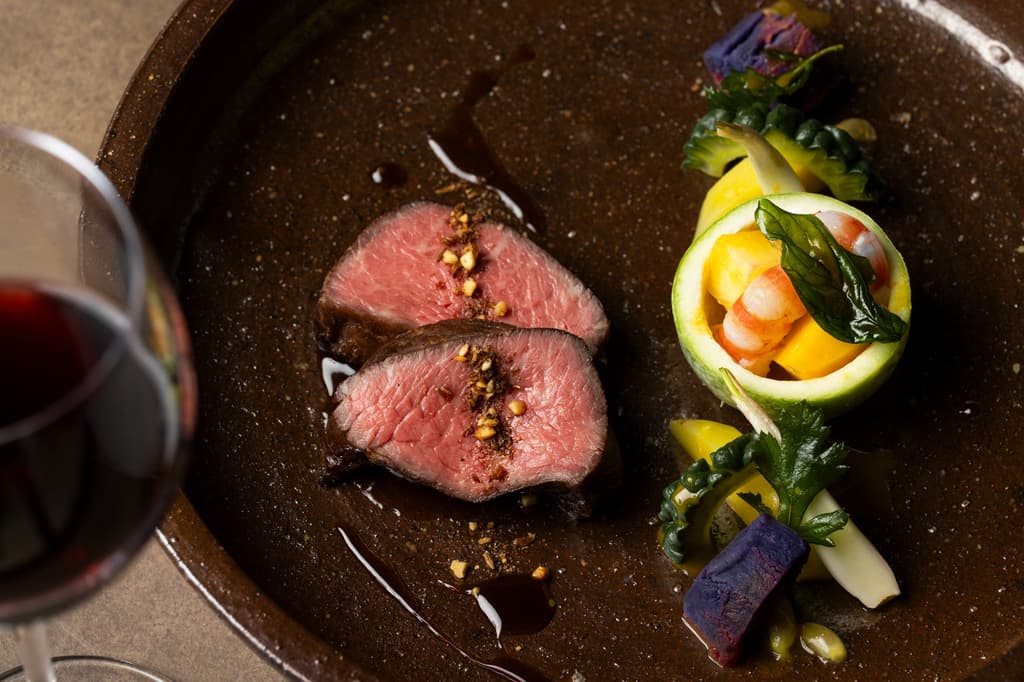
Charcoal-Grilled Aged Beef Coated With Kachi, With Kuruma Prawn and a Warm Vegetable Salad
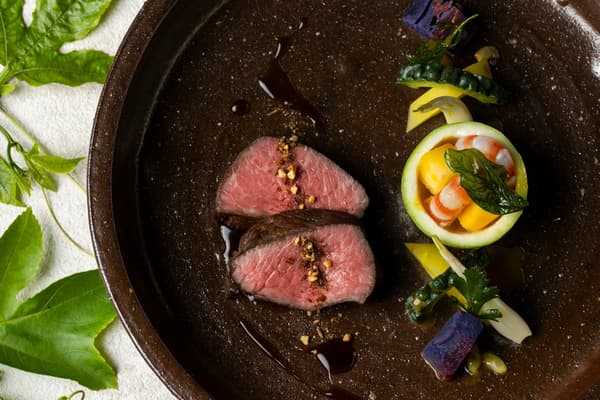
A dish that connects the gifts of land and sea with a sauce that draws on flavors familiar on the island
This dish pairs aged beef, aged with a technique unique to Okinawa, with kuruma prawn, an island ingredient of winter. The sauce uses Hitati (ヒタティ), an island soy sauce once made on Taketomi Island, koregusu (コーレーグース), a seasoning made with island chili peppers, and tankan citrus. To bring out the aroma of the island soy sauce, the aged beef is coated with kachi (カチ), the moromi (fermented mash), and grilled over charcoal. Like the island's culture, which has grown while being influenced by neighboring countries, the flavor blends nostalgia with an exotic aroma.
Taketomi Island's Soy Sauce "Hitati"
On the island, households have long kept a kame (ceramic jar) and made their own soy sauce. A brewery once carried on the island's unique method, but production became difficult. To preserve the taste, volunteers on the island took it over around 2022, and brewing continues today. Made with katsuobushi (dried bonito flakes) and awamori, it is known for a deep richness and flavor that feel both nostalgic and exotic.
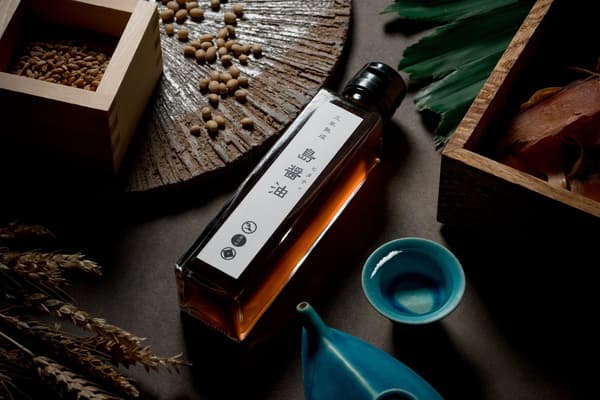
The island soy sauce "Hitati"
Enjoying the Island Slowly While Watching the Changing Scenery
In the dining room, which has large open windows, guests can enjoy Island Terroir while watching the changing colors of the sky and the plants. After the sun sets, the starry sky of Yaeyama, which is certified as a "Starry Sky Reserve" (星空保護区), spreads out overhead. Island Terroir, as proposed by HOSHINOYA Taketomi Island, is a dining experience completed not only by the dishes in the dining room but also by how guests spend their time on the island, such as giving themselves over to the gentle flow of time and being soothed by the beauty of the sky and sea.
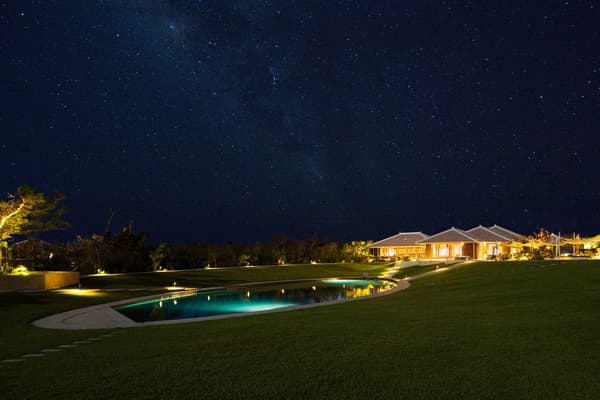
The starry sky that spreads out just beyond the dining room
Executive Chef Tatsuo Nakasu
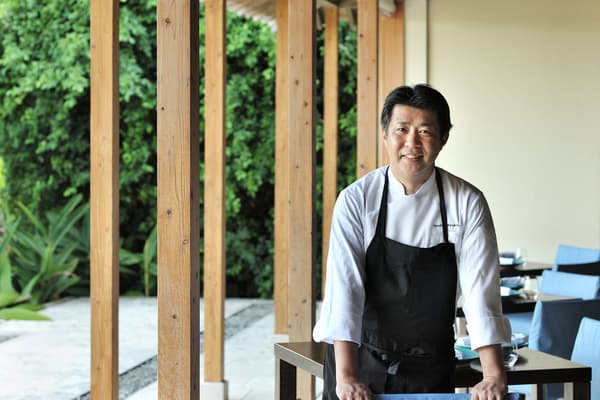
Executive Chef Tatsuo Nakasu (中洲 達郎)
Born in Tokyo in 1976, Tatsuo Nakasu joined Hoshino Resorts in 2008 and served as head chef at Hotel Bleston Court. In 2011, he took part in the Bocuse d'Or international cooking competition as the representative of Japan and Asia and advanced to the world final. In 2012, he became executive chef when HOSHINOYA Taketomi Island opened. He continues to explore cuisine that reflects the spirit of the island, drawing on the food culture of Taketomi Island and the rest of the Yaeyama Islands.
Winter Dinner Course "Island Terroir": Details
- Period: December 1, 2026 to March 31, 2027
- Price: ¥18,150 per person (tax and service charge included, accommodation not included)
- Reservations: Accepted on the official website until the day before
- Eligibility: Hotel guests
- Note: Dishes and ingredients may partly change depending on supply conditions.
HOSHINOYA Taketomi Island
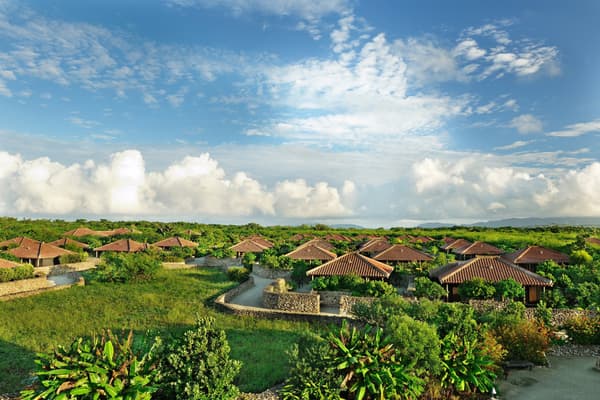
View of the village from the lookout platform
HOSHINOYA Taketomi Island is a village of Ryukyuan red tile roofs in the east of Taketomi Island. Its grounds of about 20,000 tsubo hold detached guest rooms built with respect for tradition in line with the Taketomi Island Landscape Formation Manual (竹富島景観形成マニュアル), just like the houses on the island, along with white-sand lanes, a pool, a lookout platform, and more, where the original landscape of Okinawa spreads out.
- Address: 1955 Taketomi, Taketomi Town, Yaeyama District, Okinawa 907-1101
- Phone: 050-3134-8091 (Hoshinoya general reservations)
- Rooms: 48 (check-in 3:00 PM, check-out 12:00 PM)
- Price: From ¥147,000 per night per room (tax and service charge included, meals not included). Standard reservations are for stays of two nights or more.
- Access: About 10 minutes by ferry from Ishigaki Port; a pickup service is available from Taketomi Port
- Website: https://hoshinoresorts.com/ja/hotels/hoshinoyataketomijima/