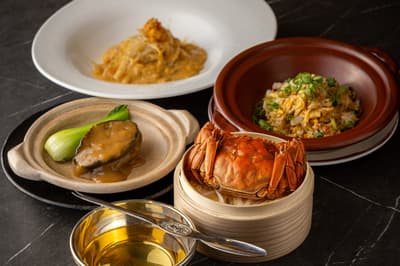
Riverside Kitchen & Bar at Hotel Indigo Hakone Gora (Kiga, Hakone-machi, Ashigarashimo-gun, Kanagawa) will serve a new dinner course featuring winter ingredients from December 2026.
The course is created by Executive Chef Kei Sakamoto. Built around the French culinary technique he has developed over the years and the bold character of wood-fire cooking, it blends in Japanese ingredients and aesthetics. Each plate expresses the nature and local bounty of Hakone in winter, along with Sakamoto's memories from his years of training and his experience as a chef.
At the center of the lineup is the "Chef's Special Course," which pairs ingredients such as Tanzawa shamo chicken (丹沢慈黒軍鶏), local kinmedai (splendid alfonsino), and Wagyu beef with Japanese flavors including wasabi, yuzu, shiitake mushrooms, and green tea. The dish names also carry the inspiration, scenery, and thoughts behind each plate.
Dinner is served in a dining room filled with the aroma of wood fire.
For Sakamoto, a dish that is merely "delicious" is not enough. He believes a plate is complete only when flavor, temperature, texture, aroma, and appearance all come into harmony. Rather than chasing trends or short-lived impact, he aims to draw out the full potential of familiar ingredients through technique, and to express his own skill, sensibility, and accumulated experience in a single dish.
To that philosophy, he adds a new expression of "wa" (Japanese sensibility), creating dishes that stay in the memory.
Chef's Special Course — 5 Dishes, ¥19,000
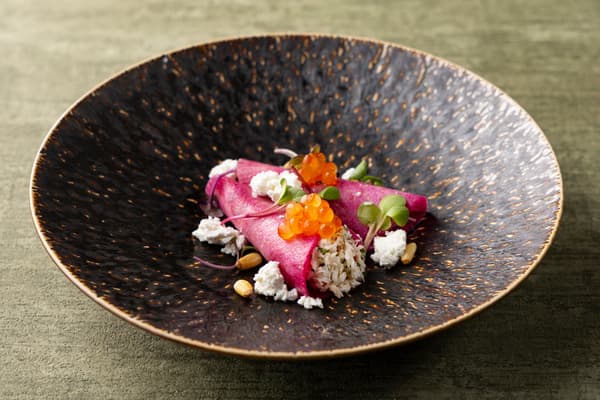
Amuse — "Fuin" (風韻)
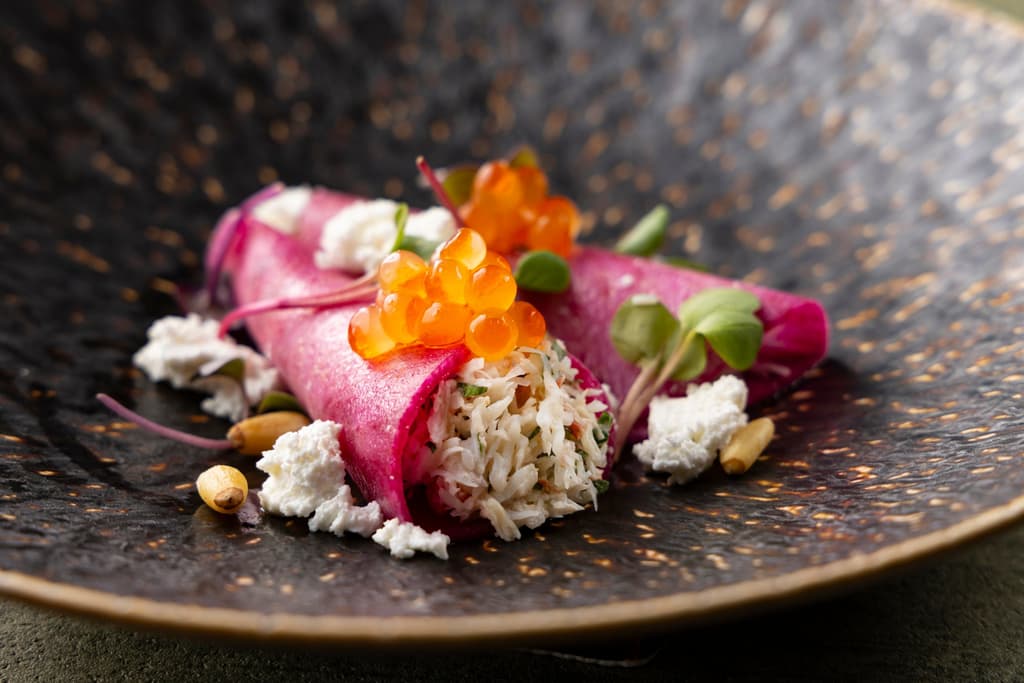
Snow crab (zuwaigani) and koshin daikon unité
A winter delicacy, snow crab, is marinated with shiso leaf, shallots, and sour cream, then wrapped in thinly sliced koshin daikon (red-core radish). Fresh cheese, salmon roe, and pine nuts are added, making an appetizer in which a variety of textures and aromas overlap.
"Fuin" refers to a subtle charm and deep beauty that words cannot fully express. Sakamoto's aim was to bring out the distinct character of the snow crab and the radish while harmonizing them into one beautiful dish. French technique and Japanese sensibility come through in the combination of ingredients and the delicate plating.
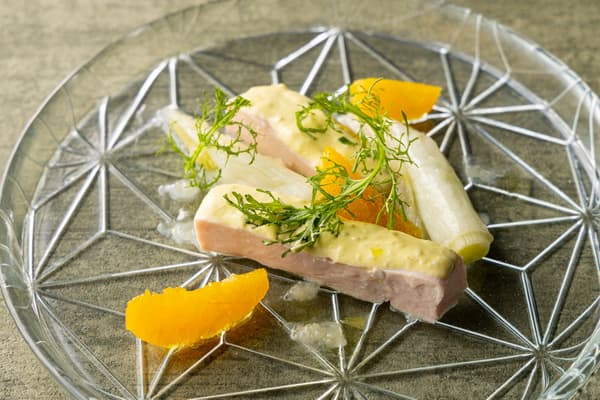
Appetizer — "Kanyo" (涵養)
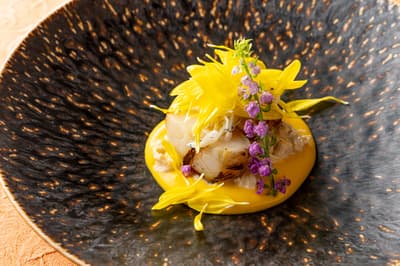
Tanzawa shamo chicken (丹沢慈黒軍鶏) wasabi chaud-froid with leek and citrus
Tanzawa shamo chicken from Kanagawa Prefecture is prepared as a chaud-froid, a traditional French cold dish. The breast and thigh meat are cooked gently at a low temperature until moist, then coated with a hollandaise sauce enriched with wasabi. Leek marinated in a Shonan Gold dressing and seasonal citrus accompany the dish, bringing out the shamo's robust flavor and a fresh aroma.
"Kanyo" means to nurture and cultivate over time, the way water soaks into soil. What Sakamoto layered onto this dish is a wish to learn about local ingredients and share their appeal through cooking.
It pairs the chaud-froid technique he had long wanted to try with a leek garnish inspired by the French "poireaux vinaigrette," linking local ingredients with French tradition.
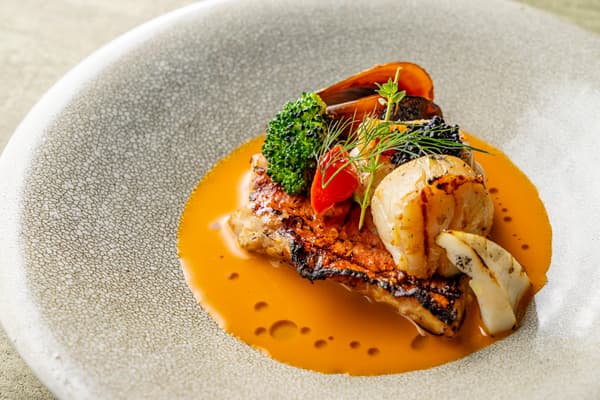
Fish — "Shokei" (憧憬, longing)
Local kinmedai bouillabaisse
This is the bouillabaisse Sakamoto continues to pursue: thick-cut local kinmedai combined with seafood such as lobster, scallops, squid, and mussels. The grilled seafood is served with a rich sauce that layers saffron and liqueur over a broth carefully extracted from fish bones and aromatic vegetables.
The dish originates in his time in southern France, where he trained in his twenties. His strong longing for Mediterranean cuisine remains today, and when he came across kinmedai in Hakone, bouillabaisse was the first dish that came to mind.
Having elevated a traditional regional dish into his own restaurant cuisine while still pursuing his ideal flavor, it remains a special plate for Sakamoto.
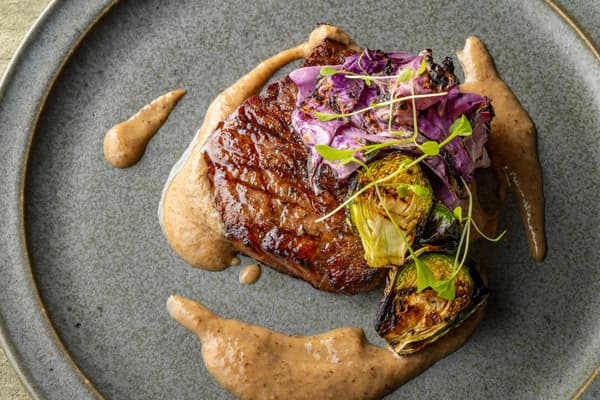
Meat — "Kyoshu" (郷愁, nostalgia)
Wood-fired Wagyu diamond sirloin with charred cabbage and mountain shiitake
The main dish is Wagyu sirloin grilled over a wood fire and served with a rich sauce that concentrates the umami of shiitake mushrooms. Two kinds of cabbage, one grilled and one fried, accompany the meat.
What Sakamoto layered onto this dish is a nostalgic, warm scene of a wood fire flickering in a cold forest. Imagining the warmth of flames in the chilly winter air, he paired the wood-grilled Wagyu sirloin with the shiitake sauce.
The star he chose this time is not only the meat but also the shiitake. With the sauce built around its rich flavor and the garnish kept deliberately simple, the aroma of the wood fire and the inherent strength of the ingredients stand out.
Dessert — "Yuko" (幽香, faint fragrance)
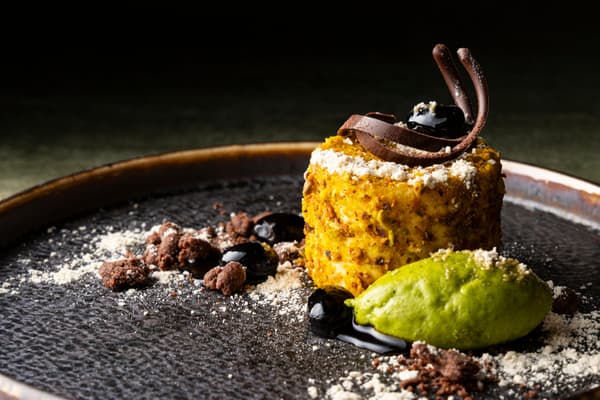
Yuzu mousse with green tea ice cream and bamboo charcoal
A mascarpone mousse scented with yuzu is covered in pistachio and combined with distinctly Japanese ingredients: green tea ice cream, black soybeans, kuromitsu (black sugar syrup), wasanbon (fine-grained Japanese sugar), and a bamboo charcoal crumble.
The idea goes back about ten years, when Sakamoto envisioned the worlds of "wabi-sabi" and "karesansui" (dry landscape garden). This is the first time the idea he has nurtured for so long has taken shape as a dessert.
Using French pastry technique, the dish expresses Japanese aesthetics through color, texture, and flavor. True to its name, it offers the subtle aroma of yuzu and green tea and a restrained lingering finish, closing the winter course.
Signature Course — 4 Dishes, ¥15,000
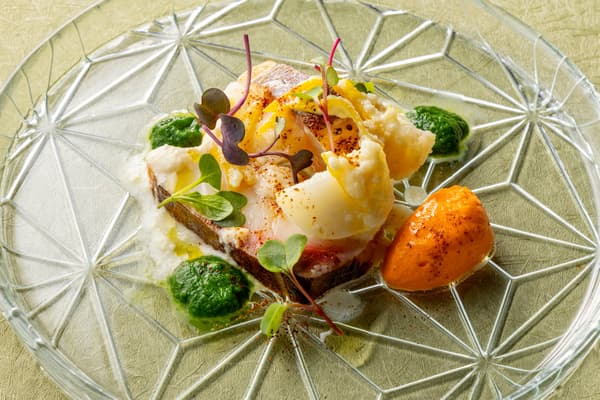
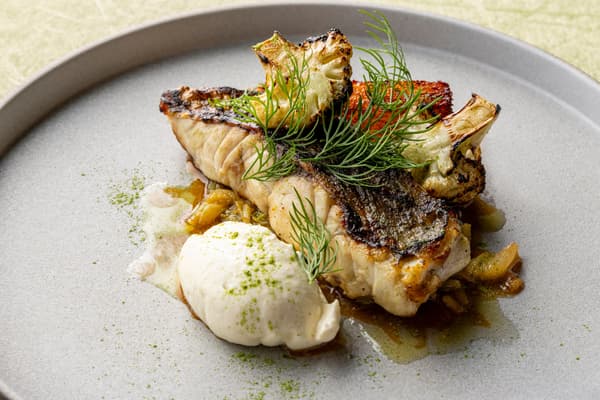
The fish dish features seasonal local fish grilled over a wood fire, served with a refreshing crema made with Shonan lemon (湘南潮彩レモン) and daikon mochi infused with clam broth. For the main dish, domestic beef sirloin grilled over a wood fire is paired with a sauce that concentrates the umami of shiitake, making a course that conveys the nature of Hakone in winter.
Main (meat) — "Kyoshu" (郷愁)
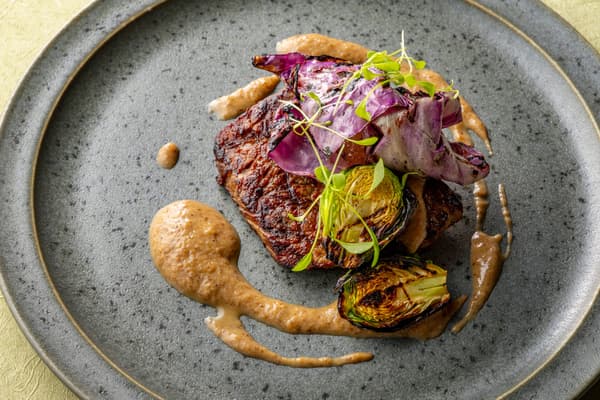
Wood-fired domestic beef sirloin with charred cabbage and mountain shiitake
A powerful yet warm dish of domestic beef sirloin grilled over a wood fire and paired with a rich sauce that concentrates the umami of shiitake mushrooms.
Standard Course — 4 Dishes, ¥10,000
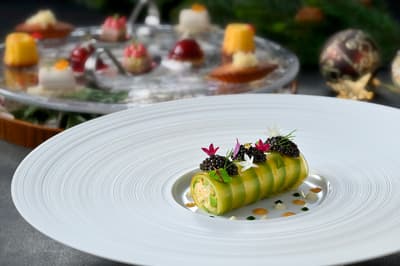
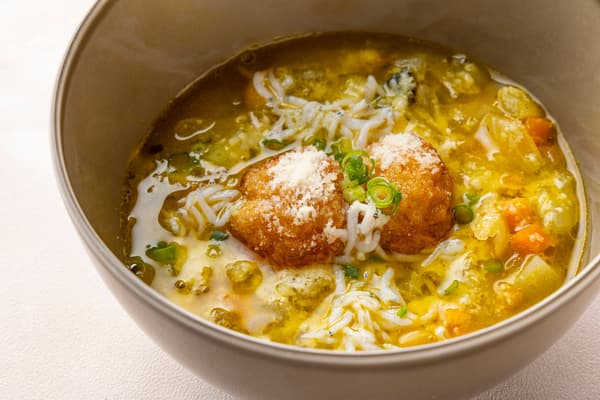
The course starts with an appetizer of winter yellowtail (kan-buri) and turnip prepared with yuzu koji, followed by a winter vegetable soup topped with a Shonan shirasu quenelle and Shonan pork grilled over a wood fire, offering local ingredients and winter flavors. Combining French technique with Japanese accents, the dishes are approachable yet distinctive.
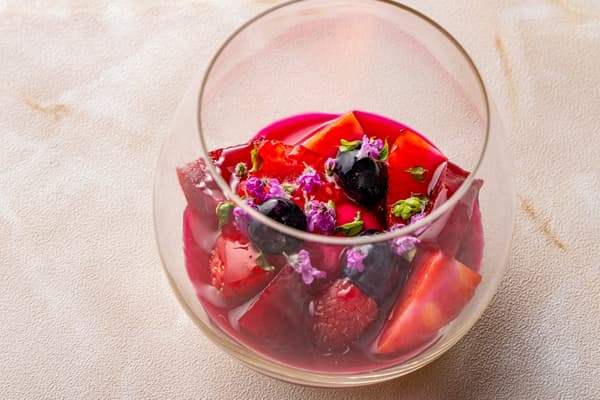
Dessert — "紅実"
Strawberry and beetroot, white chocolate, lingering shiso
A colorful dessert that combines local shiso and beetroot with seasonal berries, in which the richness of white chocolate and a refreshing acidity come together.
For details, see the Hotel Indigo Hakone Gora dinner page.
More Menu Photos
Signature Course
Standard Course
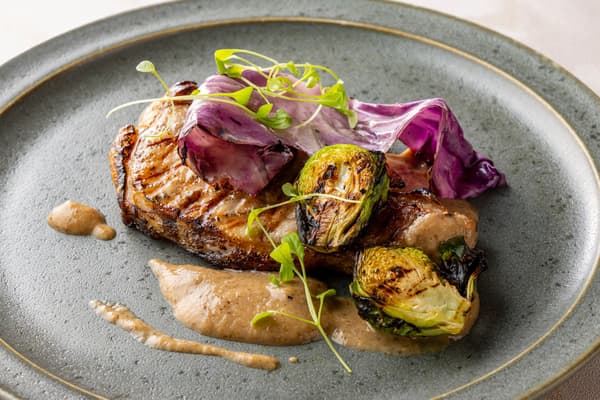
Executive Chef Kei Sakamoto's Thoughts on This Course
The theme Sakamoto always keeps in mind when creating a menu is "nostalgic." It is not mere sentimentality, but a way of expressing the flavors, landscapes, and memorable experiences he has encountered over his career as a chef in a new dish, using his present technique and sensibility. This winter's course carries his memories and thoughts throughout.
His longing for the southern French and Mediterranean cuisine that captivated him during his training in France in his twenties appears in the kinmedai bouillabaisse "Shokei." The nostalgic, warm scene of a wood fire flickering in a cold forest is expressed in the wood-grilled meat dish "Kyoshu." The shamo appetizer "Kanyo," born from a wish to deepen his understanding of and attachment to local ingredients, brings wasabi and citrus into traditional French cooking technique, fusing the bounty of the land with French cuisine.
The dessert that closes the course, "Yuko," gives form to the ideas of "wabi-sabi" and "karesansui" that he has been nurturing for about ten years. Japanese ingredients such as yuzu, green tea, and black soybeans are prepared with French pastry technique to express a delicate Japanese aesthetic.
Tracing his past memories to create dishes that can only be made now, Sakamoto has built a winter course unique to him, with French technique as its foundation, layered with the aroma of wood fire and Japanese sensibility.
Details
Availability: December 1, 2026 (Tue) – February 28, 2027 (Sun)
Hours: 5:30 PM – 9:30 PM (last order), closing at 10:00 PM
Location: Riverside Kitchen & Bar, 1F, Hotel Indigo Hakone Gora
Prices include consumption tax and service charge.
Stay plan: Accommodation plan with dinner and breakfast
Recommended for special anniversaries. The plan features the "Chef's Special Course Dinner," with wood-fire dishes of carefully selected Wagyu and seasonal fish.
Hotel official website: Hotel Indigo Hakone Gora
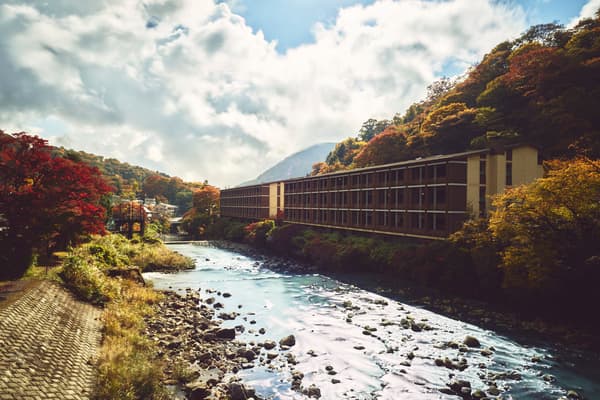
At Hotel Indigo Hakone Gora, Neighborhood Hosts share the local culture and history with guests, introducing stories that can't be found through a search by way of their own local experiences. Through close ties with the community, the hotel offers experiences such as the line of Somei Yoshino and weeping cherry trees along the Hayakawa River, the Yutate Shishimai lion dance ritual on July 15, the Miyagino Summer Festival "Mushiokuri Fire Festival" in August, and the Hakone Gora Daimonji bonfire.
The Hakone Daimonji can be viewed, together with a simultaneous fireworks display, from the hotel's riverside restaurant and guest rooms. Guests can enjoy the full range of Hakone's seasons, from the cherry blossoms blooming along the Hayakawa River near the hotel to the autumn leaves on Mt. Myojogatake (the Daimonji mountain) right in front of the hotel and the pampas grass highlands of Sengokuhara. In winter, a new style of toji (hot spring healing stay) is available, relaxing in hot springs that make guests forget the cold while taking in wintry Hakone with steam rising from the baths.
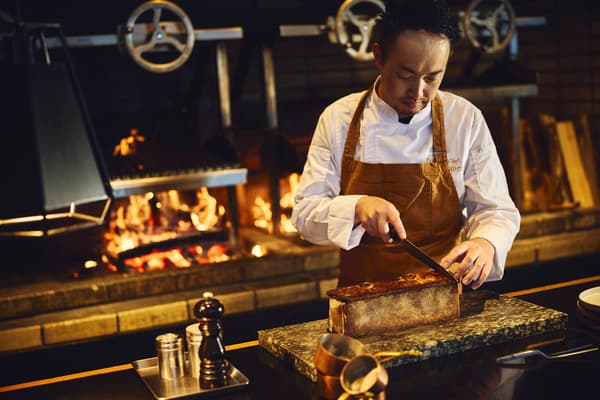
At Riverside Kitchen & Bar, the chef works the flames at the center of the dining room, serving a variety of bold grilled dishes. The wood-fire cooking uses thinned cypress and oak, and the smoke from the wood adds depth of flavor to meat and fish. This cooking method brings out the umami of the meat to the fullest.
The menu features carefully selected meats, fresh seafood delivered from nearby fishing ports, and fresh local vegetables grown with care. The dining room is a calm, refined space with art throughout.
Besides private hot springs in the guest rooms, the hotel offers footbaths and thermal spring experiences, alongside wood-fire cuisine, for a seasonal retreat stay.
Access:
- From Hakone-Yumoto Station (Odakyu Romancecar): approx. 15 min by Hakone Tozan Bus to "Miyaginobashi" stop, then approx. 2 min on foot
- From Odawara Station (JR): approx. 40 min by free shuttle bus
- From Gora Station (Hakone Tozan Railway): approx. 15 min on foot