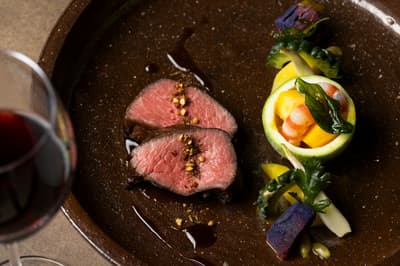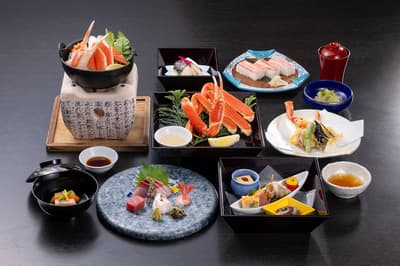
Kyukamura Kishu-Kada, a resort hotel in Setonaikai National Park in Wakayama City, Wakayama Prefecture, will begin serving its kue (longtooth grouper) course meals on Tuesday, December 1, as the fish comes into season. This year again, the courses are made with wild-caught kue.
What Is Kue, the Elusive Luxury Fish?
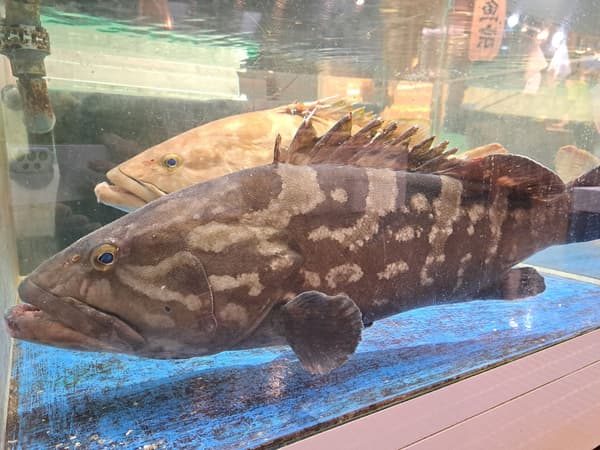
Kue lives alone in rock crevices rather than in schools and is active at night, which has earned it the nickname "King of the Night" (夜の帝王). It can grow to 1 m in length and over 80 kg. All kue are female at birth and become male as they grow, a rare trait known as protogyny (雌性先熟). Catches are extremely small and supply is tight, and it is said to take five years for a kue to grow to 2 to 3 kg. Because of its excellent taste, it costs about twice as much as fugu (pufferfish), and by the end of the year it is a luxury fish that easily exceeds ¥10,000 per kilogram.
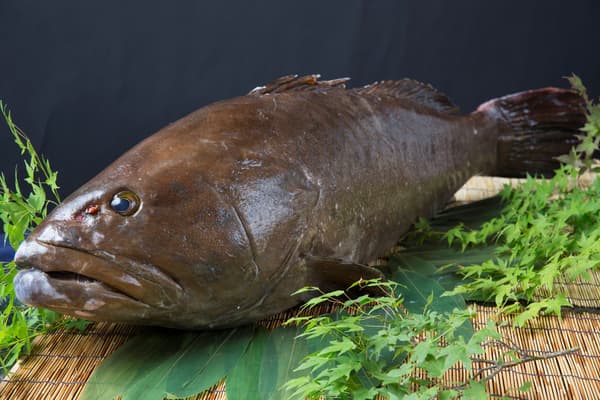
Kue is in season from autumn to winter. As the sea temperature drops, the fish gets much fattier. Its appearance gives little hint of its taste, which is one you never tire of: rich in umami from the fat, yet elegant. Around the bones and between the flesh and skin, kue is rich in gelatinous tissue packed with melt-in-the-mouth collagen. It is also popular among women, who eat it to keep their skin smooth during the dry season.
Kyukamura's Commitment to Wild Kue
Catches of kue have always been small, and they have been falling further in recent years because of warming seas, which makes the fish harder to secure. Kue is said to have firmer flesh, more fat, and more umami the larger it is. Kyukamura Kishu-Kada buys about 30 kg of kue (about 100 servings) three times a week. In the more than 30 years since it began serving kue dishes, Kyukamura has stuck with wild-caught kue, out of a wish for guests to experience something out of the ordinary and special.
Supplying Scarce Wild Kue on a Stable Basis
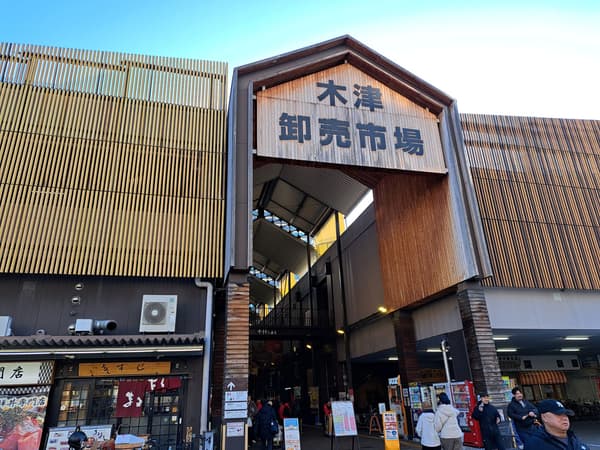
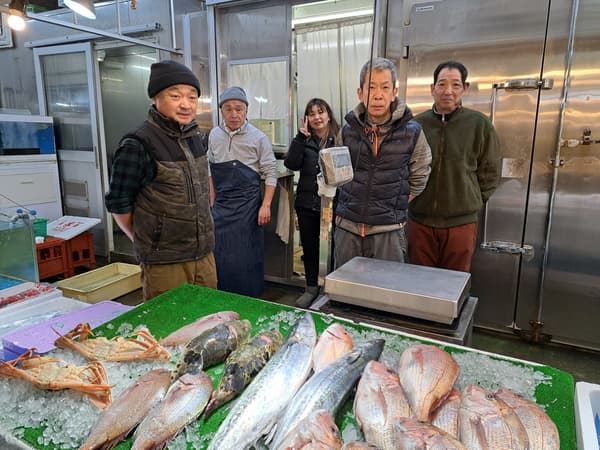
The resort serves more than 5,000 kue courses every year. Thanks to a relationship of trust with 南清水産, a long-established intermediary wholesaler at Kizu Market in Osaka, it can reliably buy carefully selected wild kue landed across Japan, including Nagasaki and Wakayama.
Chef vs. Kue: Breaking Down the Fish Is a Battle
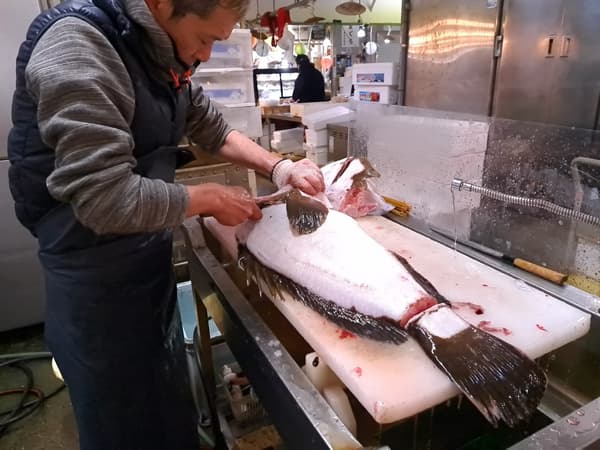
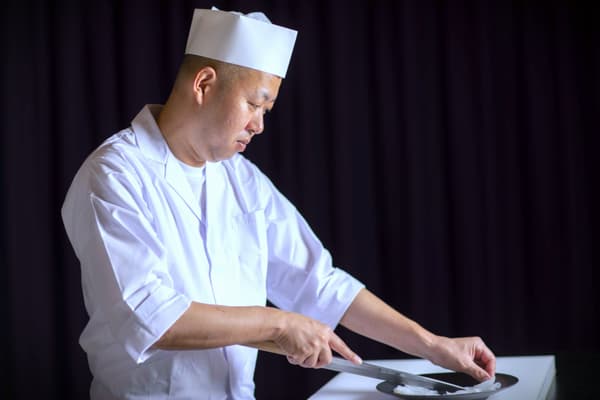
Kue scales are extremely hard, so they are stripped off with a knife. Once the scales are removed, the flesh is white with a faint, pale cherry-pink tint. After the fish is filleted into three pieces and divided by part, it becomes sashimi, hot pot, and karaage (deep-fried kue). Wild kue offers thick, meaty flesh as well as delicacies such as the stomach. The scraps (アラ) are full of collagen, and the broth made from them becomes a medicinal soup.
Working on the scraps is a struggle in itself. The bones of a kue that is 1 m long and weighs 30 kg are so hard that a chef can cut them only by swinging the knife high. The process is repeated many times until the pieces are small enough to serve, and by the end the chef's grip has given out.
Wild Kue Kaiseki "Kiwami" (Limited to 10 Servings per Day)
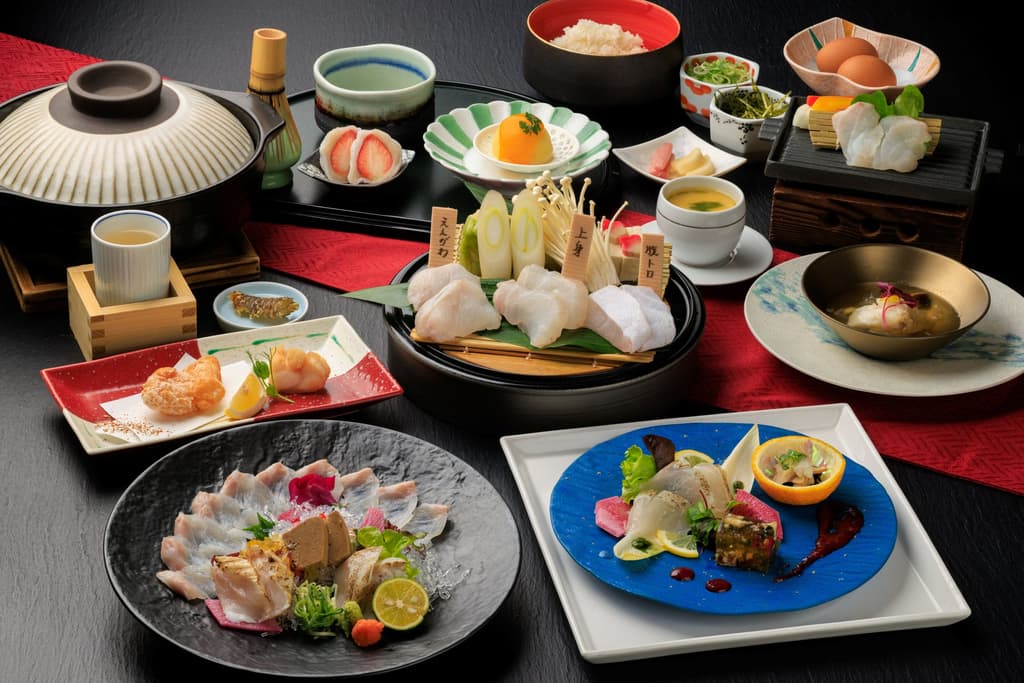
This plan was created in response to guests who wanted to enjoy wild kue prepared in many different ways. It is a course that uses wild kue without waste. The main photo shows this course for illustration only; the hot pot ingredients pictured are portioned for two guests.
- Period: Tuesday, December 1, 2026 to Sunday, February 28, 2027
- Price: From ¥45,000 per person for 1 night with 2 meals (tax included, bathing tax separate). Prices differ on days before holidays and over the New Year period. The price is based on a weekday, 2 guests sharing a 10-tatami Japanese-style room with toilet.
Menu
- Aperitif: Kue scale sake (クエうろこ酒)
- Appetizers: Seared kue and kelp-cured salad; kue stomach dressed with grated daikon, served in a yuzu cup; kue nikogori (aspic)
- Sashimi: Thinly sliced kue, seared kue, seared kue engawa, kue liver
- Hot pot: Kue hot pot (jōmi 上味, haratoro 腹トロ, and engawa), made with a broth from kue bones
- Main plate: Kue teppanyaki, served with a special sauce, herb rock salt, wasabi, and moshio (seaweed salt)
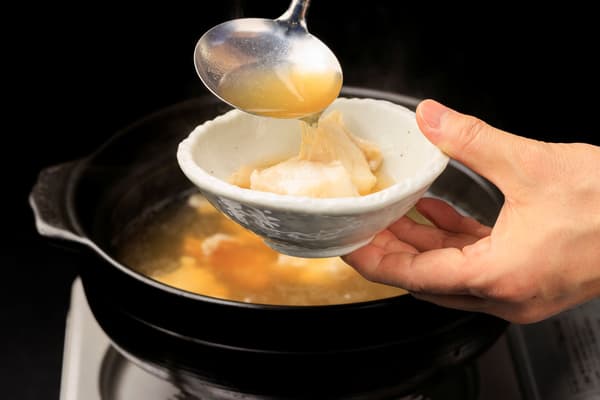
- Warm dish: Kue scrap medicinal soup
- Steamed dish: Kue chawanmushi with yuzu-pepper sauce
- Fried dishes: Kue fried in rice flour; kue karaage
- Meal: Kue zosui (rice porridge)
- Pickles: Three kinds
- Dessert: Fruit daifuku from 紫香庵, yuzu sorbet, matcha
Choose Your Wild Kue Course
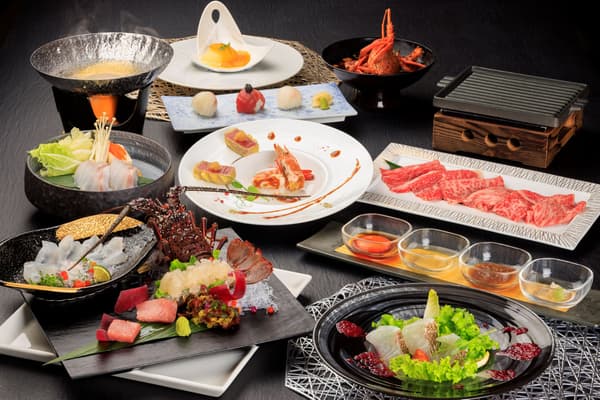
Wild Kue, Kumano Beef, and Ise Ebi Winter Gourmet Banquet Course
In addition to wild kue, this course brings together the flavors of Wakayama, including Ise ebi (Japanese spiny lobster) and Kumano beef.
- Price: From ¥38,000 per person for 1 night with 2 meals (tax included, bathing tax separate). The price is based on a weekday, 2 guests sharing a 10-tatami Japanese-style room with toilet.
Menu
- Appetizer: Seared sea bream salad with beet sauce
- Sashimi: Whole Ise ebi, thinly sliced wild kue, medium-fatty tuna
- Hot pot: Wild kue hot pot, made with a broth from kue bones
- Main plate: Grilled Kumano beef sirloin shabu, served with five kinds of special dipping sauces
- Western-style plate: Sake-steamed Ashiaka shrimp (足赤海老) from Wakayama Prefecture; medium-fatty tuna fritter, served rare
- Meal: Temari sushi of wild kue, medium-fatty tuna, and sea bream, topped with Kindai caviar
- Soup: Ise ebi red miso soup
- Dessert: Yuzu sorbet with Arita mikan sauce
Wild Kue Hot Pot Kaiseki
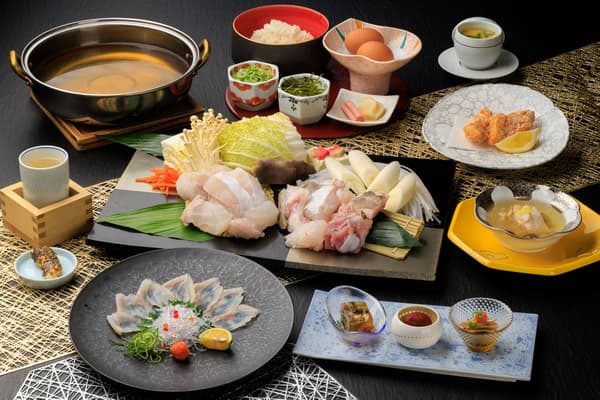
Wild kue hot pot is the centerpiece of this course, which also includes thinly sliced sashimi, medicinal soup, and karaage. It finishes with a zosui that concentrates the essence of the kue.
- Price: From ¥32,000 per person for 1 night with 2 meals (tax included, bathing tax separate). The price is based on a weekday, 2 guests sharing a 10-tatami Japanese-style room with toilet.
Menu
- Aperitif: Kue scale sake
- Appetizers: Wild kue stomach dressed with grated daikon; Nankō plum (南高梅) simmered in syrup; kue nikogori
- Sashimi: Thinly sliced wild kue
- Main plate: Wild kue hot pot, made with a broth from kue bones
- Warm dish: Wild kue medicinal soup
- Steamed dish: Wild kue chawanmushi with yuzu-pepper sauce
- Fried dish: Wild kue karaage
- Meal: Zosui with the concentrated flavor of kue broth
- Pickles
- Dessert (水物)
Lunch-Only Wild Kue Courses
This year, the resort offers two kue courses at lunchtime.
Wild Kue Zukushi Kaiseki
This lunch-only kaiseki was created in response to guests who wanted to enjoy kue in a slightly more luxurious way. All seven dishes feature wild kue.
- Price: ¥11,000 per person (tax included); ¥12,200 per person (tax included) with a hot spring bath (face towel included)
- Hours: 11:30 AM to 2:00 PM (last order 1:30 PM)
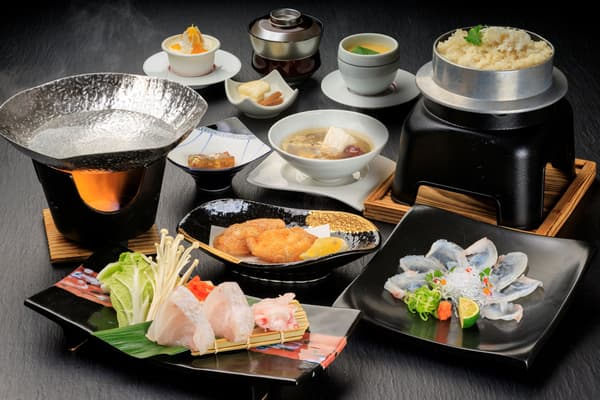
Menu
- Starter: Kue nikogori
- Sashimi: Thinly sliced wild kue
- Hot pot: Wild kue small hot pot
- Steamed dish: Wild kue medicinal soup
- Steamed dish: Chawanmushi with kue broth sauce
- Fried dish: Wild kue karaage
- Meal: Wild kue kamameshi (rice cooked in an individual pot)
- Pickles
- Clear soup
- Dessert
Wild Kue at a Reasonable Price: Wild Kue Mini Kaiseki
Recommended even for first-time kue eaters. Kue is served mainly as hot pot and thinly sliced sashimi.
- Price: ¥7,500 per person (tax included); ¥8,500 per person (tax included) with a hot spring bath (face towel included)
- Hours: 11:30 AM to 2:00 PM (last order 1:30 PM)
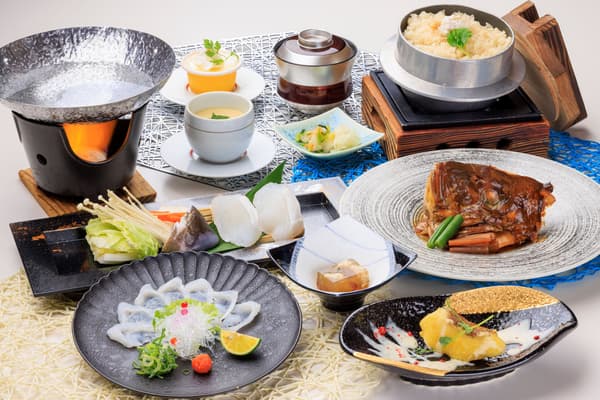
Menu
- Starter: Kue nikogori
- Sashimi: Thinly sliced wild kue
- Hot pot: Wild kue small hot pot
- Simmered dish: Sea bream ara-daki (simmered fish scraps)
- Steamed dish: Chawanmushi
- Fried dish: Sea bream fritter
- Meal: Wild kue kamameshi
- Pickles
- Clear soup
- Dessert
About Kyukamura Kishu-Kada
This hotel offers sweeping views of the islands floating in the Kitan Strait. All guest rooms face the ocean, and the evening scenery is especially beautiful. Seafood can be enjoyed throughout the year: sakura sea bream (桜鯛) in spring, hamo (pike conger) in summer, Ise ebi in autumn, and kue in winter. The open-air bath in the large communal bath is popular for its design, in which the Kitan Strait and the surface of the water appear to merge. On the grounds are the ruins of the Miyama Battery (深山砲台跡), and Tomogashima Island, which is talked about among anime fans, is close by, so the surrounding area has plenty to see.
- Location: 483 Miyama, Wakayama City, Wakayama Prefecture 640-0102
- General Manager: 松本 清司
- URL: https://www.qkamura.or.jp/kada/