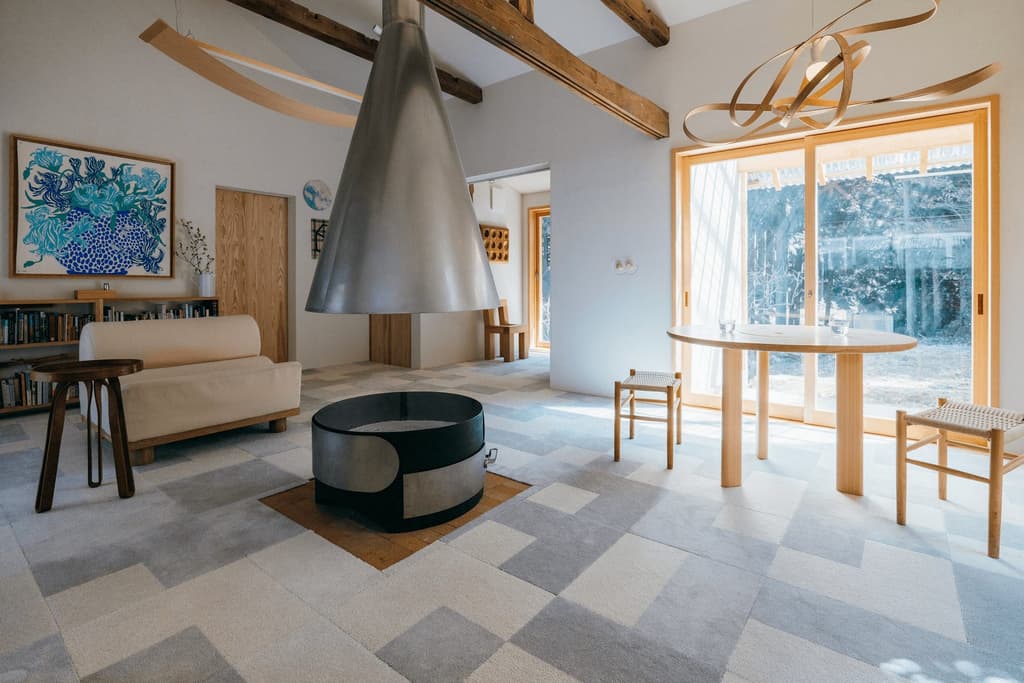
Osaka-based wool carpet maker Hotta Carpet Co., Ltd. is adding a new design to its WOOLTILE for Home wool tile carpet collection: "Tanbo," created in collaboration with British designer Felix Conran. Pre-orders open on July 1, 2026 (Wednesday) through Hotta Carpet's online store and Felix Conran's official website, with general sales following at retailers nationwide from August 1, 2026 (Saturday).
Conran relocated to Higashiyoshino Village in Nara Prefecture in 2024, where his home sits beside a former rice paddy he hopes to one day replant. Tanbo draws on the shifting light across the paddies and the changing scenery of the four seasons that he observes in daily life there, translated into 50cm-square wool tiles. A four-way split pattern echoes the layout of paddy plots, while four colors that shift with the seasons give the flooring a natural rhythm and depth.
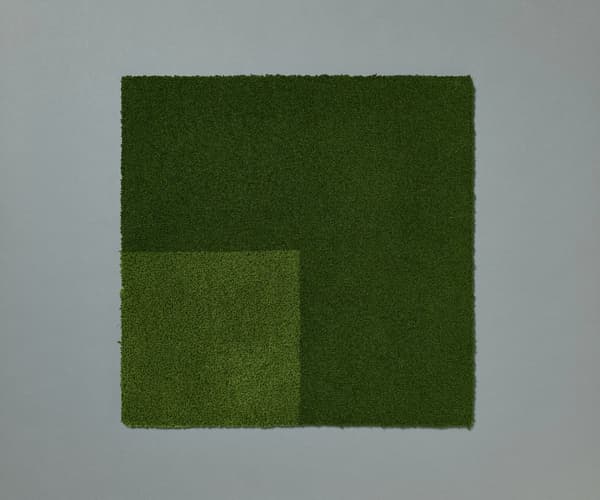
Each tile is based on a design that divides a single square into four sections, like the Japanese character 田 (ta, meaning "rice paddy"). By gradually shifting the balance between two colors, the collection offers four pattern variations — 1/4, 2/4, 3/4, and 4/4 — that can be freely combined. Depending on how the tiles are arranged, the flooring can look neatly ordered or rhythmically random, letting the look change with the season or mood.
A Collaboration That Didn't Start With a Product in Mind
The partnership between Conran and Hotta Carpet began without any plan to create a product. Through factory tours and ongoing conversations about craftsmanship and living spaces, Conran proposed a design he wanted to realize in wool tile.
He had already tested the pattern himself using off-the-shelf tile carpet, arriving at the 1/4-to-4/4 design concept before approaching Hotta Carpet. The idea of combining tiles to create varied looks aligned closely with the defining feature of WOOLTILE for Home: the ability to freely edit a living space simply by laying tiles over an existing floor.
Hotta Carpet saw potential in Conran's proposal as an approach distinct from its existing lines. Beyond the pattern of a single tile, letting people enjoy combining tiles to edit their living space is central to WOOLTILE for Home, and Tanbo carries that spirit forward with its own character — from an orderly, tile-like layout to a random, rhythmic one — made possible by Hotta Carpet's proprietary manufacturing process.
Felix Conran's Comment
My home in Higashiyoshino sits next to what used to be a rice paddy, and I'd like to plant rice there again someday. Ever since I moved to Japan, I imagine that paddy every day.
Through Tanbo, I wanted to express the lightness and connection that comes with tending and maintaining a landscape. Maybe our homes are a bit like a rice paddy — you sow the seeds, watch them sprout, and only then get to enjoy the harvest. I think we should nurture our living spaces the way we would a garden.
Hotta-san is one of the warmest people I've met, and I wanted to know more about his business right away. I have a strong interest in manufacturing processes, so touring the factory in Osaka was a dream come true. I hope this collaboration grows into a long and rewarding relationship.

Four Colors Inspired by Japan's Scenery
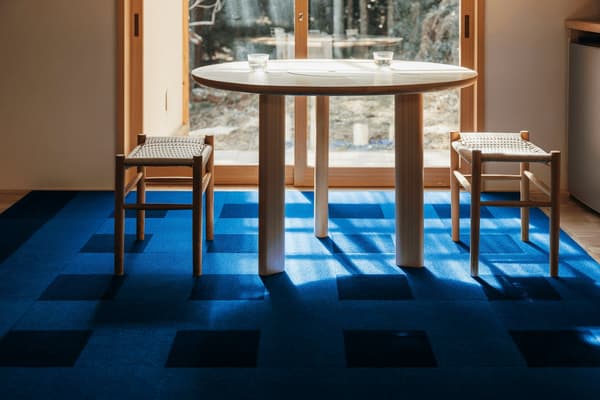
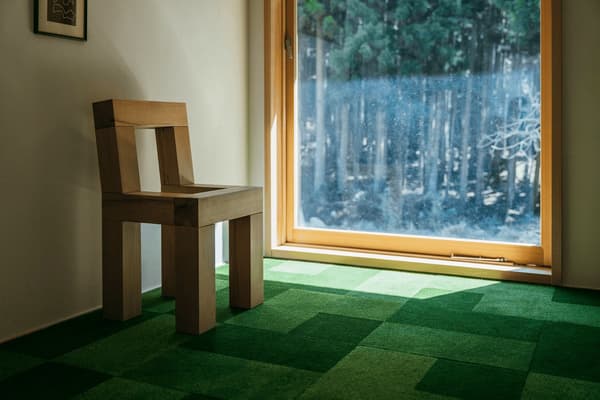
Tanbo's four colorways draw on the seasons Conran experienced in Higashiyoshino and the terraced paddies and fields that follow the area's mountainous terrain.
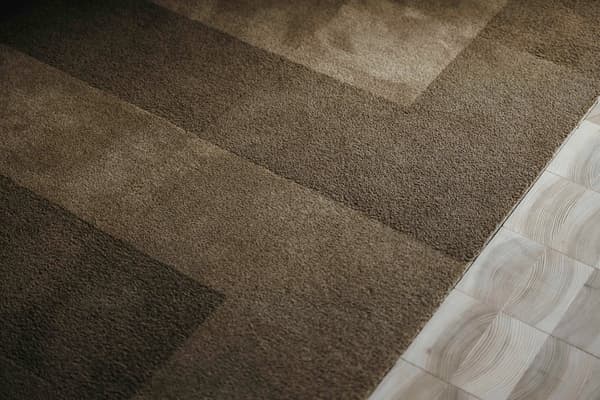
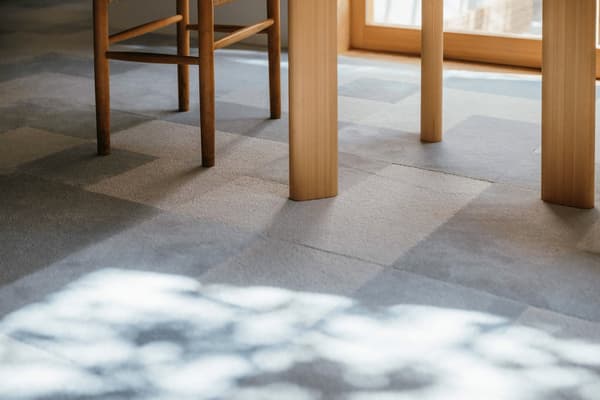
The lineup includes Mizukagami (Pond Blue), recalling spring paddies filled with water; Wakakusa (Field Green), for rice growing in summer; Kareho (Harvest Brown), evoking fields after the autumn harvest; and Shimoshiro (Frost White), inspired by winter snow. Subtle color variation from tile to tile creates the kind of depth seen when light falls across a paddy.
Infinite Patterns From a Single Motif
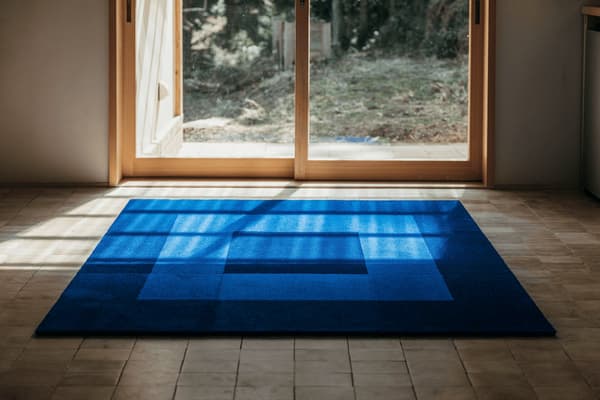
Tanbo takes its design cue from a single tile split into four sections like the character 田. By gradually shifting the balance of two colors, the collection offers four pattern variations — 1/4, 2/4, 3/4, and 4/4 — that can be freely combined. Tiles can be laid like a rug in one corner of a room, or rearranged with the seasons or mood, letting the floor's look evolve over time.
Arranged in order, the tiles create a calm, tile-like look; arranged at random, they suggest the layout of paddy plots or the flicker of light across water — a rhythmic effect made possible by the flexibility of tile carpet, adding new space and movement to a room.
Two Yarns for a More Complex Texture
At Hotta Carpet's suggestion, Tanbo uses two types of yarn to give its surface a more complex texture that better evokes nature.
Tweed yarn twists two thin threads of different colors into one, using the contrast in hue and brightness to create a sense of depth. Frieze yarn twists two thin threads of the same color tightly together; the random curl of the pile creates natural movement and helps blur the seams between tiles.
Earlier solid-color designs in the series used single-color yarn, but Tanbo's tweed yarn creates the layered, complex color found in nature, broadening the range of expression across the WOOLTILE for Home line and playing a key role in conveying the paddies and changing seasons.
The Only Akistyle Loom in the World, at Hotta Carpet
Tanbo is woven on Hotta Carpet's Akistyle loom — the only one of its kind in the world. The company acquired the machine and inherited its manufacturing know-how when the original Akistyle manufacturer closed in 2017.

Most tile carpet is made on tufting machines roughly 3.64 meters wide that punch yarn into a long roll of fabric, coat the back with resin, and finally die-cut it into tiles. Because even slight distortion in the fabric makes it difficult to cut precisely along a pattern, tile carpet is typically designed so the pattern does not need to align from tile to tile.
The Akistyle loom, by contrast, weaves WOOLTILE for Home one 50 x 50cm tile at a time, making it possible to render an intricate pattern on every single tile — including bordered designs and geometric motifs. Tanbo's evenly split four-way design, like the character 田, is only possible because of this precision, which is what makes its free tile combinations work.
Product Overview
- Product name: WOOLTILE for Home "Tanbo"
- Colors: Shimoshiro (Frost White), Kareho (Harvest Brown), Mizukagami (Pond Blue), Wakakusa (Field Green)
- Patterns: 1/4, 2/4, 3/4, 4/4
- Size: W50cm x H50cm, 15mm thick
- Price: ¥7,700 (tax included) per tile
- Release dates:
Pre-sale: July 1, 2026 (Wednesday) — exclusively through Hotta Carpet's online store and Felix Conran's official website
General sale: August 1, 2026 (Saturday) - Product page: https://hdc.co.jp/wooltile/tanbo/
About the Designer
Felix Conran

Felix Conran is a British designer working across product, furniture, and architecture. His design philosophy — simplicity, ease of use, and comfort — builds on the design legacy of his grandfather, Sir Terence Conran.
After studying at Central Saint Martins in London, he co-founded the furniture brand Maker & Son in 2018, an early adopter of 100% natural and ethically sourced materials in upholstered furniture; the brand was sold in 2022. In 2024, he relocated to Higashiyoshino Village in Nara Prefecture, where he founded the architecture and product design studio Ha Partners. He is serving as a judge for the 2026 Good Design Award.
About WOOLTILE for Home
WOOLTILE for Home is Hotta Carpet's wool tile carpet collection.
Its tiles can be freely combined in color and design, making it possible to lay sections like a rug over an existing floor. The lineup spans designs that form new patterns when placed together and accent colors, letting people rearrange their space to suit the season or mood.
Previous designs in the series include Puzzle, known for its orderly, modern shapes, and Lines, defined by the movement of loose, hand-drawn strokes. Tanbo continues that spirit of combination while bringing the scenery and changing seasons of nature onto the floor.