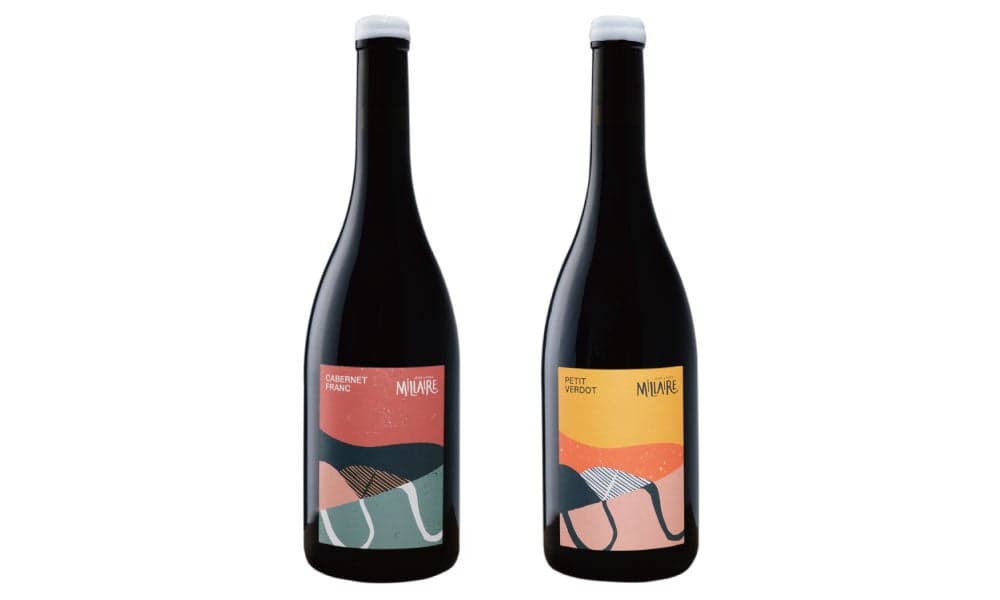
Wine retailer Enoteca will begin selling two natural wines from Jean-Yves Millaire, a producer practicing biodynamic viticulture in Fronsac, Bordeaux, with sales rolling out sequentially from August: a Cabernet Franc and a Petit Verdot.
About Jean-Yves Millaire
Jean-Yves Millaire is a winery founded in 1998 by its namesake owner. Today he works alongside his wife, Christine, under a philosophy they describe as "the art of accompaniment," caring for nature while crafting distinctive wines from a range of varietals tailored to the condition of the grapes and soil.
The winery is located in Fronsac, a distinguished appellation on the right bank of the Dordogne River, neighboring Pomerol and Saint-Émilion. Blessed with limestone soils and hilly terrain, the area has drawn growing attention in recent years thanks to a new generation of producers. Jean-Yves Millaire owns and manages roughly 35 hectares of vines — about 25 hectares of estate vineyards plus 10 hectares under contract — cultivating more than 20 plots that vary in altitude, soil, and sun exposure, drawing out the character of each parcel from vines averaging 35 years old.
From organic to biodynamic
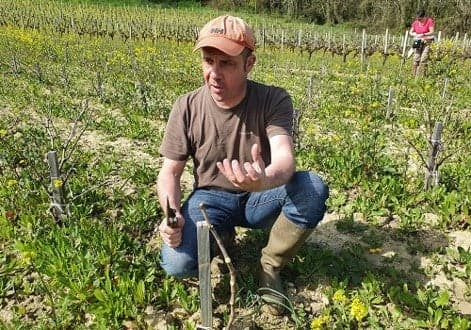
The estate has prioritized coexistence with the natural environment since its founding, adopting organic farming in 2006 and transitioning to biodynamics in 2009. It now holds AB (Agriculture Biologique) and Biodyvin certification. In 2023, its nature-respecting winemaking was recognized with the top prize, the "Grand Prix d'Or," in the "Nature et Respect" category of a competition hosted by the French wine magazine Terre de Vins. The estate also takes part in RAW WINE, organized by Master of Wine Isabelle Legeron, and La Renaissance des Appellations, a biodynamic producers' group founded by Nicolas Joly.
An "infusion" approach that preserves fruit purity
Jean-Yves Millaire departs from the heavy, powerful style traditionally associated with Bordeaux, instead pursuing light, lively wines defined by drinkability and pure fruit character. Working from the idea of handling grapes like fine tea leaves rather than pressing them, the estate keeps fermentation temperatures low and uses an "infusion" method that extracts just enough to lightly moisten the skins, carefully drawing out the grapes' natural fruit character, aroma, and smooth tannins. The winemaking also follows a philosophy of minimal intervention: fermentation relies on wild yeast, and sulfite use is kept to a minimum. Depending on the vintage and terroir, the estate uses stainless steel tanks, concrete tanks, foudres (large wooden casks), and amphorae to bring out the full individuality of each grape.
The playful label design reflects both the producer's wish for people to enjoy the wine casually and the land where it is made. Rather than evoking Bordeaux's traditional stone château imagery, the modern, art-like design captures the character of wines born from the harmony of water, slopes, and soil.
New releases
Cabernet Franc
Cabernet Franc is typically blended in Bordeaux, but this wine is crafted from a single varietal. Vibrant aromas of raspberry and violet harmonize with freshness and rich fruit flavor for an elegant style.
- Variety: 100% Cabernet Franc
- Type: Red
- Vintage: 2025
- Volume: 750 ml
- Price: ¥4,180 tax included (¥3,800 before tax)
Petit Verdot
A red wine made from 100% Petit Verdot. Rich aromas of cacao, coffee, and spice unfold, and the wine stays full-bodied and structured while retaining a fresh vibrancy. It also pairs well with rich Japanese dishes seasoned with soy sauce or miso.
- Variety: 100% Petit Verdot
- Type: Red
- Vintage: 2023
- Volume: 750 ml
- Price: ¥4,180 tax included (¥3,800 before tax)
The two wines add to Enoteca's growing lineup of natural wines, offered as an approachable introduction for customers who are not yet familiar with what makes natural wine appealing.