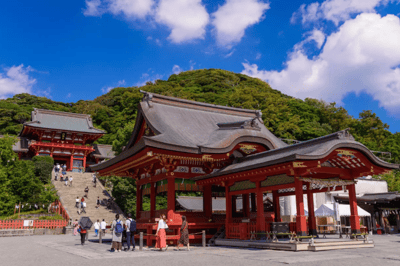
Nara was Japan's first permanent capital, established in 710 and home to the imperial court for nearly 75 years before the capital moved to Kyoto. That brief period left behind some of the oldest and largest wooden structures in the world, a sprawling park where over 1,000 deer roam freely, and a concentration of UNESCO World Heritage sites that rivals anywhere in the country.
Today Nara works beautifully as a day trip from Osaka or Kyoto -- the core sights cluster within easy walking distance of each other, and the train ride from either city takes under an hour. But it also rewards a slower pace. Spending a full day or staying overnight lets you explore the quieter backstreets of Naramachi, visit a sake brewery, and see the park after the day-trip crowds thin out.
This guide covers the main things to do, organized by area so you can plan a route without doubling back.
Getting to Nara from Osaka and Kyoto
Nara is served by two rail companies -- JR West and Kintetsu -- and both are straightforward. Kintetsu Nara Station is the more convenient option for sightseeing because it sits right at the edge of Nara Park, saving you a 15-minute walk compared to JR Nara Station.
From Osaka:
- Kintetsu Line from Osaka-Namba to Kintetsu Nara Station -- about 40 minutes on the rapid express, around 680 yen. This is the most popular option.
- JR Yamatoji Line from Osaka Station to JR Nara -- about 50 minutes, around 840 yen. From Tennoji, the ride is only about 36 minutes. Covered by the Japan Rail Pass.
From Kyoto:
- Kintetsu Line from Kyoto Station to Kintetsu Nara -- about 35 minutes on the limited express (around 1,280 yen including surcharge) or about 45 minutes on the regular express (around 760 yen, no surcharge).
- JR Nara Line from Kyoto Station to JR Nara -- about 45 minutes on the Miyakoji Rapid, around 720 yen. Covered by the Japan Rail Pass.
Once you arrive, most sights are within walking distance. The loop from Kintetsu Nara Station through Nara Park, Todai-ji, Kasuga-taisha, and back through Naramachi is roughly 5 to 6 km and manageable at a relaxed pace. There is no direct bus from Osaka or Kyoto to Nara, so the train is your best option.
Nara Park and the Deer
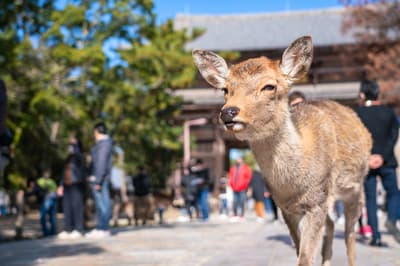
Nara Park is the green spine that connects everything. It covers about 660 hectares of open grassland, forested hills, and temple grounds -- all of it shared with over 1,000 wild sika deer that have lived here for centuries. The park is open 24 hours, every day of the year, and there is no admission fee.
The deer are considered sacred messengers of the gods in the Shinto tradition. According to local legend, the deity Takemikazuchi arrived at Kasuga-taisha riding a white deer, and the animals have been protected ever since. They were designated a national natural treasure in 1957.
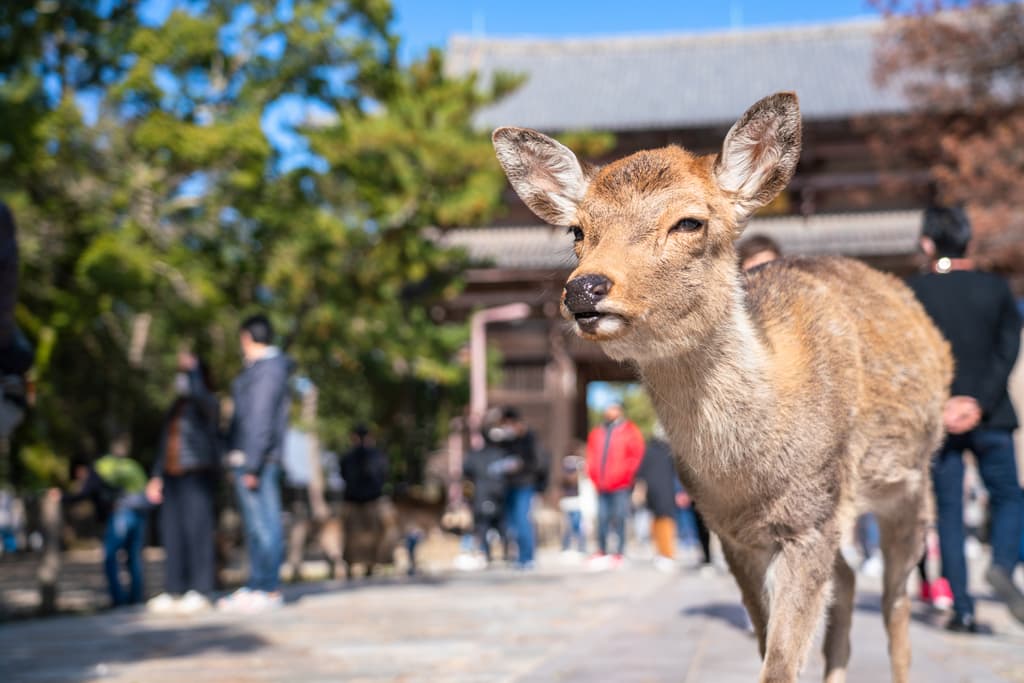
You will encounter deer almost immediately after stepping off the train at Kintetsu Nara Station. They wander freely through the park, across sidewalks, and occasionally into shop doorways. Most are calm and used to people, though they can be persistent when food is involved.
Deer Cracker Etiquette
Vendors throughout the park sell shika senbei (deer crackers) for 200 yen per bundle of about 10 crackers. These are the only thing you should feed the deer -- do not give them bread, snacks, vegetables, or any human food.
A few tips for a smooth interaction:
- Bow to the deer before offering a cracker. Many deer will bow back. This behavior has developed over generations of interaction with visitors.
- Hide your crackers after buying them. If deer see the bundle, they will crowd you immediately. Keep them behind your back or in a bag, and take one out at a time.
- Show empty hands to signal you are done. Hold up both palms facing outward. Most deer will lose interest and move on.
- Keep your distance from fawns (May through early July) and from male deer during rutting season (September through November). Males can be aggressive in autumn, and mothers are protective of newborns.
- Watch your belongings. Deer will investigate bags, maps, and pamphlets. They have been known to chew on paper and plastic.
The deer are wild animals, not pets. Bites are uncommon but not unheard of, especially when visitors tease or withhold food. Signs throughout the park warn against chasing, riding, or hitting the deer.
Spring is a particularly good time to visit -- cherry blossoms in Nara Park typically peak in early to mid-April, and the sight of deer resting under sakura trees is one of Japan's most photographed scenes.
If you want a photographer to capture your time among the deer, consider a private photoshoot with a local professional:
Todai-ji Temple and the Great Buddha
Todai-ji is the reason most people come to Nara, and it delivers. The Great Buddha Hall (Daibutsuden) is the largest wooden structure in the world -- and the current building, rebuilt in 1709, is actually about two-thirds the size of the original 8th-century version.
Inside sits the Daibutsu, a bronze statue of the Buddha Vairocana completed in 752 CE. The statue is 15 meters tall and weighs an estimated 500 tons. The scale is hard to appreciate from photos -- standing at the base, the Buddha's face alone is over 5 meters long. Flanking it are two bodhisattva statues, and the hall also contains a wooden pillar with a hole at its base the same size as the Buddha's nostril. The tradition says anyone who can squeeze through will receive enlightenment in their next life. The line for this can stretch 30 minutes or more during busy periods.
The approach to the Great Buddha Hall is an experience in itself. You enter through the massive Nandaimon Gate, which stands 25 meters tall and houses two 8.4-meter guardian statues (Nio) carved by the master sculptor Unkei and his workshop in just 72 days in 1203. These are among the finest examples of Kamakura-period sculpture in Japan.
For a guided tour that covers Todai-ji and the surrounding park with historical context:
Hours: April to October: 7:30 AM to 5:30 PM. November to March: 8:00 AM to 5:00 PM.
Admission: 800 yen (adults), 400 yen (elementary school children)
Address: 406-1 Zoshicho, Nara
Kasuga-taisha Shrine
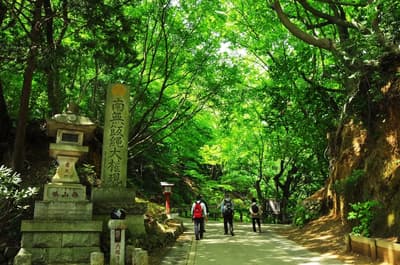
From Todai-ji, a path through the forest leads southeast to Kasuga-taisha, about a 15-minute walk through one of the most atmospheric approaches of any shrine in Japan. The trail is flanked by roughly 2,000 stone lanterns donated by worshippers over the centuries, many now covered in moss and partially swallowed by the forest. During the twice-yearly Lantern Festivals -- Setsubun in early February and Obon in mid-August -- all the lanterns are lit at once, creating one of Nara's most memorable sights.
The shrine was founded in 768 CE and is dedicated to four deities, including the one said to have arrived on a deer. It follows the kasuga-zukuri architectural style, with vermilion-painted buildings set against the dark green of the primeval forest behind it. The entire Kasugayama Primeval Forest has been protected from logging since 841 CE and is a UNESCO World Heritage site in its own right.
The main shrine grounds are free to enter. The inner cloister, which gives you a closer look at the main halls and the bronze hanging lanterns, charges an additional fee.
If you visit in late April or May, the Kasuga-taisha Manyo Botanical Garden near the shrine entrance has roughly 200 wisteria plants, including a specimen said to be around 700 years old. The setting -- ancient trees in the grounds of a 1,200-year-old shrine -- is hard to beat.
Hours: 6:30 AM to 5:30 PM (main grounds). Inner cloister reception: 9:00 AM to 4:00 PM.
Admission: Free for the main grounds. Inner cloister: 700 yen.
Address: 160 Kasuganocho, Nara
Kofuku-ji Temple
Between Nara Park and Naramachi sits Kofuku-ji, once one of the most powerful temples in Japan. It was the family temple of the Fujiwara clan, and at its height the complex had over 150 buildings.
The National Treasure Hall is the main reason to stop here. It houses a collection of Buddhist statuary from the 7th through 12th centuries, including the famous three-headed, six-armed Ashura statue from 734 CE. This piece is remarkably expressive for its age -- the face is youthful and slightly sorrowful, and it stands just 153 cm tall, about the height of a teenager.
A note for 2026 visitors: Kofuku-ji's five-story pagoda, one of Nara's most iconic landmarks and the second tallest pagoda in Japan at 50.1 meters, is currently under major restoration. The structure is enclosed in scaffolding and not visible from outside. Repair work is expected to continue through 2033. The rest of the temple complex, including the National Treasure Hall, remains open.
The temple grounds are open and free to walk through. The National Treasure Hall has separate admission.
Hours: National Treasure Hall: 9:00 AM to 5:00 PM (last entry 4:45 PM)
Admission: Grounds free. National Treasure Hall: 700 yen (adults), 300 yen (children)
Address: 48 Noborioji-cho, Nara
Naramachi -- The Old Merchant Quarter
South of Sarusawa Pond -- a photogenic reflecting pool just below Kofuku-ji -- the streets narrow into Naramachi, the preserved Edo and Meiji-era merchant quarter. The wooden machiya townhouses have been converted into cafes, galleries, craft shops, and small museums, but the neighborhood still feels residential and lived-in rather than overly curated for tourists.
Naramachi rewards aimless wandering. A few specific stops worth seeking out:
- Naramachi Koshi-no-Ie -- A restored traditional machiya that you can walk through for free. It demonstrates the classic Nara townhouse layout: narrow frontage on the street but stretching deep into the block, with multiple rooms connected by courtyards. Open 9:00 AM to 5:00 PM, closed Mondays.
- Naramachi Museum (Shiryokan) -- A small free museum covering the neighborhood's history and the daily life of Nara's merchant class. Open 10:00 AM to 4:00 PM.
- Migawari-zaru talismans -- Look for the small red fabric monkeys hanging from eaves throughout the neighborhood. These Naramachi talismans are said to take on misfortune in your place. You can buy them at several shops in the area.
- Gangoji Temple -- A UNESCO World Heritage site at the heart of Naramachi. Parts of the roof tiles date back to the Asuka period (6th century), making them among the oldest building materials still in use in Japan. Admission: 500 yen.
The area around Naramachi is where you will find many of Nara's best independent cafes and lunch spots. The pace here is slower than the park area, making it a good place to eat and rest before or after temple visits.
Isuien and Yoshikien Gardens
These two traditional gardens sit side by side near Todai-ji, offering a quiet break from the temple crowds.
Isuien Garden is the more polished of the two, with a pond-style garden that uses Todai-ji's Great Buddha Hall and Mount Wakakusa as borrowed scenery in its design. The garden has two sections: the front garden (built in the 17th century) and the back garden (added in the Meiji era). Admission includes access to the Neiraku Art Museum on the grounds.
- Hours: 9:30 AM to 4:30 PM (last entry 4:00 PM). Closed Tuesdays.
- Admission: 1,200 yen (adults), 500 yen (high school and university students)
Yoshikien Garden is free for foreign visitors (bring your passport). It has three distinct garden styles: a pond garden, a moss garden, and a tea ceremony garden. It is smaller and less visited than Isuien, which works in its favor on crowded days.
Where to Eat: Mochi, Local Specialties, and Sake
Nakatanidou -- The Famous Mochi Pounding Shop
Near Kintetsu Nara Station on Sanjo-dori street, Nakatanidou draws crowds for its high-speed mochi pounding performances. Two workers hammer and fold hot glutinous rice with heavy wooden mallets at a rhythm so fast it looks choreographed. The result is yomogi mochi (mugwort-flavored rice cake filled with red bean paste), sold for about 180 yen per piece. The demonstrations happen roughly every 30 minutes when the shop is busy, though there is no fixed schedule. Even if you arrive between poundings, the mochi is excellent -- freshly made and noticeably softer than packaged versions.
Hours: 10:00 AM to 7:00 PM
Address: 29 Higashimuki Nakamachi, Nara
Other Food Worth Trying
- Kaki-no-ha-zushi -- Sushi wrapped in persimmon leaves, a Nara specialty dating back to the Edo period. The vinegared rice is pressed with salmon or mackerel, and the persimmon leaf adds a subtle fragrance. Tanaka near Kintetsu Nara Station is one of the established shops.
- Cha-gayu -- A rice porridge cooked with roasted green tea, traditionally eaten for breakfast or lunch in Nara households. Several restaurants in Naramachi serve it as part of a set meal.
- Narazuke -- Vegetables pickled in sake lees (the residual solids from sake production). The flavor is deep, slightly sweet, and unmistakably boozy. These make a popular souvenir and are sold at shops across the city.
- Kuzu mochi and warabi mochi -- Nara is historically known for arrowroot (kuzu) and bracken starch (warabi). Nakanishi Yosaburo Shoten, a wagashi shop in Naramachi, serves traditional sweets made with these ingredients in a tea room setting. Open 10:00 AM to 6:00 PM, closed Mondays and Tuesdays.
Nara Sake
Nara is sometimes called the birthplace of sake. Monks at nearby Shoryaku-ji Temple are credited with developing the pasteurization technique (hi-ire) and the polished-rice brewing method that became the foundation for modern sake production. Today, several breweries in and around the city carry on this tradition, including Harushika Brewery in Naramachi, which offers tastings.
For a guided sake tour that visits multiple breweries and bars:
For a food-focused tour that combines craft beer, sake, and local dishes:
More Things to See
Mount Wakakusa
Mount Wakakusa (342 meters) sits on the eastern side of Nara Park and offers panoramic views over the city, with Todai-ji's roof visible among the trees below. The hike to the top takes about 30 to 40 minutes at a steady pace. The mountain is open to hikers from the third Saturday of March through the second Sunday of December. Entry costs 150 yen for adults.
Mount Wakakusa is also the site of the Yamayaki grass-burning festival, held each January. The entire hillside is set on fire in a controlled burn, with fireworks launching overhead -- one of Nara's most dramatic annual events.
Nara National Museum
The Nara National Museum specializes in Buddhist art and has one of the strongest collections of its kind in Japan. It is especially worth visiting during the annual Shoso-in Treasures exhibition each autumn, when items from the imperial storehouse that are only shown to the public for a limited period go on display.
- Hours: 9:30 AM to 5:00 PM (last entry 4:30 PM). Closed Mondays.
- Admission: 700 yen (adults). Free for visitors 18 and under or 70 and over.
- Location: Inside Nara Park, between Kofuku-ji and Kasuga-taisha.
Heijo Palace Site
Before Nara Park's temples were built, this was where the imperial court conducted its business from 710 to 784. The site has been partially reconstructed, including the Former Imperial Audience Hall and the Suzaku Gate. The grounds are large and open -- a good spot for a walk away from the crowds. The Nara Palace Site Museum on the grounds is free.
- Location: About a 10-minute walk from Yamato-Saidaiji Station (one stop west of Kintetsu Nara on the Kintetsu line).
Guided Tours and Local Experiences
If you would rather have a local expert show you around, several guided tours operate in Nara. These are especially useful for first-time visitors who want historical context beyond what signage provides.
A 3-hour guided tour covering the main sights of Nara Park:
A half-day walking tour with a more relaxed pace:
A private full-day tour you can customize to your interests:
A tea discovery tour in a traditional machiya setting:
Planning Your Day: Suggested Route
If you have a single day, this route covers the highlights efficiently:
- Arrive at Kintetsu Nara Station (morning, ideally by 9:00 AM)
- Walk through Nara Park toward Todai-ji, stopping to buy deer crackers along the way
- Todai-ji -- Allow 45 to 60 minutes for the Great Buddha Hall and grounds
- Walk through the forest path to Kasuga-taisha -- 15 minutes through the lantern-lined trail
- Kasuga-taisha -- 30 to 45 minutes including the inner cloister
- Loop back past Kofuku-ji -- Stop at the National Treasure Hall if time allows
- Lunch in Naramachi -- Browse the old streets, visit a machiya, try the local food
- Nakatanidou on the way back to the station for fresh mochi
This route takes roughly 5 to 6 hours at a comfortable pace, including a lunch break. If you want to add Isuien Garden or Mount Wakakusa, plan for a full day.
Seasonal Highlights
Nara has distinct appeal in every season:
- Spring (March to May): Cherry blossoms in Nara Park peak in early to mid-April. The park's open layout means you can picnic under the trees with deer wandering past. Wisteria at Kasuga-taisha blooms from late April into May.
- Summer (June to August): The Nara Tokae Lantern Festival (usually early to mid-August) places thousands of candles along the paths around Todai-ji and Kasuga-taisha. Evenings are warm but atmospheric.
- Autumn (September to November): The maple trees around Todai-ji, Kasuga-taisha, and the Isuien and Yoshikien gardens turn vivid red and orange. Autumn foliage typically peaks in mid to late November. Male deer have antlers during this season, making for dramatic photographs.
- Winter (December to February): Fewer crowds and occasional frost on the park lawns create a serene atmosphere. The Kasuga Wakamiya Onmatsuri festival (December 15 to 18) is one of Nara's oldest ceremonies, dating back to 1136. The Shuni-e (Omizutori) ceremony at Todai-ji's Nigatsu-do Hall runs from March 1 to 14 each year, with priests carrying large torches along the wooden balcony in a ritual that has not been interrupted for over 1,200 years.
Practical Tips
- Time needed: A focused day trip covering the big three -- Nara Park with the deer, Todai-ji, and Kasuga-taisha -- plus lunch in Naramachi takes about 5 to 6 hours. A full day allows for gardens, Mount Wakakusa, and a more relaxed pace.
- Luggage storage: Coin lockers are available at both Kintetsu Nara and JR Nara stations. Large suitcases fit in the bigger lockers (600 to 800 yen).
- Walking shoes: The paths around Kasuga-taisha and through the park are unpaved gravel and dirt. Comfortable walking shoes are strongly recommended.
- Carry your trash: Nara Park has very few public trash bins, partly to keep deer from eating garbage. Bring a plastic bag for your waste.
- IC cards: Suica, ICOCA, and other major IC cards work on both JR and Kintetsu trains and at most shops and vending machines in the area.
- Crowds: Weekends and holidays, particularly during cherry blossom season and autumn foliage, are significantly more crowded. Weekday mornings offer the best experience.
Nara often gets treated as a quick side trip, but the city has more depth than a few hours can cover. Whether you come for the Great Buddha, the deer, the food, or just to walk through streets where Japan's history is built into the ground, it is a place that repays attention.