Kamakura sits in a natural amphitheater — mountains on three sides, ocean on the fourth. For about 150 years starting in 1185, it was Japan's political capital, and the density of temples and shrines left behind from that era is hard to match outside of Kyoto. But Kamakura is smaller, less crowded on most days, and an hour from central Tokyo by train. You can see the major sights in a single day trip, or spread things out over two days if you want to include Enoshima and some hiking.
This guide covers the spots worth your time, organized roughly by area so you can plan a route that makes geographic sense rather than zigzagging across town.
Getting to Kamakura from Tokyo
The most direct option is the JR Yokosuka Line from Tokyo Station to Kamakura Station. It takes about 57 minutes, costs around 950 yen, and no transfers are needed. Trains run frequently throughout the day.
From Shinjuku, the Odakyu Line to Fujisawa (about 60 minutes) followed by the Enoden to Kamakura is another solid option. If you plan to ride the Enoden multiple times during the day, pick up the Odakyu Enoshima-Kamakura Freepass (1,640 yen from Shinjuku) — it covers the round-trip to Fujisawa plus unlimited Enoden rides between Fujisawa and Kamakura.
Once in Kamakura, most sightseeing is walkable. The exceptions are Kita-Kamakura (one JR stop north) and the Hase/Enoshima area (Enoden line). The Enoden 1-day pass "Noriorikun" costs 800 yen for adults and pays for itself after about three rides.
One thing to know: on weekends from late March through June, Kamakura gets genuinely packed. Arriving before 9:00 AM makes a real difference, especially if you want photos without crowds at the more popular temples.
Tsurugaoka Hachimangu Shrine
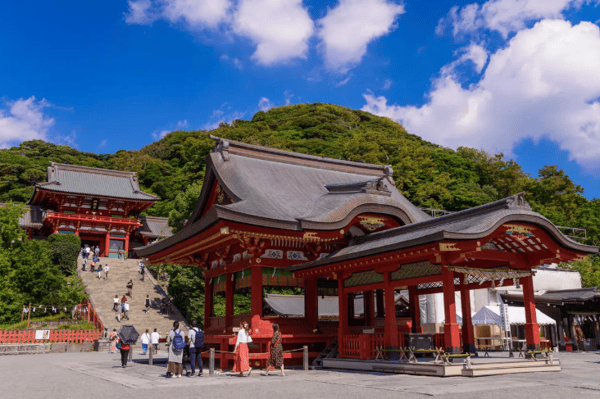
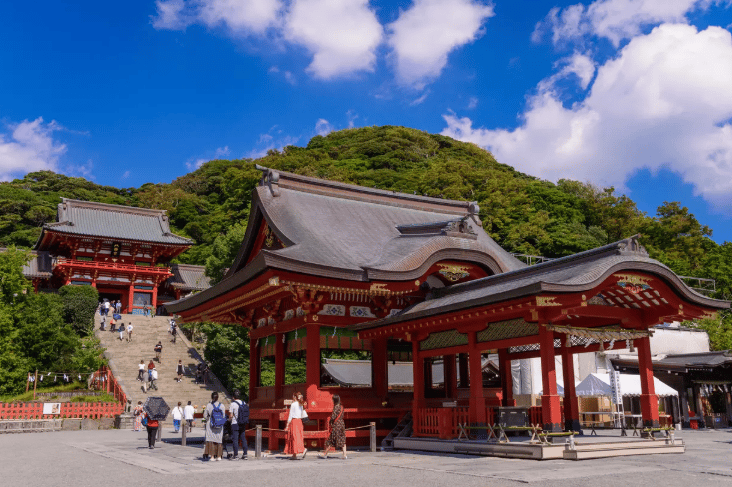
Kamakura's most important shrine, founded in 1063 and moved to its current location by Minamoto no Yoritomo when he established the Kamakura Shogunate. It sits at the end of Wakamiya Oji, the broad avenue that runs straight from the coast to the shrine, and the approach itself — particularly the raised cherry-tree-lined section called Dankazura — is part of the experience.
The shrine grounds are open from 6:00 AM to 8:00 PM, and there's no admission fee for the main area. The Treasure Hall charges a small entry if you want to see the collection of swords and Kamakura-era artifacts, but the shrine itself, the lotus ponds, and the hilltop main hall are all free.
Late March to early April is when the Dankazura approach is at its best — the cherry trees form a canopy over the walkway, and the contrast with the vermilion torii gates works well in photographs. If you're here in mid-September, the shrine hosts its annual grand festival (September 14-16), which includes yabusame — horseback archery performed in full traditional attire.
Address: 2-1-31 Yukinoshita, Kamakura-shi, Kanagawa
Komachi-dori Street
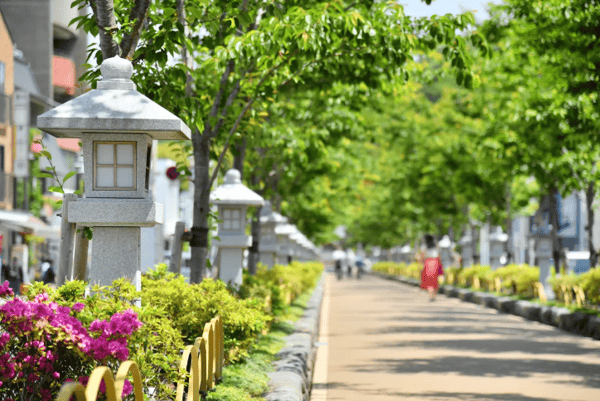
The narrow shopping street that runs parallel to Wakamiya Oji, starting right at the east exit of Kamakura Station. It's about 360 meters long and lined on both sides with small shops, cafes, and food stalls. On weekends it's wall-to-wall people; on weekday mornings, you can actually browse at a normal pace.
A few stops that have earned their reputation: Iwata Coffee is a kissaten (old-style Japanese coffee shop) that's been here since the 1940s, and their soufflé-thick hotcakes take about 20 minutes to prepare — worth the wait. Isoage Maruten does freshly fried fishcake skewers, and their shirasu (whitebait) cheese version is a Kamakura-specific thing you won't find in Tokyo. Kamakura Chacha lets you choose the intensity of your matcha soft serve on a scale, which is a small but satisfying bit of customization.
For souvenirs, Toshimaya (on Wakamiya Oji, near the intersection) has been selling their pigeon-shaped butter cookies — Hato Sablé — since the late 1890s, and they've become the definitive Kamakura omiyage. Kamakura Goro on Komachi-dori itself sells Kamakura Hangetsu, the half-moon waffle cookies that are the other classic choice.
One local etiquette point: shops along Komachi-dori ask that you don't walk around eating. Buy your fishcake or croquette, eat it at or near the shop, and return your trash there before moving on.
If you want to explore this area with a local guide, a private photoshoot is one way to get insider tips on the best angles and lesser-known spots.
Hasedera Temple
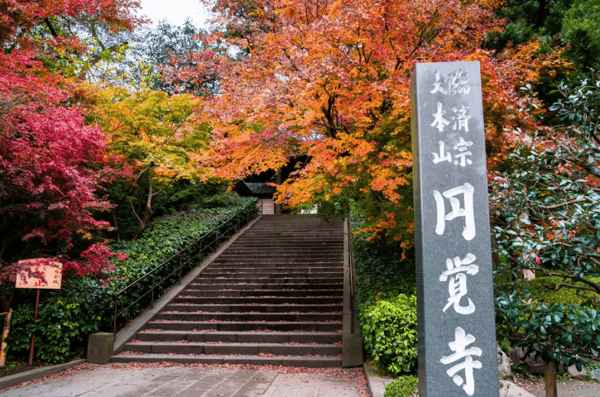
Take the Enoden from Kamakura Station to Hase Station (3 stops, about 5 minutes), then walk uphill for about 5 minutes. Hasedera is a hillside temple with several levels of gardens, and the ocean views from the upper terrace are some of the best in Kamakura — you can see Yuigahama Beach and, on clear days, the Miura Peninsula.
The main hall houses a 9.18-meter-tall wooden Kannon statue (eleven-headed), one of the largest wooden sculptures in Japan. The lower gardens have a cave system called Benten-kutsu, where you walk through narrow tunnels past small Buddhist statues carved into the rock walls. It's unexpectedly atmospheric.
But what Hasedera is really known for is flowers. The temple maintains gardens that bloom in rotation through the year — plum blossoms in February, cherry blossoms in late March, wisteria in April, and the famous hydrangea path in June, when roughly 2,500 hydrangeas bloom along the hillside. In hydrangea season, the temple sometimes issues numbered tickets and has wait times that can reach an hour or more.
Hours: 8:00 AM to 5:00 PM (July through March), 8:00 AM to 5:30 PM (April through June). Last entry 30 minutes before closing.
Admission: 400 yen (adults), 200 yen (children 6-11)
Address: 3-11-2 Hase, Kamakura, Kanagawa
The Great Buddha at Kotoku-in
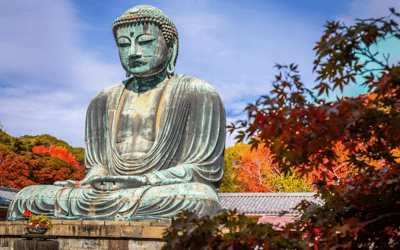
Kamakura's most recognizable image. The bronze Amida Buddha sits outdoors in the grounds of Kotoku-in temple, about a 7-minute walk from Hase Station. It stands 13.35 meters tall including the base (the statue itself is 11.31 meters) and weighs 121 tons. Originally housed inside a wooden hall, the building was destroyed by a tsunami in 1498, and the Buddha has sat in the open air ever since.
You can go inside the hollow statue for an extra 50 yen. The interior is bare — you're looking at the casting technique from the inside, essentially — but it's worth the few minutes.
The grounds are compact. Most visitors spend 20 to 30 minutes here, which leaves plenty of time to combine it with Hasedera in a single morning. Walking between the two takes about 10 minutes.
Hours: 8:00 AM to 5:30 PM (April through September), 8:00 AM to 5:00 PM (October through March). Last entry 15 minutes before closing.
Admission: 300 yen (adults), 150 yen (children 6-12). Additional 50 yen to enter the statue interior.
Address: 4-2-28 Hase, Kamakura, Kanagawa
Hokokuji Temple and the Bamboo Grove
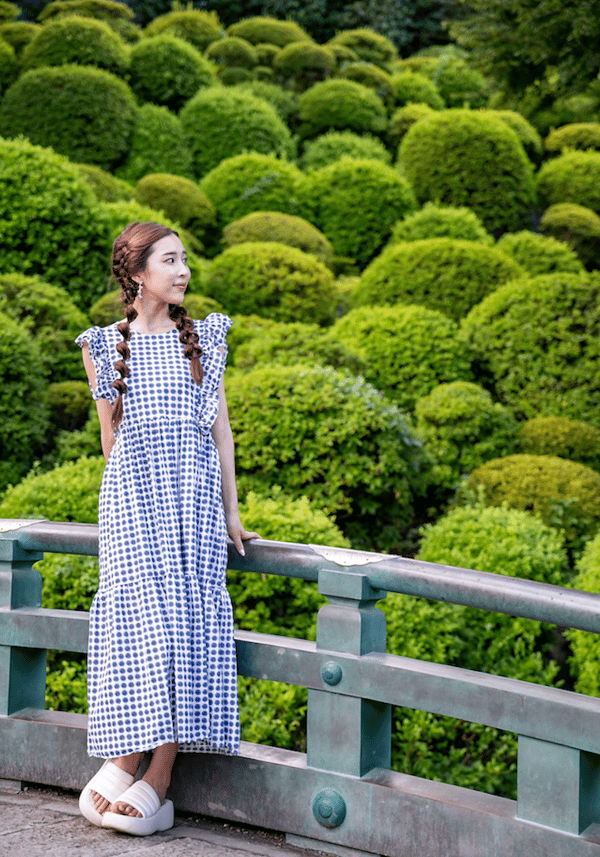
East of central Kamakura, about a 12-minute bus ride from Kamakura Station (bus #5 toward Kamakura-gū, get off at Jomyoji stop) or a 25-minute walk. Hokokuji is a small Rinzai Zen temple founded in 1334, and the reason most people come is the bamboo grove in the back garden — around 2,000 moso bamboo stalks growing in a dense cluster behind the main hall.
The grove is smaller than Arashiyama's in Kyoto, but it has a different feel — more intimate, less tourist-infrastructure. There's a tea house inside the grove where you can sit on tatami and drink matcha (600 yen, served with a dry sweet) while looking into the bamboo. Matcha last order is at 3:30 PM, so don't leave this for the end of the day.
The approach to the temple passes through a moss-covered garden that's worth slowing down for, especially in the morning when the light comes through at a low angle.
If you're interested in capturing the temple district along the old Kanazawa Kaido road — including Hokokuji, Jomyoji, and Zuisenji — a private photoshoot covering the Kanazawa Kaido temples is available.
Hours: 9:00 AM to 4:00 PM
Admission: 400 yen (adults), 200 yen (children). Matcha is an additional 600 yen.
Address: 2-7-4 Jomyoji, Kamakura, Kanagawa
Kita-Kamakura: Zen Temples
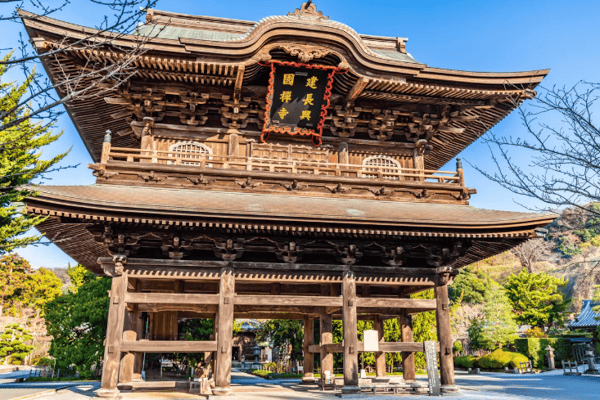
One JR stop north of Kamakura Station. The area around Kita-Kamakura Station has a concentration of major Zen temples from the Kamakura period, and the atmosphere is noticeably quieter than central Kamakura — fewer souvenir shops, more tree cover, and you can sometimes hear the temple bells.
Engakuji is right at the station — literally steps from the ticket gate. Founded in 1282, it's one of Kamakura's Five Great Zen Temples and has an impressive Sanmon gate and a bell (Ogane) that's designated a National Treasure. The temple grounds are large enough to absorb crowds, and the autumn leaves here (usually peaking in late November) are excellent. Hours: 8:30 AM to 4:30 PM (March through November), 8:30 AM to 4:00 PM (December through February). Admission: 500 yen.
Kenchoji, a 10-minute walk from Engakuji, was the first Zen temple built in Kamakura (1253) and remains the largest. The main buildings — Butsuden, Hatto, and Hojo — follow in a straight line, and the Juniper trees flanking the approach are said to be over 750 years old. Behind the temple, a trail leads up to a hilltop observation point with a view over Kamakura and the ocean — it's about a 20-minute climb and connects to the Ten-en hiking trail. Hours: 8:30 AM to 4:30 PM. Admission: 500 yen (cash only).
Meigetsuin is a smaller temple known locally as the "Hydrangea Temple." In June, the approach path is lined with hundreds of blue hydrangeas, and it becomes one of the most photographed spots in Kamakura. Outside of hydrangea season, it's worth visiting for the famous circular window (maru-mado) in the main hall, which frames the rear garden like a painting — green in summer, red in autumn. Hours: 9:00 AM to 4:00 PM. Admission: 500 yen (additional 500 yen for the rear garden when open seasonally).
A private walking tour of Kita-Kamakura's Zen temples covers Engakuji, Kenchoji, Meigetsuin, and Tsurugaoka Hachimangu with a local English-speaking guide — useful if you want context on Zen history and architecture rather than just seeing the buildings.
Kamakura Hiking Trails
Two main trails run through the hills behind Kamakura, and both are manageable for anyone in reasonable shape wearing proper shoes.
The Daibutsu Hiking Trail (about 3 km) connects Kita-Kamakura to the Great Buddha area. The trail passes through forest, over exposed tree roots, and past several smaller shrines and temples — including Zeniarai Benten, where visitors wash coins in spring water for good financial luck. Allow about 60 to 90 minutes for the walk itself, longer if you stop at temples along the way.
The Ten-en Hiking Trail (about 5 km) starts behind Kenchoji temple and runs along a ridgeline to Zuisenji temple in eastern Kamakura. The highest point is about 159 meters, and there are ocean views at several spots along the trail. It takes roughly 2 to 2.5 hours. The trail head behind Kenchoji requires paying the temple's 500 yen admission to access.
Both trails can get muddy after rain — check conditions before setting out, especially after a typhoon or heavy storms. Trail closures happen periodically for maintenance or weather damage.
The Enoden Line and Kamakura's Coast
The Enoshima Electric Railway — the Enoden — runs 10 km between Kamakura Station and Fujisawa Station, and the middle section of the route hugs the coastline so closely that the train feels like it might clip the waves. It's a single-car tram for most services, and riding it is part of the experience.
Kamakurakokomae Station is where most people get off for photos. The railroad crossing just south of the station — with the ocean behind it and the train passing through — went viral as the real-life location from the Slam Dunk anime opening sequence. Expect crowds, especially on weekends. Go early in the morning for the best light and fewest people. Stay on the sidewalk and don't stand on the tracks; local police patrol this crossing regularly.
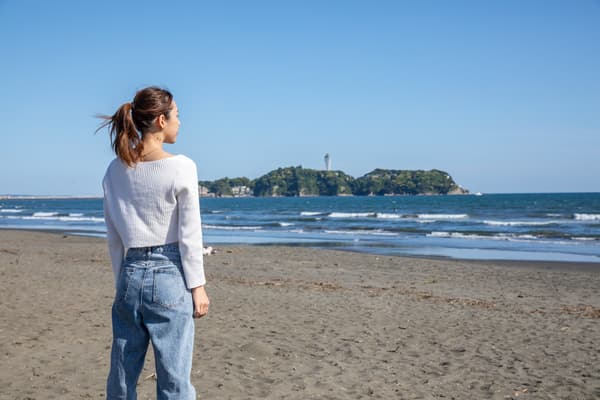
Inamuragasaki and Shichirigahama, the next stops down the line, are less crowded and have their own appeal. Shichirigahama has a long beach with a view of Enoshima and, on clear days, Mt. Fuji beyond it. The sunset from here is worth timing your day around.
For a professional take on the coastal scenery, there's a private photoshoot covering the Enoden coastal route available.
Enoshima Island
At the western end of the Enoden line. From Kamakura Station, it's about 23 minutes by train to Enoshima Station, then a 15-minute walk across the bridge to the island itself.
Enoshima is a small island that packs a lot into a compact space — three connected shrines (Enoshima Jinja), botanical gardens, sea caves, and an observation tower called the Sea Candle that gives 360-degree views of Sagami Bay and, in the right conditions, Mt. Fuji.
The island involves a lot of uphill walking (or you can pay for the escalator series called the Escar). The food street near the base has shirasu-don (raw whitebait rice bowls) as the local specialty — shirasu is caught in the waters off Shonan, and eating it this fresh is specific to this stretch of coast. January through mid-March is the off-season for shirasu fishing, so raw shirasu may not be available in early spring.
The Sea Candle observation tower charges 800 yen (adults) and is open until 8:00 PM, making it one of the few things in the Kamakura/Enoshima area that you can do in the evening.
If you're interested in Enoshima's nightlife side, an Enoshima bar-hopping tour covers the local izakaya scene.
When to Visit
Kamakura is a year-round destination, but each season has its own character:
Late March to early April — Cherry blossom season. Dankazura, the approach to Tsurugaoka Hachimangu, is one of the best spots. Hasedera and the smaller temple gardens also have sakura, with less competition for viewing space.
June — Hydrangea season. Meigetsuin and Hasedera are the two main spots, and both get extremely crowded. Weekday mornings are your best chance at a reasonable experience. Hasedera sometimes requires numbered entry tickets during peak bloom.
July and August — Beach season along Yuigahama and Shichirigahama. The Kamakura Fireworks Festival (usually mid-July) is a major event. Temperatures are high and so are the crowds.
Late November to early December — Autumn leaves. Engakuji and Kenchoji in Kita-Kamakura are the highlights. The combination of red maples and Zen temple architecture photographs extremely well.
Winter (January to February) — The quietest season and arguably the best for temple visits without crowds. Clear winter days give the best Mt. Fuji views from Shichirigahama and Enoshima.
Practical Tips
Day trip or overnight? A focused day trip from Tokyo covers the core sights — Tsurugaoka Hachimangu, Komachi-dori, Hasedera, the Great Buddha, and a ride on the Enoden. To include Kita-Kamakura temples, Hokokuji, hiking, and Enoshima, two days is more comfortable.
IC card vs. passes: If you're only doing Kamakura Station to Hase Station and back, your Suica or Pasmo IC card is fine. If you're riding the Enoden more than twice, the Noriorikun pass saves money. Coming from Shinjuku? The Odakyu Freepass wraps everything up for 1,640 yen.
Coin lockers: Available at Kamakura Station (east and west exits) and Kita-Kamakura Station. They fill up fast on weekends — arrive early or travel light.
Cash: Some temples, especially Kenchoji, are cash only. Bring enough yen for admission fees (300 to 500 yen each, and you'll likely visit 3 to 5 temples).
Footwear: If you're planning to hike the Daibutsu or Ten-en trail, proper walking shoes are necessary — the paths are unpaved, with tree roots and rocky sections. Temple visits alone are fine in regular walking shoes.
For a wider view of the Kamakura area — including Kamakurayama and the coastline — a Kamakura and Enoshima photoshoot with a local photographer can be customized to your schedule and interests.