Osaka is where Japan lets its guard down. The city runs on street food, comedy, and a certain directness that sets it apart from Tokyo or Kyoto. Locals will tell you Osaka is the "kitchen of Japan" (tenka no daidokoro), and they mean it. But Osaka isn't only about food. It has a shrine dating back to the 3rd century, a castle with panoramic city views, one of Asia's biggest aquariums, and a retro neighborhood that feels frozen in the 1960s. Here are 20 things to do when you visit.
Dotonbori and Namba
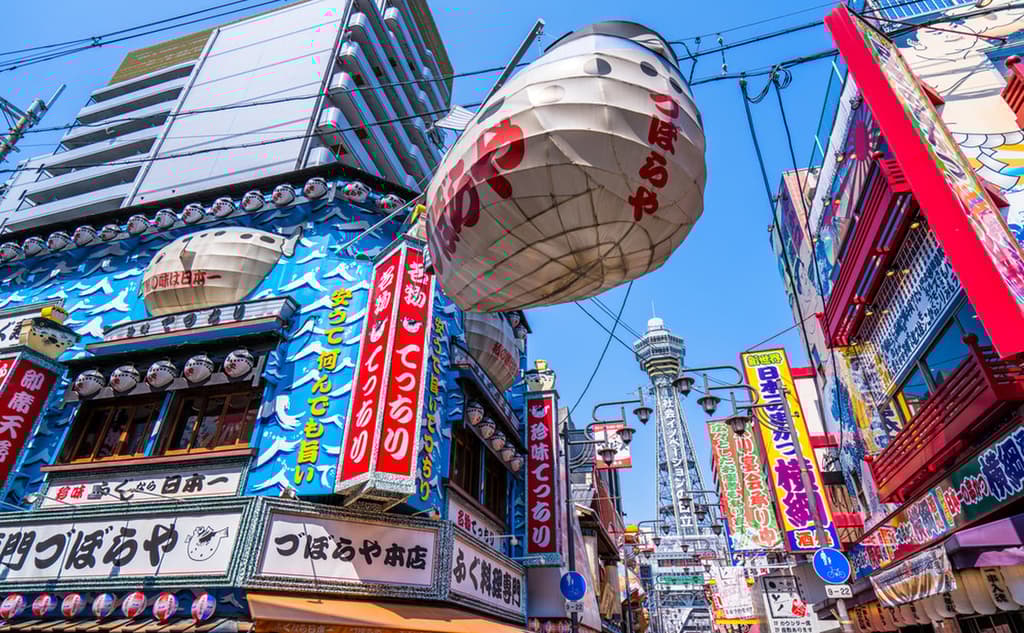
Dotonbori is the first place most visitors see in Osaka, and it earns the hype. The canal-side strip between Dotonborisuji and Soemoncho is packed with restaurants, neon signs, and the famous Glico Running Man billboard. Walk along the canal at night when the signs reflect off the water.
What to Eat in Dotonbori
Takoyaki (octopus balls) and okonomiyaki (savory pancakes) are the headliners. Creo-Ru near Dotonbori Bridge has been doing takoyaki since the 1970s and is one of the original shops in the area. For okonomiyaki, Mizuno on Dotonborisuji has a counter where cooks make it right in front of you. Lines form early on weekends, so aim for a weekday visit or show up right when they open.
Duck into Hozenji Yokocho, a narrow cobblestone alley just south of the main strip. It's a quiet pocket with a moss-covered Buddhist statue (Fudo Myoo) and a handful of small bars and restaurants. The atmosphere shifts completely from the neon chaos a block away.
Access: Namba Station (Osaka Metro Midosuji, Yotsubashi, or Sennichimae lines), direct walk south from Exit 14.
Osaka Castle
Osaka Castle sits on a hilltop in the middle of Osaka Castle Park, surrounded by stone walls and moats. The current tower is a 1931 concrete reconstruction, but the observation deck on the 8th floor offers one of the best city views in Osaka. Inside, the museum covers the history of Toyotomi Hideyoshi, the warlord who built the original castle in the 1580s.
The park itself is worth the visit even if you skip the tower. Cherry blossom season (late March to early April) fills the park with picnickers, and the Nishinomaru Garden on the west side is especially good for sakura viewing.
Hours: 9:00 to 18:00 (last entry 17:30). Closed December 28 to January 1.
Admission: Adults 1,200 yen. University and high school students 600 yen (ID required). Junior high and younger free.
Access: Tanimachi 4-chome Station (Osaka Metro Tanimachi/Chuo lines) or Osakajokoen Station (JR Loop Line).
Shinsekai
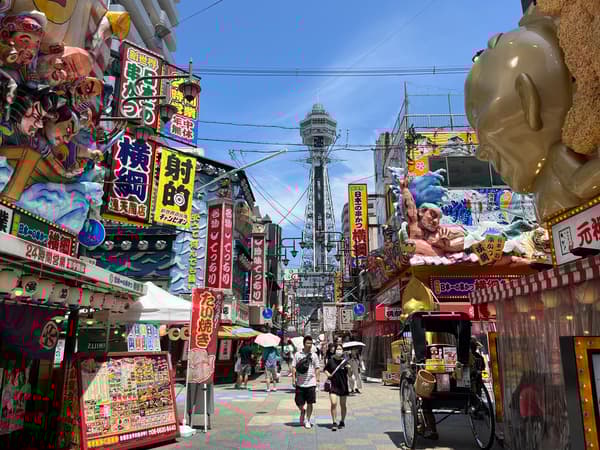
Shinsekai ("New World") is Osaka's retro district at the base of Tsutenkaku Tower. The neighborhood was built in 1912, modeled partly after New York and Paris, and it still has a throwback Showa-era feel with its flashy signs, game parlors, and kushikatsu shops.
Kushikatsu in Shinsekai
Kushikatsu (deep-fried skewers) is the signature dish here. Daruma is the most famous chain, with its angry chef mascot staring down at you from the storefront. Tengu, a few doors down, is another solid choice with slightly lower prices. The one rule everyone follows: never double-dip your skewer in the communal sauce pot.
Walk through Janjan Yokocho, the narrow covered arcade on the south side, for more street food stalls and old-school shogi (Japanese chess) parlors.
For a deeper look at the neighborhood, check out our full guide:
Access: Dobutsuen-mae Station (Osaka Metro Midosuji/Sakaisuji lines), Exit 1.
Tsutenkaku Tower
Tsutenkaku Tower stands at the heart of Shinsekai and has been an Osaka symbol since 1956 (the current tower replaced the 1912 original). The outdoor observation deck on the top floor sits at about 94 meters. It isn't the tallest viewing spot in the city, but the neon-lit view of Shinsekai below is unique.
There is also a small shrine at the top dedicated to Billiken, a "God of Things as They Ought to Be." Rubbing the soles of Billiken's feet is said to bring good luck.
Hours: 10:00 to 20:00 (last admission 19:30). Hours may vary by season.
Admission: General observation deck 900 yen (adults). Special outdoor deck 300 yen additional.
Access: Same as Shinsekai, Dobutsuen-mae Station.
Kuromon Market
Kuromon Market (Kuromon Ichiba) is a covered market about a five-minute walk east of Namba. It has roughly 150 stalls and shops selling fresh seafood, produce, and street food. Vendors grill scallops, crab legs, and wagyu on the spot.
The market opens early and most stalls close by late afternoon (around 17:00). Weekday mornings are less crowded. Note that some stalls are closed on Sundays and holidays.
Access: Nippombashi Station (Osaka Metro Sakaisuji/Sennichimae lines), Exit 10. About a 3-minute walk.
Umeda Sky Building
The Umeda Sky Building in the Kita (north) district has a Floating Garden Observatory on the 39th and 40th floors, connected by an outdoor escalator tube that passes between the two towers. The rooftop is open-air, giving you 360-degree views across Osaka without glass getting in the way.
At night, the floor of the observation deck lights up with luminous stones, creating a starfield effect. The basement floor has Takimi-Koji, a retro food alley designed to look like a 1920s Osaka street.
Hours: 9:30 to 22:30 (last admission 22:00).
Admission: Adults 1,500 yen. Ages 4 to elementary school 700 yen.
Access: Osaka/Umeda Station (JR, Hankyu, Hanshin, or Osaka Metro Midosuji Line). About a 9-minute walk northwest from JR Osaka Station's central exit, passing through an underground tunnel.
Shinsaibashi-suji Shopping Street
Shinsaibashi-suji is a covered arcade stretching about 600 meters between Shinsaibashi Station and Dotonbori. It mixes international brands (Apple, Uniqlo, H&M) with local shops, drugstores stocked with Japanese cosmetics, and department stores like Daimaru. The arcade stays busy until late at night.
Side streets off the main arcade lead to smaller boutiques and vintage clothing shops, especially around the Amerikamura (American Village) area on the west side.
Access: Shinsaibashi Station (Osaka Metro Midosuji Line), directly connected.
Amerikamura (American Village)
Amerikamura, or "Amemura," is Osaka's youth culture hub west of Shinsaibashi. It started in the 1970s with shops importing American goods, and today it's a dense cluster of secondhand clothing stores, record shops, sneaker boutiques, and small bars. The Triangle Park at the center is a popular hangout spot.
For food, try the shops near Triangle Park selling large tacos or the soft-serve ice cream stands. The vibe here is casual and young, especially on weekend afternoons.
Access: Walk west from Shinsaibashi-suji arcade or take the Osaka Metro to Shinsaibashi Station (Midosuji Line).
Osaka Aquarium Kaiyukan
Kaiyukan in the Tempozan Harbor Village area is one of the largest aquariums in Asia. The main tank, themed after the Pacific Ocean, holds whale sharks, manta rays, and thousands of fish. You spiral down through 15 tanks representing different marine environments, from the Arctic to the Great Barrier Reef.
There's also a touch pool where you can handle small sharks and rays. Kaiyukan gets crowded on weekends and holidays, so weekday visits are smoother.
Hours: Generally 10:00 to 20:00 (last entry 19:00). Hours vary seasonally; check the official site before your visit.
Admission: Adults 2,700 yen. Children (7 to 15) 1,400 yen. Young children (4 to 6) 700 yen. Prices use date-based dynamic pricing and may vary slightly.
Access: Osakako Station (Osaka Metro Chuo Line), about a 5-minute walk.
Tempozan Ferris Wheel and Harbor Village
Right next to Kaiyukan, the Tempozan Giant Ferris Wheel was once the world's tallest when it opened in 1997. The ride takes about 15 minutes and gives views of the Osaka skyline, the port, and on clear days, Mount Ikoma to the east.
Tempozan Harbor Village also has a shopping mall and Legoland Discovery Center (good for families with younger children). The Santa Maria, a replica of Columbus's ship, runs harbor cruises from the dock near Kaiyukan.
Access: Same as Kaiyukan, Osakako Station.
Abeno Harukas
Abeno Harukas is the tallest skyscraper in Osaka at 300 meters. The observation deck, Harukas 300, occupies the top three floors (58th to 60th). On a clear day, you can spot Osaka Bay, Awaji Island, and the Kii Peninsula. There's also an open-air deck on the 58th floor called the "Edge the Harukas" experience, where visitors walk along a glass-floored ledge on the building's edge. That add-on requires a separate booking.
Below the observation deck, Abeno Harukas houses the Kintetsu department store (the largest department store in Japan by floor space), an art museum on the 16th floor, and the Osaka Marriott Miyako Hotel on the upper floors.
Hours (Harukas 300): 9:00 to 22:00 (last admission 21:30).
Admission: Adults 1,800 yen. Junior high/high school students 1,200 yen. Elementary school 700 yen. Children (4+) 500 yen.
Access: Tennoji Station (JR/Osaka Metro) or Osaka Abenobashi Station (Kintetsu). Direct connection from the station.
Sumiyoshi Taisha
Sumiyoshi Taisha is one of Japan's oldest shrines, founded in the 3rd century. The main buildings use the "Sumiyoshi-zukuri" architectural style, one of the oldest shrine building styles in the country, predating Chinese and Korean architectural influence. The distinctive arched Sorihashi Bridge at the entrance is a classic photo spot.
The shrine grounds are spacious and tree-lined, making it a calm break from central Osaka. Sumiyoshi Taisha is also the head shrine for all Sumiyoshi shrines across Japan (there are about 2,300 of them).
A small local market sometimes appears on the first Sunday of the month just outside the shrine grounds.
Hours: Shrine grounds open daily 6:00 to 17:00 (until 16:30 October through March).
Admission: Free.
Access: Sumiyoshi Taisha Station (Nankai Main Line) or Sumiyoshitorii-mae (Hankai Tramway). The tram ride from Tennoji is about 15 minutes and is a nice experience in itself.
Nakanoshima
Nakanoshima is a narrow island sandwiched between the Dojima and Tosabori rivers in central Osaka. It's the city's business and cultural heart, lined with stone buildings from the early 1900s. The Osaka City Central Public Hall (1918) and the former Bank of Japan Osaka Branch are two of the standout structures.
The Nakanoshima Museum of Art opened in 2022, with a striking black exterior. Rose gardens along the eastern end of the island bloom twice a year (May and October). At night, the riverbanks light up, and several restaurants along the water offer terrace seating.
Access: Naniwabashi Station (Keihan Railway) or Kitahama Station (Keihan Railway/Osaka Metro Sakaisuji Line).
Tenma and Tenjinbashisuji Shopping Street
Tenjinbashisuji Shopping Street is the longest shopping arcade in Japan, stretching 2.6 km north from the area near Osaka Tenmangu shrine. It has a local, everyday feel with cheap clothing shops, household goods stores, and plenty of small eateries.
The Tenma area around the southern end of the arcade is one of the best bar-hopping districts in Osaka. Small izakayas and standing bars line the side streets, most with very reasonable prices. If you want to explore with a guide, we offer a night tour of the area:
Access: Minami-Morimachi Station (Osaka Metro Tanimachi/Sakaisuji lines) or Tenjinbashisuji 6-chome Station (Osaka Metro Tanimachi/Sakaisuji lines).
Osaka Tenmangu Shrine
Osaka Tenmangu is a shrine dedicated to Sugawara no Michizane, the deity of learning and scholarship. The current buildings date to 1845 after a fire destroyed the earlier structures. Students often come here before exams to pray for academic success.
Every July, the shrine hosts the Tenjin Matsuri, one of Japan's three great festivals. The festival climaxes on July 25 with a boat procession on the Okawa River and fireworks.
Access: Minami-Morimachi Station (Osaka Metro), Exit 4. A 3-minute walk.
Nakazakicho
Nakazakicho, just north of Umeda, is a quiet residential area where old wooden townhouses have been converted into cafes, galleries, and secondhand bookshops. The narrow streets and low-rise buildings create a village atmosphere that feels nothing like the skyscraper district a few blocks south.
Notable spots include Salon de AManTO, a cafe in a converted 1920s house, and Iraboty, a tiny standing bar. The neighborhood is walkable in about 30 minutes and pairs well with a visit to Umeda.
Access: Nakazakicho Station (Osaka Metro Tanimachi Line) or walk 10 minutes north from Umeda/Osaka Station.
Universal Studios Japan (USJ)
USJ in the Osaka Bay area is one of the biggest theme parks in Japan. The park includes zones themed around Harry Potter (with a recreation of Hogwarts Castle), Nintendo (Super Nintendo World with its Mario Kart ride), and seasonal events that change throughout the year.
The park celebrated its 25th anniversary in 2026 with additional events and new attractions. Wait times for popular rides like Mario Kart and the Harry Potter rides can exceed 90 minutes on weekends. Express passes help but sell out quickly, so book online before your trip.
Hours: Vary daily; generally 9:00 to 21:00. Check the official site for your visit date.
Admission: 1-Day Studio Pass starts around 8,600 yen for adults, but prices use dynamic pricing and vary by date.
Access: Universal City Station (JR Yumesaki Line), about a 5-minute walk from the gate. From Osaka/Namba, take the JR to Nishikujo and transfer to the Yumesaki Line.
Spa World
Spa World in Shinsekai is a large onsen (hot spring bath) facility spread across multiple floors. It has two themed zones: a "European Zone" and an "Asian Zone," each with baths designed after different countries. The zones alternate monthly between men's and women's access (check the schedule on their website before going).
There's also a pool area with waterslides on the top floor (swimsuits required there, unlike the bath floors). Spa World works well as a half-day activity, especially after walking around Shinsekai.
Hours: Open 24 hours for bathing. Pool area has separate hours (generally 10:00 to 19:00).
Admission: Adults 1,500 yen (for the bath zones). Pool area has an additional fee.
Access: Dobutsuen-mae Station (Osaka Metro Midosuji/Sakaisuji lines), Exit 5.
teamLab Botanical Garden Osaka
teamLab Botanical Garden at Nagai Park transforms the botanical garden into an interactive digital art space at night. The exhibits change with the seasons, and the outdoor setting makes it different from teamLab's indoor venues in other cities.
The garden is best experienced after dark, and you'll want about 60 to 90 minutes to walk through the full circuit. Weeknights tend to be less crowded than weekends.
Hours: Generally 18:00 to 21:30 (last entry 20:30). Closed on some Mondays.
Admission: Adults 1,600 yen. Children (4 to middle school) 500 yen.
Access: Nagai Station (Osaka Metro Midosuji Line/JR Hanwa Line), about a 10-minute walk.
Osaka's Street Food Scene
Beyond the major markets and famous strips, Osaka's street food culture shows up everywhere. A few things worth tracking down:
- Takoyaki - Osaka's signature snack. Wanaka (multiple locations including Namba) and Aizuya in Tamade (credited as the birthplace of takoyaki) are two reliable picks.
- Okonomiyaki - Try the "Osaka-style" where ingredients are mixed into the batter (unlike Hiroshima-style which layers). Kiji in Umeda Sky Building's basement has a strong following.
- Kushikatsu - Shinsekai is the epicenter, but you'll find it across the city. See our Shinsekai guide for specific recommendations.
- Ikayaki - Grilled squid pressed in a thin dough. The stand inside Hanshin Department Store near Umeda station has been doing it for decades and regularly has a queue.
- 551 Horai - Not exactly street food, but 551's pork nikuman (steamed buns) are an Osaka institution. You'll smell them from a distance. The main shop is in Namba, and there are counters at major train stations.
For a guided food experience in the Osaka night scene, explore some of our bar-hopping tours:
Day Trips from Osaka
Osaka's central location in the Kansai region makes it an excellent base for day trips. Nara is just 30 to 45 minutes by train (JR or Kintetsu), and Kyoto is about 15 minutes on the Shinkansen or 30 to 50 minutes on local trains.
We have a detailed guide to Nara's top attractions:
Other popular day trips include Kobe (20 minutes by JR), Himeji Castle (about 1 hour by JR), and Mount Koya (about 90 minutes by Nankai Railway).
Getting Around Osaka
Osaka Metro covers most of the city's main areas. The Midosuji Line (north-south, connecting Umeda, Shinsaibashi, Namba, and Tennoji) and the Chuo Line (east-west) handle the bulk of tourist travel.
For multiple rides in a day, the Osaka Amazing Pass (1-day 2,800 yen, 2-day 3,600 yen) includes unlimited metro and bus rides plus free entry to several attractions including Osaka Castle, the Tempozan Ferris Wheel, and the Santa Maria cruise. The pass is available at tourist information counters and some metro stations.
IC cards (ICOCA, Suica, or PASMO) work on all trains, subways, and buses in Osaka and are the simplest option for short stays.
From Kansai International Airport, the Nankai Rapi:t express reaches Namba in about 38 minutes (1,490 yen for reserved seat as of early 2026, with a fare increase to 1,670 yen from April 2026). The JR Haruka express goes to Tennoji in about 35 minutes.