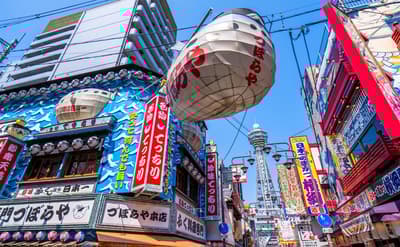
Osaka calls itself "tenka no daidokoro" -- the kitchen of Japan. The nickname dates back centuries, when the city was the country's main rice trading hub and merchants demanded good food at fair prices. That attitude stuck. Today Osaka is the one Japanese city where eating on the street is not just tolerated but expected, and where a plate of six takoyaki from a sidewalk stall can be one of the best things you eat on your entire trip.
This guide breaks down the best street food neighborhoods in Osaka, with specific shops, current prices, and practical details so you can plan a day (or several) of eating your way through the city.
Dotonbori: The Neon-Lit Food Corridor
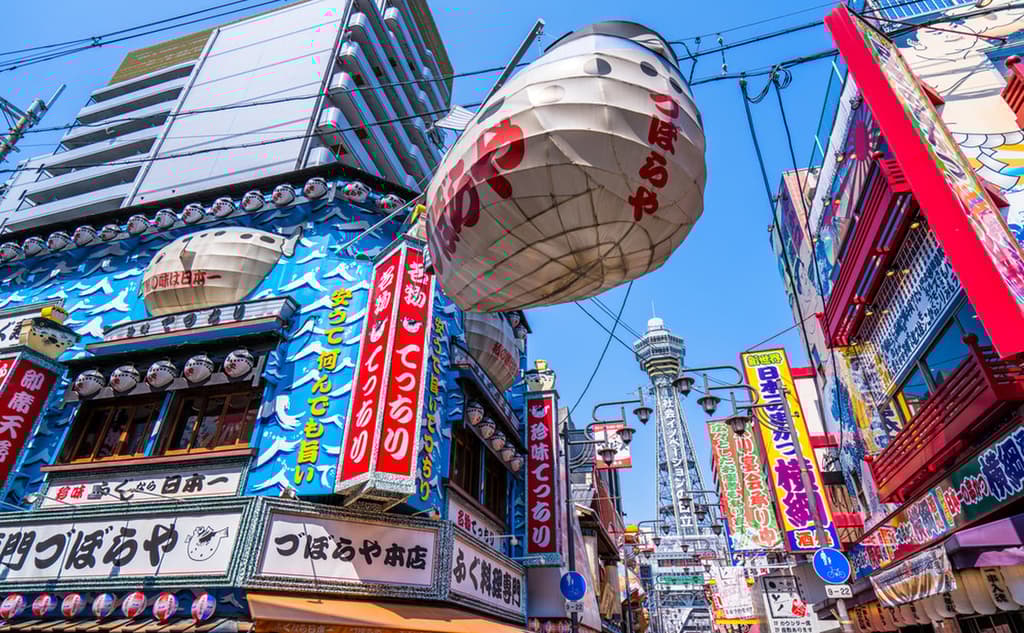
Dotonbori is where most visitors get their first taste of Osaka's food culture. The canal-side strip in Namba is lined with restaurants, street vendors, and the giant mechanical crab and running man signs you have probably seen in photos. It is loud, crowded, and unapologetically touristy -- but the food holds up.
Takoyaki
Osaka invented takoyaki (battered octopus balls), and Dotonbori has more takoyaki vendors per block than anywhere else in the city. Two shops worth seeking out:
Dotonbori Kukuru (道頓堀くくる) uses large pieces of octopus and produces a softer, richer ball than most competitors. The main store is at 1-10-5 Dotonbori, Chuo-ku. Expect to pay around 800 to 960 yen for 8 pieces. Hours are 11:00 to 21:00 on weekdays, 10:00 to 21:00 on weekends and holidays.
Takoyaki Wanaka (たこ焼き わなか) has its main Sennichimae store a short walk south of the canal at 11-19 Namba Sennichimae, Chuo-ku. Wanaka is known for a crisp exterior and creamy center. A standard serving of 8 pieces runs about 650 yen (prices were revised in February 2026). Hours are 10:30 to 21:00, with Saturday and holiday openings at 9:30.
If you want to taste takoyaki in its original form -- without sauce, just seasoned dashi batter -- make the trip to Aizuya (会津屋) in Tamadenishi. The main store is at 2-3-1 Tamadenishi, Nishinari-ku, about a 10-minute train ride from Namba. Twelve pieces cost around 600 yen. Hours are 11:00 to 21:00.
Okonomiyaki
Two legendary okonomiyaki restaurants sit within walking distance of the Dotonbori canal:
Mizuno (美津の) at 1-4-15 Dotonbori is the more famous of the two. Their signature Yamaimo-yaki uses mountain yam for a lighter, fluffier texture (1,780 yen). The standard Mizuno-yaki is 1,580 yen. Open daily 11:00 to 22:00, last order at 21:00. Lines form regularly, especially on weekends; going at 11:00 sharp or after 20:00 gives you the best chance of a short wait.
Ajinoya (味乃家) at 1-7-16 Namba takes a slightly different approach, with a denser, more savory style. Their mixed okonomiyaki is 1,680 yen, and a special mix version with extra toppings runs 3,150 yen. Open 11:00 to 22:00, closed Mondays. Since August 2025, Ajinoya offers a FastPass through TableCheck for 660 yen per person -- it does not guarantee a seat but moves you to the front of the walk-in line.
Other Dotonbori Bites
Beyond takoyaki and okonomiyaki, keep an eye out for kani doraku crab sticks sold from takeout windows along the canal, grilled mochi skewers, and gyoza stands near the Ebisu Bridge area. Dotonbori is also a good place to try ikayaki -- a grilled squid pressed flat in a special iron, sold from small windows for 200 to 400 yen.
Shinsekai and Jan Jan Yokocho: Kushikatsu Territory

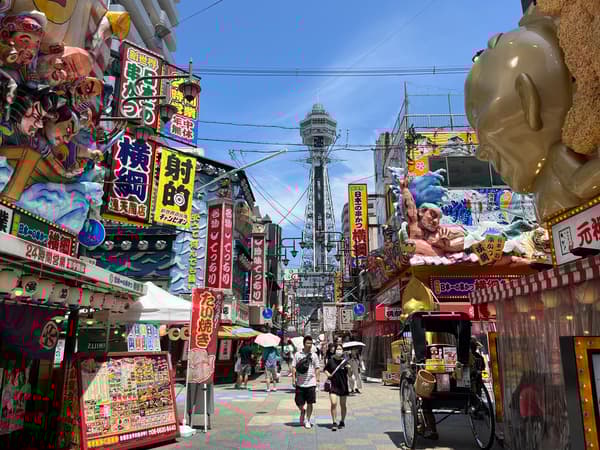
Shinsekai sits in southern Osaka at the foot of Tsutenkaku Tower. The neighborhood has a retro, slightly rough-around-the-edges feel that is entirely different from Dotonbori's tourist polish. This is where you come for kushikatsu -- battered and deep-fried skewers of meat, seafood, and vegetables.
Kushikatsu Daruma
Kushikatsu Daruma (串カツだるま) is the neighborhood's most famous kushikatsu shop. The Shinsekai main store at 2-3-9 Ebisuhigashi, Naniwa-ku has been operating for decades, and you will recognize it by the angry chef mascot outside the entrance.
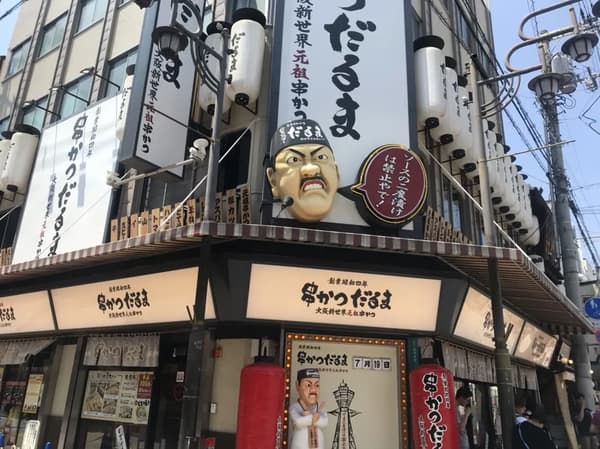
Individual skewers start from around 143 yen, and most people spend 1,500 to 2,500 yen for a full meal with drinks. Hours are 11:00 to 22:30 on weekdays, 10:30 to 22:30 on weekends. No reservations accepted; cash only. One drink per person is required.
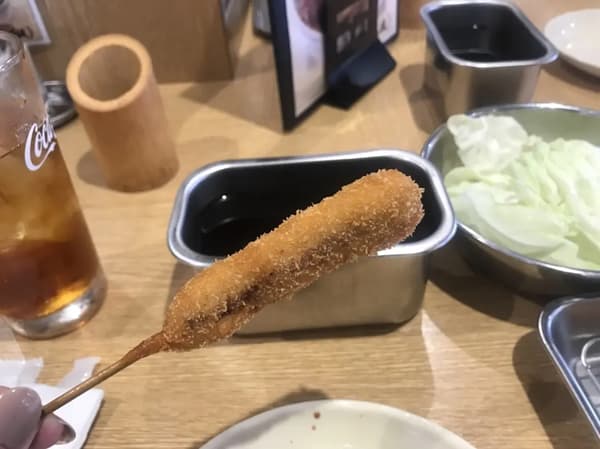
The house rule at Daruma -- and at every kushikatsu shop in Osaka -- is no double-dipping. Each table has a communal sauce container (though some shops now pour sauce over the skewers directly for hygiene). Dip once, or use the provided cabbage leaves to scoop extra sauce onto your plate.
Doteyaki and Other Shinsekai Specialties
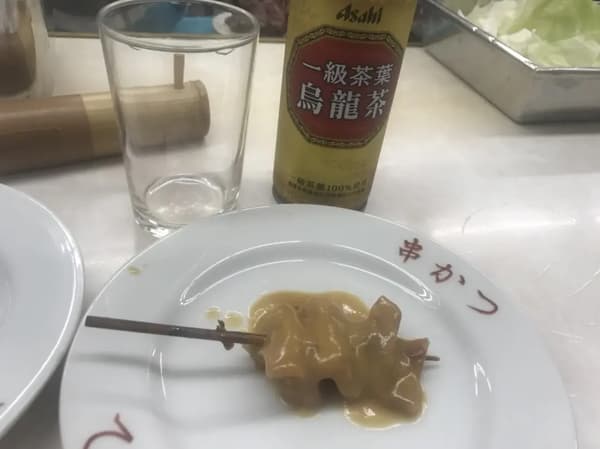
Kushikatsu gets the headlines, but Shinsekai's other signature dish is doteyaki -- beef tendons and konnyaku (a firm, gelatinous block made from konjac root) slow-simmered in a thick, sweet white miso sauce. It is sold at many kushikatsu restaurants as a side dish and is the perfect rich, sticky counterpoint to the crisp fried skewers.
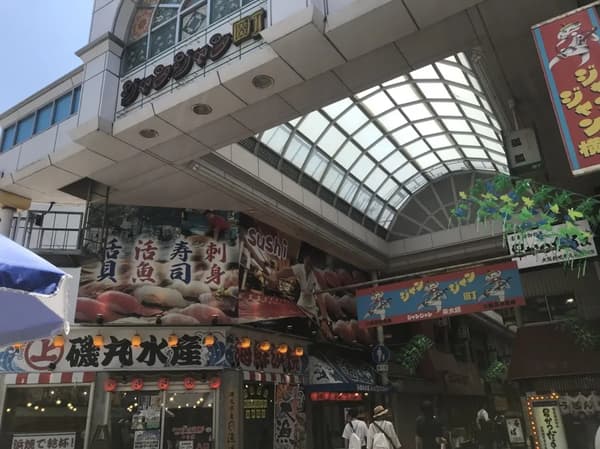
Walk south from the main Tsutenkaku area into Jan Jan Yokocho (ジャンジャン横丁), a narrow covered arcade with old-school game parlors, shogi clubs, and small izakayas. The street food here leans more toward grilled items and oden (hot pot with fishcake and daikon) from small counter shops. It is less polished than Dotonbori but feels more authentically Osaka.
For a deeper look at everything Shinsekai has to offer beyond food, read our complete Shinsekai guide:
Kuromon Market: Seafood Grazing in the Morning
Kuromon Market (Kuromon Ichiba) is a covered market stretching about 600 meters through Nipponbashi, a few minutes' walk from Namba station. It has roughly 170 shops, though the number fluctuates, and the atmosphere shifts depending on the time of day. Go in the morning and you will find vendors slicing fresh tuna and grilling scallops to order. By late afternoon many stalls have closed.
What to Eat
Tuna is Kuromon's signature item. Maguroya Kurogin is one of the best-known tuna specialists in the market, serving different cuts from akami (lean, around 1,000 yen for sashimi) through chutoro and otoro at higher prices. You can eat at their small counter or take portions away.
Grilled scallops are available at several stalls, typically 500 to 600 yen each, cooked on the spot with butter and soy sauce. Oysters, also grilled to order, run similar prices.
For something different, try the tamagoyaki (rolled omelet) stalls -- thick, slightly sweet slices sold on sticks for 200 to 300 yen -- and the fruit stalls selling perfectly ripe strawberries, melons, and mangos on skewers. The fruit is priced at a premium, but the quality is usually excellent.
Full seafood bowls (kaisendon) with tuna, salmon roe, and sea urchin range from 2,000 to 2,900 yen depending on the vendor and the day's catch.
Tips for Visiting Kuromon
- Arrive between 9:30 and 11:30 for the best combination of freshness and open stalls. By 14:00, the market starts winding down.
- Compare stalls before buying, especially for expensive items like otoro sashimi. Prices and quality vary between vendors.
- Kuromon is a fun market, but it is well aware of its tourist reputation. It is not the cheapest place to eat in Osaka -- treat it as a special tasting experience rather than a budget stop.
- Most stalls accept cash and credit cards, but smaller vendors may prefer cash.
- The market is closed or partially closed on some Sundays and national holidays. Check the official website (kuromon.com) before your visit.
Nearest station: Nippombashi Station (Osaka Metro Sakaisuji Line / Kintetsu Namba Line), Exit 10.
Tenjinbashisuji Shopping Street: Local Flavor, Fewer Tourists
Tenjinbashisuji Shotengai stretches about 2.6 kilometers through six city blocks in northern Osaka, making it one of Japan's longest shopping streets. Unlike Dotonbori, this arcade is built for local daily life -- fishmongers, clothing shops, pharmacies, and small eateries mix together under a covered roof. Foreign visitors are few, and the food prices reflect the local clientele.
Nakamuraya Korokke
The one street food stop everyone talks about in Tenjinbashisuji is Nakamuraya (中村屋) in 2-chome, at 2-3-21 Tenjinbashi, Kita-ku. This tiny shop sells croquettes (korokke) that have been a local institution for decades. The standard potato croquette is priced under 100 yen -- making it one of the cheapest bites in this guide -- and the menchi katsu (minced meat cutlet) is worth adding to your order.
Hours are 9:00 to 18:00, closed Sundays and holidays. Lines form regularly, particularly around lunchtime. Go mid-morning or mid-afternoon to avoid the worst of the wait.
Beyond Nakamuraya, the shopping street has plenty of other small food shops selling taiyaki (fish-shaped pastry filled with red bean), nikuman (steamed meat buns), and yakitori. Walk the full length and you will find lunch options at every budget level.
Nearest station: Tenjinbashisuji Rokuchome Station (Osaka Metro Tanimachi Line / Sakaisuji Line).
Namba and Ura-Namba: Where the Locals Eat Late
Namba is a broad area south of Dotonbori, and while the main streets are busy with tourists, the back alleys known as Ura-Namba (literally "behind Namba") are where Osaka's food workers and nightlife staff eat after their shifts. The area is packed with tiny izakayas, standing bars, and late-night ramen shops.
Street food in the traditional sense is less common here -- Ura-Namba is more of a sit-down neighborhood. But it is worth mentioning because it fills a gap that Dotonbori and Shinsekai do not: affordable, unpretentious, and open late. Many places serve until midnight or later.
If you want to explore Osaka's bar and izakaya scene with a local guide, our bar-hopping experiences cover several neighborhoods:
For izakaya-specific recommendations across Osaka, see our izakaya guide:
Street Food Etiquette in Osaka
Osaka is more relaxed about eating while walking than most Japanese cities, but there are still a few unwritten rules worth knowing:
- Eat near the stall. Most vendors have a small standing area or counter where you are expected to finish your food. Walking through a crowded arcade with an open box of takoyaki is not ideal and earns disapproving looks from some locals.
- Carry your trash. Public garbage bins are rare in Japan. Street food vendors usually have bins for their own packaging, but anything else you should carry with you until you find a convenience store with a public bin.
- Bring cash. The biggest chains and market stalls increasingly accept credit cards and IC cards (Suica, ICOCA), but smaller vendors -- especially the ones with the best food -- may still be cash-only.
- Do not eat on trains or buses. This is standard across Japan. Finish your food before boarding.
- The kushikatsu rule. At any kushikatsu restaurant: dip once. No double-dipping in the communal sauce.
A One-Day Osaka Street Food Route
If you have a single full day for eating, here is a route that hits four neighborhoods without backtracking:
Morning (9:30 to 11:30) -- Kuromon Market. Start with seafood while the stalls are freshest. Have a few pieces of tuna sashimi at Kurogin, a grilled scallop, and some tamagoyaki. Budget: 2,000 to 3,000 yen.
Early afternoon (12:30 to 14:00) -- Dotonbori. Walk northwest from Kuromon (about 15 minutes). Get takoyaki at Wanaka or Kukuru, and if you still have room, sit down for okonomiyaki at Mizuno or Ajinoya. Budget: 1,000 to 2,500 yen.
Late afternoon (15:00 to 17:00) -- Shinsekai. Take the Osaka Metro from Namba to Dobutsuen-mae station (about 5 minutes). Walk into Shinsekai for kushikatsu at Daruma and a side of doteyaki. Wander through Jan Jan Yokocho to see the retro game stalls. Budget: 1,500 to 2,500 yen.
Evening (18:00 onward) -- Ura-Namba or Tenma. Head back north for a beer and small plates at one of the standing bars in Ura-Namba, or take the train up to Tenma for a more local drinking district. This is where you slow down and stop being a tourist for a few hours. Budget: 2,000 to 4,000 yen.
Total day's food budget: roughly 6,500 to 12,000 yen, depending on how much you eat and drink.
Planning Your Osaka Trip
Osaka's food scene goes well beyond street food. For a deeper look at Shinsekai and the area around Tsutenkaku Tower, see our complete Shinsekai guide:
And for izakaya and bar recommendations across the city, check out our Osaka izakaya guide: