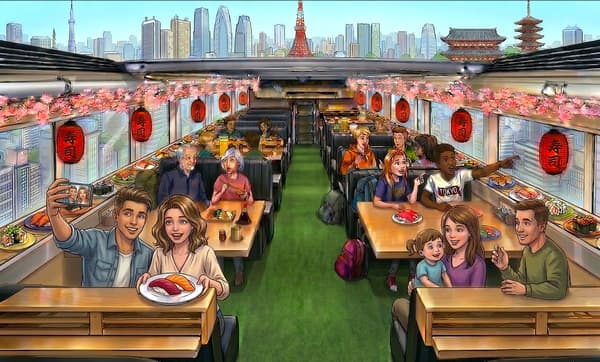
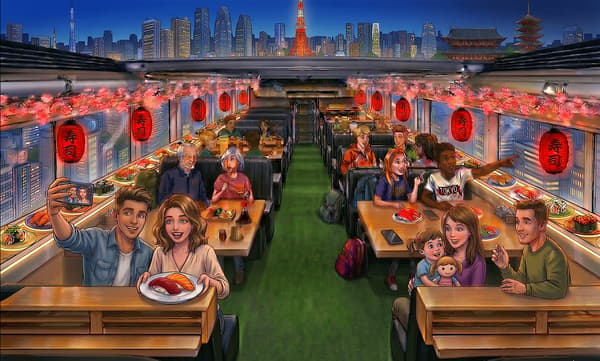
The SUSHI BUS, billed as the world's first collaboration between a double-decker bus and conveyor-belt sushi, will begin running in Tokyo on October 10, 2026. A sushi conveyor lane runs alongside the seats on the second floor of an open-top double-decker bus, turning it into a "conveyor-belt sushi restaurant on the move." Guests can eat as much sushi as they like during a tour of the city that lasts about 70 minutes. Reservations opened on September 30, 2026.
What Is the SUSHI BUS?
The concept pairs sushi, a food with high name recognition and demand among visitors from abroad, with the double-decker open-top bus, one of the leading sightseeing activities in Tokyo. The service is aimed mainly at international visitors to Japan, but it is not inbound-only, and reservations are open to the general public.
The clear roof closes in rain and other bad weather, and the bus runs as usual.
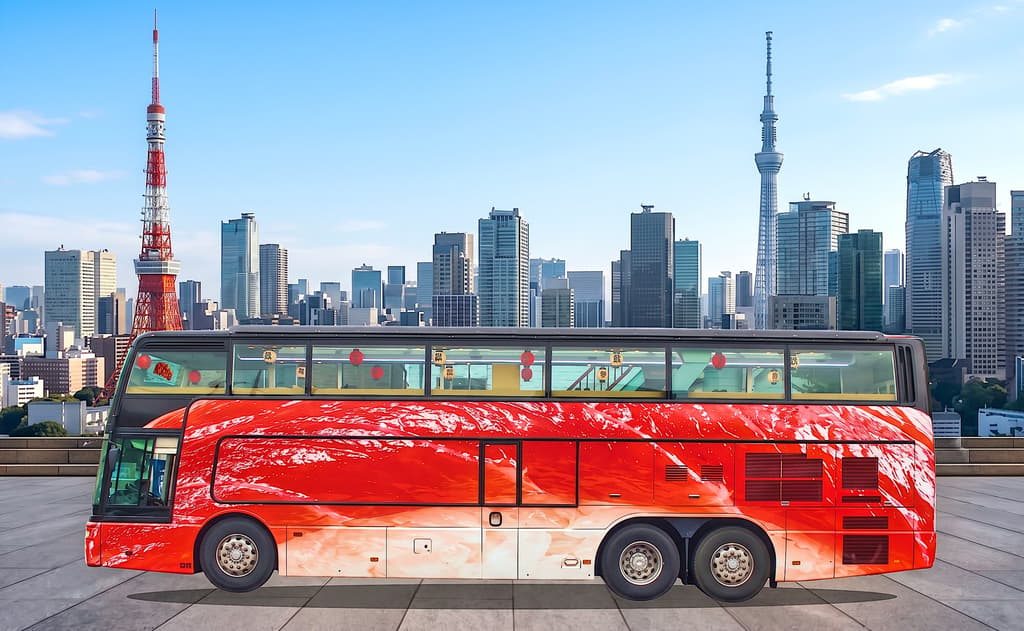
A Bus Wrapped as a Giant Tuna Sushi
The first bus, the "Tuna Bus," is wrapped in the design of a giant tuna sushi, about 12 m long and about 4 m tall. The design was chosen to express the "surprise" people showed when they first heard the concept. Starting October 10, it will run through tourist areas in Tokyo, and the operator invites anyone who spots it to take photos.
How It Works
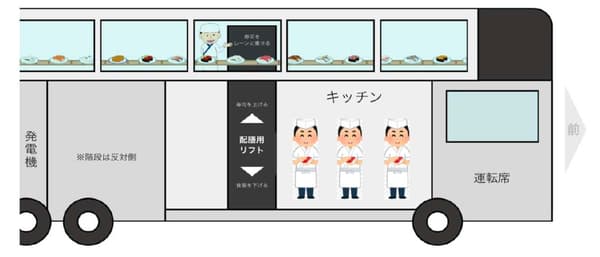
- Various kinds of sushi are prepared in the dedicated kitchen on the first floor of the bus.
- The finished sushi is carried up to the second floor by an elevator inside the bus.
- Serving staff on the second floor place the sushi on the conveyor lane next to the seats.
- Guests can eat all they like during the ride, which lasts about 70 minutes.
Questions About Riding
Will I get motion sick? The bus is operated within the legal speed limit. When the planned routes were tested with a double-decker bus, the trip took under 70 minutes at roughly 30 km/h. Sensitivity differs from person to person, but the operator says its representative, who is prone to motion sickness, had no problem. It suggests the ride suits people who are comfortable eating in-flight meals or a bento on a Shinkansen train.
What happens if the bus brakes suddenly? According to the operator, more than 100 tests since the project began have produced a specification that keeps the sushi in place even under sudden braking.
How are hygiene and quality handled? The bus has a kitchen comparable to that of an ordinary restaurant, and the number of on-board operations has been kept to a minimum. The 10 to 15 types of toppings are bought directly through a business partnership with an intermediate wholesaler at Toyosu Market, and they arrive already cut to gram specifications set by the operator, so no preparation or cooking takes place on the moving bus.
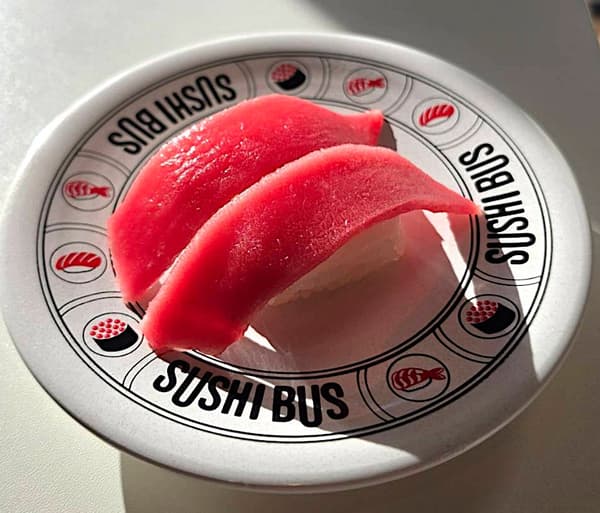
The bluefin tuna chu-toro is sourced from a different region each season, and each piece is specified at 12 g, about 1.5 times the amount at a typical conveyor-belt sushi shop. Because guests may eat less while looking at the scenery, the operator says it maximized the cost spent on each plate. It puts the purchase cost of one piece of bluefin chu-toro at about ¥200, or about ¥420 per two-piece plate including rice, which it compares to restaurants that sell a plate for about ¥600 to ¥800.
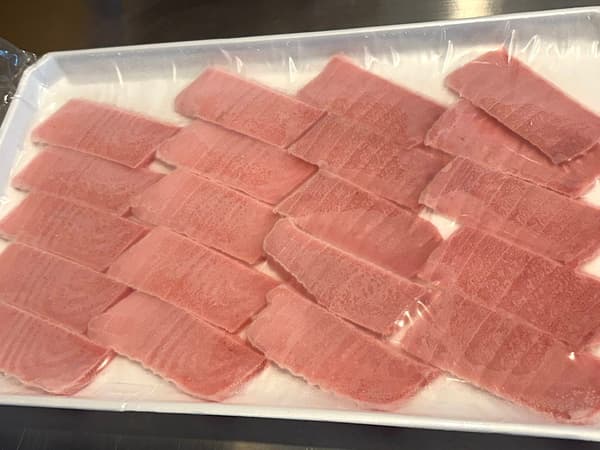
The bluefin tuna akami (lean red meat) is also generous, with 16 g of rice and 12 g of topping per piece.
Are dietary restrictions accommodated? Yes. The SUSHI BUS accommodates a range of dietary restrictions, including vegetarian and halal diets, so that visitors from around the world can enjoy it.

Route and Highlights
The SUSHI BUS departs from and returns to the Kajibashi Parking Lot (鍛冶橋駐車場) near Tokyo Station. It passes major sightseeing spots in central Tokyo but deliberately has no final destination, so the ride is meant as an entertainment-style food activity rather than a means of transportation. Routes are decided with weather, time of day, road conditions, and season in mind.
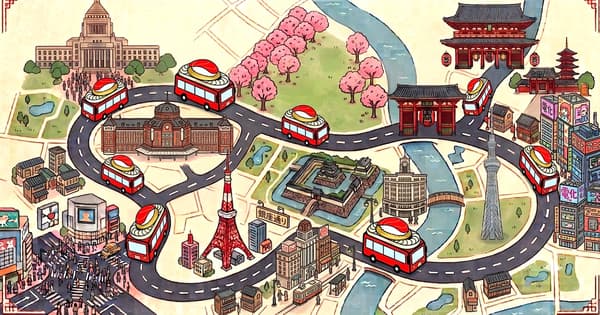
Another part of the ride is being seen. Because it is an unfamiliar-looking bus, the operator expects passersby to stare and take photos with their phones at spots such as Tokyo Tower, Ginza-dori, the front of Asakusa's Kaminarimon, and Tokyo Skytree.
Details
- Name: SUSHI BUS
- Start date: October 10, 2026 (reservations opened September 30, 2026, at 3:00 PM)
- Departure point: Kajibashi Parking Lot (鍛冶橋駐車場), a 3 to 5 minute walk from Tokyo Station
- Seats: 20 seated guests, second floor only. The service currently launches with one bus.
- Price: ¥16,000 per person (set with about US$100 as the baseline)
- Includes: A ride of about 70 minutes around central Tokyo, all-you-can-eat sushi, and drinks
- Operating days: Daily, with irregular closures for vehicle inspection and maintenance
- Departure times: Five departures a day are currently planned: 11:00 AM to 12:10 PM, 1:00 PM to 2:10 PM, 3:00 PM to 4:10 PM, 5:00 PM to 6:10 PM, and 7:00 PM to 8:10 PM
- Reservations: Online at https://sushi-bus.com/