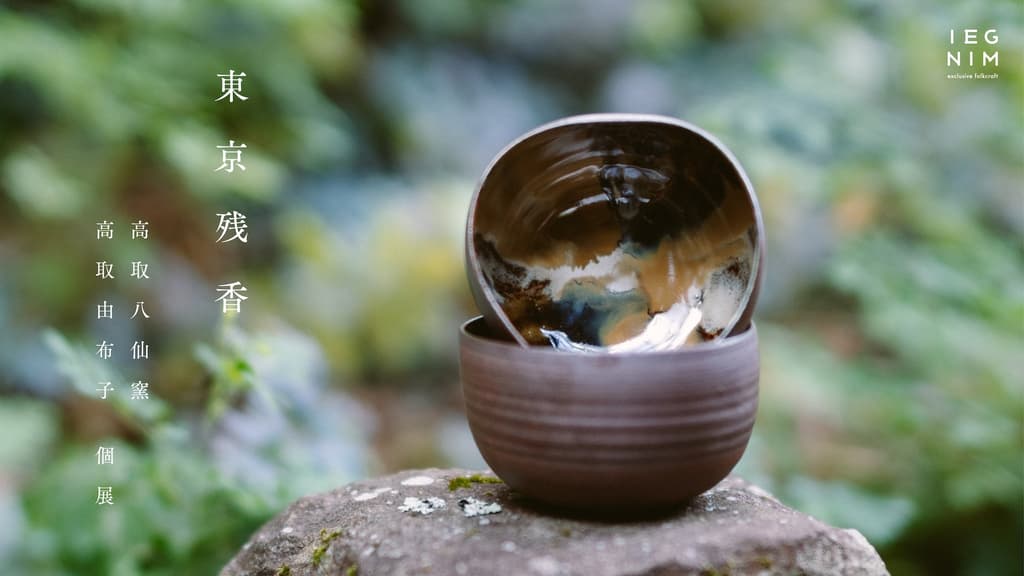
From September 12 to 23, 2026, IEGNIM — a select shop for folk crafts in Tokyo's Yoyogi-Uehara neighborhood, run by Roaster Co., Ltd. (Shinjuku, Tokyo; President: Akiji Osaki) — hosts a solo exhibition titled "Tokyo Zanko" by Yuko Takatori, a potter from Takatori Hassengama, a kiln that has carried roughly 420 years of history and tradition in Koishiwara Sarayama, Toho Village, Fukuoka Prefecture.
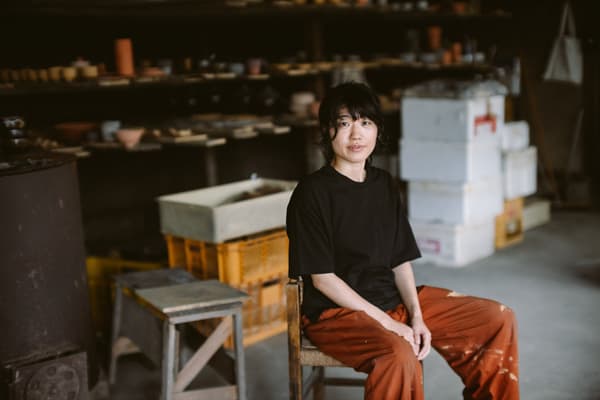
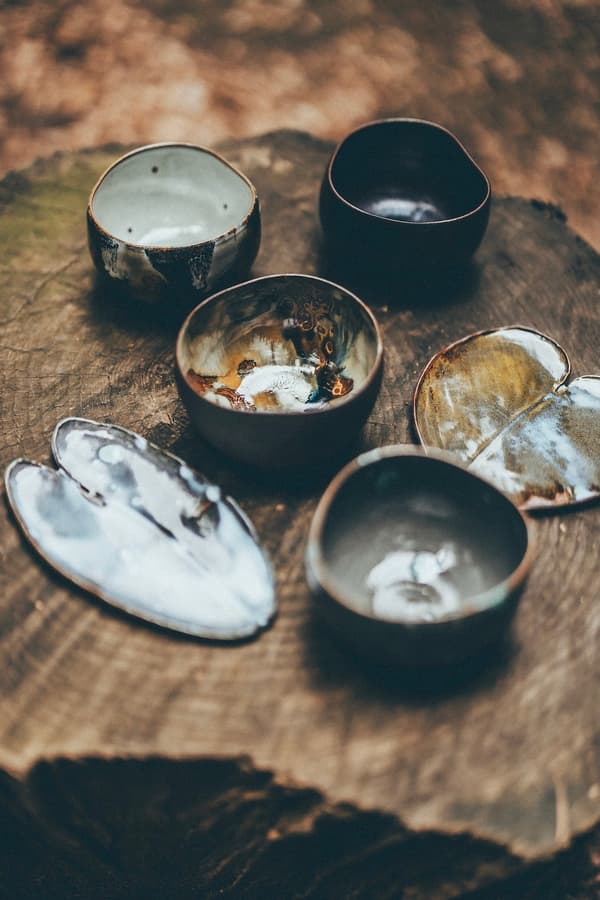
Takatori ware traces its origins to the end of the 16th century under Fukuoka Domain lord Kuroda Nagamasa. Deeply tied to the culture of tea, it carries the "kirei-sabi" aesthetic of tea master Kobori Enshu into the present day.
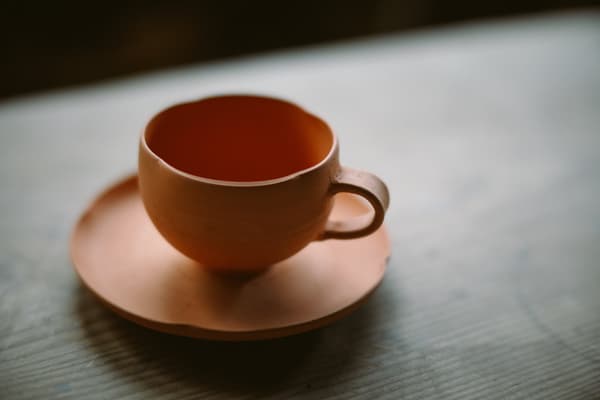
Beneath its poised, dignified surface lie the fragility of things that fade and the quiet presence of passing seasons. Each clear, cherished piece slips a small, quiet pause into the everyday.
Read the Yuko Takatori interview
In Yuko Takatori's own words —
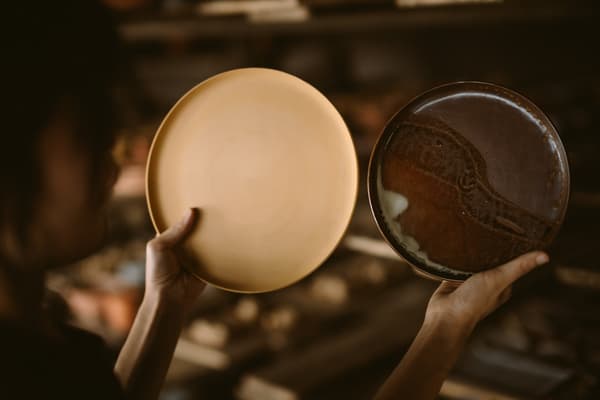
I was born and raised at a Takatori ware kiln with roughly 420 years of history. Takatori ware's beauty lies in its poised, thinly thrown forms and the landscapes that emerge in the glaze from the fire. I feel as though an invisible flow of time settles within them. What draws me in is a fullness of abundance paired with the fragility of things that will eventually be lost — the beauty that lives in that "awahi (awai)," the space between the two. Seasons turn, and scenery shifts. I want to give form to the quiet brilliance that appears, briefly, within a finite stretch of time.
On this exhibition, "Tokyo Zanko" —
I found myself thinking of the Kohonegawa, the river said to have inspired the children's song "Haru no Ogawa" (Spring Brook). It once flowed through Tokyo's Shibuya Ward and vanished as the city grew. Traces of that water remain in place names, in the rise and fall of the streets, and in roads shaped by the course the river once followed. Something no longer visible. A murmur that once was. I layered that presence onto Takatori ware. It carries the echo of time and memory that has settled over Tokyo. I hope it becomes a small opening for feeling the beauty of an unremarkable, nameless moment in daily life.
Exhibition Details
- Dates: September 12 (Sat) to September 23 (Wed, holiday), 2026
- Hours: Open Fridays, Saturdays, Sundays, and holidays, 12:30 PM – 6:00 PM (check IEGNIM's official Instagram for the latest hours)
- The artist will be present: September 12 (Sat), 13 (Sun), 22 (Tue, holiday), and 23 (Wed, holiday)
Venue
IEGNIM
1F, 3-11-5 Nishihara, Shibuya-ku, Tokyo
(1-minute walk from Exit 1 (North) of Yoyogi-Uehara Station)
https://share.google/qaD0s0N15ZGn3YBcL
Yuko Takatori
Born in Fukuoka Prefecture in 1989. After majoring in industrial design at university, she cycled home to Kyushu. She trained in tea ceramics under her grandfather, 13th-generation Takatori Hassen (now known as Sosen), and her father, the 14th-generation head of the kiln. Building on Takatori ware's traditions and aesthetic sensibility, she continues to explore her own approach to ceramic expression.
https://www.instagram.com/yuko_takatori/
https://www.instagram.com/takatori_hassengama/
Takatori Hassengama
Takatori ware began at the end of the 16th century under Fukuoka Domain lord Kuroda Nagamasa. Deeply tied to the culture of tea, its delicate, refined "kirei-sabi" worldview gives it a distinctive beauty.
Latest updates on the official Instagram
Wagashi-Making Workshop Lets Visitors Hear About the Craft Directly from the Artist
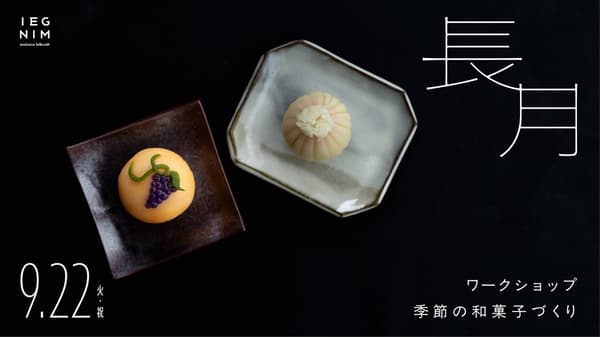
Alongside the exhibition, IEGNIM is holding a program in which participants hand-make two kinds of nerikiri, a traditional wagashi, then choose their favorite Takatori Hassengama mamezara (small dish) to serve them on. Guests take the dish home afterward.
Yuko Takatori, of the storied tea-ceramics kiln Takatori Hassengama, joins as a special guest during her IEGNIM solo exhibition to speak directly with participants about Takatori ware.
The workshop pairs vessels shaped by an artisan's aesthetic sensibility with wagashi guests make themselves.
Workshop Details
September 22 (Tue, holiday), 10:00 AM – 12:00 PM
Capacity: 9 guests
- Program: Making two nerikiri wagashi, a talk on Takatori ware and wagashi, and choosing one favorite mamezara to take home
- Fee: ¥10,000 (tax included)
- Advance reservation required
Location
GOOD NEWS STORE Yoyogi-Uehara
1F Halleluya Matsubara Building, 2-39-9 Uehara, Shibuya-ku, Tokyo
https://maps.app.goo.gl/jP9y5YEkXcymp3Un9
Interview: Yuko Takatori of Takatori Hassengama
Her fingertips remember the tension of the moment clay grows thin. The sound of a potter's wheel echoes through a quiet workshop in the hills — in Koishiwara Sarayama, a place rich with nature in Toho Village, Fukuoka Prefecture, stands Takatori Hassengama, a kiln carrying on 420 years of tradition.
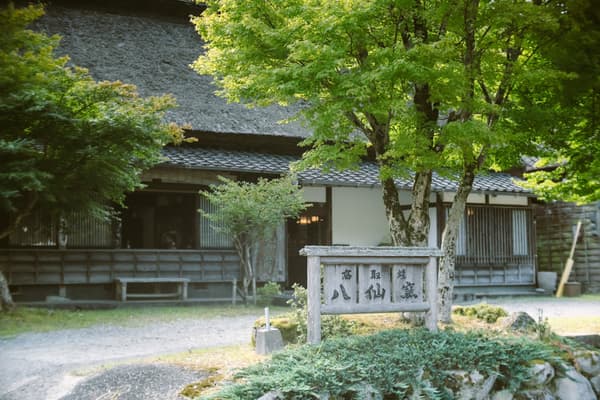
Takatori ware was once cherished as the "domain kiln" of the Chikuzen Fukuoka Domain, favored by feudal lords and by tea master Kobori Enshu. Carrying that prestigious tradition, Yuko Takatori continues to pursue vessels that fill the hearts of people living in the present.
She spoke about the philosophy at the root of her work, the spirit of "kirei-sabi" that has been passed down to her, and her own practice as a potter.
Yuko Takatori — Profile
Born in 1989 in Koishiwara Sarayama, Toho Village, Asakura District, Fukuoka Prefecture. After graduating from Tokyo Zokei University with a degree in industrial design, she made a 1,300-kilometer journey home from Tokyo to Fukuoka by bicycle and local train before joining the family kiln, Takatori Hassengama. There, under her grandfather, 13th-generation Takatori Hassen (now known as Sosen), and her father, the 14th-generation head of the kiln, she carries on a lineage passed down through self-directed learning. She reinterprets the traditional "kirei-sabi" aesthetic through her own sensibility, carrying the beauty of everyday use into the present.
https://www.instagram.com/yuko_takatori/
https://www.instagram.com/takatori_hassengama/
Light and Shadow: Scenes from Her Childhood
Her earliest memories begin with the sight of the adults around her at their wheels in the workshop.
"I think I was a quiet child. I was always gazing absentmindedly at the clouds moving, or staring at the broken shards destined for the discard pile in the corner of the workshop and thinking, 'that's so beautiful.'"
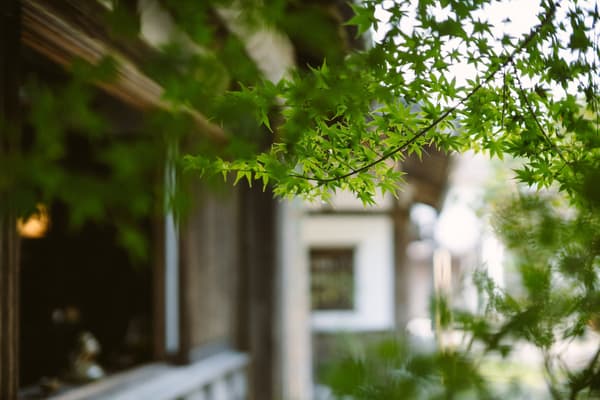
"I'd look at the cedar tree or the yellow flowers in the garden and seriously wonder, 'why can't I become that tree, even if I wake up again tomorrow?' or 'why isn't my hand a leaf?' I think my parents were probably at a loss when I asked things like that (laughs). As an adult, I know those are strange questions, but I still feel like I don't really know the true answer even now. I was a child who kept carrying that strange sense of wonder in my heart."
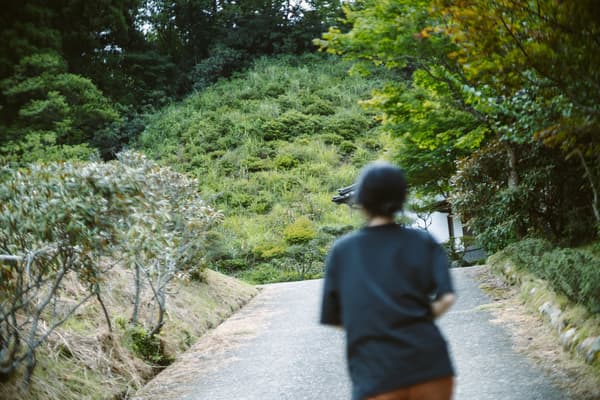
That sensibility — sitting quietly with questions that have no answer — would eventually connect to a growing interest in art.
"Even before I could read, I loved books of Impressionist paintings. I remember just flipping through the picture pages over and over."
She was drawn to the moment light hit a plant and its shadow deepened, and to the presence given off by a space where flowers swayed in the wind.
"Looking back now, I feel that the way multiple glazes layer over one another to create deep landscapes in Takatori ware, and that flicker of light and shadow, are connected somewhere inside me."
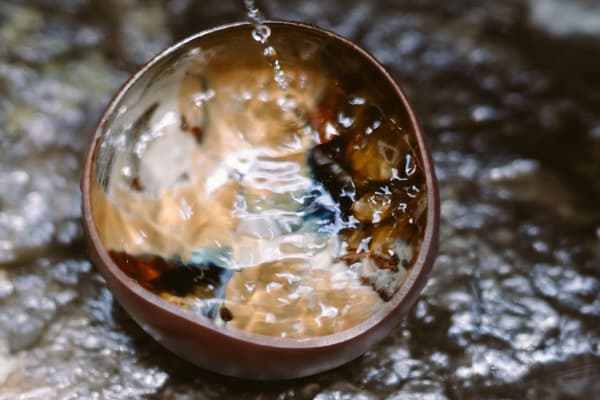
Choosing Her Own Path: The 1,300-Kilometer Journey That Sealed Her Resolve
Though she grew up in a family of potters, she recalls that at first, "I never intended to take over the family business."
She moved to Tokyo at 18 and majored in industrial design at Tokyo Zokei University. Four years spent designing industrial products under the principles of Germany's Bauhaus, considering the market and the needs of the people who would use them, broadened her view of making things. But as job hunting drew closer, an unease began to grow inside her.
"At university, I studied design for mass-produced goods based on market research and user needs. But when I tried to face the work I'd do for the rest of my life, there was something I simply couldn't shake from my mind. It was how happy and interested a friend was when I sent her a piece from home for her birthday, and the sight of my grandfather and father working with their hands in the workshop whenever I went home. There was nothing that could match that thrill — beyond that cycle of a customer choosing a piece with such affection."
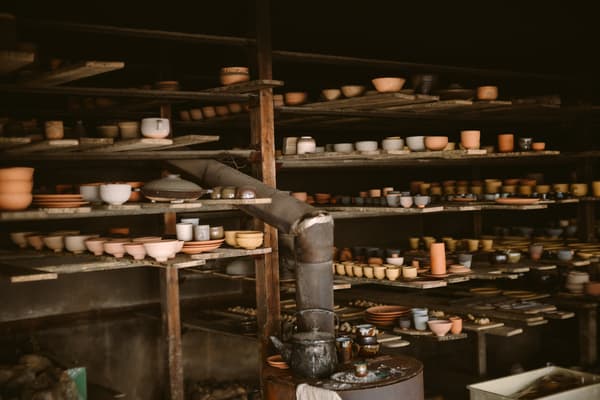
She brought her unresolved feelings to a mentor from university. He pushed her forward, telling her to "go immerse yourself completely in the tradition."
Right after graduating, she set off on a reckless journey — 1,300 kilometers from Shinjuku, Tokyo, to her family home in Fukuoka, using only a bicycle and local trains.
"If I was going to live as a potter, I knew I'd be holed up in the mountains, continuing to make things. Before that, I wanted to see the many different landscapes of Japan and let their beauty soak into my body on the way home. Taking 14 days to get there under my own power was, looking back, a kind of courage that only came from not knowing any better. Right after setting out from Shinjuku Gyoen, I got a flat tire near Shinjuku Station and didn't even know how to fix it, so I was at a complete loss (laughs).
But there were warm encounters too — a bicycle shop owner I happened to pass helped me out, and in Shizuoka, a stranger treated me to hitsumabushi, saying, 'with kids like you around, Japan's still not so bad after all.'"
She says there was one scene she'll never forget.
"I was riding along the coastline in Shizuoka when sunlight poured down through a break in the clouds like a 'ladder of light,' and part of the sea glowed round and gold. It was an overwhelming, momentary beauty that hadn't changed in hundreds of years. I want to hold things like that within the landscape of a vessel. My resolve to spend the rest of my life pulling clay for that purpose was sealed on that journey."
420 Years as a Domain Kiln, and the Kirei-Sabi Aesthetic Guided by Kobori Enshu
Back home, once she began making pottery under her grandfather and father, what awaited her was the overwhelming weight of 420 years of history.
Takatori ware's roots trace back to the Keicho era. Fukuoka Domain lord Kuroda Nagamasa brought a skilled potter from the Korean Peninsula, Palsan (known in Japan as Takatori Hachizo), to start the kiln.
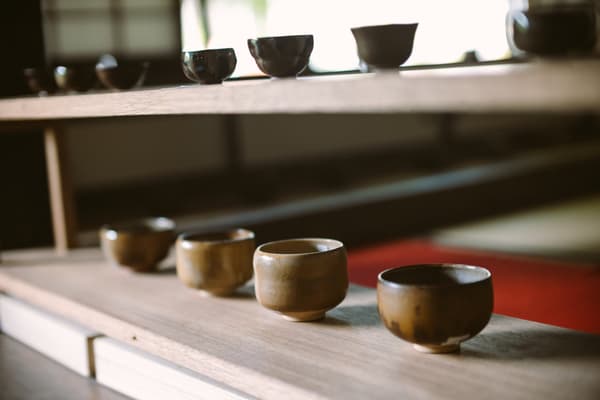
Because Takatori ware flourished not as everyday tableware but as a "domain kiln" specializing in tea utensils for the lord's own use and gifts to other domains, it was always expected to carry the highest level of dignity and skill.
"At first, I was completely absorbed just in learning Takatori's history and building up my technique. My father built a small building packed with books, shelved nearly to the ceiling, and he has all of that content memorized. Not wanting to be outdone, I put up a Takatori chronology on my bathroom wall and memorized it. Because I was a young woman, I often received harsh words from customers, and I studied desperately to live up to that."
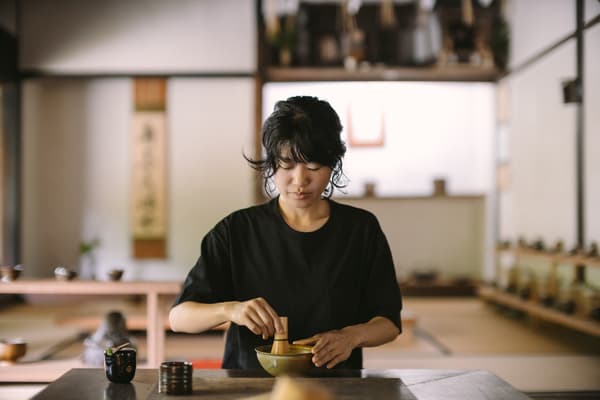
Now, her major theme is how to interpret and express Takatori's "kirei-sabi" in her own words.
Kirei-sabi is a harmony of beauty that early Edo-period tea master Kobori Enshu drew out by adding "brightness, elegance, and refined beauty" to the subdued, weathered aesthetic of wabi-sabi that came before it.
"If it's simply about tidy perfection, industrial products do that far better in this day and age. But things we make by hand carry a kind of 'flicker.' How do you let warmth and a weathered softness coexist within that beauty? When I try to put that into words, it settles into something like 'the beauty that stands in the space between abundance and impermanence.' I want to express, within a vessel, that momentary flicker of light I saw on my journey — that 'awahi (awai).'"
"Awahi (awai)" is a word for the space "between" two things, or for the boundary in space or time where things overlap and meet.
A Left-Turning Wheel and the Soul of Craftsmanship in Extreme Thinness
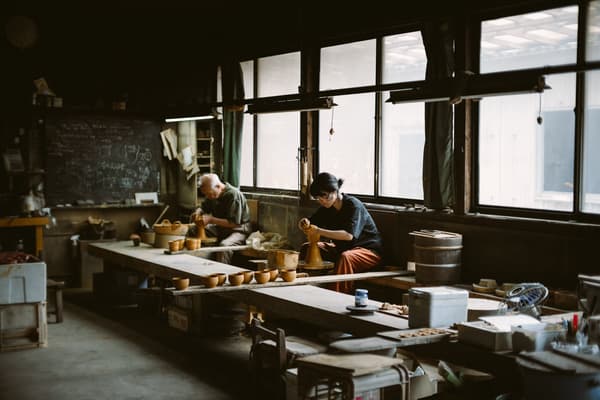
Supporting that aesthetic is an uncompromising technique. The potter's wheel at Takatori Hassengama turns to the left — the opposite direction from most pottery regions.
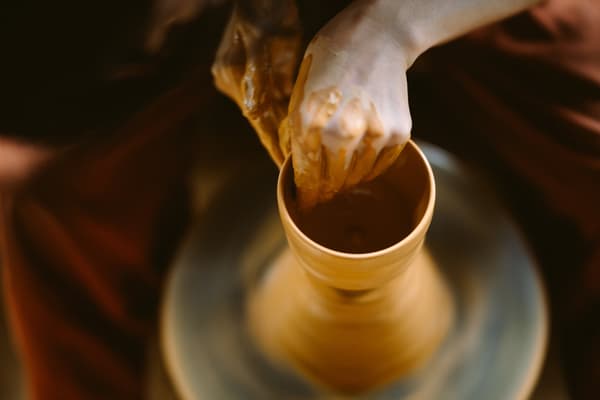
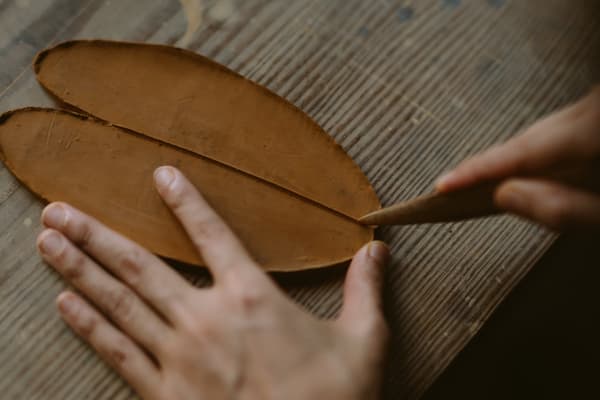
"There's a piece called a chaire, used for holding tea — the most formal tool in the tea ceremony. Takatori chaire are known for the 'itokiri' marks left on the base and for walls so thin they feel as light as a feather. That comes from a historical role: faithfully reproducing the Chinese 'karamono' chaire that were treasured as masterpieces and deeply admired at the time. The skill of matching even the original's thin walls and the itokiri marks on the base earned Takatori ware the reputation of 'Karamono-utsushi no Takatori,' meaning Takatori pieces that copy Chinese originals. Whenever I catch sight of the itokiri base of a chaire or the trace of a hand, I can feel the skill and aesthetic sensibility of the potters and tea masters of that era."
At Hassengama, technique and feel are passed down through a lineage of self-directed learning — watching first, working alongside others, then repeating the motions with your own hands across generations.
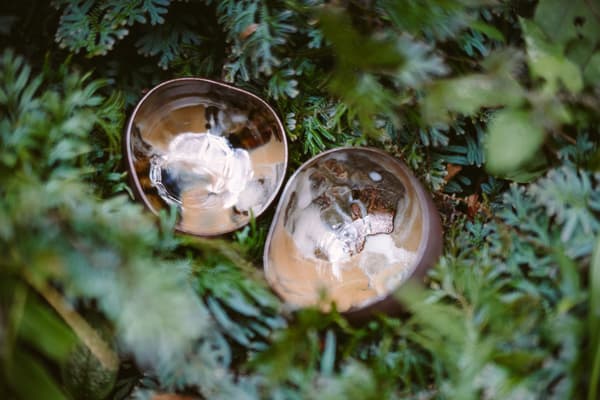
"Wheel skills come with practice, but the hardest thing to inherit is the invisible, sensory part. Because we're always searching for an answer that has no answer, my grandfather, even past 90, still says 'I still haven't made a single piece I'm satisfied with,' and I think that's exactly why he keeps pushing to evolve. Alongside a modern kerosene kiln, we also use a wood-fired kiln. How the flame hits the piece and the temperature are entirely up to nature. In midwinter, a freezing wind blows against your back while the front of the kiln radiates heat above 1,200 degrees Celsius — in that harsh environment, deciding when to stop adding wood comes down purely to our own senses. Rather than controlling nature, we truly feel that we are 'kept alive' within it."
Carrying the Space Between Abundance and Impermanence Toward a Bowl for the Next 100 Years
"Convenient things make life convenient, but I think it's craft and culture that make life rich. When I look at old excavated pottery, there are moments I'm deeply moved, feeling the fingertips of an artisan from a hundred or two hundred years ago. My motivation is to create, among the vessels I'm making now, even just one 'bowl that will remain a hundred years from now.' If it could enrich someone's heart in the future, or bring them inspiration, nothing would make me happier."
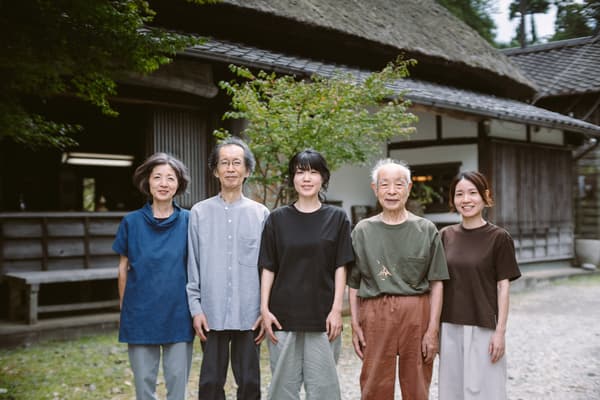
Today, Takatori Hassengama's makers are 13th-generation Hassen (now known as Sosen), 14th-generation Shinobu, 15th-generation Shuichiro, his wife, and Shuichiro's younger sister Yuko and older sister — the fifteenth generation. Those active as wheel potters are 13th-generation Hassen (now known as Sosen), 14th-generation Shinobu, and the fifteenth generation's Shuichiro and Yuko. It is, in every sense, a family of potters running Hassengama together.
Finally, we asked about the words she holds close.
"A vessel can't fill a person's stomach. But it can fill their heart."
The quiet echo of kirei-sabi that she creates, speaking those words, will surely bring a gentle, beautiful sense of peace to our lives today.
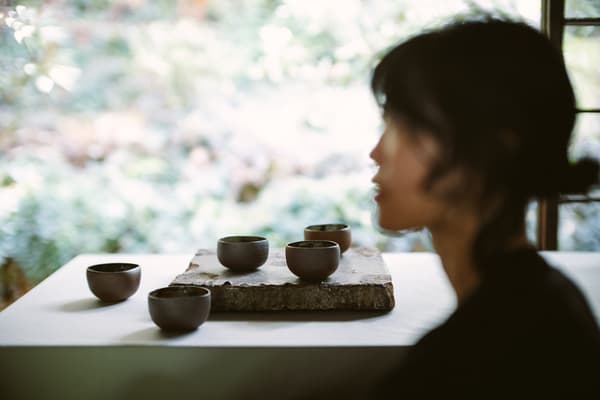
Text: Hanako Fujita / Photos: Kenta Nakamura
About IEGNIM
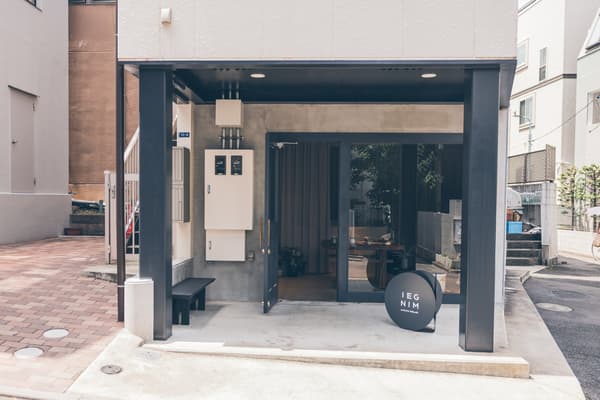
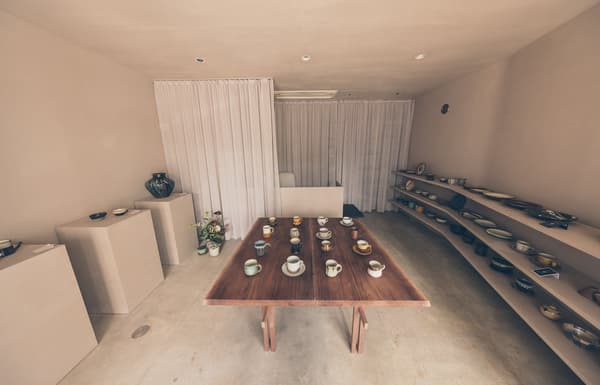
A select shop for folk crafts, a 1-minute walk from Exit 1 (North) of Yoyogi-Uehara Station. IEGNIM runs both an online shop and a physical store in Tokyo, carrying a wide range of handmade items centered on mingei folk craft. Founded by an editor who loves mingei, the shop visits kilns around the country, turns the stories artisans share into articles, and sells vessels alongside the background and stories behind their making. It also sells collaborative pieces created with kilns.
Site: https://iegnim.com/
Instagram: https://www.instagram.com/iegnim_/