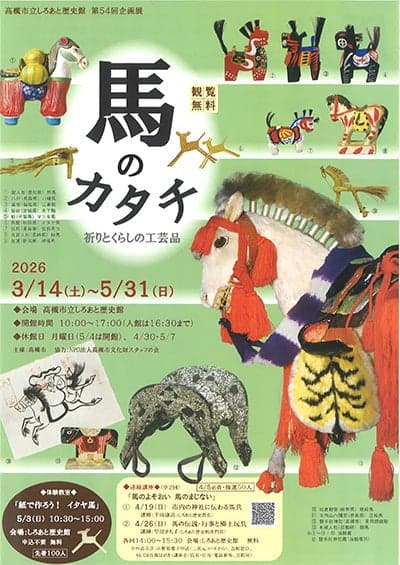
The Takatsuki City Shiroato History Museum will hold an exhibition titled "The Form of Horses: Crafts of Prayer and Daily Life" from Saturday, March 14 to Sunday, May 31, 2026. The exhibition presents approximately 200 items, including horse tack used in Edo-period festivals, decorative horse figurines displayed during the Boys' Festival, and folk toys such as papier-mâché and clay horses.
The museum holds annual exhibitions themed around one of the twelve zodiac animals to help visitors deepen their knowledge of the zodiac while becoming familiar with folk toys. This year's theme is the horse, in keeping with the current zodiac year of the Horse (午年).
Horses have long been close companions to people — helping to transport goods, carrying travelers, and assisting with agricultural work — and the health of horses was closely tied to community prosperity. Customs of visiting shrines and temples with horses, and ceremonies honoring horses, have been seen throughout Japan. Horses were also regarded as vehicles for deities and buddhas, making them frequent participants in religious offerings and festival rituals. Horse tack and horse-motif lucky charms from such occasions have been passed down to the present day.
The exhibition features horse tack from the Iwatamori Shrine's "Uma Matsuri (Mikoshi Procession Ceremony)," a city-designated intangible folk cultural property in which a child rides a horse and parades through the neighborhood alongside portable shrines, praying for bountiful harvests and community peace. Also on display are decorative horses from the Meiji to early Showa era exhibited during the Boys' Festival (Tango no Sekku). Beyond these local Takatsuki cultural assets, the exhibition includes folk toys from across Japan: papier-mâché horses, clay horses, wooden horses, straw horses, and votive horse tablets (ema) — approximately 200 items in all.
Particularly noteworthy is the horse tack from the Iwatamori Shrine festivals, crafted in 1608 (Keichō 13), which features beautifully detailed mother-of-pearl inlay work. Other highlights include a Meiji-era decorative horse whose realistic mane and coat are rendered in silk and hemp fibers, and rustic, charming straw horses used in Tanabata festivities and as charms for bountiful harvests and happiness.
Through this diverse collection of horse-related crafts, visitors are invited to reflect on the many ways humans and horses have lived and worked together.
Exhibition Overview
Period: Saturday, March 14 to Sunday, May 31, 2026. Open 10:00 AM to 5:00 PM (admission until 4:30 PM).
Closed: Every Monday (open on May 4, 2026), April 30 (Thursday), May 7 (Thursday).
Venue: Shiroato History Museum (1-7 Shirouchi-cho, Takatsuki City, Osaka)
Access: Approximately 10 minutes on foot from Hankyu Takatsuki-shi Station; approximately 15 minutes on foot from JR Takatsuki Station. Please come by public transportation.
Admission: Free