YATZ GARDEN, the sprawling flower field run by Yatsugatake Agricultural College in Chino and Hara, Nagano, has passed 100,000 visitors (*1) for the current season (July 3 to August 16, 2026), now in its second year. The college had originally aimed for 100,000 cumulative visitors by the end of the season in mid-October, but arrivals have far outpaced that pace, pushing the field past the milestone early. On August 13, 2026, the garden also logged its first single-day count of 10,000 visitors (*1), part of a string of record-setting days.
*1 Measured by the college using a fixed visitor counter combined with periodic staff headcounts at the entrance.
With no reservation required, free admission, and 600 free parking spaces, the garden is an easy stop for a spontaneous outing or a last-minute change of plans, and many visitors treat it as a cool summer retreat within reach.
All of the garden's main flower areas, including the red-and-white salvia field and the striped "Colors" plot, are now at peak bloom, alongside a new swing with a sweeping view, soft-serve made from 100% fresh milk, and hands-on programs such as fresh corn picking. Free admission continues through the rest of the season, into mid-October.
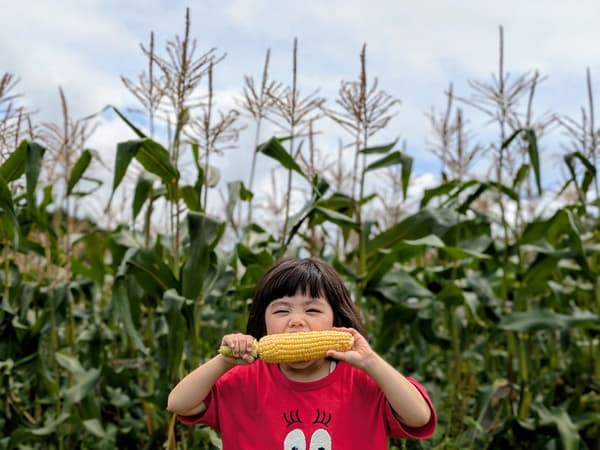
Freshly picked corn, sweeter than melon, can be sampled on the spot
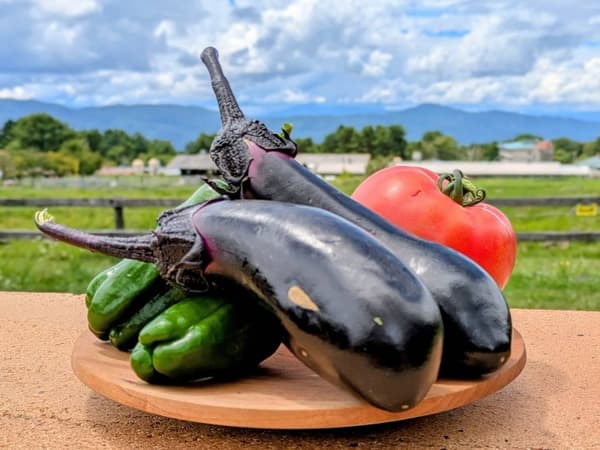
At the on-site farm stand, the college's students and staff sell freshly picked vegetables, food, and souvenirs grown and prepared with care
About two and a half hours by car from Tokyo, the college sits at an elevation of 1,300 meters, where temperatures run roughly 8°C cooler than Tokyo (*2). Some of the longest sunshine hours in Japan (*3), combined with a sharp day-night temperature swing of 15°C or more, help bring out the flowers' natural vibrancy and deepen their color. Visitors can stroll with a wide-open view of Yatsugatake and a cool breeze, making it a fitting summer destination this year.
*2 The average July–August temperature at Nobeyama, a nearby Yatsugatake-area station at a similar elevation, is 19.1°C, about 8 degrees cooler than Tokyo's 27.1°C — consistent with the standard atmospheric lapse rate of roughly 0.6°C per 100 meters of elevation (1,300m × 0.6°C ≈ 7.8°C). Based on Japan Meteorological Agency AMeDAS normals for Nobeyama and Tokyo (1991–2020).
*3 Hara Village, where the college is located, records 2,188.4 hours of sunshine a year, well above the national average of roughly 1,900 hours and among the top 3% of Japan's roughly 800 observation points. Based on Japan Meteorological Agency AMeDAS normals for Hara Village (1991–2020): https://www.data.jma.go.jp/obd/stats/etrn/index.php
Video of the flower field: https://www.youtube.com/watch?v=WnL-iEK3zbw
The Buzzworthy "Breathtaking View Swing"
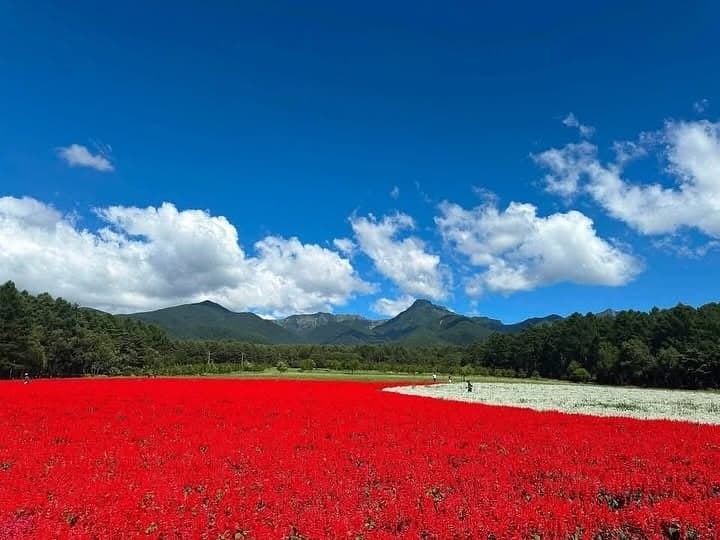
A new wooden swing set within the red salvia field, the spot with the best view of Yatsugatake, has become a popular photo stop, drawing attention on social media for its setting amid a sea of red blooms with the Yatsugatake mountain range spread out beyond.
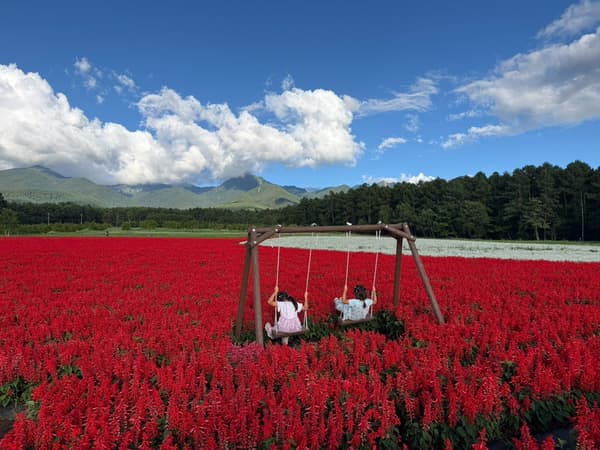
Garden Highlights and Bloom Status (as of August 17, 2026)
Under the guidance of garden producer Konami Tsukamoto and garden designer Keiko Yoshitani, the flowers are being managed with close attention using weather and environmental sensing data. Of the 400,000 plants across the garden, all of the following main areas are currently in bloom together:
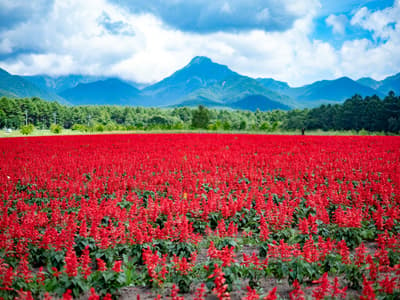
- Salvia ("The Yatsugatake Red Carpet," 220,000 plants): full bloom in both red and white (through late September). The sharp temperature swings typical of the highlands have deepened the color, with both the red (110,000 plants) and white (110,000 plants) sections now at their best.
- "Colors" (55,000 plants): full bloom (through late September). A vividly striped field where different flower varieties bloom in bands, now at its peak for the Obon holiday period.
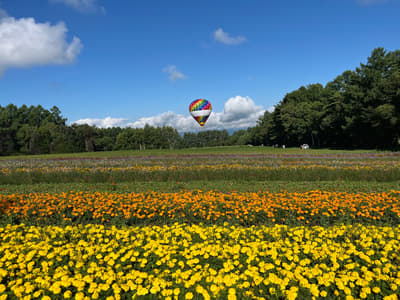
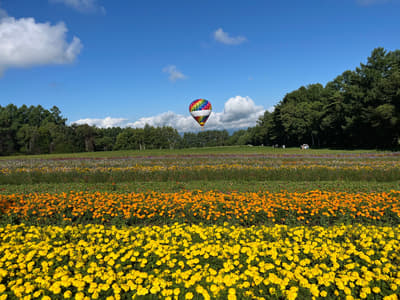
- Marigolds ("The Ladybug Flower Field," 65,000 plants): full bloom (through late August). About 65,000 yellow and orange marigolds laid out across the field in the shape of a large ladybug, now at peak bloom and expected to stay colorful through the end of August.
- Sunflowers: coming into bloom (late August to mid-September). Growing toward a late-August opening and a mid-September peak.
For the latest updates on bloom conditions or closures due to poor weather, check the college's official Instagram: https://www.instagram.com/yatsunou.since1938/
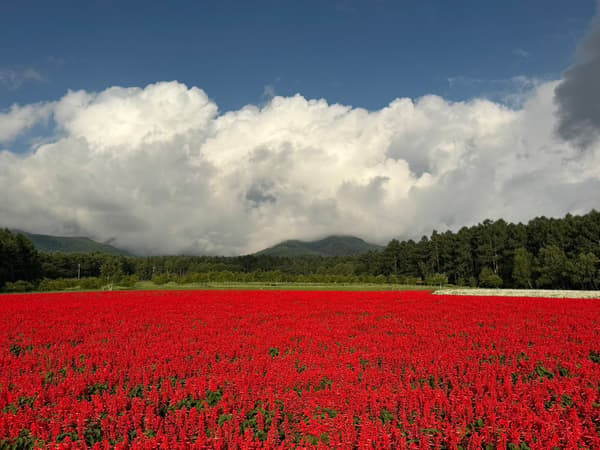
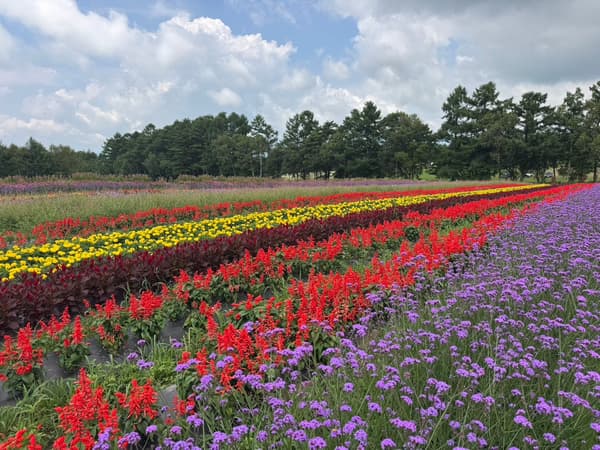
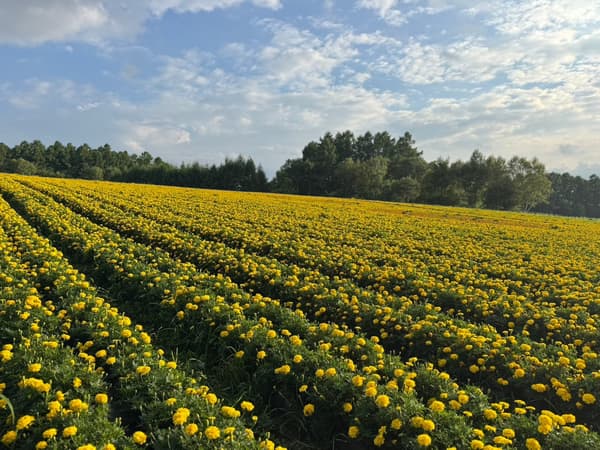
In its second year, the garden has added a walking path through the flower fields and a dedicated photo-spot area, making it easier for visitors to follow a route and take in more of the grounds.
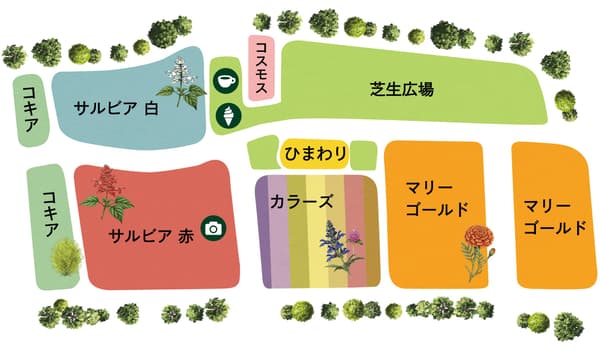
Signature Soft-Serve at the Heart of the Flower Field
A kitchen truck at the center of the flower field sells soft-serve made from fresh milk sourced from dairy cows raised on the college's grounds.
Fresh milk soft-serve: made entirely from fresh milk drawn by the college's students, with a rich yet clean milk flavor.
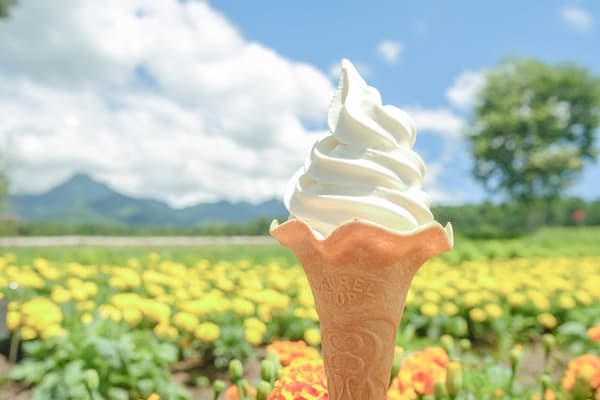
Breathtaking-view soft-serve: a specialty sweet inspired by the garden's red-and-white salvia fields, made by lightly shaving frozen strawberries grown at the college over the college's milk soft-serve, meant to be enjoyed on the spot with the flowers in view.
Join Anytime: The "Fura-Bora" Flower Field Volunteer Program
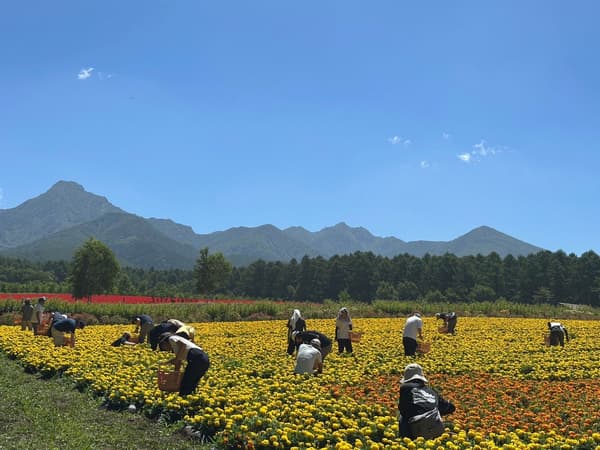
"Fura-Bora" (short for "flower volunteer, drop in anytime") is a hands-on program that requires no reservation or equipment. Visitors can help out for as little as five minutes, for example by picking spent, browned blooms from the marigold field at its peak. Everyone who takes part receives a free topping to use on soft-serve bought at the kitchen truck or farm stand. Past participants have said that even a short bit of hands-on care left them feeling a personal connection to the garden.
Hours and Access

Season: July 3 (Friday) to mid-October, 2026 (planned; the garden may close during severe weather)
Hours: 8:30 AM to 5:30 PM (through September 13), 9:00 AM to 5:00 PM (from September 14); the kitchen truck operates 10:00 AM to 4:00 PM
Admission: Free
Parking: 600 spaces (free)
Access:
By car: About 15 minutes from the Suwa-Minami IC or about 30 minutes from the Kobuchizawa IC on the Chuo Expressway. Park at the Yatsugatake Farm Direct Sales Store, then continue to the flower field, about a 4–5 minute drive away and marked with white signage.
By train: About 20 minutes by taxi, or about 30 minutes by bus, from JR Chuo Line Chino Station to the "Yatsugatake Chuo Agricultural Practical College" bus stop. The direct sales store is a few minutes' walk from the bus stop, but the flower field itself is about a 30-minute walk. On weekends and holidays through October 12, a sightseeing shuttle bus connects Chino Station with the college's direct sales store and flower field; see the college's website for details.

Some areas are accessible with pets or wheelchairs.
Details: https://yatsunou.jp/garden/
For the latest updates on bloom conditions or closures due to poor weather, check the college's official Instagram: https://www.instagram.com/yatsunou.since1938/
More to Explore: A Full Day of Summer Experiences and Fresh Food
The college's campus spans 267 hectares, roughly 57 times the area of the Tokyo Dome, and beyond the flower field it also hosts a range of food and hands-on programs.
- Hot-air balloon flight over the flower field (August 23): A hot-air balloon ride departing near the flower field for a panoramic view of the blooms and the surrounding Yatsugatake range from above, taking in the cool, clear air of early morning. Details and booking: https://www.asoview.com/channel/activities/ja/yatsunou-taiken/offices/3117/courses
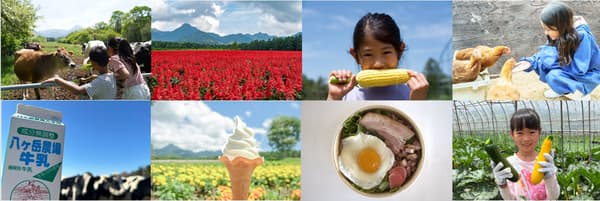
- Fresh corn picking, sweeter than melon (ongoing): Visitors pick their own corn from a field of about 100,000 stalks and eat it raw on the spot. Thanks to the sharp day-night temperature swing of 15°C or more, this year's corn again reached a sugar content of up to 22.7 Brix, well above the 12–16 Brix typical of melons.
- Vegetable Science Tour (ongoing): A hands-on, educational tour where parents and children observe and pick seasonal summer vegetables such as tomatoes, corn, zucchini, and edamame, learning about them along the way — a good fit for a summer research project.
- Farm stand food and souvenirs: Open year-round, the direct sales store sells items such as fresh milk cookies made with 100% of the college's own milk and a "premium bacon rice bowl" made with bacon smoked roughly ten times longer than usual.
- Farm tour highlights (ongoing): A tour taking in a barn home to about 100 dairy cows and a free-range poultry farm, offering a close look at food production and another option for summer research projects.
(Workshop programs: https://yatsunou.jp/workshop/)
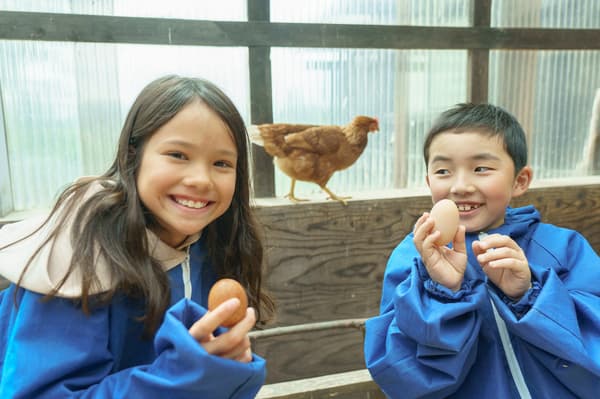
- Outdoor summer play on the farm: A summer-only outdoor program with a water slide, pool, and mud play (August 3–18 and August 22–24, 10:00 AM to 3:00 PM, ¥1,000).

The Idea Behind "A Flower Field Grown Together"
The flower field was created on fallow land within the campus as part of the college's broader revitalization plan, under the concept of "a flower field grown together." Students and staff from the college's flower cultivation program, local residents, volunteers, and even elementary and middle schoolers who helped plant seedlings one by one through the college's farm and forestry experience program have all had a hand in raising it, making it a genuine hands-on agricultural education site.
From a Nemophila Setback to a New Soil Analysis Lab
This year's vivid blooms follow a difficult lesson from last year, when the garden's nemophila failed to grow well. In response, the college worked with outside experts to carry out a thorough soil survey rather than guess at the cause, and traced the growth problems to aluminum ionization, a trait of the region's volcanic ash soil (kuroboku soil). Since then, the college has improved drainage by mounding the soil and applied its own charred chicken manure from its poultry program to build up the soil through a more circular approach. In June this year it also opened a new "Soil Analysis Lab" for more scientific, detailed soil management, helping this season's 400,000 flowering plants bloom as they have.