Yatsugatake Agricultural College, spanning Hara Village and Chino City in Nagano Prefecture, is opening its roughly 10-hectare flower field, YATZ GARDEN, on July 3, 2026 (Friday). The garden will be open to the public free of charge for the rest of the season, through mid-October.
Now in its second year, the garden has been renamed from last year's pre-opening title, the "Yatsugatake Garden Project," to its official name, YATZ GARDEN. As in its debut year, garden producer Konami Tsukamoto, known for numerous flower park projects, and garden designer Keiko Yoshitani return to lead the project, with the flower varieties and plantings refined based on last year's experience.
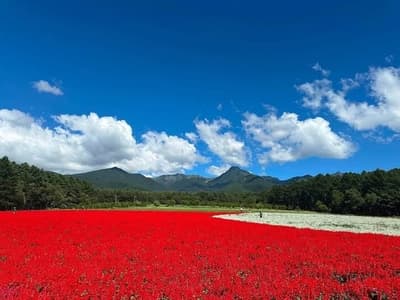
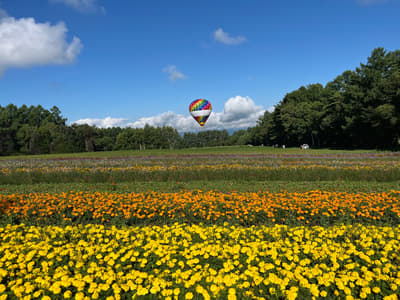
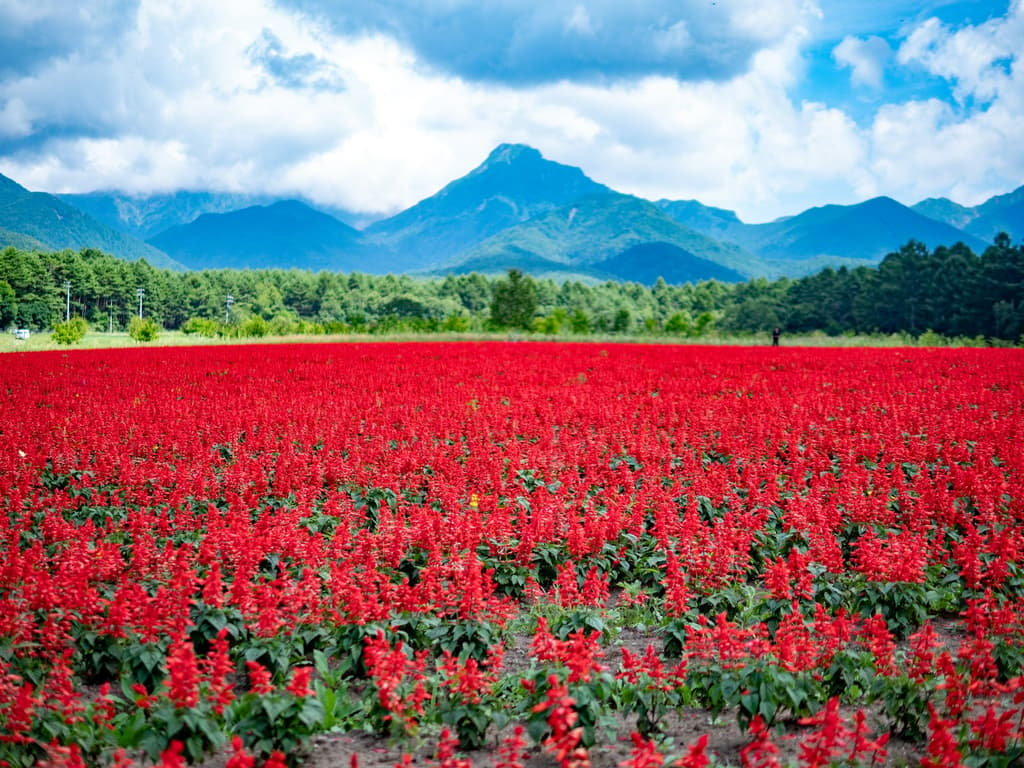
The area's highland climate brings some of the longest sunshine hours in Japan and a dramatic day-night temperature swing of more than 15°C. Summer temperatures run roughly 8°C cooler than in Tokyo, and amid this rich natural setting, the sharp temperature difference is said to bring out the flowers' natural vitality and deepen their color. This season, look for two-tone salvia in red and newly added white, yellow-and-orange marigolds, and "Colors," a bed where several rows of different varieties bloom in vivid stripes, all coming into season one after another.
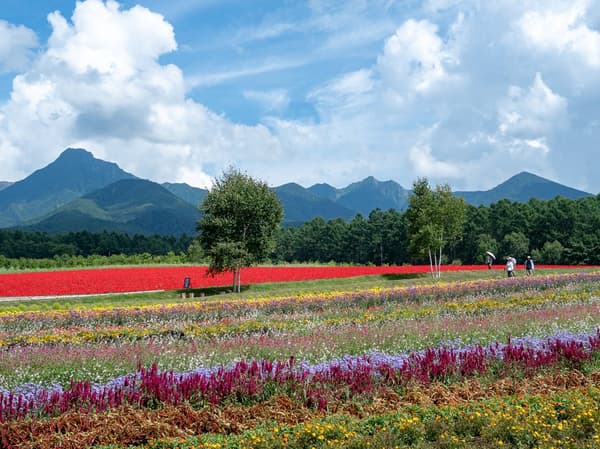
Beyond the flower field, the college's much larger 267-hectare campus offers fresh food made with its own ingredients, a fresh corn harvesting experience, a vegetable-harvesting barbecue, and farm tours, making it a summer outing where visitors can spend a full day away from the everyday.
Highlights and Bloom Times
From late July through September, different areas of the garden will come into bloom one after another.
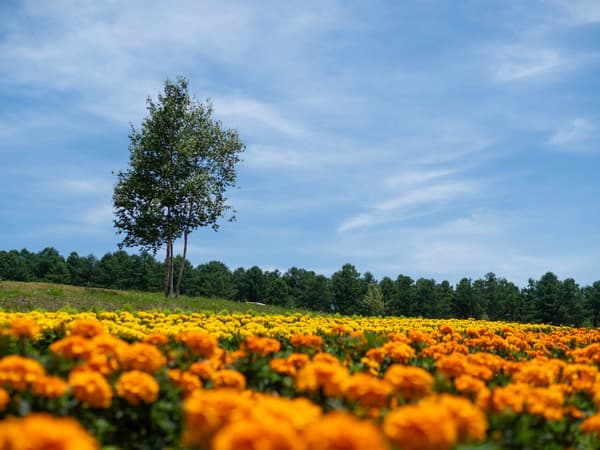
- Marigold "Ladybug Flower Field" (late July to late August): Yellow and orange marigolds planted across the wide field in the shape of a large, endearing ladybug.
- "Colors" (early August to late September): A colorful area where different varieties bloom in stripes. This season also introduces perennials, creating a sustainable flower field that develops over time.
- Salvia "Yatsugatake Red Carpet" (August to September): The highland's sharp temperature swings sharpen the salvia's color. Last year's all-red bed is joined this season by white, creating a striking two-tone contrast. A swing is also set up nearby as a photo spot.
- Sunflowers (early to late August): A newly added photo zone where visitors can take in the feel of a highland summer.
For the latest updates on bloom conditions or closures due to bad weather, visitors are encouraged to check the college's official Instagram (https://www.instagram.com/yatsunou.since1938/).
A New Walking Course, and a Soil Lab Born From Data
This season, the garden has added a walking course and photo-spot area so visitors can experience more of the grounds along a set route. The college also treats the garden as more than a place to simply grow flowers, applying a scientific approach as an educational institution. After nemophila planted on the same site last year failed to grow as hoped, the college moved away from guesswork and thoroughly investigated the changes in soil composition and the causes of the poor growth. That effort led to the opening of a new Soil Analysis Lab this June, which closely analyzes and manages the day-to-day changes in soil composition to help create the best conditions for the flowers to reach their peak bloom in July and August.
Fresh Milk Soft-Serve at the Garden's Center, and Casual Flower Volunteering
A new stand has been set up at the center of the flower field, offering the college's signature soft-serve made with 100% fresh milk from cows raised on campus and milked by the college's trainees, so visitors can enjoy it right in front of the flowers.
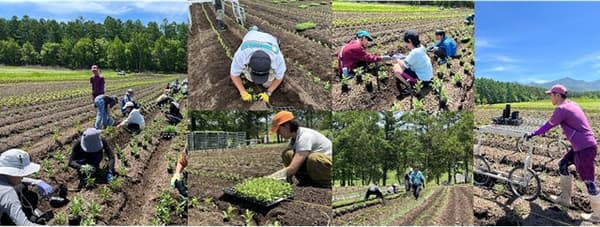
Also returning this season is "Furabora," a flower-field volunteer program that lets visitors join in deadheading and weeding without a reservation, giving guests a chance to take part in tending the flower field themselves.
A Flower Field Grown Together
The garden was created by putting fallow land on campus back to use as part of the college's revitalization plan, under the concept of a "flower field grown together." Trainees, staff, local residents, and volunteers all take part in tending it, making it a working example of agricultural education in practice.
Visitor Information

- Open: July 3, 2026 (Friday) to mid-October (planned). The garden may close early in case of bad weather.
- Hours: 8:30 AM to 5:30 PM (through September 13), 9:00 AM to 5:00 PM (from September 14). Kitchen cars operate 10:00 AM to 4:00 PM.
- Admission: Free
- Parking: 600 spaces (free)
- By car: About 15 minutes from Suwa-Minami IC, or about 30 minutes from Kobuchizawa IC on the Chuo Expressway. Park at the Yatsugatake Farm Direct-Sales Shop, then it's about a 4- to 5-minute drive to the flower field (look for the white signage).
- By train: About 20 minutes by taxi from JR Chuo Main Line's Chino Station, or about 30 minutes by bus to the Yatsugatake Agricultural College stop (from the bus stop, it is about a 30-minute walk across campus to the flower field).

Some areas of the garden are accessible with pets or wheelchairs. For details, see https://yatsunou.jp/garden/.
More Ways to Spend the Day: Fresh Flavors and Hands-On Experiences
Beyond the flower field, the campus's 267 hectares also offer food and hands-on programs.
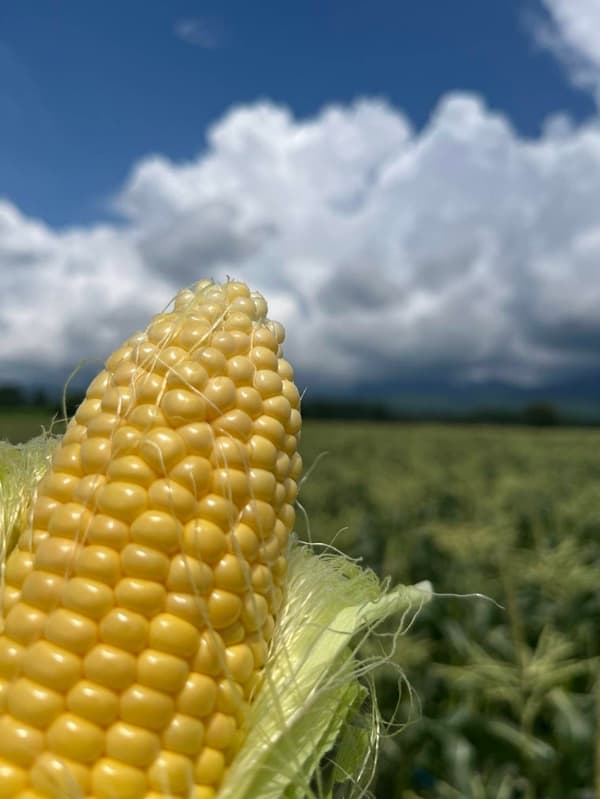
Fresh corn harvesting in a field of about 100,000 stalks (early to late August)
Grown by trainees and managed with the help of data and AI to bring out the best quality, the corn can be picked straight from the field and eaten on the spot under the open sky, prized for its melon-like sweetness and juiciness.
Summer vegetable harvesting barbecue (from July, reservation required)
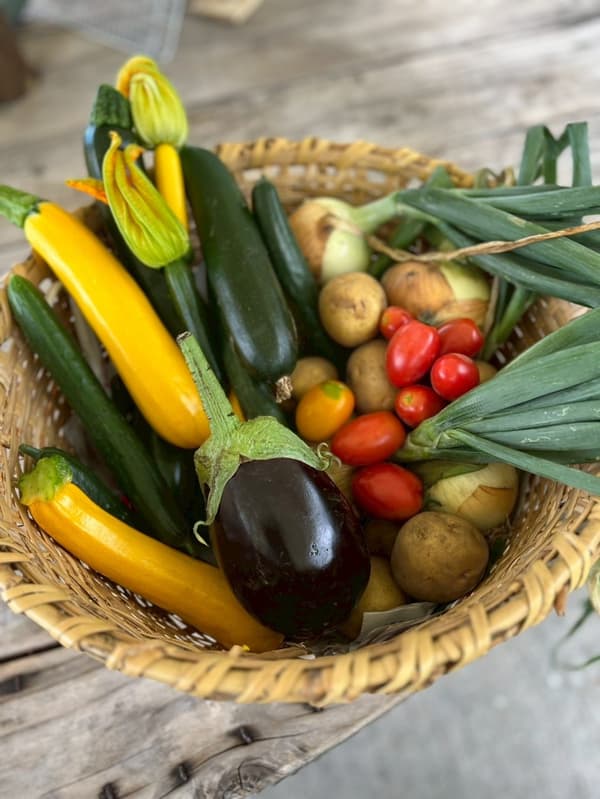
Highland vegetables grown by trainees across the campus's fields can be picked by hand and enjoyed fresh amid nature. Beyond the barbecue itself, visitors can also try sweet lettuce and juicy zucchini raw, as a salad (available produce varies by season).
Direct-sales shop food, souvenirs, and workshops found only here
The signature soft-serve, made with 100% fresh milk from the campus's cows, is sold near the flower field and near the pasture area, home to around 100 cattle (cup milk is also available). A new souvenir, fresh milk cookies made with the trainees' fresh milk and eggs from the college's free-range chickens, debuted at the end of April this year.
The direct-sales shop is open year-round (9:00 AM to 4:00 PM on weekdays, 9:00 AM to 5:00 PM on weekends and holidays), selling the college's milk and dairy products such as soft-serve and ice cream, eggs from free-range chickens, highland vegetables and seasonal flowers grown by trainees, bacon smoked for about ten times longer than usual, and other food and souvenirs made with the college's ingredients. On weekends, trainees also take turns selling produce they grew and harvested themselves. Original dishes found only here include a "premium bacon bowl" featuring that slow-smoked bacon, and an "oyadori-don" topped with a fried egg from the college's free-range chickens.
Hands-on workshops are also available, including a reservation-only "Strawberry Professor Tour" where visitors learn about how strawberries grow and are cultivated, then harvest and eat them on the spot, as well as a farm tour through the barn that is home to around 100 cattle and the free-range chicken coop. These programs can also make for a good summer-break research project for school-age visitors. (Details: https://yatsunou.jp/workshop/)
A Message From the Team
Konami Tsukamoto, Garden Producer, and Keiko Yoshitani, Garden Designer
The garden project began with a wish to share a landscape of blooming flowers set against the backdrop of beautiful Mt. Yatsugatake, using the college's expansive campus as its stage. Cherry blossoms that herald spring in Yatsugatake and vivid flowers unique to the highlands come together to create a beautiful scene, with the aim of a garden that draws out reactions like "wow, how pretty" and "wow, how lovely." The flower field has only just begun its journey, and its creators hope visitors will look forward to how it continues to grow.
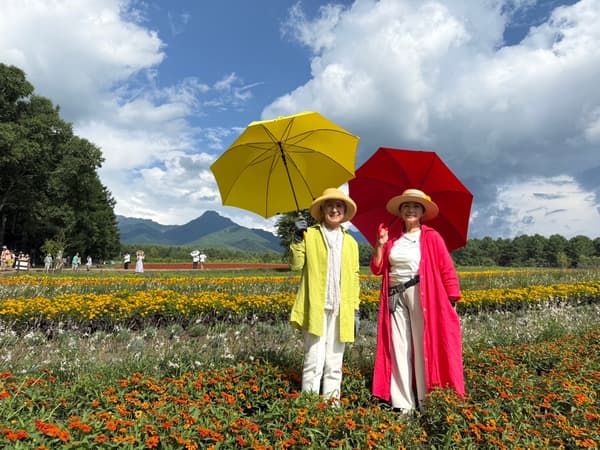
Soichiro Minami, Chairman, and Yusuke Maruyama, Principal and Managing Director, Yatsugatake Agricultural College
The flower field carries more than just flower seedlings; it carries a range of hopes, from creating a new travel destination on the western foot of Yatsugatake, to a landscape that local residents can take pride in, to accomplishing that goal together with the young people studying agriculture there.
Not being flower-facility specialists themselves, the college's leadership studied flower fields and tourist destinations across the country in depth, asking what kind of scenery moves people, what flowers they want to see, and what makes a place worth visiting again, all while considering what is only possible at Yatsugatake's cool 1,300-meter elevation.
The answer they arrived at was to create a flower landscape that can only be seen here in the height of summer. As warming has pushed flowering seasons earlier across the country, leaving fewer places with flower scenery to see in summer, Yatsugatake's cool climate stands out, and the college has aimed to make its flower field at its most beautiful in summer. The resulting landscape is the product of a shared effort by students, staff, and the local community, and its creators hope that the emotion visitors feel there will carry forward into the region's future and into hope for the young people pursuing agriculture.