Following the great success of last year's exhibition, artist and chef boulangere Yoshimi Ishikawa is set to hold her 2026 publication commemorative art exhibition at Gallery Hare in Minami-Aoyama, Tokyo.
Dates: May 19 (Tue) to May 26 (Tue), 2026
Hours: 11:00 AM to 6:00 PM (Fridays until 8:00 PM)
Venue: Gallery Hare, Minami-Aoyama
3-8-5 Minami-Aoyama, Minato-ku, Tokyo / M385 Bldg. 302
Mes petits bonheurs — My Little Joys
Through soft Modern Realism, the exhibition captures small moments of joy quietly woven into everyday Parisian life.
The warmth of a boulangerie, an interior still holding the trace of human presence, light gently crossing through a city street — each seemingly ordinary scene is brought to the surface as something irreplaceable and precious.
Time flows slowly in these works, sometimes seeming to pause altogether.
The exhibition invites visitors to reconnect with the delicate, light-filled poetry that breathes within daily life.
As with previous exhibitions, works in oil, acrylic, pastel, watercolor, and digital media will all be on display and available for purchase.
Oil Paintings
The Haussmannian apartment in Paris's 9th arrondissement where Ishikawa lives was born from the urban renovation project led by Georges-Eugène Haussmann (1850s–1870s) and stands as one of the most iconic styles of Parisian architecture.
These stone buildings, which have endured across the centuries, are themselves works of art and objects of beauty.
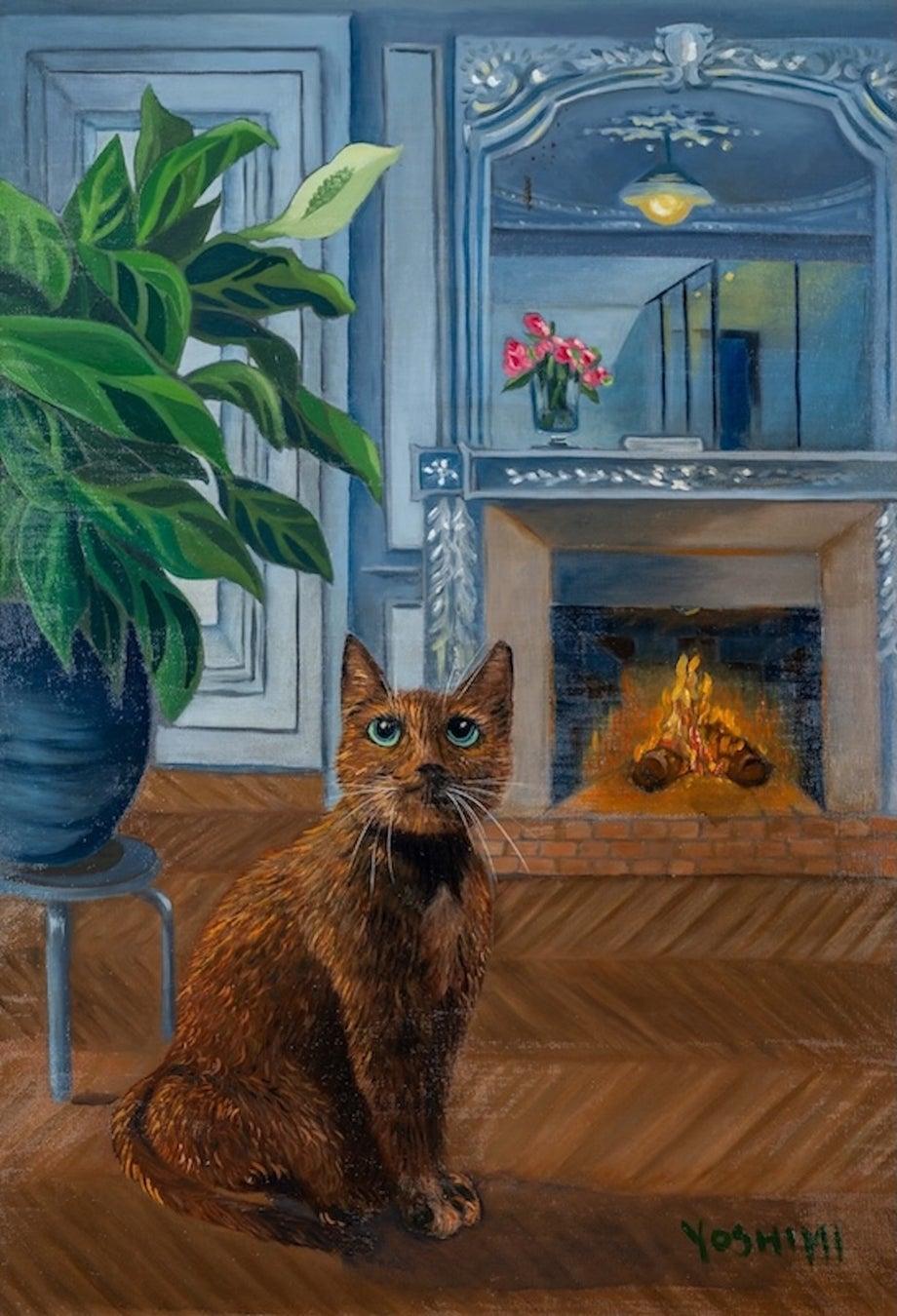
Ishikawa has extracted distinctive features of her own home and rendered them on large canvases in oil, creating an atmosphere that feels distinctly contemporary through her Modern Realist approach.
One work features her beloved cat Carrot as the motif, depicting characteristic Haussmannian details — walls, doors, ceiling ornamentation, and herringbone floors — evocative of an unmistakably French aesthetic.
Also on display is an oil painting of the intersection on Rue de Mogador near her home, capturing an ordinary Parisian Sunday far from the tourist trail.
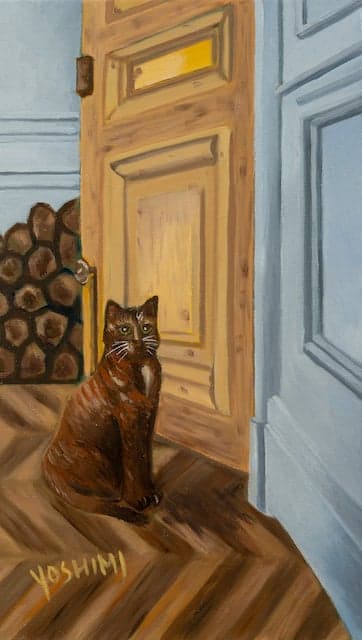
Demeurer devant la porte
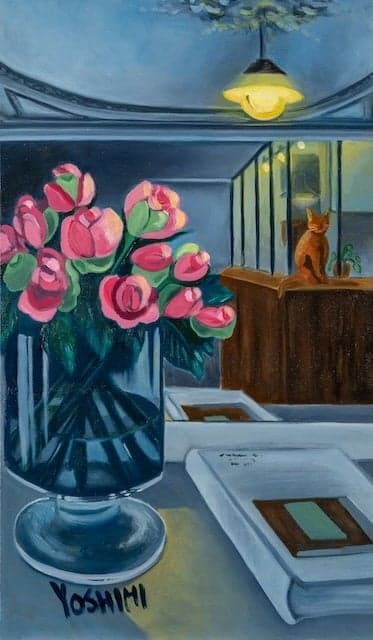
La Rose et le Miroir
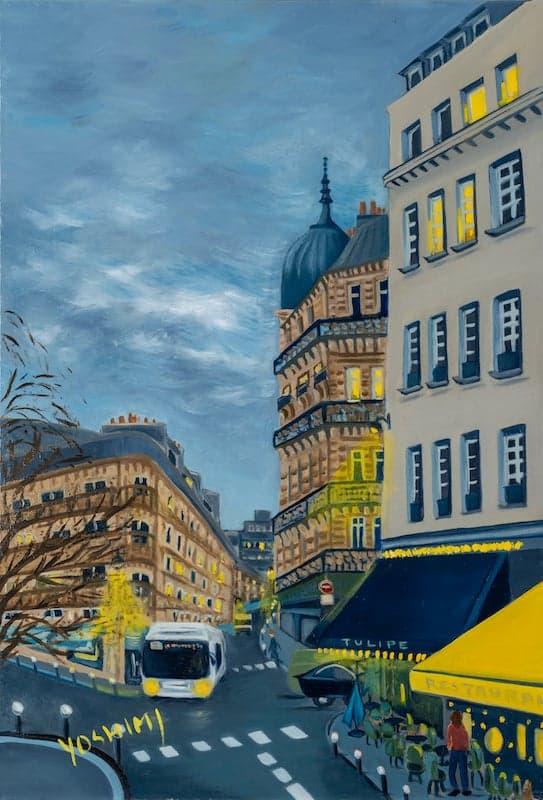
Hiver rue de Mogador
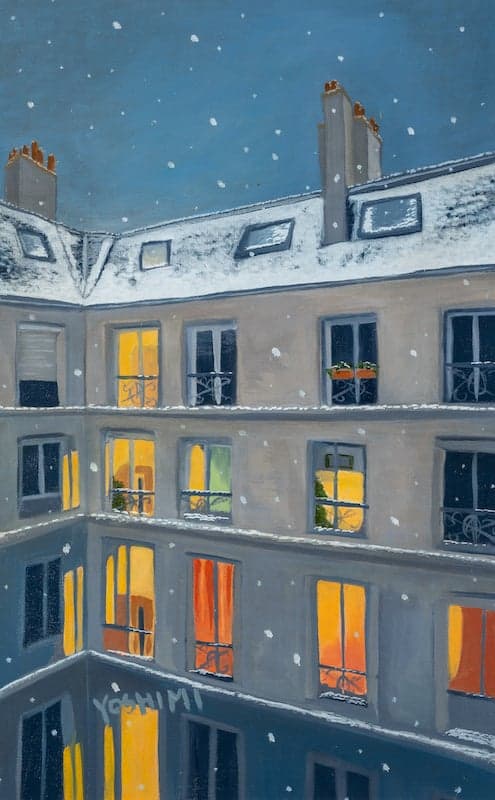
Fenêtre à Lumière Orange
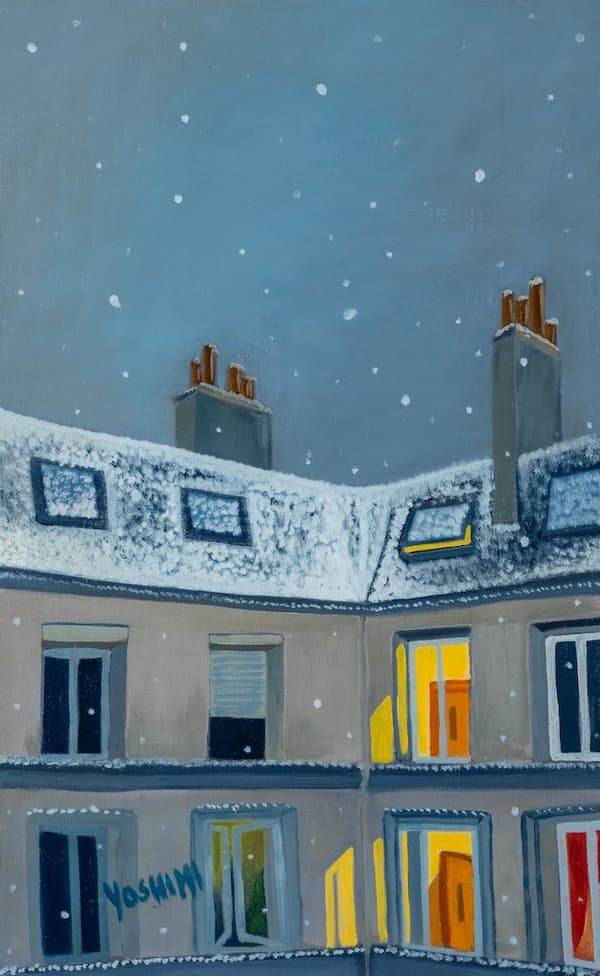
Lumière de Fenêtre
Rendered in Modern Realism, this oil painting captures the view from the studio's back window at dusk on a snowy winter evening — Parisian everyday life felt through the light of windows, invisible from the street outside.
Diptyque — Two Panels as One Work
Diptychs — works composed of two panels — will be exhibited at this art exhibition for the first time.
The word derives from the Greek "Diptychos," meaning "folded in two." Originally referring to two paintings connected by a hinge that could be closed like a book, the format offers a different kind of space and breathing room compared to single-panel works.
The exhibition's theme of "small joys" reflects the idea that by shifting the way we look at everyday things we might overlook, we can find happiness within them. In these diptych works, even a cluttered bookshelf full of unsorted books becomes art when seen with fresh eyes.
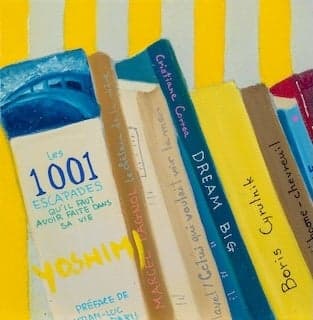
Réveil vert émeraude
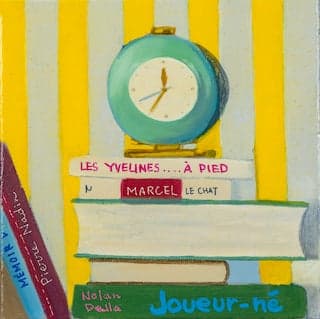
Réveil vert émeraude
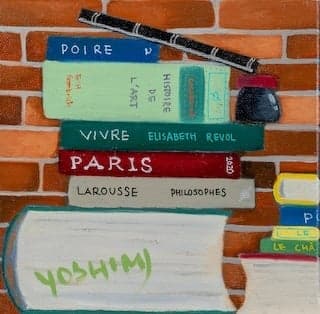
Pile de Livres
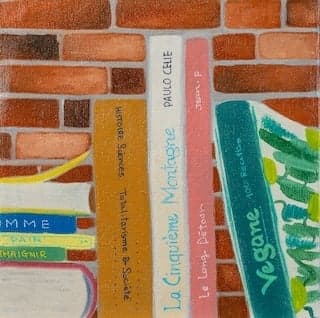
Pile de Livres
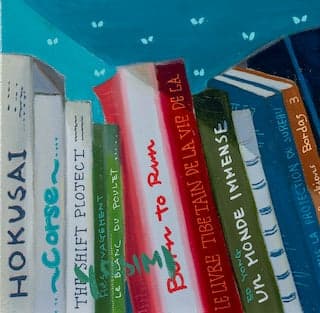
Étagère de Livres de Café
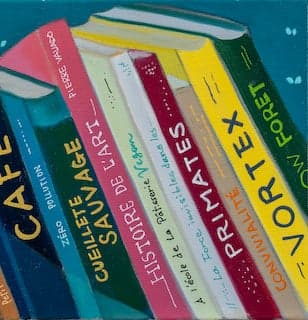
Étagère de Livres de Café
Digital Art
Ishikawa's digital art series transforms scenes from her own daily life in Paris into illustrations inspired by boulangeries and city life.
With textures and atmosphere unique to the digital medium, these works depict Parisian streetscapes and bakery life with carefully crafted characters and meticulous attention to detail.
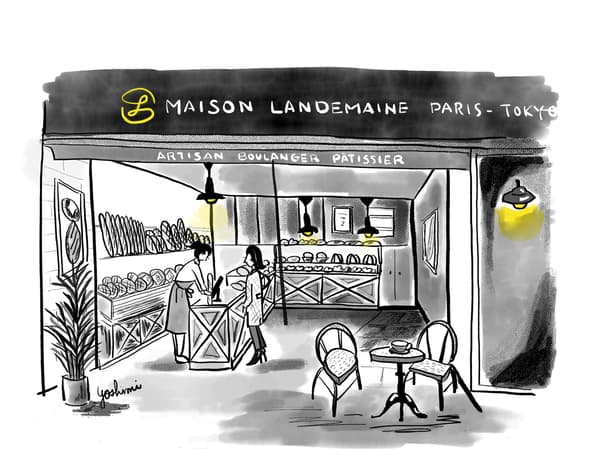
La Dame et la Baguette
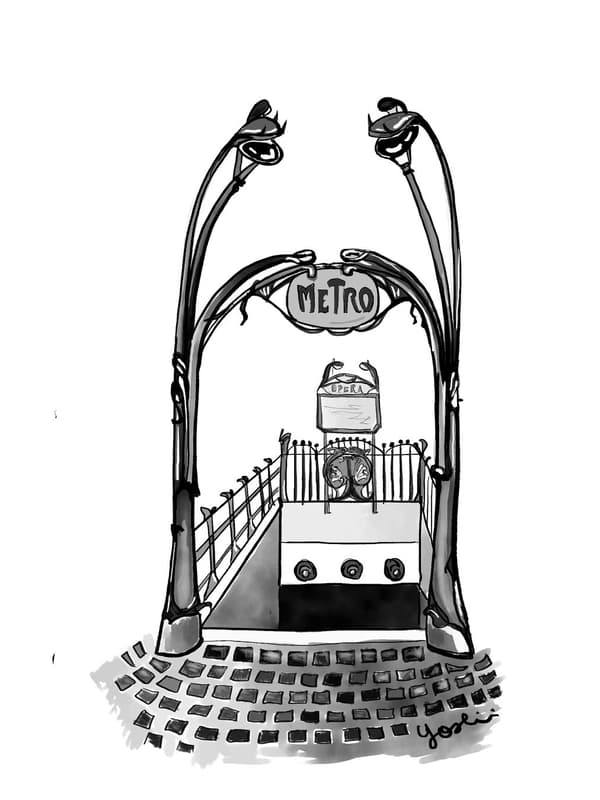
Art Nouveau
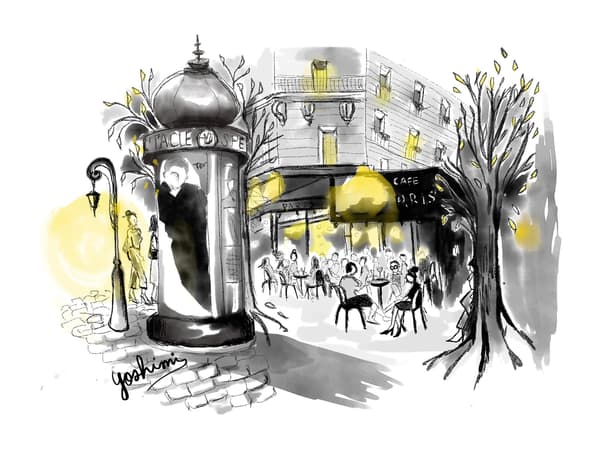
Bavardage au Crépuscule
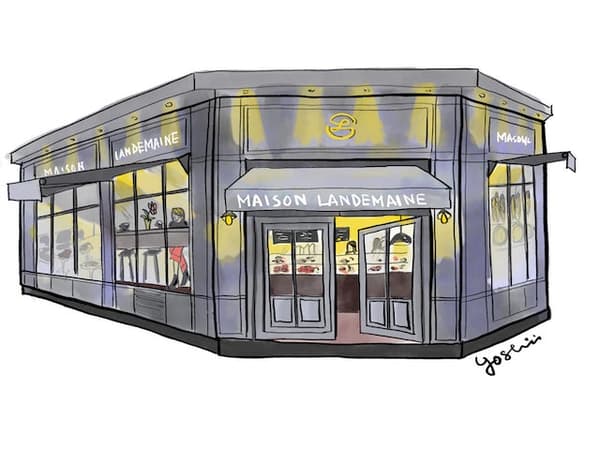
Pantalon Rouge
Art Nouveau was an artistic style that spread across Europe from the late 19th to the early 20th century, flourishing particularly in France and Belgium. Characterized by decorative motifs inspired by plants and organic curved forms, it influenced a wide range of fields including architecture, crafts, and graphic design. Unlike traditional styles that emphasized straight lines and symmetry, Art Nouveau prized flowing organic lines and rich ornamentation. It also sought to bring beauty into everyday objects and urban spaces — the entrances to Paris's Métro stations are among its most well-known examples.
Antique Glass Sculpture
Antique glass — quietly left behind by the passage of time — was not mass-produced, but crafted one piece at a time by the hands of artisans long past.
By carving sculptures into their surfaces, Ishikawa breathes new life into these objects, returning them to the present.
Where encounter meets a flash of inspiration, forms are awakened across the ages — and therein lies the enduring appeal of antique glass sculpture.
Working entirely by instinct and feel, Ishikawa carves into each piece and inlays gold wax into the grooves in a meticulous process, resulting in one-of-a-kind works — each a true original.
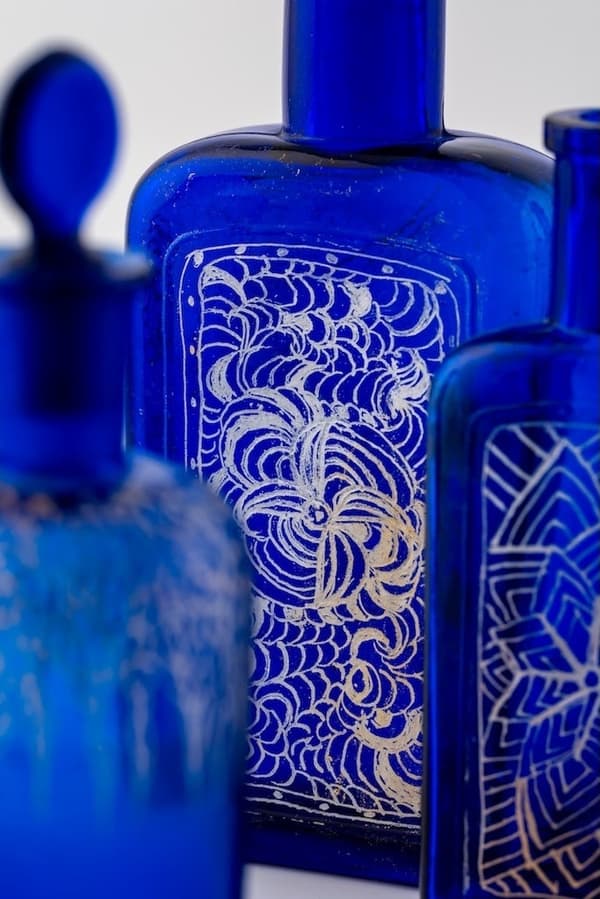
Cobalt blue glass, widely used from the late 18th to the 19th century — particularly for medicine and cosmetics bottles. Its deep color also served to protect light-sensitive contents from degradation.
Cobalt Collection
Antique glass created by hand by craftsmen in Europe — primarily France — from the late 18th through the 19th century, engraved freehand by Ishikawa, with gold wax worked into the carved grooves to bring the imagery to the surface.
The Cobalt Blue Collection consists primarily of medicine bottles from the era, made before the shift from cork stoppers to screw caps. Look closely and you can see tiny air bubbles left behind by the craftsman's breath.
The deep green glass was produced using chromium oxide and iron, offering high light-blocking properties to protect the contents from light. The thickness of the glass and cork-stopper construction indicate these pieces date from the late 19th to the early 20th century, used by pharmacists to store medicinal liquids, essential oils, and chemicals.
Functional in form, yet carrying a quiet beauty and material quality unique to their era.
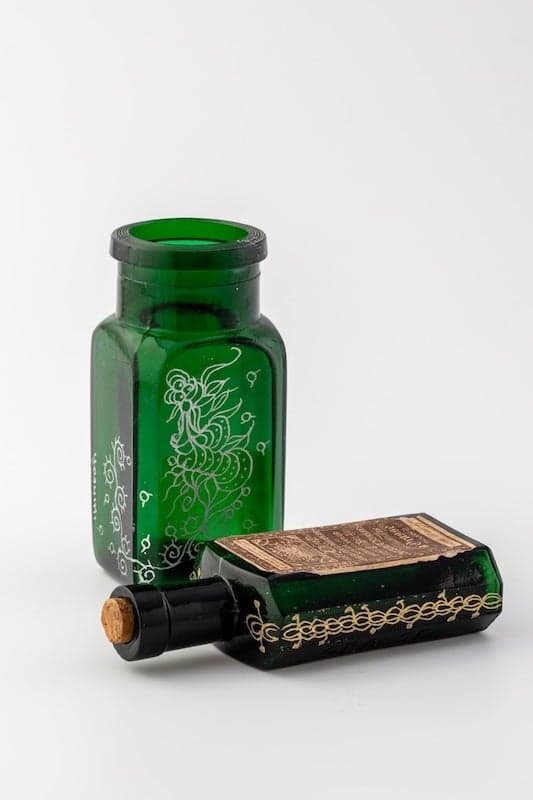
Each piece is carved in a single session, guided by the shape and texture of the bottle — a spontaneous, one-of-a-kind encounter with the material.
More than 25 varieties of antique and vintage glass sculptures will be on display.
Yoshimi Ishikawa's Debut Book: The French Way to Live True to Yourself
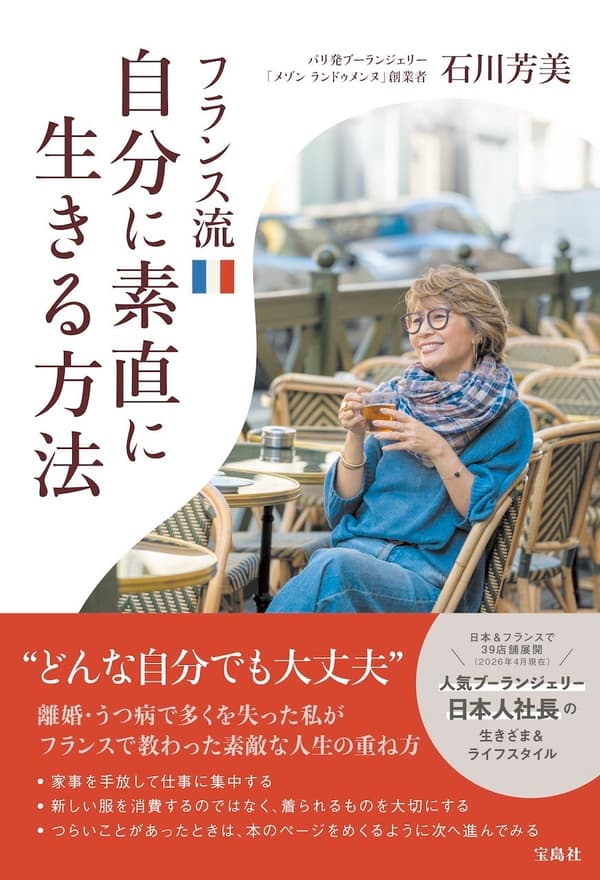
Published by Takarajima on April 22, The French Way to Live True to Yourself is Ishikawa's first book. Spanning five chapters, it draws on 60 years of life experience to share French-inspired wisdom, ways of thinking, and career insights for living authentically.
The book reflects a perspective shaped by building a career as a woman, confronting and overcoming challenges, and finding success — a perspective only Ishikawa could offer. As someone deeply familiar with both Japanese and French cultures, she shares words of insight that resonate especially with women navigating life today. The book also touches on art.
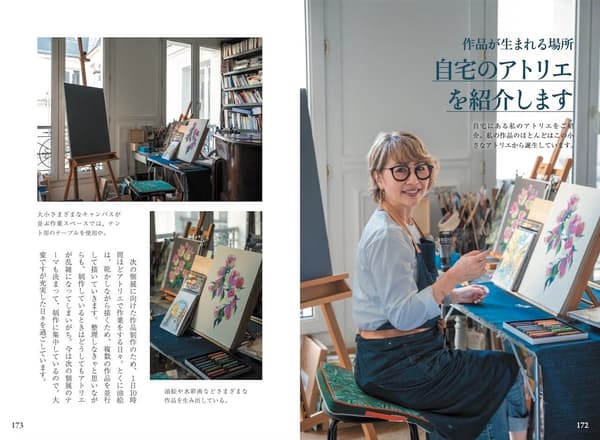
In her Paris studio
Publication Commemorative Talk Event
During the exhibition period, a talk event will be held on the following dates. Bread from Maison Landemaine will be available for tasting on the day.
All seats by reservation — Participation fee: ¥8,000
- May 22 (Fri): 1:00 PM to 2:00 PM
- May 24 (Sun): Two sessions
- Session 1: 10:00 AM to 11:00 AM
- Session 2: 4:00 PM to 5:00 PM
Please note: the gallery will be closed to general visitors during talk event hours.
Venue: Gallery Hare, Minami-Aoyama
3-8-5 Minami-Aoyama, Minato-ku, Tokyo / M385 Bldg. 302
Reservations: Gallery Hare
About Yoshimi Ishikawa
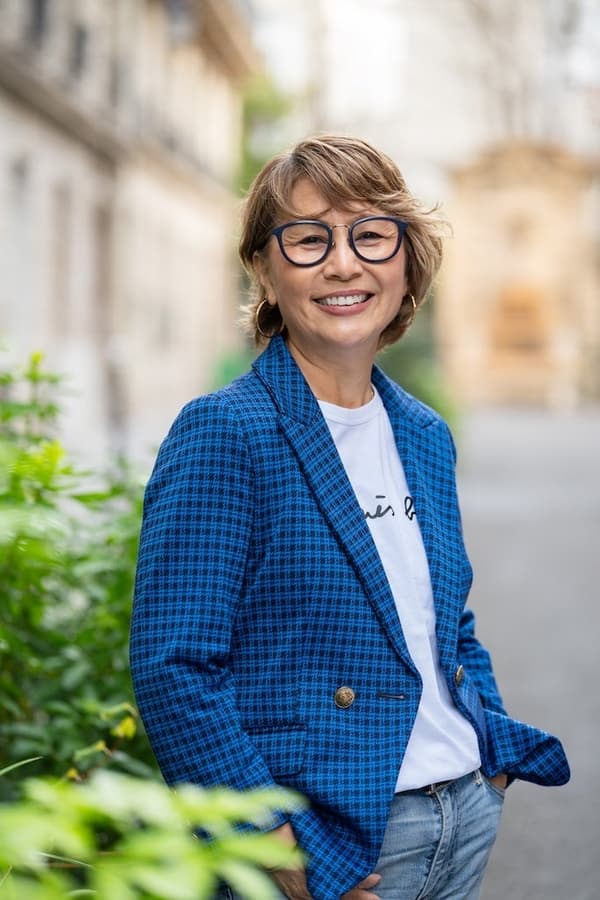
Artist / Chef Boulangere
Co-owner, Lili Group (formerly Landemaine)
Born in Tokyo, 1966.
Ishikawa immersed herself in calligraphy and music through her mid-twenties before turning to bread-making, where she developed her craft as both artisan and entrepreneur. Together with her husband, she expanded a bakery business and now oversees approximately 40 locations, with a foundation established in Normandy dedicated to preserving nature and cultivating wheat.
She began painting at age 30, driven by an inner creative urge, and returned to the world of art. At 35, she moved to France and continued to explore artistic expression within a new cultural environment.
From 2016, she has honed her skills at her Paris studio, "Atelier des Petits Écureuils," mastering a range of techniques.
In 2026, she is releasing a lifestyle book in Japan and a book on natural yeast in France. Through many turning points in her life, her expression has quietly returned to its roots and is now taking shape in new form.