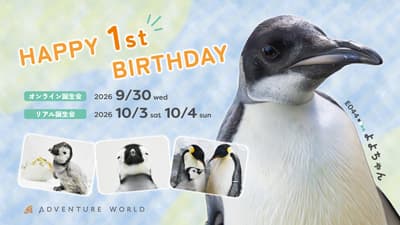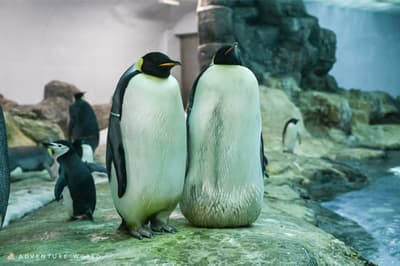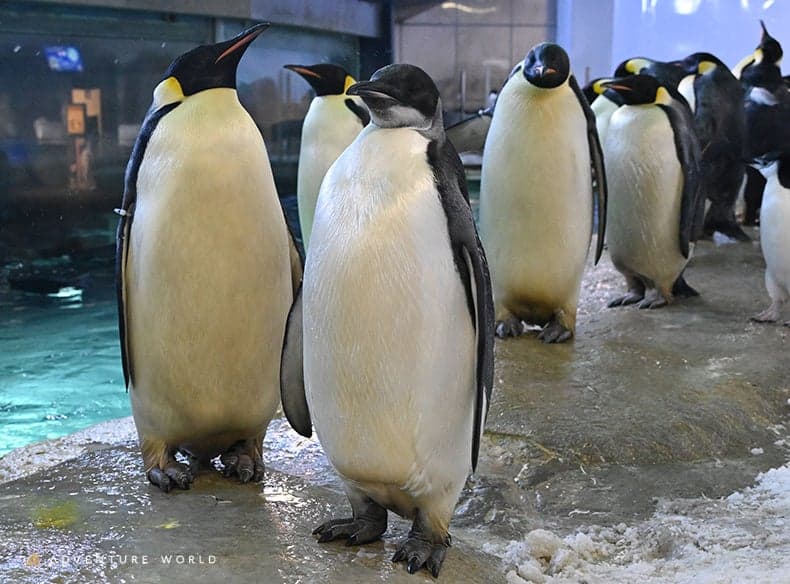
Emperor penguin chick "No. 44," born at Adventure World in Shirahama, Wakayama on September 30, 2025, will move to a new habitat area on April 15, 2026 (Wednesday), marking the start of its independent life. The young penguin will leave the area it has shared with its parents and join a group of unfamiliar companions for the first time.
In the wild, emperor penguins grow their waterproof adult feathers roughly six months after hatching and head out to sea for the first time around the same period that their parents depart. In keeping with this natural lifecycle, the park is facilitating the relocation to encourage the chick's independence and support its transition into adulthood.
This move is a meaningful milestone for "No. 44" as it begins to develop social bonds with a new group of penguin peers. It also plays an important role for the adult penguins, helping them establish a natural breeding cycle in preparation for the next season.
Move Details
- Date: Wednesday, April 15, 2026 (a closed day for the park)
- Location: 2nd Floor Marine Animal Hall Penguin Exhibit → adjacent exhibit
- Details: The chick moves from the area shared with parent birds and the adult group to a habitat with penguins it has never met before
Protecting the Future of Emperor Penguins
The "Endangered" Listing and Growing Importance of Captive Breeding Research
On April 9, 2026, the International Union for Conservation of Nature (IUCN) officially classified the emperor penguin as "Endangered (EN)" on its Red List. Accelerating collapse of Antarctic shelf ice due to climate change has led to increasingly severe breeding failures in the wild, raising concerns that the species could face extinction by the end of the 21st century.
With wild populations under unprecedented pressure, the stable continuation of life in captivity and advancement of breeding research for species preservation have become urgent priorities worldwide.
Supporting Natural Breeding and Pursuing Artificial Insemination Technology
Maintaining genetic diversity and preventing inbreeding over time are the greatest long-term challenges for sustaining the species in captivity. Adventure World achieved the successful production of fertilized eggs in the previous season. In addition to restructuring the habitat for natural breeding through "No. 44's" relocation, the park is also actively pursuing the establishment of artificial insemination technology. Through this multi-pronged approach to conservation, the park aims to strengthen its efforts to carry the baton of life forward to future generations.