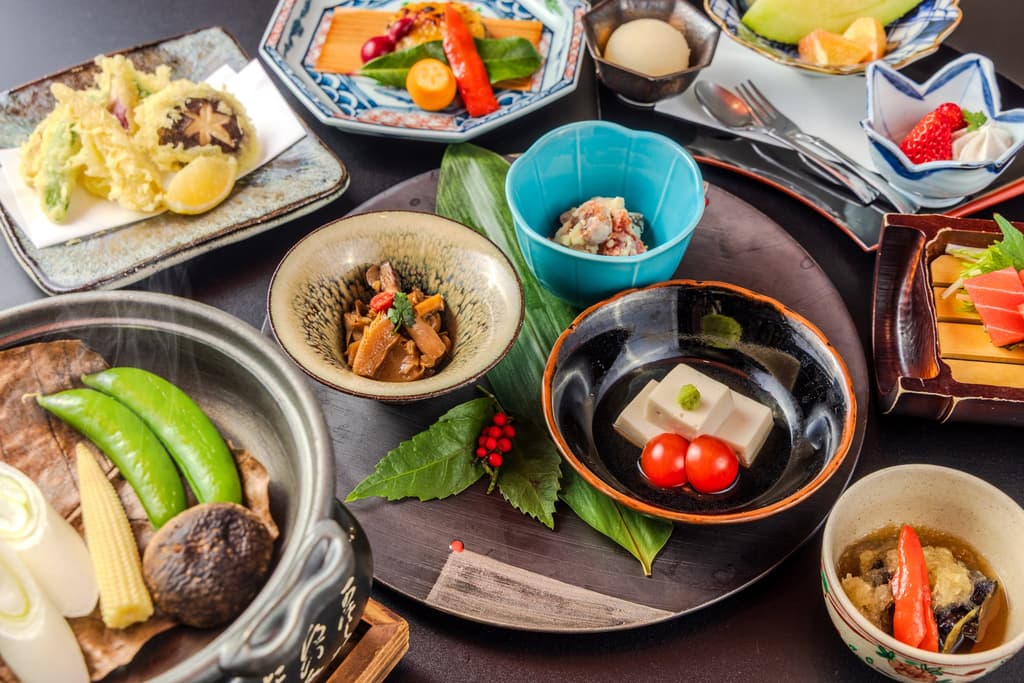
Kinnotake Corporation, operating five ryokans and three restaurants in Hakone, Kanagawa Prefecture (Headquarters: Hakone-machi, Kanagawa; President: Masaaki Yahata), has introduced vegan kaiseki cuisine that uses no animal-based ingredients, which began service in December 2025.
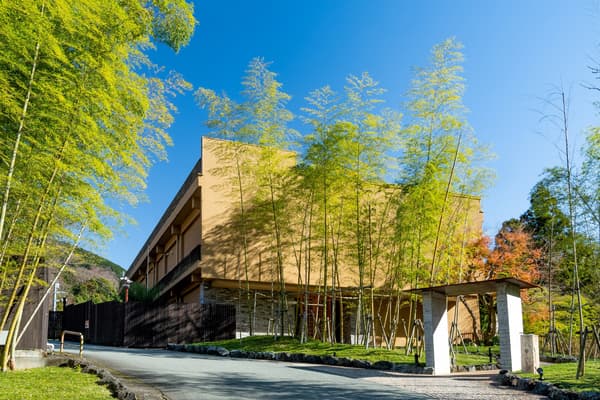
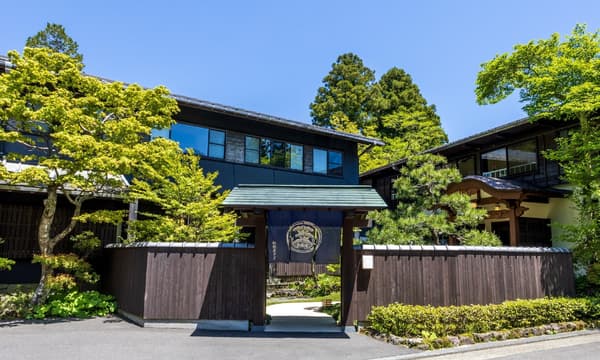
This cuisine is now available at three facilities with distinct characteristics: Kinnotake Sengokuhara, Kinnotake Tonosawa, and Matsuzakaya Main Store.
This initiative goes beyond simple allergy and religious accommodations, aiming to create a dining environment where everyone can equally experience Japanese food culture.
Hospitality Industry Faces Food Diversity Challenges with 60% International Guests
In recent years, alongside the increase in international travelers to Japan, the number of travelers avoiding animal-based ingredients for religious, health, or environmental reasons has been growing worldwide. At Kinnotake, approximately 60% of guests in 2025 were international visitors, with dietary consultations increasing annually.
What they focused on was that vegan guests seek not special treatment, but "the same opportunity as other guests to deeply savor the culture of that place."
However, Japanese cuisine widely uses dashi derived from seafood, creating challenges with "invisible dashi" and the sense of exclusion from "being the only one with a different menu."
Rather than accepting the conventional wisdom that "vegan accommodation equals restrictive diet," they aimed to create an environment where everyone can experience the beauty of Japanese food culture at the same table.
Development Challenge: Unable to Use the Foundation of Japanese Cuisine
However, achieving this was far from simple. The biggest challenge was being unable to use katsuobushi (bonito flakes), which forms the flavor foundation of Japanese cuisine. Previously, the on-site approach centered on individual accommodations after arrival, with most pre-prepared ingredients containing animal-based dashi. This meant preparing vegan dishes required cooking from scratch, creating a significant burden on the staff.
Furthermore, during the development stage, they faced fundamental technical challenges as chefs: how to express flavors close to traditional kaiseki cuisine, how to construct umami without relying on animal-based ingredients, and how to express the essence of Japanese cuisine.
Solution Found in Fermentation and Plant-Based Umami
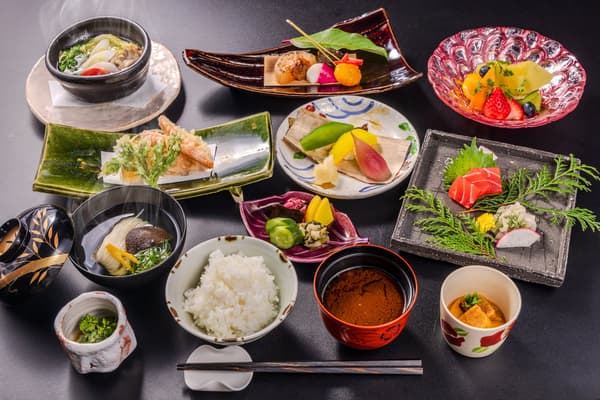
After much trial and error, Kinnotake shifted their thinking to fundamentally reconsider the structure of Japanese cuisine itself. Rather than replicating the taste of katsuobushi, they aimed to reconstruct the umami foundation of Japanese cuisine using only plant-based ingredients.
Specifically, they established 100% plant-based Japanese dashi as the foundation and renewed their research into traditional Japanese fermented seasonings like miso and koji. Additionally, by carefully extracting dashi from dried shiitake mushrooms, kombu seaweed, dried vegetables, and vegetable scraps, they combined various plant-based umami elements to create deep, layered flavors.
As a result, they achieved a new Japanese cuisine flavor where the individuality of ingredients stands out more prominently, without relying on animal-based ingredients.
New Discoveries and Values
What emerged through this initiative was the potential for vegan cuisine to be enjoyed not as a substitute, but as a new dining experience. By not relying on animal-based ingredients, the original flavors of ingredients became more pronounced, evolving into cuisine that carefully draws out the character of each ingredient. Additionally, being low-calorie and gentle on the body is another distinctive feature.
Furthermore, by incorporating cooking methods that utilize vegetable scraps for dashi, they contribute to reducing food waste and realizing environmentally conscious sustainable dining experiences.
Guest Feedback:
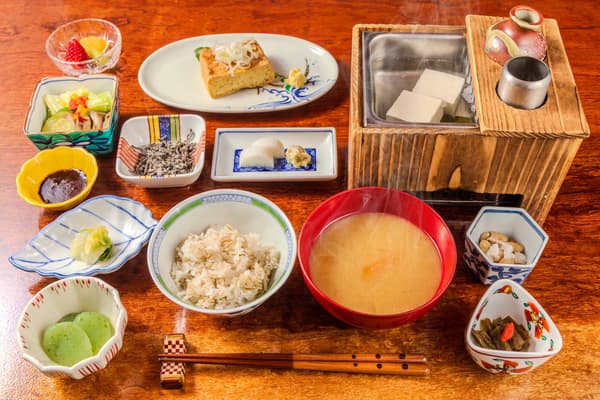
Guests who tried the cuisine shared their appreciation:
"I was delighted they prepared vegan kaiseki cuisine. It was beautifully presented and tasted wonderful."
"They prepared this for two members of our group, and it was truly helpful."
Future Outlook
Kinnotake will not limit this initiative to a one-time accommodation but will continue developing an environment where not only vegans and vegetarians, but also guests with various backgrounds including religion, health, and allergies can enjoy Japanese food culture alongside other guests.
This aligns with their cherished concept of "diversity." They consider it an important role of accommodation facilities to create spaces where everyone feels comfortable, transcending differences in nationality and culture.
Kinnotake will continue contributing to realizing a sustainable society by connecting people and cultures through accommodation experiences and nurturing places where mutual understanding can flourish.
Kinnotake's Environmental Initiatives
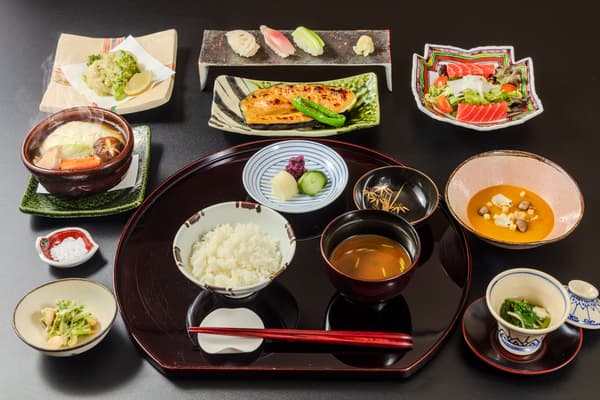
The Kinnotake Group implements sustainable practices within daily accommodation experiences, aiming to reduce environmental impact and preserve the value of Japanese culture.
Guest rooms feature bamboo toothbrushes and hairbrushes, while the spa uses environmentally conscious natural materials. At the teppanyaki restaurant "Zen," they utilize vegetable peels and stems that would typically be discarded for soup-making, contributing to food waste reduction.
Through this series of initiatives, they convey the Japanese cultural spirit of cherishing nature and ingredients throughout guests' stays.
About Kinnotake Resort
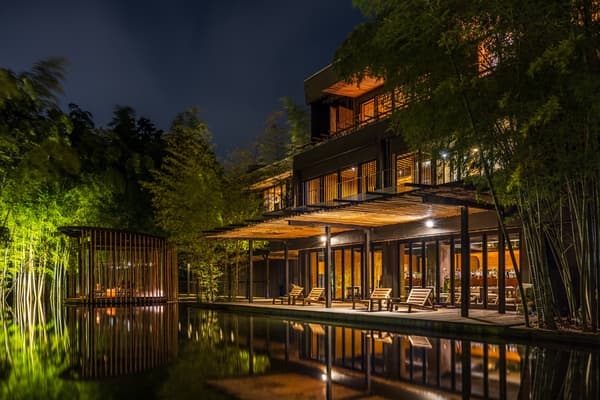
Kinnotake Resort opened its first onsen ryokan in Sengokuhara, Hakone-machi, Kanagawa Prefecture in 1947. In 1999, they created new enjoyment and value for onsen ryokans through private outdoor baths, which were still rare at the time, offering "extraordinary experiences." Currently, they operate five ryokan facilities and three restaurants while pursuing diversification through new businesses like craft beer and opening new ryokan facilities targeting different customer segments, building a diversified portfolio. Through this approach, they aim for sustainable growth while adapting to changes in the external environment.
Kinnotake Resort Official Website