Auberge Homachi Mikuniminato (オーベルジュほまち 三國湊), a dispersed-style lodging in Sakai, Fukui Prefecture, has started taking reservations for three stay plans featuring Echizen crab, Fukui's signature winter delicacy. The plans run from November 14 (Saturday), 2026 to March 30 (Tuesday), 2027.
Chef Tateru Yoshino has been expressing the local ingredients of Fukui's Mikuni-minato through French cuisine since the property opened. In its third year, he takes on a new style of crab cooking that goes beyond what he has done before. Guests can enjoy a "French crab course" supervised by Yoshino, who has earned Michelin stars in both Japan and France, along with Echizen crab of imperial-presentation quality selected by the eye of a long-established fish wholesaler, all while staying in historic machiya townhouses.
Why Mikuni-minato in Fukui?
Mikuni-minato once flourished as a major hub for the Kitamaebune trading ships, and its historic streetscapes and culture from that era are still strongly felt today. Auberge Homachi Mikuniminato was created by renovating nine historically valuable machiya scattered around the town into a dispersed auberge with 16 guest rooms.
Access has improved since the Hokuriku Shinkansen was extended to Tsuruga in March 2024. Guests can combine a stay in a historic space (a machiya stay) with local cultural experiences such as making Mikuni lanterns and walking around the town, as well as the rich produce of Fukui's seas and land (its terroir). Sakai, the city that includes Mikuni-minato, also won the "Gourmet City Award 2025" (美食都市アワード2025) in 2025, as one of five cities nationwide and the first in Fukui Prefecture.
Sakai City official tourism guide: https://kanko-sakai.com/topics/5462/
French Cuisine Meets Echizen Crab
In French cuisine, crab is often used in broths or as an accent in appetizers, but it is rarely the main dish that closes a course. Eating meat out of the shell does not fit easily with elegant table manners, and eating crab miso (tomalley) is not a common custom in France.
Sourcing is also difficult. In Mikuni-minato on the Hokuriku coast, winter seas are rough, and there are many days when boats cannot go out because of weather and sea conditions. Getting top-quality Echizen crab depends on nature's bounty and on luck with timing. Because of this rarity, Echizen crab has been called the "king of Japan's winter flavors" and has long been admired by food lovers.
It was Chef Tateru Yoshino who took on both the food-culture barrier and the scarcity of the ingredient. He is a leading figure who earned a Michelin star in Paris, and his achievements have also been recognized by the French government. While mastering traditional French techniques, he has kept exploring the potential of local ingredients. The result is a French crab menu built around Echizen crab, going beyond the Japanese-style boiled crab to bring out the crab's potential as far as possible.
A Message from Chef Tateru Yoshino
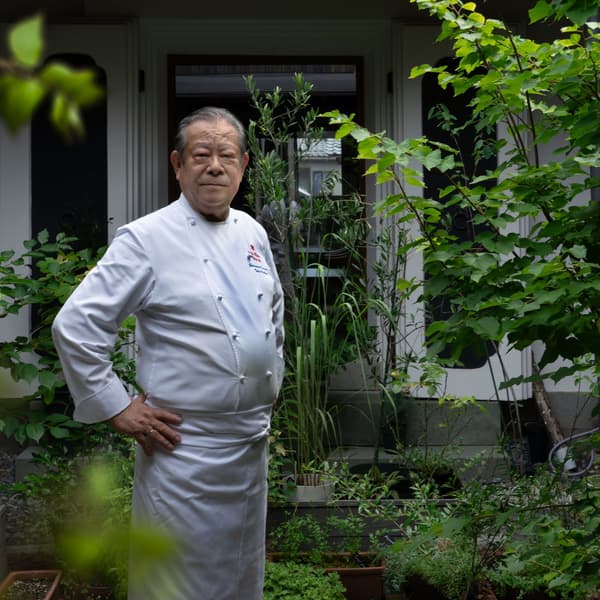
As a chef, I have always tried to face ingredients honestly and bring out their appeal to the fullest. Echizen crab, which I met in the port town of Mikuni-minato that prospered through the Kitamaebune, is truly a treasure of Japan that we can be proud of around the world. Two and a half years have passed since the opening. Through my interactions with the people of the town and our guests, and through exchanges with local chefs, my own sensibilities have matured, and it is precisely now that a new crab dish blending Japanese and French cuisine has been born. I want to make it something that will surprise even the guests who have visited us before, all over again.
Plan Overview: Echizen Mikuni Winter Special Crab Course (越前三国 冬の特別蟹コース)
The Echizen crab used in these plans is landed at Mikuni Port, where presentation of crab to the Imperial Household began in 1922 (Taisho 11). The crab is carefully selected, with only top-quality pieces purchased on the judgment of a long-established local fish wholesaler.
- Period: November 14 (Saturday), 2026 to March 30 (Tuesday), 2027
- Note: Depending on crab supply (for example, because of bad weather), plan details may change or a plan may end early.
Imperial Presentation Crab Course (【越前三国】皇室献上がにコース)
A winter-only premium plan that uses 1.5 rare "purple-tag Echizen crab" per person, selected as imperial-presentation quality.
- Crab: Echizen crab (purple tag, about 1.2 kg), 1.5 crabs
- Price: From ¥135,000 per person (tax and service charge included; one night with two meals; based on 2 to 4 guests sharing one room)
- Reservations: Reserve the Imperial Presentation Crab Course
Echizen Crab Course (【越前三国】越前がにコース)
A standard plan for enjoying Echizen crab, Fukui's branded ingredient, in generous quantities.
- Crab: Echizen crab (yellow tag, about 0.8 kg), 1.5 crabs
- Price: From ¥89,000 per person (tax and service charge included; one night with two meals; based on 2 to 4 guests sharing one room)
- Reservations: Reserve the Echizen Crab Course
Both plans share the same menu. The only difference is the rank and size of the Echizen crab used.
Menu for both plans
- Amuse: Cold borscht / itawakame (sheet wakame) with Mikuni sweet shrimp / heshiko (fermented fish) and Ishikawa baby taro brochette
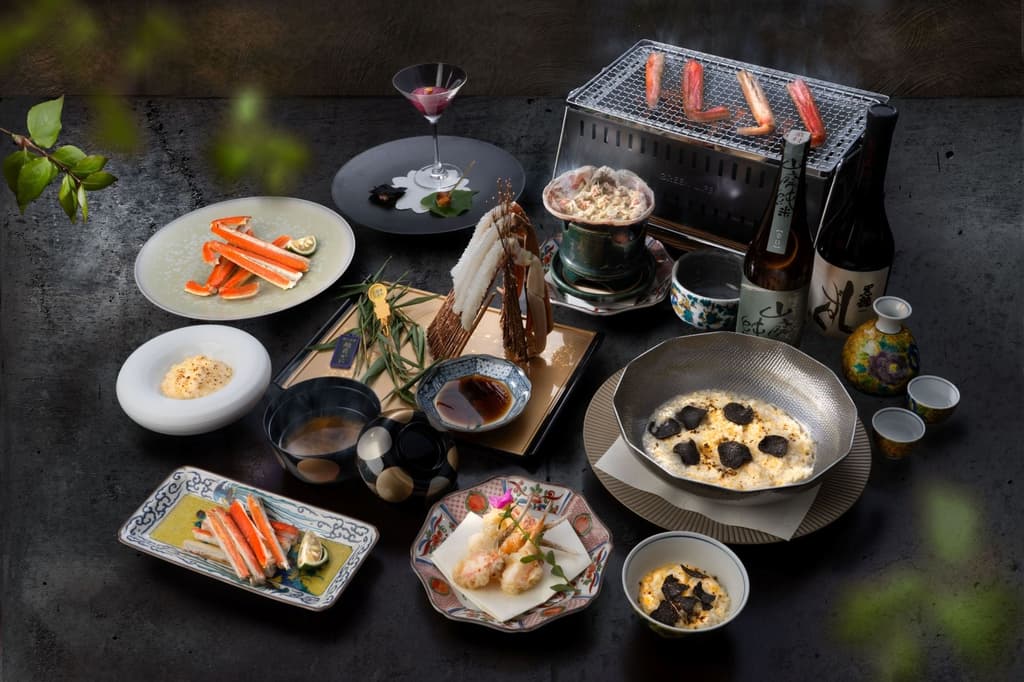
- Echizen crab: Hanasaki-style sashimi, salt-boiled, charcoal-grilled, tempura, gratin, soup bowl, shell-grilled, crab zosui (rice porridge), and more
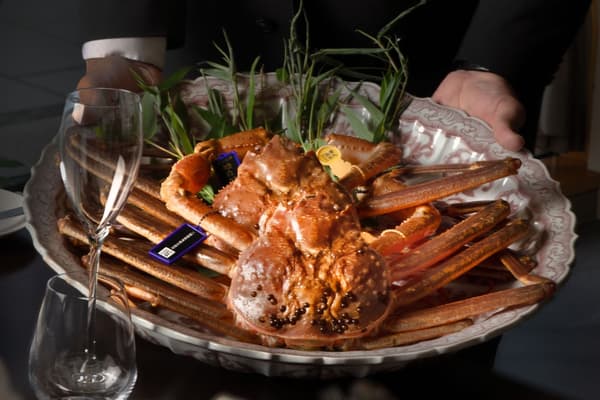
Tagged Echizen crab
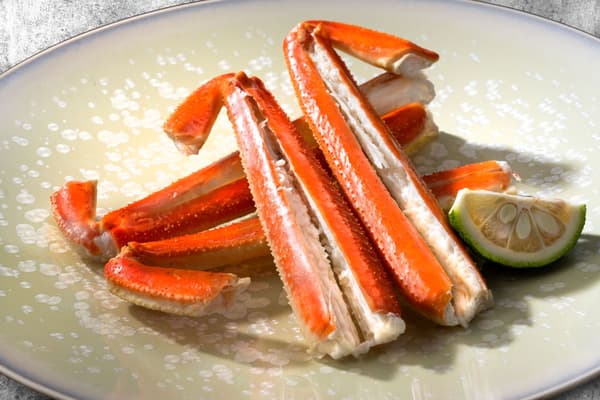
Echizen crab "salt-boiled," served with sudachi
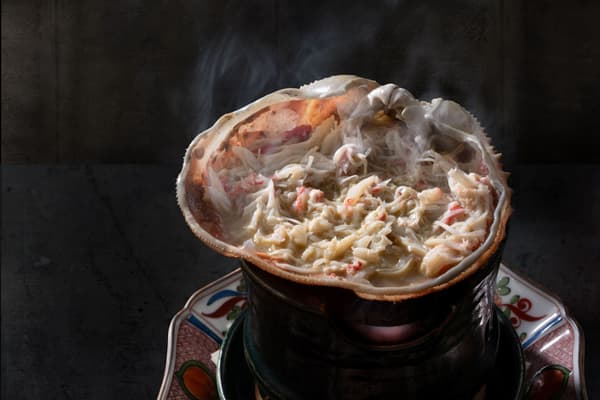
Echizen crab "shell-grilled," with the crab meat and crab miso warmed in sake
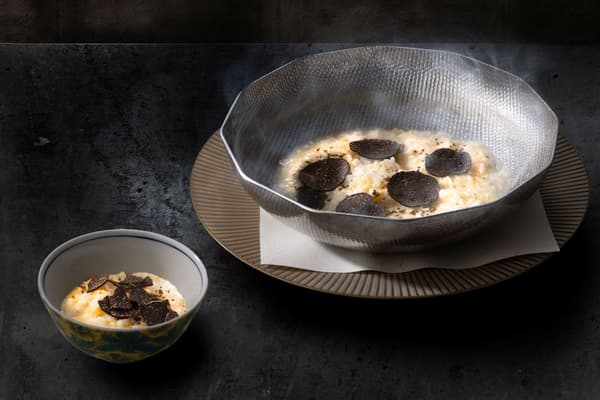
Echizen crab "crab zosui," a luxurious rice porridge scented with black truffle
French Crab Course (フレンチ カニコース)
A full-course French dinner that uses one Echizen crab (yellow tag, about 0.8 kg).
- Price: From ¥79,000 per person (tax and service charge included; one night with two meals; based on 2 to 4 guests sharing one room)
- Reservations: Reserve the French Crab Course
Menu
- Amuse (cold borscht / itawakame (sheet wakame) with Mikuni sweet shrimp / heshiko (fermented fish) and Ishikawa baby taro brochette)
- Beef consommé soup made with Rishiri kelp, scented with yuzu
- Echizen soba and Koshi no Ruby coulis with a trio of caviar, karasumi (cured mullet roe), and mint
- Echizen crab tasting comparison, served with a yuzu-flavored beurre blanc sauce
- Savoy cabbage and black truffle, foie gras vapeur
- Grilled Wakasa beef ichibo (rump cap) with sauce bordelaise
- Echizen crab risotto with a buckwheat groat accent
- Crème fine
- Apple pie with caramel mousse
- Café / petit fours
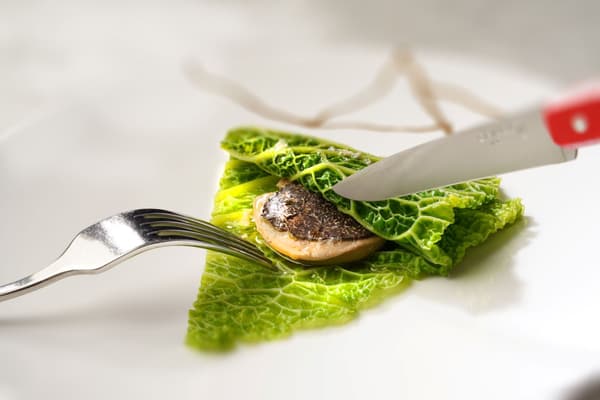
Savoy cabbage and black truffle, foie gras vapeur
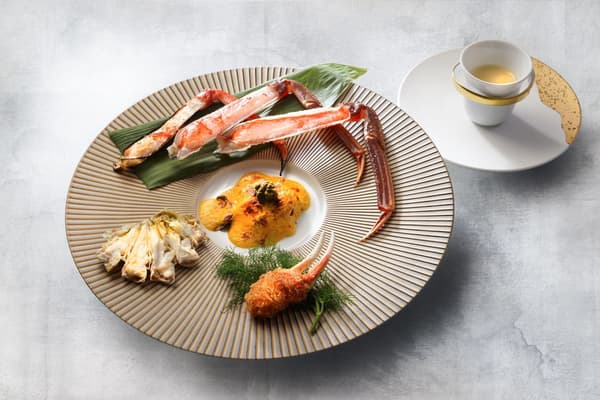
Echizen crab tasting comparison, served with a yuzu-flavored beurre blanc sauce
About the "Imperial Presentation Quality" Tag
The purple "imperial presentation quality" tag marks top-quality Echizen crab landed at Mikuni Port that meets strict standards equal to those of the crab presented to the Imperial Household. In addition to the "yellow tag" that certifies the quality of Fukui-caught Echizen crab, the purple tag is given only to crabs that clear conditions such as a weight of 1.1 kg or more, an excellent shape and form, and a good amount of meat. The crab is selected through the history of imperial presentation that has continued since 1922 (Taisho 11) and the trained eye of local fishermen.
Accommodation
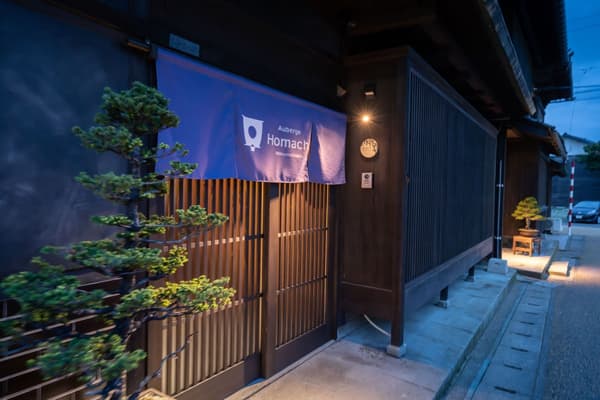
Guest room exterior
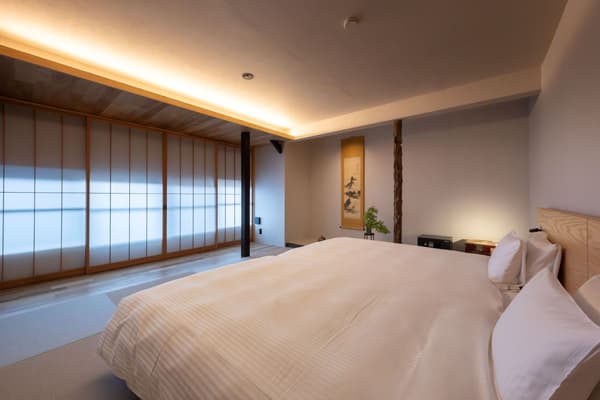
Guest room "Shippo"
The name "Homachi" comes from "homachi" (帆待ち), which refers to a Kitamaebune ship waiting for the waves to calm and a good wind to blow before leaving port. While waiting, the sailors earned money by selling the cargo they had brought on board or by doing other loading work, and this pay was called "homachigane." In Mikuni, the word later came to mean pocket money or a reward for children, also called "homachi." The hotel was given this name in the hope that a stay here will be a reward (a present) for guests who lead busy everyday lives, as they rest for a while before heading to their next destination.
Facility Information
- Name: Auberge Homachi Mikuniminato (オーベルジュほまち 三國湊)
- Address: 3-4-39 Minamihonmachi, Mikuni-cho, Sakai, Fukui
- Phone: 0776-82-0070
- Rooms: 16 rooms in 9 buildings (2 to 4 guests per room)
- Facilities: Front desk building, restaurant "Tateru Yoshino Mikuniminato" (タテルヨシノ 三國湊), gym
- Official website: https://www.homachi.jp/
- Official Instagram: https://www.instagram.com/homachi_mikuniminato/