Myakumyaku Connecting Exhibition – Bringing Osaka-Kansai Expo Outcomes to the Future
First Post-Expo Initiative Starting February 18
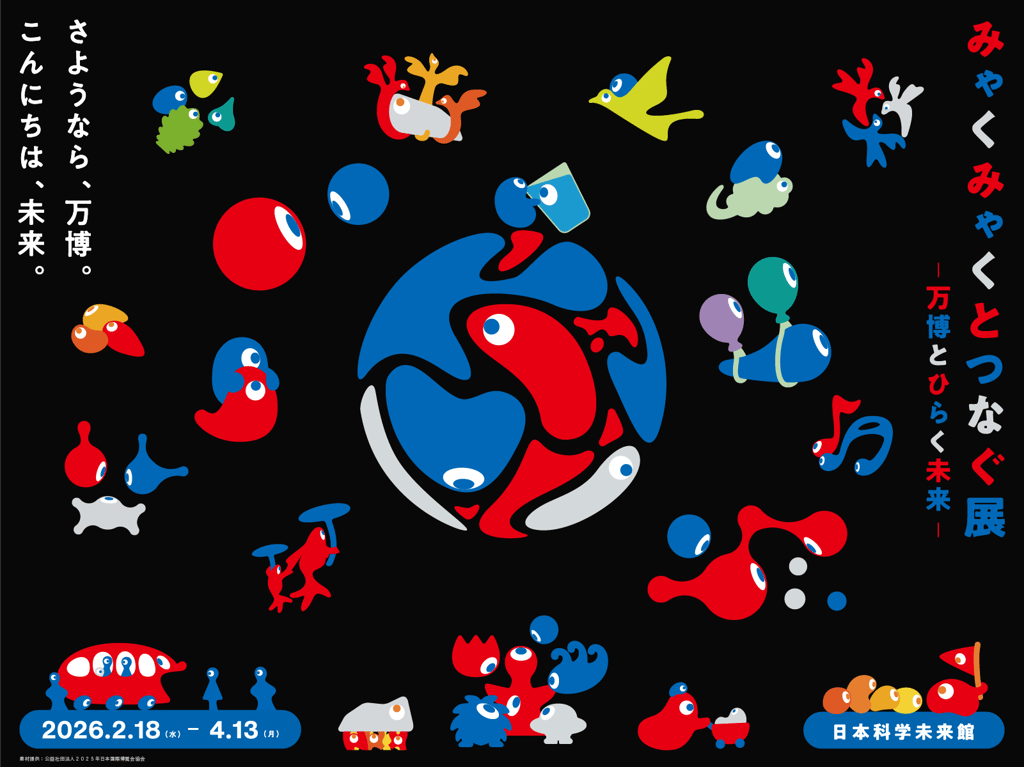
The National Museum of Emerging Science and Innovation (Miraikan, Director: Chieko Asakawa) will launch an initiative to look back at the Osaka-Kansai Expo, held under the concept of "Experimental Field for Future Society," and carry its outcomes into the future. As the first initiative, "Myakumyaku Connecting Exhibition – Opening the Future with the Expo" will be held from February 18 (Wednesday) to April 13 (Monday), 2026.
This exhibition will showcase cutting-edge science and technology introduced at the Expo related to future food and healthcare, including physical exhibits making their Tokyo debut. It will also reconsider the design system that enabled active citizen participation symbolized by "Komyaku" (derivative works) and architectural challenges at facilities, creating a space to carry these outcomes into the future.
Exhibition Overview
| Item | Details |
|---|---|
| Title | "Myakumyaku Connecting Exhibition – Opening the Future with the Expo" |
| Exhibition Period | February 18 (Wednesday) to April 13 (Monday), 2026 |
| Venue | National Museum of Emerging Science and Innovation, 1F Symbol Zone |
| Opening Hours | 10:00 AM to 5:00 PM ※Opening day, February 18 (Wednesday), starts at 1:00 PM |
| Admission | Free ※Separate fees apply for permanent exhibitions and Dome Theater |
| Organizer | National Museum of Emerging Science and Innovation |
| Support | Japan Association for the 2025 World Exposition |
| Creative Direction & Art Direction | Kota Hikichi (VISIONs) |
| Cooperation | 1→10 Inc., COMMONs Inc. |
| Event Page | https://www.miraikan.jst.go.jp/events/202602034396.html |
"Myakumyaku Connecting Exhibition – Opening the Future with the Expo"
The exhibition will showcase physical exhibits of "Lab-Grown Marbled Meat," "Cardiac Muscle Sheet," and "Future Human Washing Machine" that drew attention at the Osaka-Kansai Expo. It will also unpack the Expo's "Design System" that helped birth "Komyaku," and introduce ambitious, unconventional facility architecture challenges undertaken by young architects.
1. Physical Exhibits of Cutting-Edge Science and Technology in Future Food and Healthcare
The Osaka-Kansai Expo, held as an "Experimental Field for Future Society," showcased various cutting-edge science and technology that drew considerable attention. From among these, this venue will gather physical exhibits related to future food and healthcare. The exhibition will also feature the autonomous navigation robot "AI Suitcase," currently under development by Miraikan and others.
※Tokyo Debut
"Marbled meat" created using 3D bioprinting technology by culturing real Japanese beef cells. It's drawing attention as one solution to future food-related challenges. How would our food culture change if 3D printers for creating marbled meat came to every household?
Exhibition cooperation: Graduate School of Engineering, Osaka University
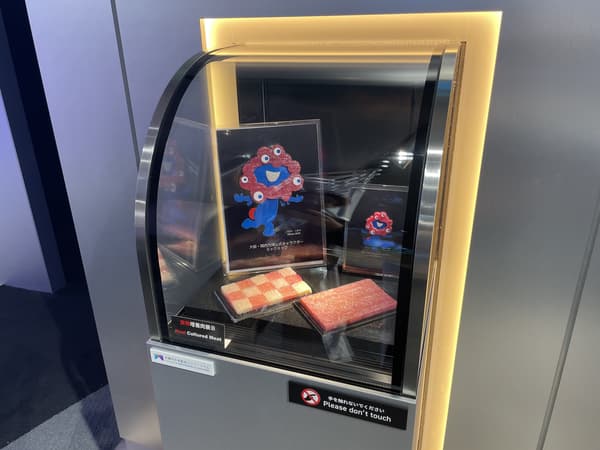
Marbled Meat at the Expo
"Cardiac muscle sheets" created by differentiating human iPS cells into cardiac muscle cells. When transplanted into the heart, they enable treatment to restore function reduced by serious heart disease. From the sight of many cells connecting and beating, please feel the vitality of life.
Exhibition cooperation: Qualips Corporation
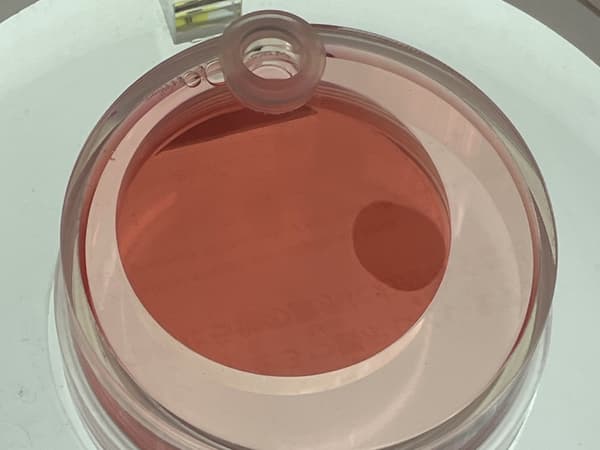
Cardiac Muscle Sheet at the Expo
The "Ultrasonic Bath" (commonly known as the Human Washing Machine) displayed at the 1970 Osaka Expo has drawn attention at this Expo as well as the "Future Human Washing Machine" after about half a century. This exhibition will display the actual machine shown at the Expo.
※No bathing experience available
Exhibition cooperation: Science Co., Ltd.
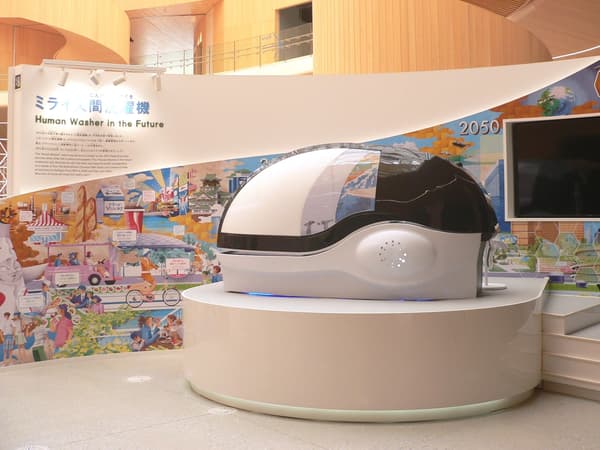
Future Human Washing Machine at the Expo
<Autonomous Navigation Robot "AI Suitcase">
The "AI Suitcase" aims for social implementation as a robot to safely guide visually impaired people. Next Generation Mobility Technology Development Consortium and Miraikan have been cooperating on its development, and over 4,800 people participated in demonstration experiments at the Expo. Development continues to carry outcomes forward.
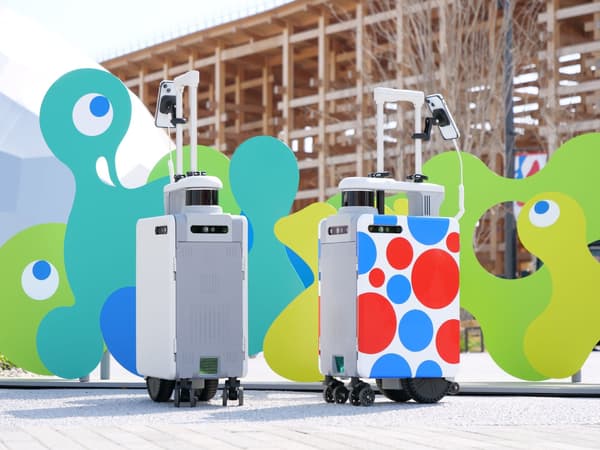
AI Suitcase at the Expo
2. The Secret of Design That Encourages Everyone to Get Involved
At this Expo, citizen-created derivative works called "Komyaku" became a major topic on social media. The buzz on social media helped create an atmosphere where people felt closer to the Expo and engaged more actively. What enabled this citizen involvement was the existence of the Expo's "Design System," which advocates "open design" as its concept, and active communication by creative director Kota Hikichi, who led the production.
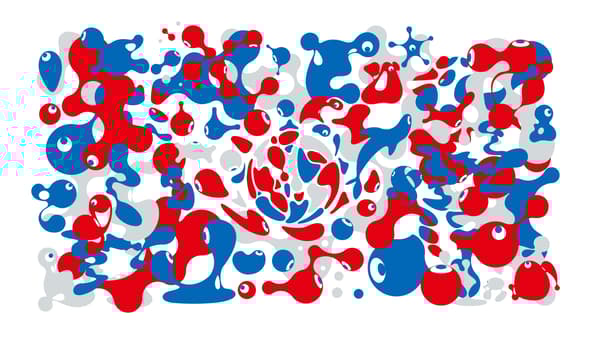
EXPO2025 Design System WORLD Core Graphic "Inochi"
This exhibition introduces the process of creating the design system, including valuable proposal materials from when Hikichi proposed the design system and a timeline summarizing events related to the Expo's design. Focusing on the uniqueness of the design system as it fulfilled its role as a "platform that encourages participation and co-creation," the exhibition considers new approaches to public initiatives to encourage active citizen participation. The venue also displays "Komyaku" created by citizens through secondary creation. Witness the power of citizens who energized the Expo through bottom-up efforts.
The exhibition also recreates the "Soundscape" that enveloped the entire Expo venue. Sounds created by seven composers with themes of life, festival, city, forest, water, sky, and earth gently harmonize, treating the venue as one ecosystem (Earth).
3. Architectural Challenges Not Bound by Convention
The "Great Roof Ring" brilliantly embodied the venue concept of "diverse yet one" and drew significant attention as symbolic architecture of the Expo. Meanwhile, facilities like rest areas and toilets at the Expo venue showed bold challenges by young architects not bound by architectural conventions.
This exhibition shows video recordings of the venue planning produced by Great Roof Ring designer Sou Fujimoto and the actual use of the Great Roof Ring, while introducing three facility architectures undertaken by young architects. It introduces experimental initiatives connecting to future society from an architectural perspective, including challenges to reconsider "cost-effectiveness" through the material of stone, reinterpretation of "air membrane structure" used in the 1970 Expo, and design concepts with effective post-Expo utilization in mind.
- Rest Area 2 "Time-scape Pavilion" (Kohei Kudo)
- Toilet 3 "Responsive Structure" (Yusuke Omata)
- Toilet 5 "Architecture Like Building Blocks" (Takashi Yonezawa)
Cooperation: TOTO Gallery-Ma
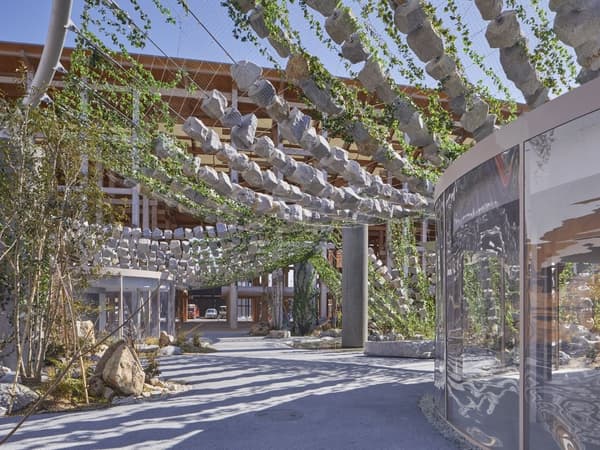
Rest Area 2 "Time-scape Pavilion"
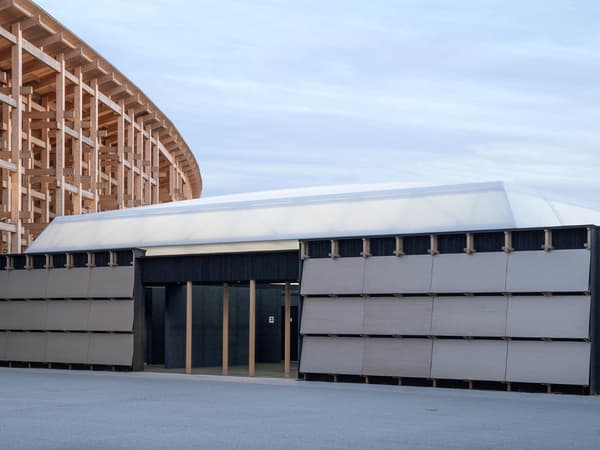
Toilet 3 "Responsive Structure"
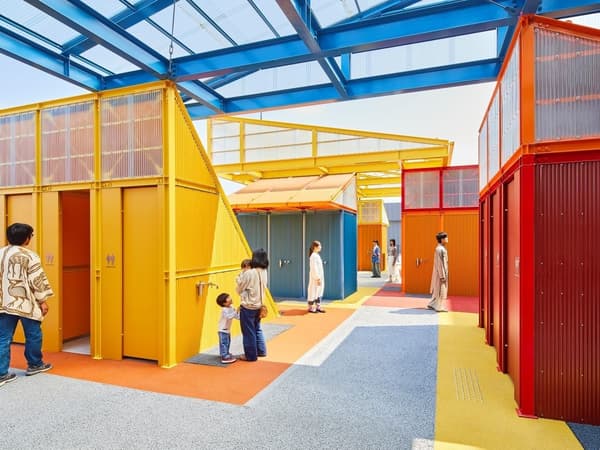
Toilet 5 "Architecture Like Building Blocks"