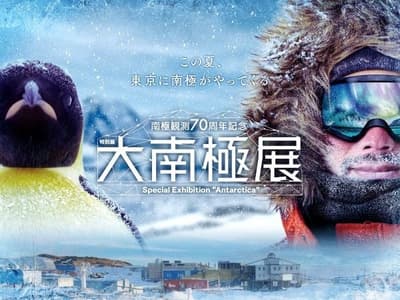
The National Museum of Emerging Science and Innovation (abbreviated as: Miraikan, Director: Chieko Asakawa), along with the National Institute of Polar Research, Dream Studio, TV Asahi, and The Asahi Shimbun, will present Special Exhibition "Antarctica" from July 1 (Wednesday) to September 27 (Sunday), 2026. This exhibition marks the 70th anniversary of Japan's Antarctic observation program, exploring observation activities and challenges in the extreme and mysterious land of Antarctica.
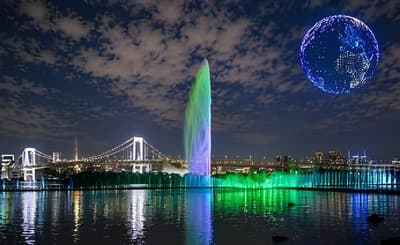
In 1956, the 1st Japanese Antarctic Research Expedition aboard the Antarctic observation ship "Soya" departed from Harumi Pier in Tokyo, beginning Japan's Antarctic challenge. Japan's Antarctic observation program celebrates its 70th anniversary in 2026.
Antarctica has minimal human activity impact on the atmosphere and environment, making it an ideal location to directly observe Earth's current state. The long-term observation data collected by Japanese research teams is crucial for understanding future global environmental conditions. Additionally, Antarctica contains approximately 90% of Earth's ice, and its melting significantly impacts future global environments. The Japanese Antarctic Research Expedition uses cutting-edge scientific technology for on-site observations to unravel climate change mechanisms.
In this exhibition, visitors become members of a "Special Antarctic Observation Team," learning about the diverse missions of Japan's Antarctic research teams through spectacular Antarctic videos and interactive exhibits, while considering Earth's future.
This summer, please visit this exhibition to contemplate Earth's future through Antarctica.
Exhibition Highlights
① Rare Authentic Samples Collected in Antarctica on Display
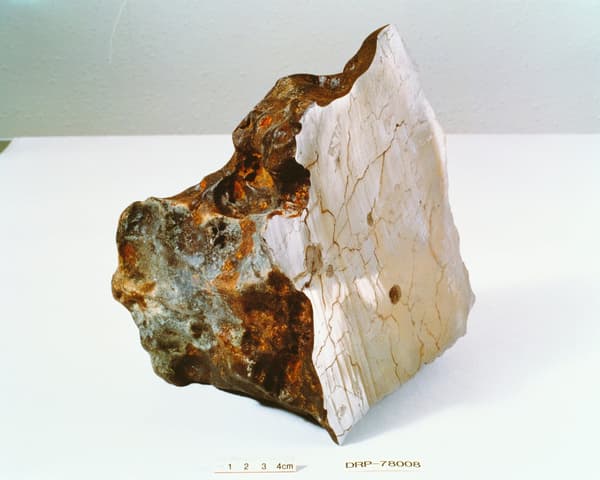
Iron meteorite collected in Antarctica ©National Institute of Polar Research
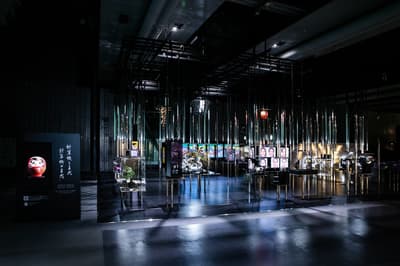
The exhibition displays authentic "Antarctic ice," a precious time capsule containing records of past climate change. It also features over 30 meteorite samples collected in Antarctica, known as a "holy land for meteorite collection," including touchable iron meteorites and rare specimens believed to have come from the Moon and Mars. The actual "touchable Mars meteorite (slice)" exhibited at the Osaka-Kansai Expo will also be displayed. Through these precious samples obtained from Antarctic observation, visitors can experience Antarctic research firsthand.
About "Antarctic Ice"
Ice formed from accumulated snow, containing air from when the snow fell.
About "Antarctic Meteorites"
Since discovering the "Yamato meteorite" in 1969, Japanese Antarctic observation teams have collected approximately 17,400 meteorites from the Antarctic ice sheet. About 60% of meteorites registered with the International Meteorite Society come from Antarctica, making it the region where the most meteorites are collected on Earth.
② Experience Antarctica Through Large-Scale Videos of Glaciers and Auroras, Plus Various Interactive Exhibits
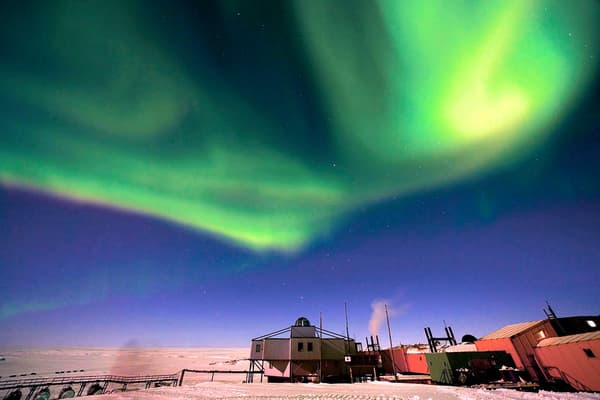
Aurora glow above Antarctica's Showa Station ©The Asahi Shimbun
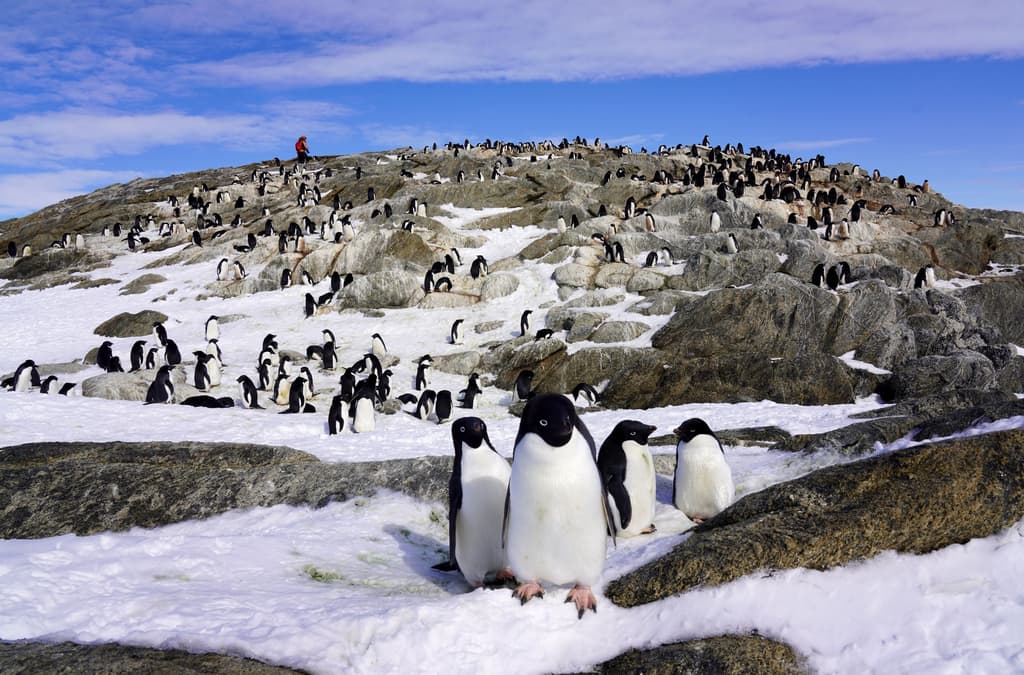
Experience large-scale dynamic videos of glaciers and auroras, along with numerous interactive exhibits including "Penguin Census" and "Blizzard Experience" that bring Antarctica and Antarctic observation to life. Based on years of accumulated data and research findings, visitors can explore environmental changes on Earth and connections with space, discovering scientific insights Antarctica offers and its implications for the future.
About "Penguin Census"
Annual surveys conducted at Adélie penguin nesting sites during the same period each year to count individuals and nests. Around Showa Station, Adélie penguins arrive at nesting sites around October in early spring to lay eggs and raise chicks, then fledglings depart around February to March. Research teams conduct surveys twice annually in mid-November and early December. This long-term survey, conducted since the 5th expedition (1960 to 1962), is one of the important monitoring observations by the Japanese Antarctic Research Expedition.
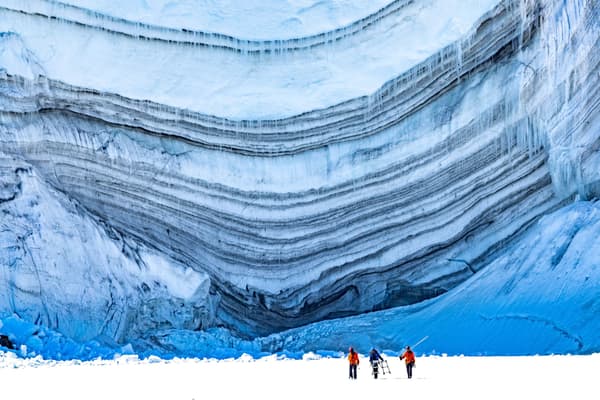
Survey scene in Antarctica ©National Institute of Polar Research
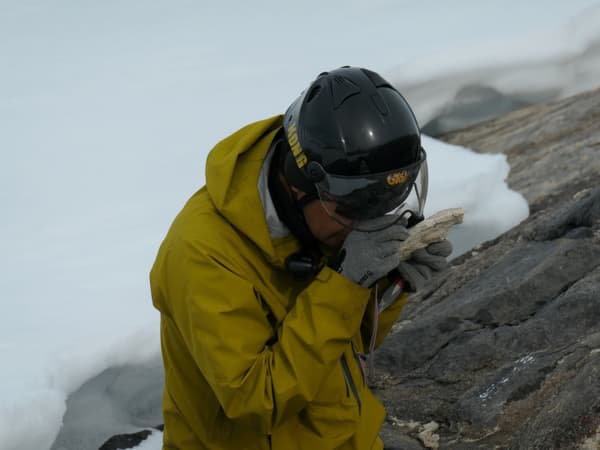
Geological survey in Antarctica ©National Institute of Polar Research
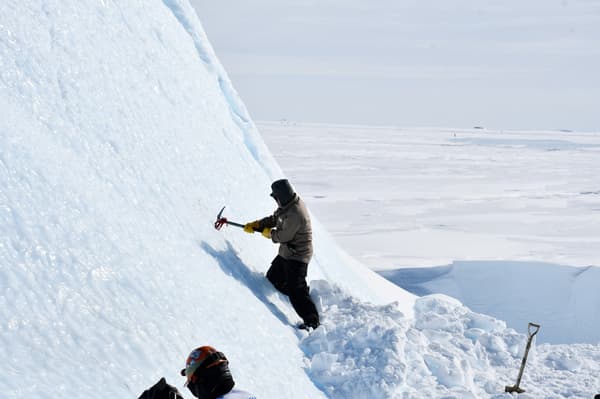
Collecting Antarctic ice ©National Institute of Polar Research
※Exhibition content may change without notice due to circumstances.
※Images are for reference.
Messages
On the 70th Anniversary of Antarctic Observation (National Institute of Polar Research Director Yoshifumi Nogi)
In 2026, Antarctic observation marks its 70th anniversary.
On November 8, 1956, the Antarctic observation ship "Soya" carrying the 1st Japanese Antarctic Research Expedition departed from Tokyo. On January 29, 1957, Showa Station opened, beginning Japan's Antarctic observation challenge.
At the core of Antarctic observation, transcending eras, breathes a spirit of exploration and challenge to venture into unknown worlds and contribute to humanity's future through scientific power.
At Special Exhibition "Antarctica," visitors become members of the Special Antarctic Observation Team, experiencing research team activities and Antarctica's nature. We hope many will visit, connect with the research team's spirit of exploration and challenge, and share the determination to face unknown worlds together.
Message for Special Exhibition "Antarctica" (67th Japanese Antarctic Research Expedition Leader Shigeru Aoki)
I am delighted to hear that Special Exhibition "Antarctica" will be held at the National Museum of Emerging Science and Innovation in summer 2026. The 67th Japanese Antarctic Research Expedition is completing summer activities at Showa Station.
Support from people in Japan empowers us, enabling successful near-complete planned activities despite unusual sea ice conditions.
Through Special Exhibition "Antarctica," I hope many will directly encounter the Antarctic research team's cutting-edge discoveries and team member activities, deepening their interest and understanding.
Exhibition Overview
| Item | Details |
|---|---|
| Exhibition Name | Special Exhibition "Antarctica" |
| Period | July 1 (Wednesday) to September 27 (Sunday), 2026 |
| Venue | National Museum of Emerging Science and Innovation, 1st Floor, Special Exhibition Zone (2-3-6 Aomi, Koto-ku, Tokyo) |
| Admission | TBA ※Details will be announced on the official exhibition website. |
| Organizers | National Museum of Emerging Science and Innovation, National Institute of Polar Research, Dream Studio, TV Asahi, The Asahi Shimbun |
| Planning and Production | Dream Studio |
| Special Sponsor | KDDI |
| Sponsors | Sanki Engineering Co., Ltd., Misawa Homes Co., Ltd., Yanmar Holdings Co., Ltd., Rengo Co., Ltd., Tokyo University of Agriculture |
| Supporters | Ministry of Education, Culture, Sports, Science and Technology, Ministry of Foreign Affairs, Ministry of the Environment, Ministry of Defense, Japan Meteorological Agency, Japan Coast Guard, Geospatial Information Authority of Japan, National Institute of Information and Communications Technology, Tokyo Metropolitan Board of Education (scheduled), Tachikawa City Board of Education, Tokyo Waterfront New Transit, Yurikamome |
| Cooperation | Tokyu Corporation |
| Official Website | https://dainankyokuten.jp/ |
| Official X | https://x.com/dainankyokuten |
National Museum of Emerging Science and Innovation
2-3-6 Aomi, Koto-ku, Tokyo 135-0064
TEL: 03-3570-9151 FAX: 03-3570-9150
URL: https://www.miraikan.jst.go.jp/