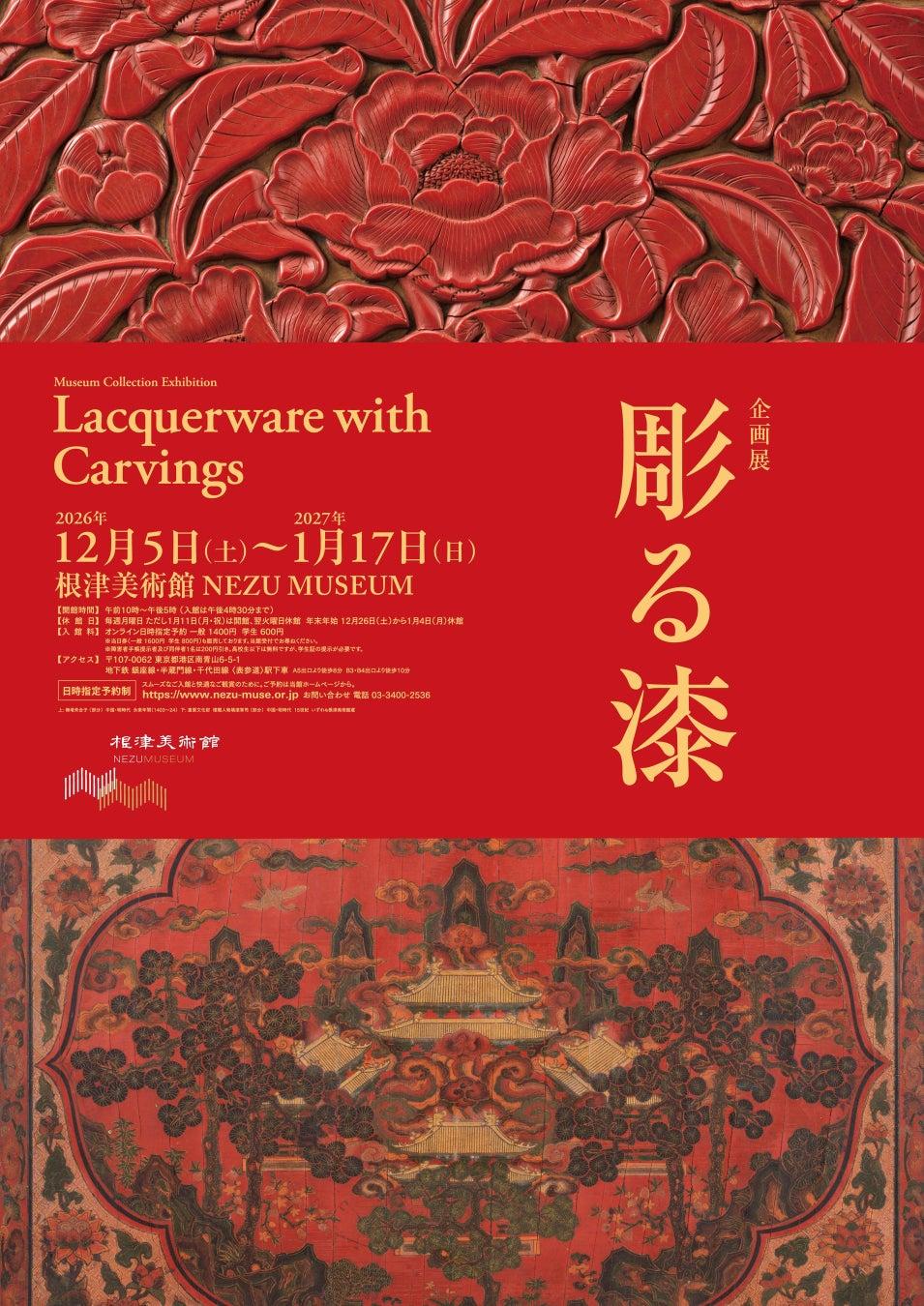
The Nezu Museum in Minami-Aoyama, Tokyo, will hold the exhibition "Lacquerware with Carvings" (彫る漆) from Saturday, December 5, 2026 to Sunday, January 17, 2027. The exhibition focuses on lacquer techniques in which designs are expressed by carving.
Lacquer techniques are remarkably varied. In recent years, the museum has held a series of exhibitions, each taking up one technique and introducing its history and works, mainly from the museum's own collection. The series began in 2018 with "A First Look at Classical Art: Decoration and Techniques of Lacquer" (はじめての古美術鑑賞 -漆の装飾と技法-), which surveyed the whole field. It was followed in 2021 by "Kirakiraden" (きらきらでん) on raden (mother-of-pearl inlay), and in 2022 by "The Power of Form" (かたちのチカラ) on kyushitsu (髹漆) and "Storehouse Maki-e Collection" (蔵出し蒔絵コレクション) on maki-e.
This fifth installment features lacquerware expressed through carving. The techniques covered are choshitsu (彫漆), chomokusaishitsu (彫木彩漆, Kamakura-bori), sokin (鎗金), chinkin (沈金), tenshitsu (填漆) and kinma (蒟醤), all of which were developed across East and Southeast Asia, the region of lacquer culture. Yet they are surprisingly rarely shown together, so there are few chances to see the works or learn the characteristics of each, and some are not even widely understood to be carving techniques. In Japan, however, many of them were prized as karamono (imported) lacquerware, and a collection that is valuable even by world standards has been formed. The museum hopes the exhibition, which displays and explains these works systematically, will spark interest in the richly varied world of lacquerware with carvings.
Choshitsu (彫漆)
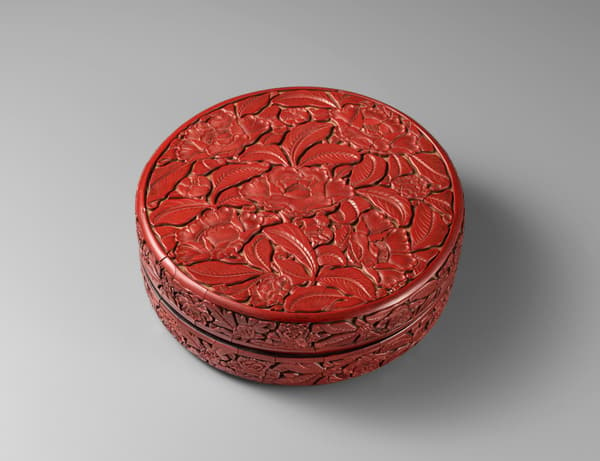
Camellia tsuishu lidded box (椿堆朱合子), 1 box, lacquer on wood core, China, Ming dynasty, Yongle era (1403–24), Nezu Museum
Choshitsu is the general term used in Japan today for a representative Chinese lacquer technique in which a thick, built-up layer of lacquer is carved to form a design. Tsuishu (堆朱) is one type. It is an extremely lavish form of decoration, using plenty of costly lacquer only to carve it away. The refined, three-dimensional expression is striking.
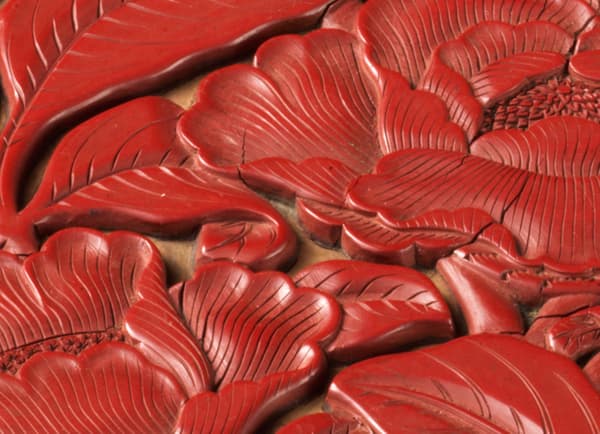
Detail of the camellia tsuishu lidded box. The layers of red lacquer have been carved to reveal a layer of yellow lacquer beneath.
Extravagant Materials
A single application of lacquer is said to be only about 30 to 60 microns thick, so a layer just 1 mm thick represents 20 to 30 coats. The deeply carved layers make it easy to imagine how much labor went into each piece. Please also pay attention to the material that is carved.
Chomokusaishitsu (彫木彩漆), Kamakura-bori
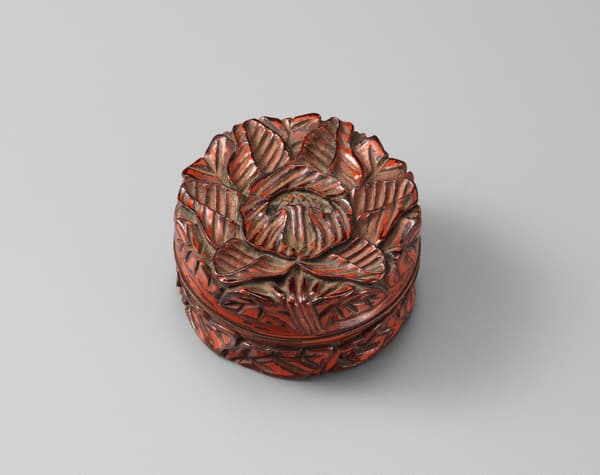
Peony chomokusaishitsu incense container (牡丹彫木彩漆香合), 1 piece, lacquer on wood core, Japan, Muromachi period, 15th–16th century, Nezu Museum
In chomokusaishitsu, the wood base is carved first and lacquer is applied afterward. Compared with the sharpness of choshitsu, it is characterized by bold carving marks, and its rustic charm is also appealing.
Sokin (鎗金)
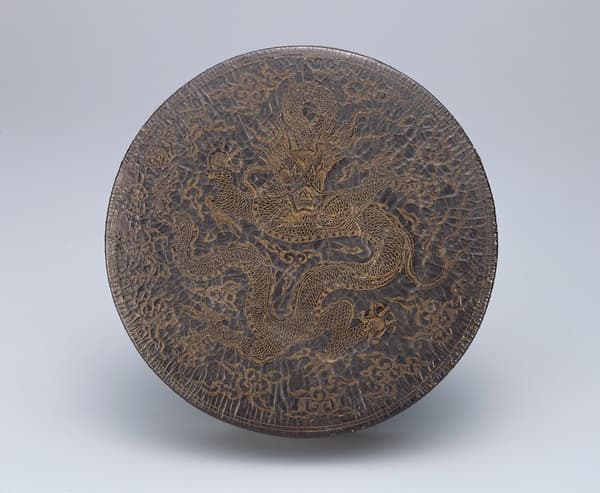
Dragon sokin inkstone box (龍鎗金硯箱), 1 box, lacquer on wood core, China, Ming dynasty, 14th–15th century, Nezu Museum, gift of Makiko Nagata (永田牧子)
Sokin is a technique in which a design is incised with a blade, lacquer or glue is rubbed into the grooves, and gold leaf is pressed in to form golden lines. With its restrained splendor, it flourished from the Song dynasty through the Ming dynasty.
Chinkin (沈金)
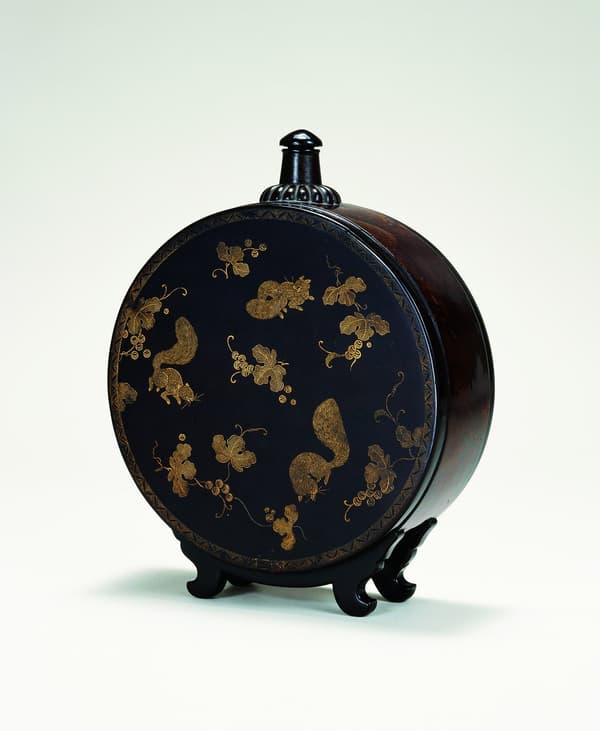
Taiko barrel with grape, squirrel, millet and quail design in chinkin (葡萄栗鼠粟鶉沈金太鼓樽), 1 piece, lacquer on wood core, Japan, Momoyama period, 16th century, Suntory Museum of Art
After sokin was brought to Japan in large numbers from the Kamakura period onward, production began in Japan as well, and the technique came to be called chinkin. It has a pure, elegant character that differs from maki-e.
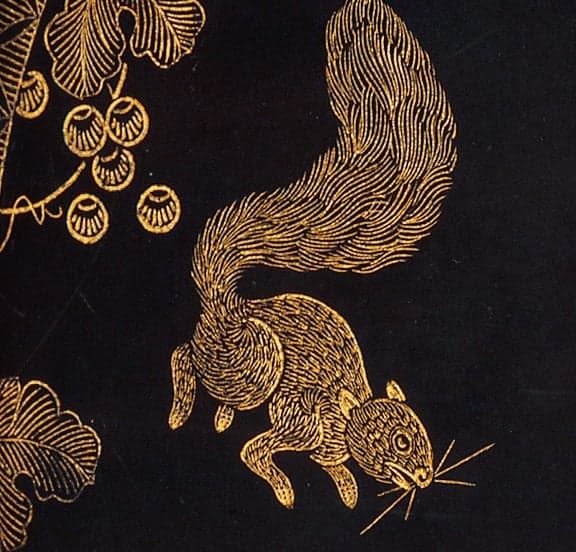
Detail of the taiko barrel with grape, squirrel, millet and quail design in chinkin.
Sokin and Chinkin
In maki-e, in which gold powder is sprinkled on areas drawn in lacquer, the raised lines shine brilliantly. In sokin and chinkin, by contrast, the appeal lies in the modest glow that comes from gold leaf filling the carved recesses. Different ways of carving produce a variety of expressions.
Tenshitsu (填漆)
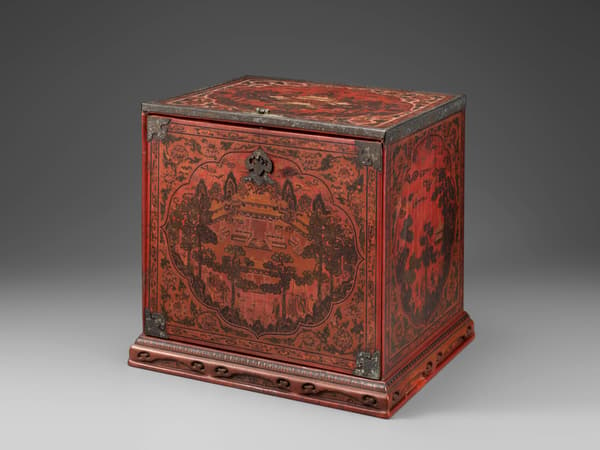
Important Cultural Property: Chest with pavilion and figures in tenshitsu (楼閣人物填漆箪笥), 1 piece, lacquer on wood core, China, Ming dynasty, 15th century, Nezu Museum
First Public Showing Since Acquisition
Tenshitsu is a Chinese technique in which colored lacquer different from the ground color is filled into the carved parts of a design, and the whole surface is then ground flat to finish. At first glance it looks as if it were painted, but this too is an expression created by carving. This piece is a rare example from the early Ming dynasty.
Kinma (蒟醤)
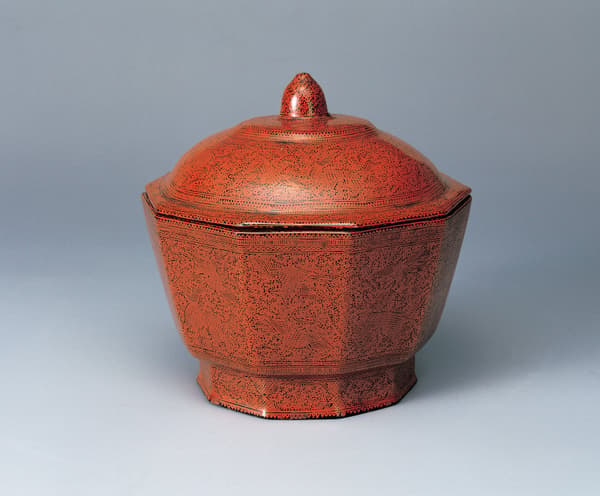
Decagonal lidded container with birds, beasts and arabesque design in kinma (鳥獣唐草蒟醤十角蓋物), 1 piece, lacquer on basketry core, Southeast Asia, 16th–17th century, Nezu Museum
Kinma, a representative decorative technique of Thailand and Myanmar, is a type of tenshitsu. In Japan, its exotic shapes and patterns were favored, and pieces were treasured and used as tea utensils.
Related Events
For the related events, applications are accepted from 1:00 PM on Tuesday, November 24 through the application form under "Event Information" on the Nezu Museum website. Applications close once capacity is reached.
Lecture: "The Makers Speak: Techniques and Highlights of Lacquerware with Carvings"
- Date and time: Saturday, December 19, 2026, 2:00 PM to 3:30 PM
- Speaker: Tatsuya Matsumoto (松本達弥), Part-Time Lecturer, Tokyo University of the Arts
- Venue: Nezu Museum, Auditorium
Slide Lecture: "Lacquerware with Carvings"
- Date and time: Friday, December 18, 2026 and Friday, January 8, 2027, both from 11:30 AM to 12:15 PM (the two sessions have the same content)
- Venue: Nezu Museum, Auditorium
The curator in charge gives an explanation of the exhibition using slides. Each lecture has the same content. Participation is free, but museum admission is required.
Concurrent Exhibitions
Gallery 5: "Classical Books of the Nezu Museum: From the Hyakumanto Darani to Nanso Satomi Hakkenden" (根津美術館の古典籍 -百万塔陀羅尼から南総里見八犬伝まで-)
This exhibition introduces the museum's collection of classical books, focusing on printed works. Visitors can see a wide range of printed editions, from sutras of the Nara period to novels of the early modern period.
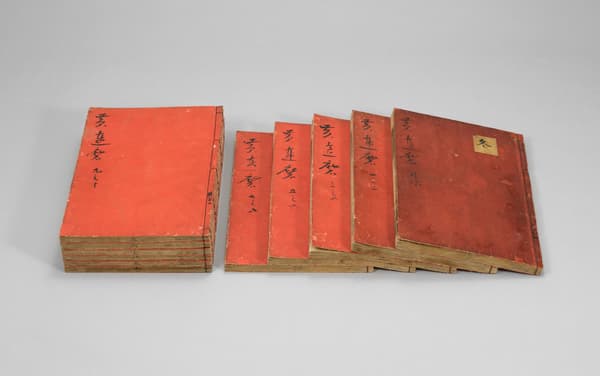
Annotated Poetry Collection of Shangu (山谷詩集注), 11 volumes, ink printing on paper, Japan, Nanbokucho period, 14th century, Nezu Museum
This is a "Gozan-ban" edition, published mainly at Zen temples, with annotations on the collected poems of the Song dynasty Chinese literatus Huang Tingjian (Shangu). It is said to be one of the first-printing copies with the best impression among the surviving copies.
Gallery 6: "Winter Tea Gathering: The Old Year Out, the New Year In" (冬の茶会 -ゆく年くる年-)
From the end of the year to the New Year, this exhibition brings together about 25 seasonal tea utensils that reflect the atmosphere of winter and the turning of the year.
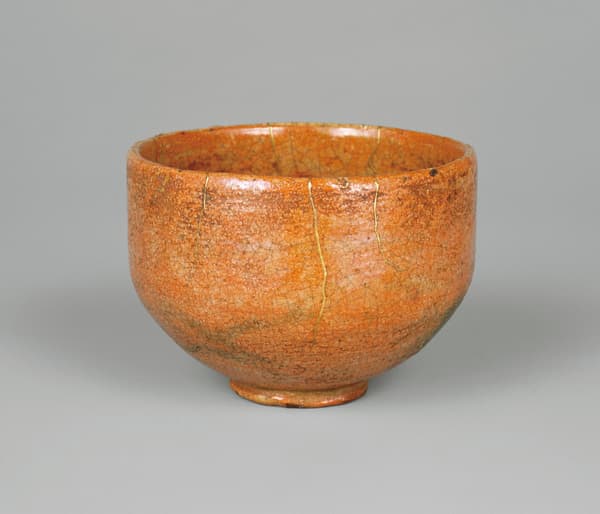
Red Raku tea bowl (赤樂茶碗), named "Fuyuno" (冬野), Kyoto, attributed to Raku Donyu, 1 piece, Japan, Edo period, 17th century, Nezu Museum
This red Raku tea bowl is by Donyu, the third generation of the Raku family. Its high-waisted cylindrical shape follows the form of the first generation, Chojiro. Red Raku, which gets its red color from a coat of yellow ochre, was Donyu's own invention.
Exhibition Information
- Exhibition name: "Lacquerware with Carvings"
- Organizer: Nezu Museum
- Dates: Saturday, December 5, 2026 to Sunday, January 17, 2027
- Hours: 10:00 AM to 5:00 PM (last admission 4:30 PM)
- Closed: Every Monday, except Monday, January 11 (national holiday), when the museum is open and closed the following Tuesday instead. The museum is also closed for the year-end and New Year holidays from Saturday, December 26 to Monday, January 4. On closed days, the entire museum is closed, including the garden and NEZUCAFE.
- Admission:
- Online date-and-time reserved tickets: General ¥1,400, Students ¥600
- Same-day tickets: General ¥1,600, Students ¥800
- Holders of a disability certificate and one accompanying person: ¥200 off
- High school students and younger: Free
- Admission notes:
- A student ID must be shown at entry to receive the student rate or free admission for high school students and younger.
- Guests with reservations are guided first, and holders of same-day tickets may have to wait. Depending on how crowded the museum is, same-day tickets may not be sold.
- Reservations are accepted on the museum website from 1:00 PM on Tuesday, November 24, 2026.
- Reservations are limited to 10 people per group.
- The admission fee covers all exhibitions in the museum and the garden.
- Address: 6-5-1 Minami-Aoyama, Minato-ku, Tokyo 107-0062
- Access: From Omotesando Station on the subway Ginza, Hanzomon and Chiyoda lines, an 8-minute walk from Exit A5 (stairs), a 10-minute walk from Exit B4 (stairs and escalator), or a 10-minute walk from Exit B3 (elevator or escalator)
- Phone: 03-3400-2536 (main line)
- Website: https://www.nezu-muse.or.jp