Shangri-La Tokyo, in Marunouchi, Chiyoda-ku, Tokyo, will display a Christmas nebuta made with nebuta techniques from Friday, November 6. The work is a collaboration with Aomori nebuta artist Asako Kitamura (北村麻子), and this is the third consecutive year of the display since 2024.
The project began several years ago, when hotel staff were captivated by a sculptural work by Kitamura that used nebuta techniques and wanted many guests to see her Christmas work at Shangri-La Tokyo. Every year since then, the theme and design have been developed from scratch, and the Christmas nebuta is created exclusively for the hotel. It has become a familiar symbol of the holiday season for many guests. Kitamura handles everything from design to production herself, combining traditional Aomori craftsmanship with the world of Shangri-La Tokyo in a work that can be seen only here.
How the Christmas Nebuta Is Made
Making a nebuta involves many steps, each built up carefully by hand through detailed work. This year's Christmas nebuta was made through the following steps over about two months.
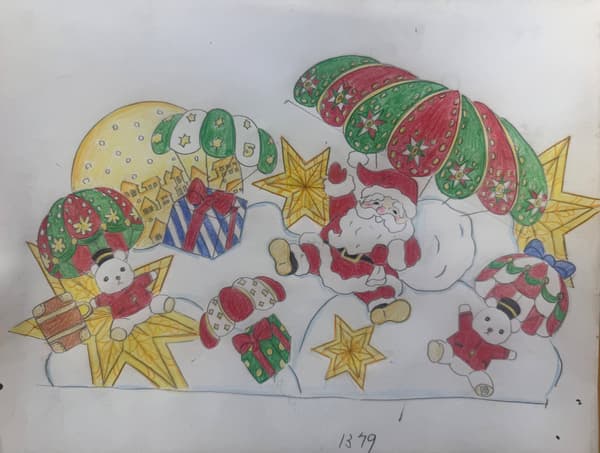
1. Theme and Rough Sketch
The sketch serves as the blueprint for the nebuta, so the nebuta artist spends time preparing it as the first step of production. Ideas are developed from concepts such as the character of Shangri-La Tokyo and the joy and fun of Christmas, drawn in pencil, and then colored.
2. Preparing the Details
Dimensions are calculated using proportional formulas, and small parts such as hands, feet, and props are made in advance so that work on the main body can proceed efficiently.
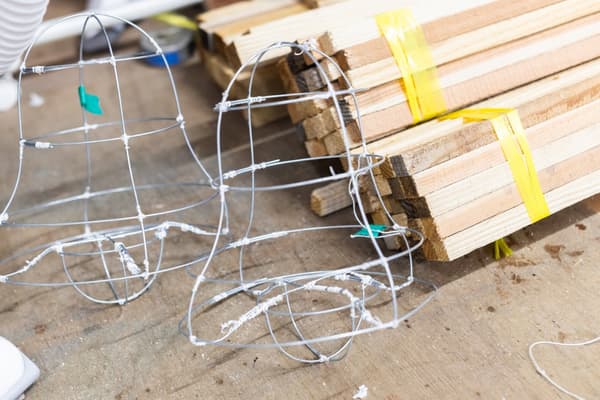
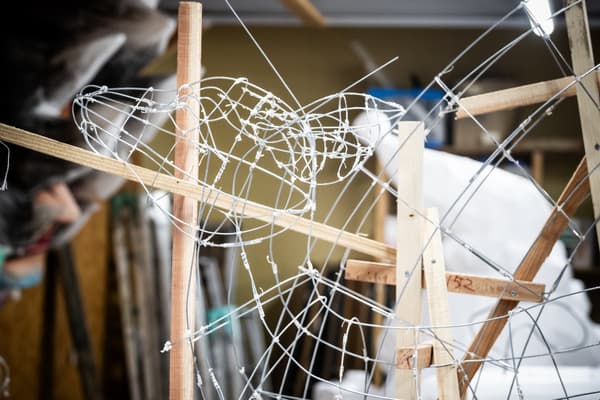
3. Framework
Square timber is used to make supports, which are combined with wire and thread to shape a framework that paper can be pasted onto. In the past, the framework was reportedly made of bamboo rather than wire.
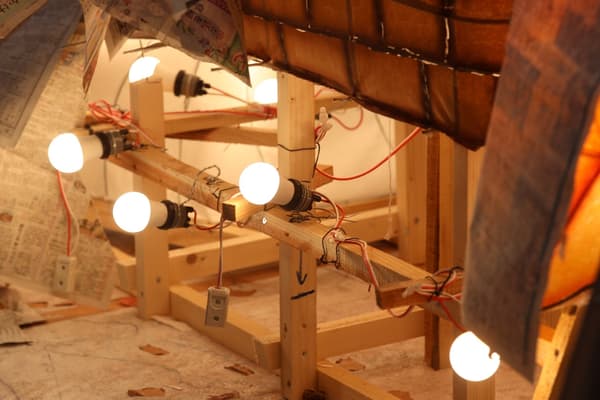
4. Electrical Wiring (Lighting)
Specialist electricians install lighting inside the nebuta, usually close to 1,000 fixtures. The nebuta for Shangri-La Tokyo this time has about 200 light bulbs.
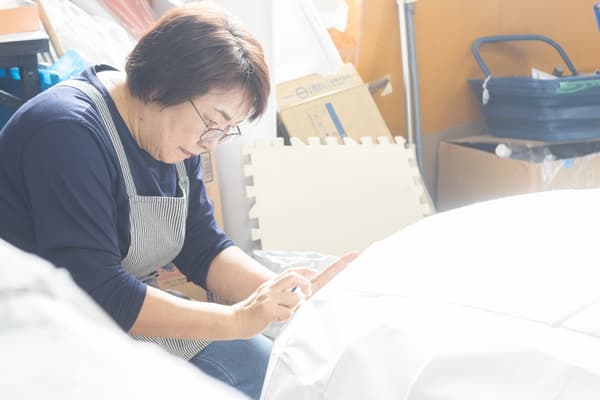
5. Pasting the Paper
Hosho paper (奉書紙), a type of washi (Japanese paper), is carefully pasted with glue along the wire frame. The paper must follow the framework as closely as possible and is given texture in some places, so this step requires precise skill and patience.
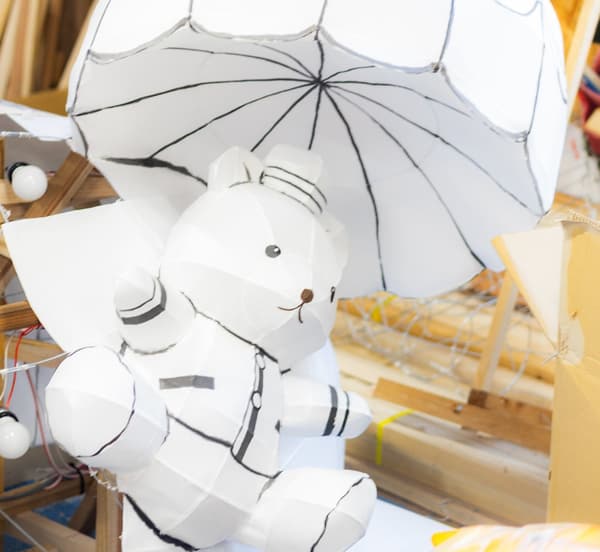
6. Ink Drawing
On the pure white nebuta, the face, hands, feet, and outlines are drawn in sumi ink. By adjusting how the brush is applied, the artist varies the expressions, from cute and gentle to powerful, and brings a sense of movement to the figure.
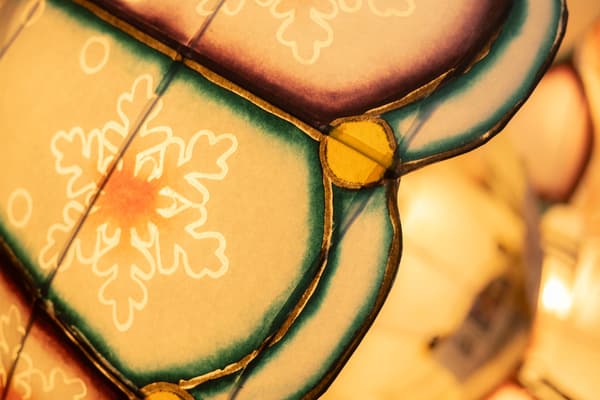
7. Wax Drawing
Melted paraffin is used to add patterns. It adds brightness and also prevents the colors from bleeding.
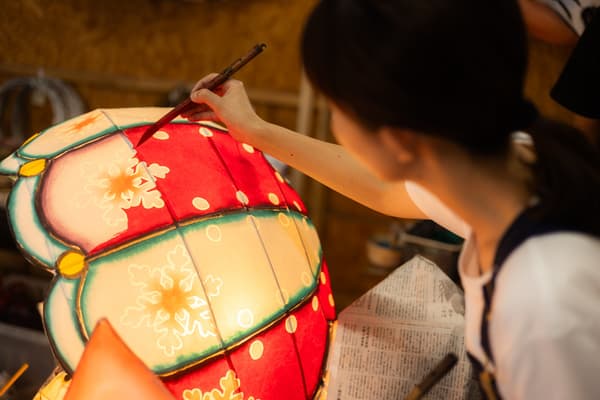
8. Coloring
In the final step, the remaining white areas are colored with dyes and water-based pigments. Various brushes and sprays are used to finish the work in vivid colors, and the main body is finally complete.
This Year's Christmas Nebuta
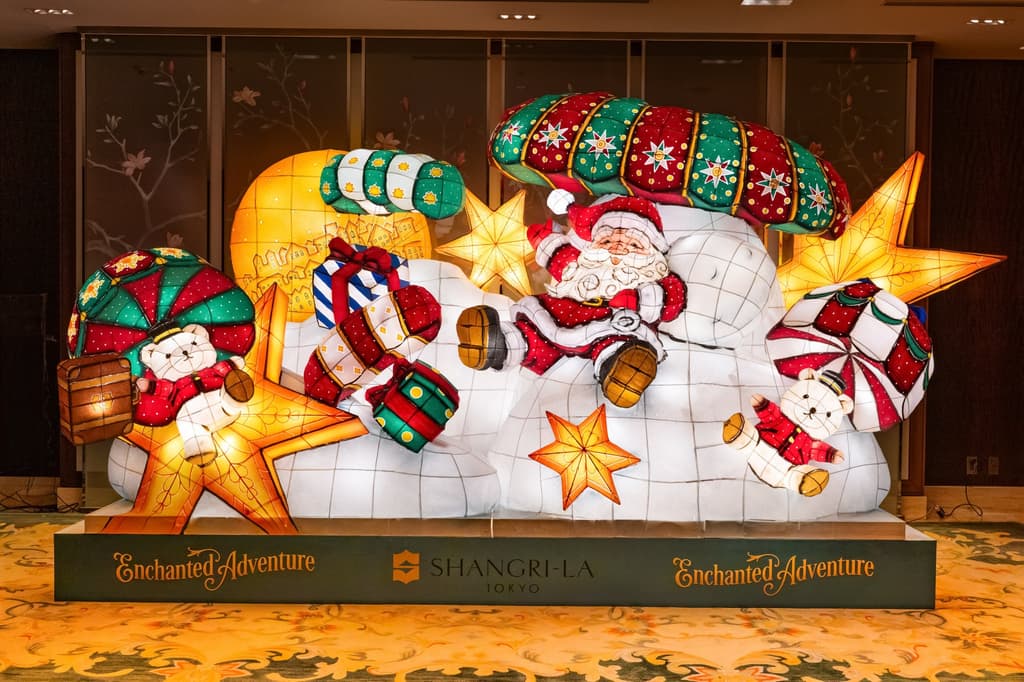
The Christmas nebuta is the centerpiece of Shangri-La Tokyo's 2026 Christmas decorations. Along with the excitement unique to the holiday season, it features Bell Bear (ベルベア), the hotel's mascot Shangri-La Bear dressed as bell staff, and expresses the warm, playful feeling of time shared with family and loved ones, full of love and happiness. Every step was done by hand by the nebuta artist.
This year's work is set in a snowy town. A gently smiling Santa Claus descends by parachute from among the clouds, together with Bell Bear and Christmas gifts for the children. Gift boxes drifting down from the sky and the lovable Bell Bear tell a story that draws viewers into a Christmas world filled with dreams and joy.
To mark the third year of the Christmas decorations, the Shangri-La "S" logo is drawn in three places on the nebuta. One is hidden on Bell Bear's bag, one on Santa Claus's parachute, and one on the sole of Bell Bear's foot. Looking for the logos and the various other hidden motifs while viewing the nebuta is part of the fun.
Comment From Nebuta Artist Asako Kitamura
Kitamura, who has now made the Christmas nebuta for three years in a row, commented as follows.
"I expressed the fun and sense of movement of Santa Claus and Bell Bear descending by parachute against the backdrop of a snow-covered cityscape. In the first year, Santa Claus's backside was seen entering a chimney. In the second year, animals decorated a Christmas tree. In this third year, Santa Claus's smiling face finally appears. I hope that the hearts of everyone who sees the Christmas nebuta are warmed, even a little, and that they spend the holiday season happily while enjoying the story and playfulness in the work."
Comment From General Manager Matthias Sutter
Shangri-La Tokyo General Manager Matthias Sutter commented on the Christmas nebuta as follows.
"Again this year, through the Christmas nebuta, Shangri-La Tokyo will present both the glamour of Western Christmas culture and the beauty created by traditional Japanese craftsmanship. This work combines the excitement unique to Christmas with the outstanding skill of nebuta, a Japanese tradition, and it reflects the harmony and creativity of different cultures resonating beautifully with each other, as well as the spirit of hospitality handed down across the ages. We hope the warm, fantastical world lit by the Christmas nebuta will offer a moment of comfort unique to the festive season."
The display is set in a calm space away from the hustle and bustle of the city, in the season when clear winter air fills the streets. It can be enjoyed with family or loved ones.
About Nebuta Artist Asako Kitamura
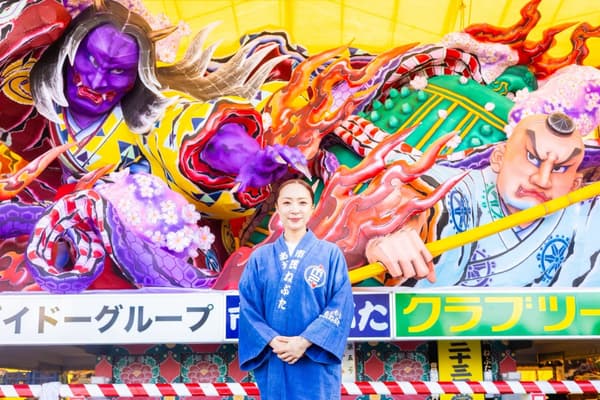
Asako Kitamura (きたむら あさこ) is the first female nebuta artist in the history of nebuta artists. She trained under her father, Takashi Kitamura (北村隆), the sixth-generation Nebuta Meijin (六代目ねぶた名人) and a leading figure among nebuta artists with numerous accomplishments. In 2007, she was moved by her father's large-scale nebuta "聖人聖徳太子" (winner of the Nebuta Grand Prize, ねぶた大賞) and decided to become a nebuta artist. She made her debut in 2012 at the request of the Aomori Citizens' Nebuta Executive Committee (あおもり市民ねぶた実行委員会), and her debut work, "琢鹿(たくろく)の戦い", drew attention after winning the Excellent Producer Award (優秀制作者賞).
Awards:
- Best Producer Award (最優秀制作者賞): three times
- Excellent Producer Award (優秀制作者賞): seven times
- 陸奥文化選奨
In recent years, she has also been working energetically on sculptural pieces that use nebuta techniques, sharing the appeal of nebuta in Japan and abroad. At last year's Osaka Expo, she presented large nebuta as well as medium-sized nebuta made with upcycled washi paper.
Christmas Nebuta Details
- Dates: Friday, November 6 to Sunday, December 27, 2026
- Venue: 28th-floor lobby, Shangri-La Tokyo
- Creator: Nebuta artist Asako Kitamura (北村麻子)
The display can be viewed by anyone, not only hotel guests.