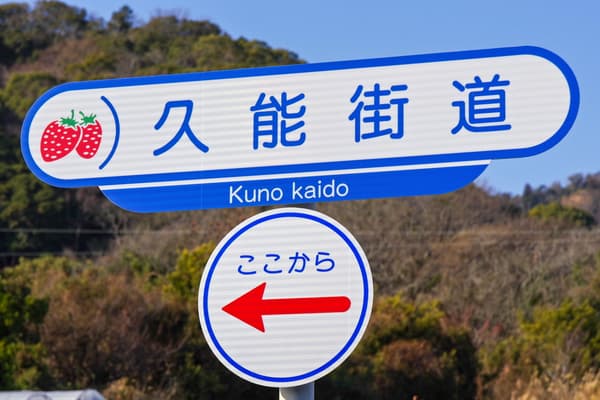
Stone wall strawberry picking begins in full swing from mid-January on Kuno Street and Strawberry Coast Street in the Kuno area of Suruga Ward and Shimizu Ward, Shizuoka City.
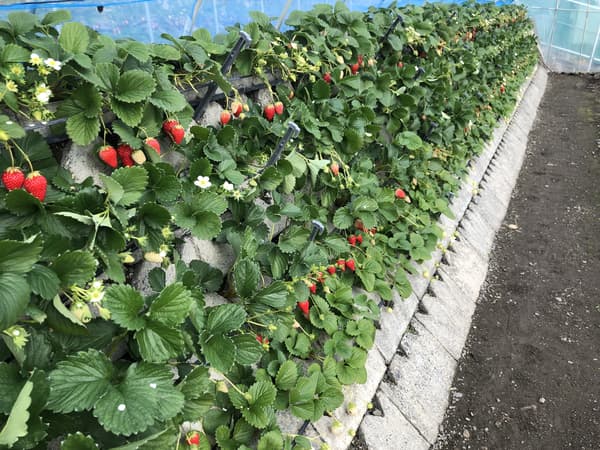
Stone wall strawberries are grown by planting strawberry seedlings in the gaps between stone walls. This environmentally friendly cultivation method uses radiant heat from stone walls stacked on sunny slopes, eliminating the need to heat greenhouses with oil. Along Kuno Street and Strawberry Coast Street facing Suruga Bay, more than 20 strawberry farms offer strawberry picking until early May. Many farms have cafes attached, where visitors can enjoy freshly picked strawberries in parfaits, gelato, and other sweets.
This article also introduces strawberry-related events in Shizuoka City, strawberry sweets like parfaits and gelato, and Shizuoka City's specialty fruits.
Stone Wall Strawberry Picking on Kuno Street and Strawberry Coast Street
Period: Until early May 2026 (subject to change depending on store and growing conditions)
Location: Along National Route 150 (Strawberry Coast Street) and Kuno Street in Suruga Ward and Shimizu Ward, Shizuoka City
Access:
- By car:
- Approximately 6 km (10 minutes) from Nihondaira Kunōzan Smart IC on the Tomei Expressway
- Approximately 9 km (15 minutes) from Shizuoka IC, approximately 13 km (22 minutes) from Shimizu IC
- By bus:
- From Shizuoka Station North Bus Terminal Platform 4 or 8, Shizutetsu Justline (approximately 45 minutes)
- To Higashi-Ōtani, transfer to Kunōzan-shita, final stop Kunōzan-shita
Fees: Adults (elementary school and above) from ¥2,000
(Prices vary by season. Pricing, hours, varieties, and services vary by farm.)
Inquiries: Contact farms directly for farm information.
List of farms identified by the city (ZRATTO! Shizuoka): https://zratto.com/information/11252/
About Stone Wall Strawberries
What Are Stone Wall Strawberries?
Stone wall strawberries refer to a cultivation method where strawberries are grown in soil within stacked stone walls. Typical strawberry cultivation methods include planting directly in the ground (soil cultivation) or planting in planter-like containers at elevated positions (raised-bed cultivation).
The Kuno area facing Suruga Bay is open along the coast, allowing strawberries planted along the slopes to receive abundant sunlight. Additionally, light reflected from the sea adds warmth, and the heat stored in the stone walls provides warmth at night, creating an environmentally friendly and sustainable cultivation method that harnesses natural forces without heating. Furthermore, the excellent drainage of stone wall cultivation produces strawberries with concentrated umami.
The 130-Year History of Stone Wall Strawberries
There are various theories about the origin of stone wall strawberry cultivation, but it is said to have begun about 130 years ago in 1896 (Meiji 29) when the chief priest of Kunōzan Tōshō-gū Shrine received strawberry seedlings from someone at the American Consulate and entrusted them to Tsunekichi Kawashima, who served at Tōshō-gū.
Although vinyl greenhouses did not exist at that time, when Kawashima planted the seedlings in the stone walls of his garden, the warm coastal climate and the heat retention effect of the stones allowed the strawberries to bear fruit even during winter. This effect continues to be applied today, with stone wall strawberries still produced along Kuno Street and Strawberry Coast Street.
Sustainable Cultivation Method Passed Down from the Meiji Era
The optimal temperature inside a strawberry greenhouse is said to be around 10°C at night and around 23°C during the day for photosynthesis in sunlight. The glucose produced during daytime photosynthesis travels through the leaves and becomes starch, which converts to sucrose and other sugars that give strawberries their sweetness.
Typically, strawberries are grown by using heating to prevent excessive cold and artificially generating carbon dioxide (carbonic acid gas) in greenhouses for efficient photosynthesis. In contrast, stone wall strawberries utilize the warm climate of the Kuno area and abundant sunlight facing Suruga Bay, with the concrete used in the stone walls accumulating solar heat to allow sweet strawberries to grow using only the stone wall heat at night without heating. This environmentally friendly and sustainable cultivation method has been passed down since the Meiji era.
How to Identify Delicious Strawberries and How to Pick and Eat Them
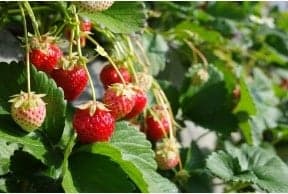
Strawberry picking is recommended in the morning during January to February when strawberries are most delicious. Since the greenhouse temperature rises in the afternoon, the strawberries become slightly warm.
How to Identify Delicious Strawberries:
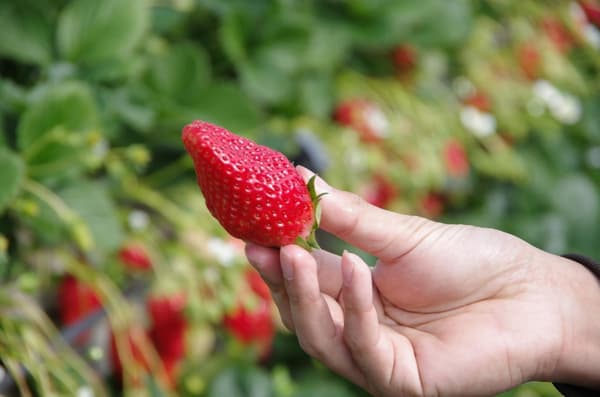
Look for strawberries colored up to near the stem. Also, if the stem is curled back, it's proof of full ripeness.
How to Pick and Eat Strawberries:
Bend 90 degrees and twist slightly to pick easily. If difficult to pick, hold the branch (stem) and pull slightly while bending 90 degrees. Since the tip is sweeter, it's recommended to eat from the stem side.
Strawberry-Related Events in Shizuoka City
Enjoy Strawberries at Dream Plaza: Shizuoka Strawberry Fair 2026
The strawberry-filled Shizuoka Strawberry Fair 2026 will be held again this year at S-Pulse Dream Plaza. During the event, the facility will feature limited-edition sweets and drinks using strawberries, as well as sushi and other gourmet items, plus strawberry-related products. Visitors can fully enjoy the special charm of strawberries unique to this season at S-Pulse Dream Plaza.
Period: January 31, 2026 (Saturday) to March 31, 2026 (Tuesday), 10:00 AM to 8:00 PM (varies by store)
Location: 13-15 Irifune-cho, Shimizu-ku, Shizuoka City, Shizuoka Prefecture
Access: 10 minutes by free shuttle bus to S-Pulse Dream Plaza from JR Tokaido Main Line Shimizu Station, get off at final stop
Closed: Open daily
Operating/usage hours: Varies by store
Official website: http://www.dream-plaza.co.jp
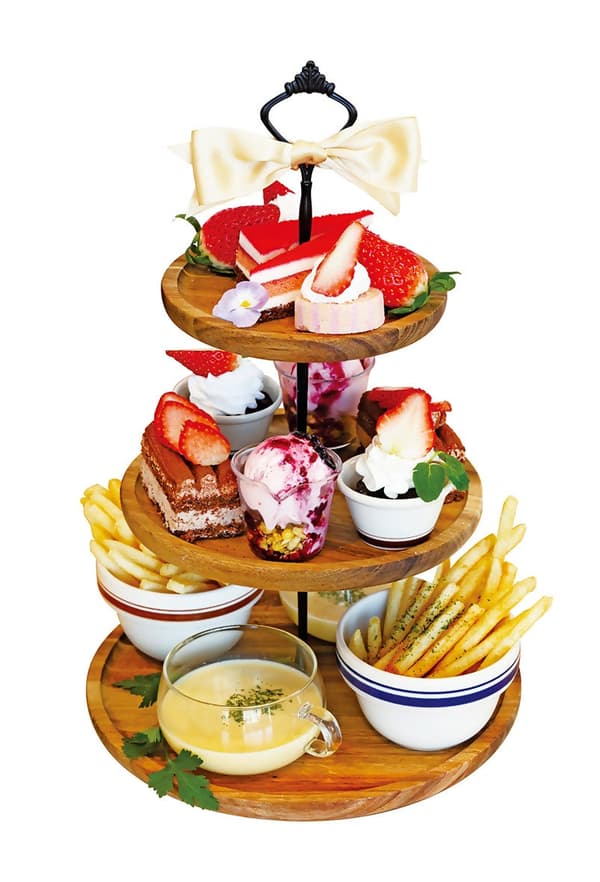
① Available Only Here! Luxurious Strawberry × Chocolate Afternoon Tea
A limited afternoon tea featuring the sweet and sour taste of strawberries and rich chocolate. The substantial menu includes not only sweets but also potatoes and soup, with unlimited coffee and tea refills. Enjoy a relaxing adult afternoon.
Product information: "strawberry & chocolat Afternoon Tea"
Strawberry × Chocolate Afternoon Tea ¥6,000
(For 2 or more people / ¥3,000 per person)
Service time: 2:00 PM to 5:00 PM
Location: New building "PARK-side" 3F "Freely"
② Breaking the Strawberry = Sweets Stereotype! Unusual Gourmet
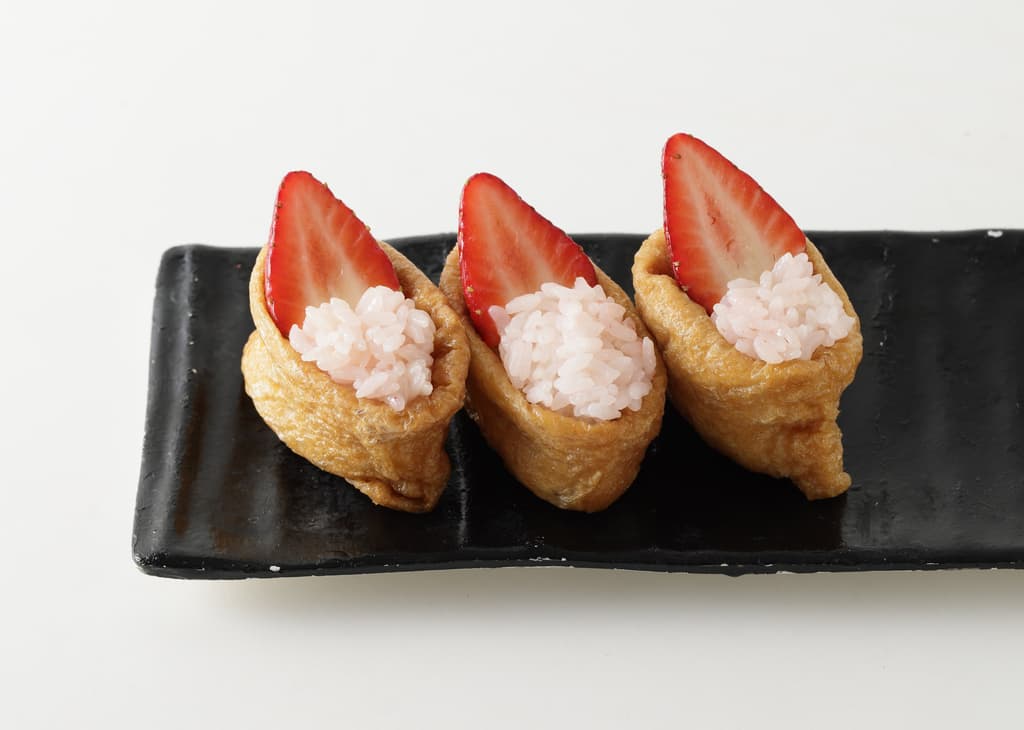
At "Umi to Taiyō" inside Shimizu Sushi Yokocho, enjoy "strawberry inari" - a novel dish using vinegared rice with strawberry juice, topped with strawberries for a dessert-like experience, born from a sushi restaurant's unique perspective.
Product information: Shimizu Strawberry Inari ¥500
Location: Main building "SEA-side" 1F, inside Shimizu Sushi Yokocho at "Umi to Taiyō"
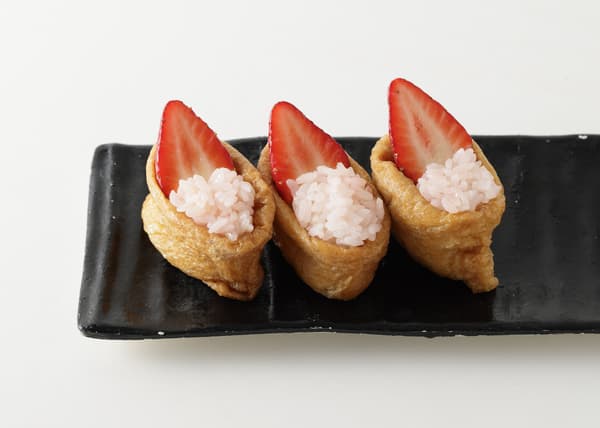
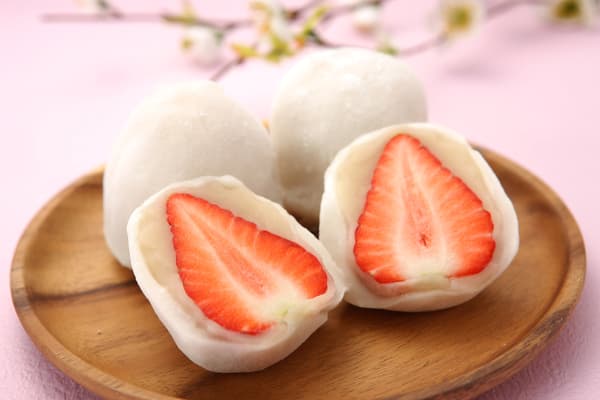
③ Strawberry Daifuku from 7 Long-Established Wagashi Shops
Suruga Miyage Yokocho sells strawberry daifuku from 7 long-established wagashi shops in the prefecture (Anbara-ya, Fūgetsu-dō, Shūgetsu-dō, Ushioya, Takoman, Gyokka-dō, Tago no Tsuki). Compare the pride and taste of each shop's specialty in this limited-time project. *Limited to weekends, approximately 30 pieces per shop scheduled for sale
Location: Main building "SEA-side" 1F, Suruga Miyage Yokocho
④ Kuno-Produced Strawberry Parfait Making Experience
At "Hatoba Kitchen," participate in a "strawberry parfait making experience" using half a pack of Kuno-produced strawberries to create your own original parfait. Includes drink bar and all-you-can-eat sweets, suitable for everyone from children to adults.
Price: ¥2,000 (includes drink bar/all-you-can-eat sweets)
Hours: 2:00 PM to 5:00 PM
Location: Main building "SEA-side" 1F "Hatoba Kitchen"
*Limited to 20 people per day
*Reservations available (TEL: 054-354-3370)
*This experience requires one order per person
*Children cannot participate or order alone
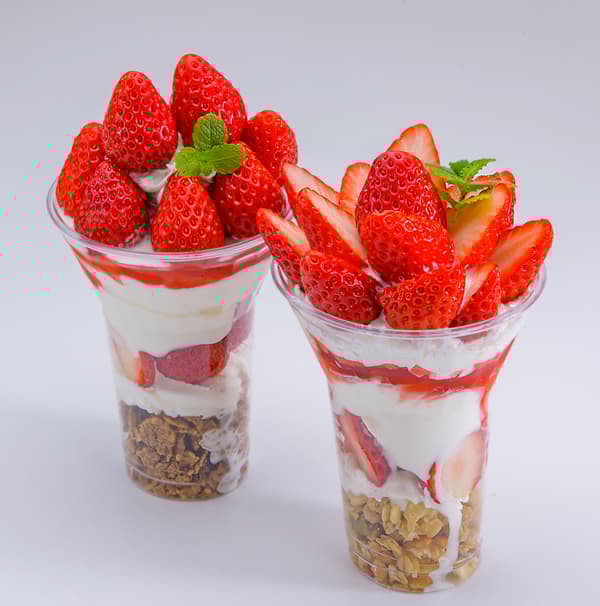
Shimizu Ward Strawberry Fair
The Strawberry Fair featuring fresh Shimizu Ward-produced strawberries will be held. Purchase three varieties of Shimizu Ward-produced strawberries at special prices in limited quantities. Enjoy products like "Strawberry Kagayaki Parfait" and "Strawberry Cheesecake," plus cafe menu items are 100 yen off on the day (some products excluded). Also enjoy comparing strawberry gelato flavors using Shizuoka's representative strawberry varieties "Benihoppe," "Kirapika," and "Kaorino."
Date and time: January 24, 2026 (Saturday), 10:00 AM to 3:00 PM
Location: Shikisai Gelato & Cafe Kirari
(250-1 Kitawaki, Shimizu-ku, Shizuoka City)
Website: https://www.instagram.com/kirari.ja_shimizu/
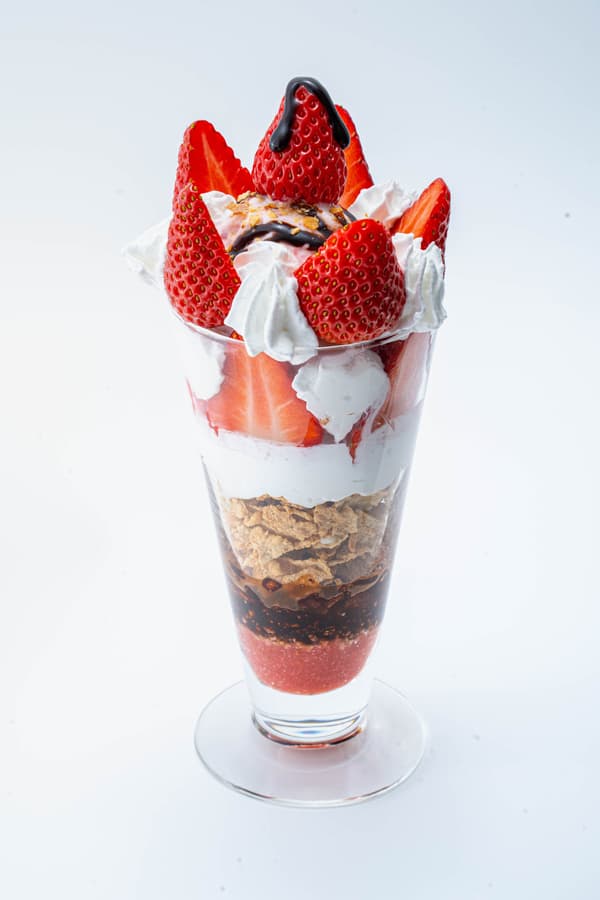
Strawberry Sweets: Parfaits and Gelato
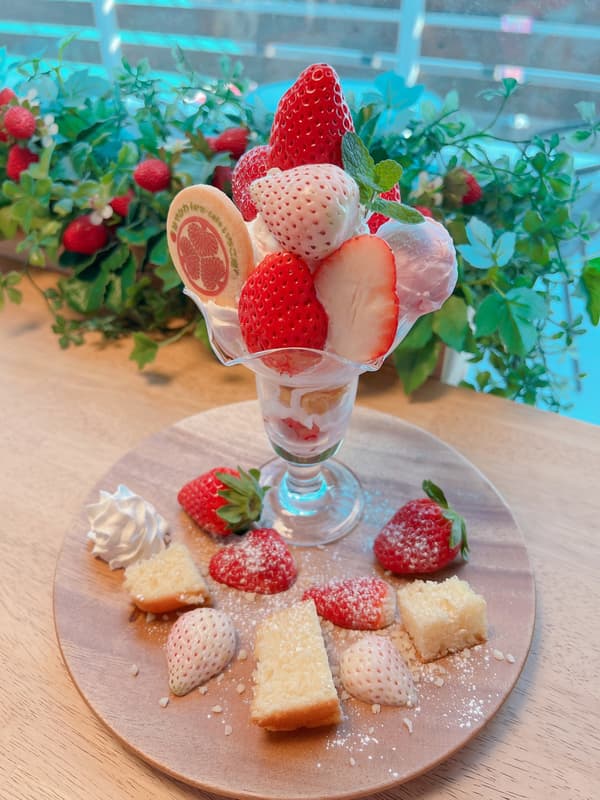
Kunozan White Strawberry Parfait Plate (¥2,300)
A luxurious parfait plate featuring three varieties of stone wall-cultivated strawberries: white strawberries, Akihime, and Benihoppe.
*Limited quantity, while supplies last
Store address: Hayakawa Farm & cafe Ichigo Batake (39 Negoya, Suruga-ku, Shizuoka City)
Hours: 9:00 AM to 4:00 PM
Website: https://www.instagram.com/ichigo.hayakawa_nouen/
Stone Wall Strawberry Gelato (price varies by size)
Premium gelato made from home-grown stone wall strawberries and carefully selected milk, crafted from raw materials.
Store address: Sweet Message Yamaroku
(140-2 Masu, Shimizu-ku, Shizuoka City)
Hours: 10:00 AM to 6:00 PM, Closed Tuesdays (except holidays and festivals)
Website: https://www.s-yamaroku.com/

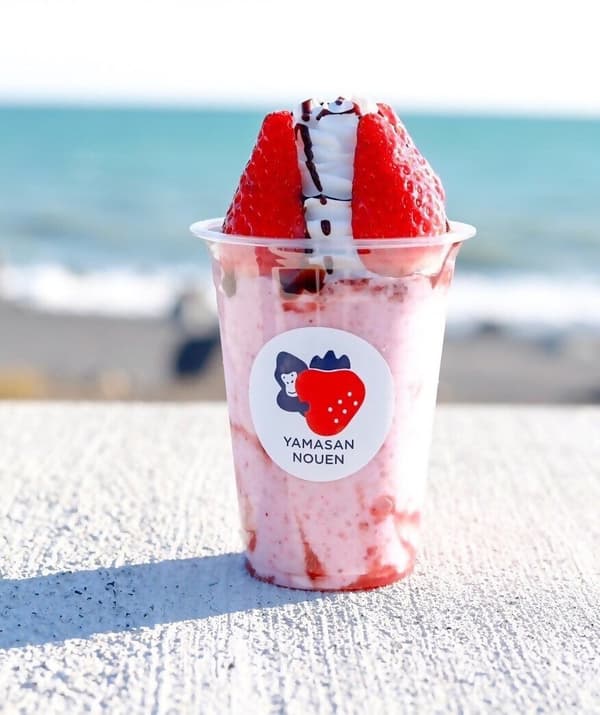
Berry Good Smoothie (¥800)
A berry good product with chocolate-sauced whipped cream and large strawberries on top of a smoothie.
Store address: Yamasan Farm (462-1 Nishihiramatsu, Suruga-ku, Shizuoka City)
Hours: 11:30 AM to 5:00 PM
Closed Mondays (open on holidays, closed Tuesday instead)
Website: https://www.instagram.com/suruga.yumeichigo/
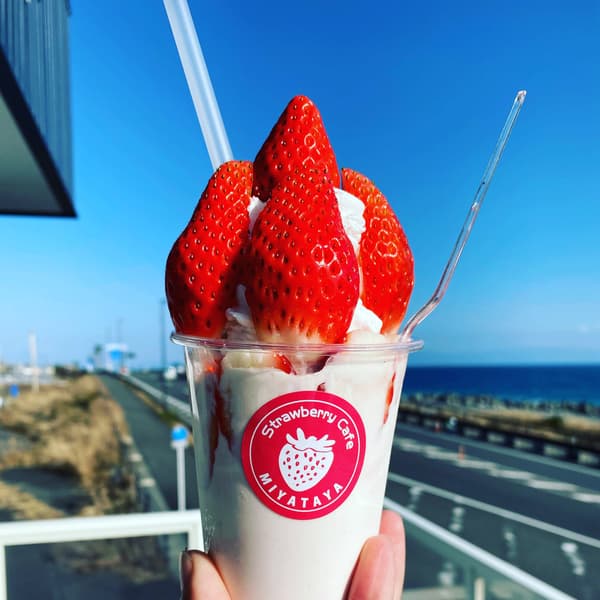
Strawberry Shake (¥1,200)
A strawberry shake generously topped with fully ripened strawberries. A delightful item for strawberry lovers that delivers strawberry flavor in every bite.
Store address: Strawberry Cafe Miyataya
(147-1 Negoya, Suruga-ku, Shizuoka City)
Hours: Weekdays 12:00 PM to 5:30 PM, Weekends 11:00 AM to 5:30 PM
Closed Mondays
Website: https://www.instagram.com/strawberry_cafe_miyataya/
*Prices and hours subject to change; please confirm with stores.
Stone Wall Strawberry Varieties
Benihoppe
The current main variety in Shizuoka Prefecture, introduced in 2002.
A crossbreed of "Akihime" and "Sachinoka," it has a good balance of sweetness and acidity, is juicy and rich, and has a very rich aroma. The fruit is red inside, and it's named "Benihoppe" because it's delicious enough to make your cheeks fall off. Its vibrant color makes it popular for commercial use in cakes and tarts, which has helped increase brand recognition. It now accounts for nearly 80% of the prefecture's production.
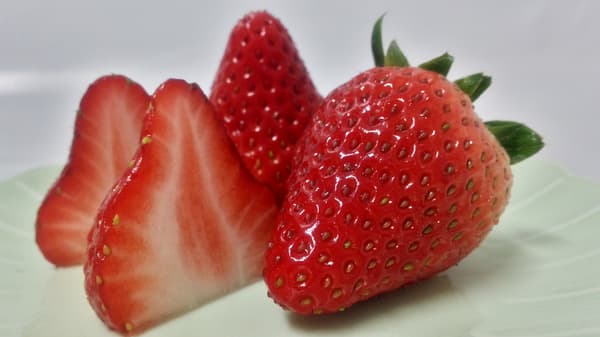
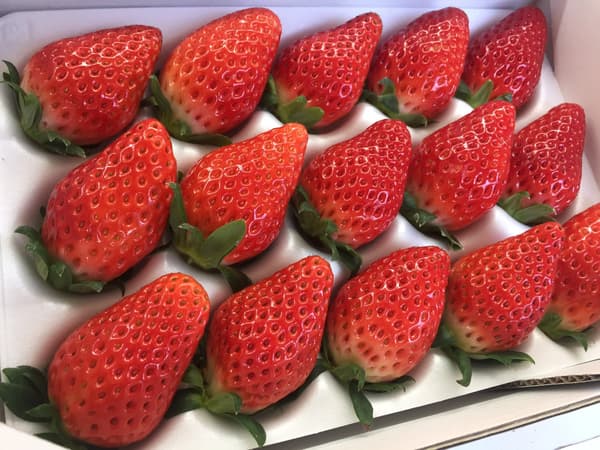
Akihime
A brand long loved as the synonym for Shizuoka strawberries.
A crossbreed of "Nyoho" and "Kuno Wase" developed by Akihiro Hagiwara of Shizuoka City. With low acidity and elegant sweetness loved by everyone, its juicy deliciousness is known nationwide. It remains strongly popular at tourist strawberry picking farms, where many people continue to enjoy it.
Kirapika
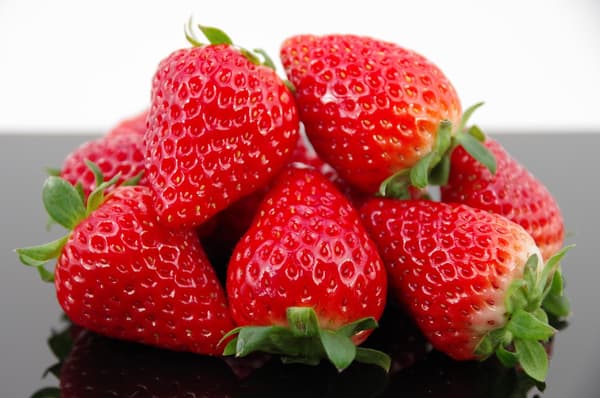
A new brand that debuted in 2014 after 17 years of development.
True to its "Premium Strawberry" name, it features jewel-like brilliance, elegant sweetness and fruity aroma, and juicy smooth texture. This rare variety is produced only in Shizuoka.
Shizuoka City's Specialty Fruits
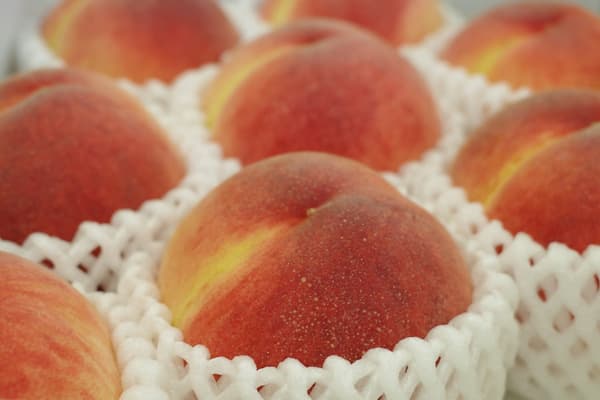
Osada Peaches Grown by the Sea Under the Sun
The Osada area in Suruga Ward, Shizuoka City, is among Japan's top early-season peach production areas. Records show peach cultivation began around 1897 (Meiji 30).
Grown under abundant sunlight near Suruga Bay, the peaches have excellent aroma and melt-in-your-mouth flesh bursting with sweetness.
Main cultivation area: Osada area, Suruga Ward, Shizuoka City
Shipping season: Late May to early July
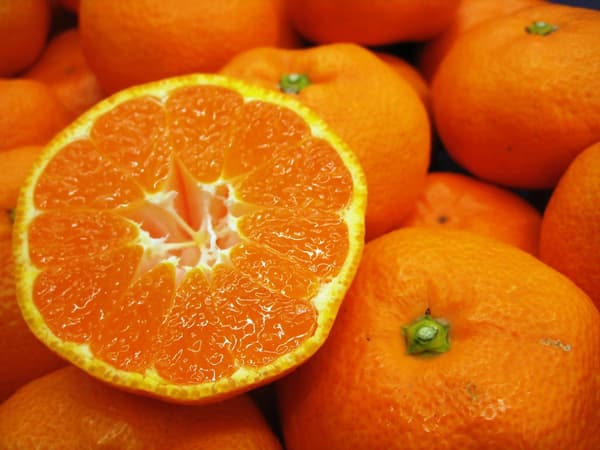
Aoshima Unshu: The Synonym for Enduringly Popular Satsuma Mandarins
A major Shizuoka City brand discovered by Heiju Aoshima in the 1930s. It accounts for more than half of the Satsuma mandarins produced prefecture-wide.
Characterized by a flat shape, large size, and rich flavor with both strong sweetness and acidity. Due to high sugar content and excellent taste, it has become a representative variety of Satsuma mandarins and is widely cultivated nationwide.
Main cultivation area: Shimizu Ward, Shizuoka City
Shipping season: December to late March