A special program centered on a special Noh performance by Yamamoto Noh Theater (山本能楽堂) will be held at Tokuzen-ji (徳禅寺), a sub-temple of Daitoku-ji, head temple of the Daitoku-ji school of the Rinzai sect, in Kyoto.
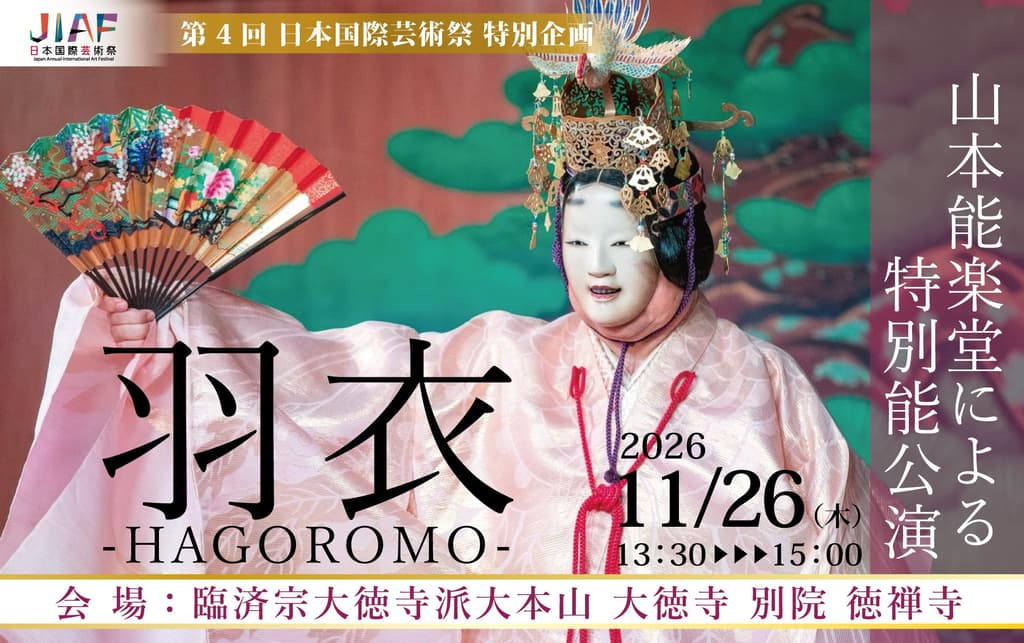
At a place that has nurtured Japan's spiritual culture for 700 years and formed the foundation of Japanese culture, visitors can see the Noh play "Hagoromo" (羽衣) and also hear explanations of the history of Noh, its costumes, and its instruments. It is a rare opportunity.
Special Noh Performance by Yamamoto Noh Theater at Tokuzen-ji, a Daitoku-ji Sub-Temple
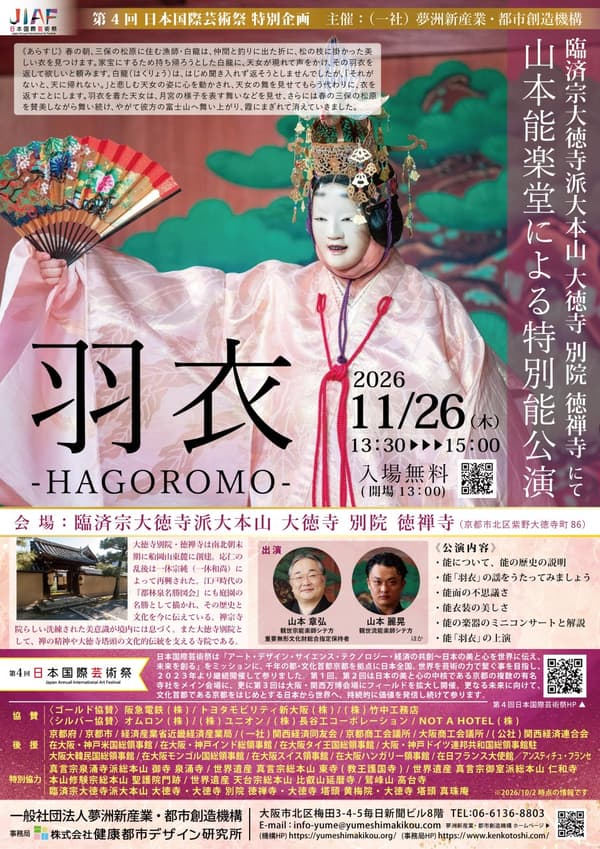
- Date and time: Thursday, November 26, 2026, 1:30 PM to 3:00 PM
- Venue: Tokuzen-ji (徳禅寺), a sub-temple of Daitoku-ji, head temple of the Daitoku-ji school of the Rinzai sect (86 Murasakino Daitokuji-cho, Kita-ku, Kyoto)
- Organizer: Yumeshima Organization to Create New Industry and City (一般社団法人夢洲新産業・都市創造機構)
- Special cooperation: Tokuzen-ji, a sub-temple of Daitoku-ji, head temple of the Daitoku-ji school of the Rinzai sect
- Admission: Free
Performers
- 山本 章弘: Kanze school Noh performer (shite-kata), General Designation Holder of Important Intangible Cultural Property
- 山本 麗晃: Kanze school Noh performer (shite-kata)
Other performers will also appear.
Program
- An introduction to Noh and an explanation of its history
- Trying out the chant (utai) of the Noh play "Hagoromo"
- The mystery of Noh masks
- The beauty of Noh costumes
- A mini concert of Noh instruments with commentary
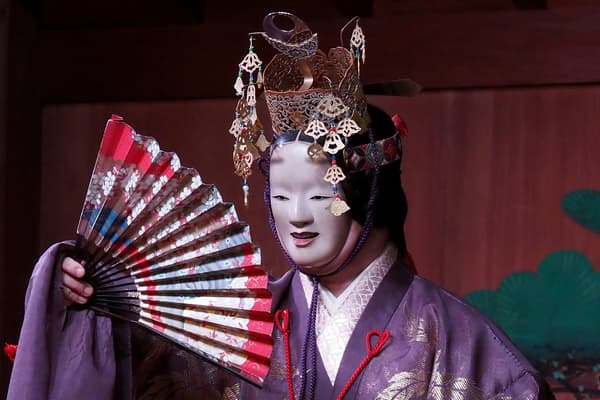
- A performance of the Noh play "Hagoromo"
About Tokuzen-ji, a Sub-Temple of Daitoku-ji
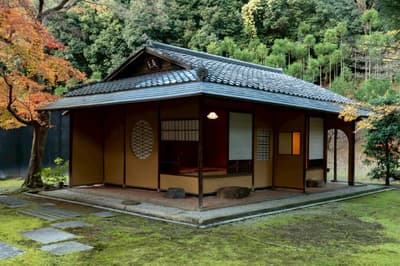
Tokuzen-ji, a sub-temple of Daitoku-ji, was founded at the eastern foot of Mt. Funaoka at the end of the Nanbokucho period. After the Onin War, it was revived by Ikkyu Sojun (Priest Ikkyu). It was also depicted as a scenic garden in the Edo-period guidebook "Miyako Rinsen Meisho Zue" (『都林泉名勝図会』), and its history and culture have been passed down to the present day.
A refined sense of beauty typical of a Zen temple lives on within the grounds. As a sub-temple of Daitoku-ji, it also supports the spirit of Zen and the cultural traditions of the sub-temples of Daitoku-ji.
Address: 86 Murasakino Daitokuji-cho, Kita-ku, Kyoto
About the 4th Japan Annual-International Art Festival
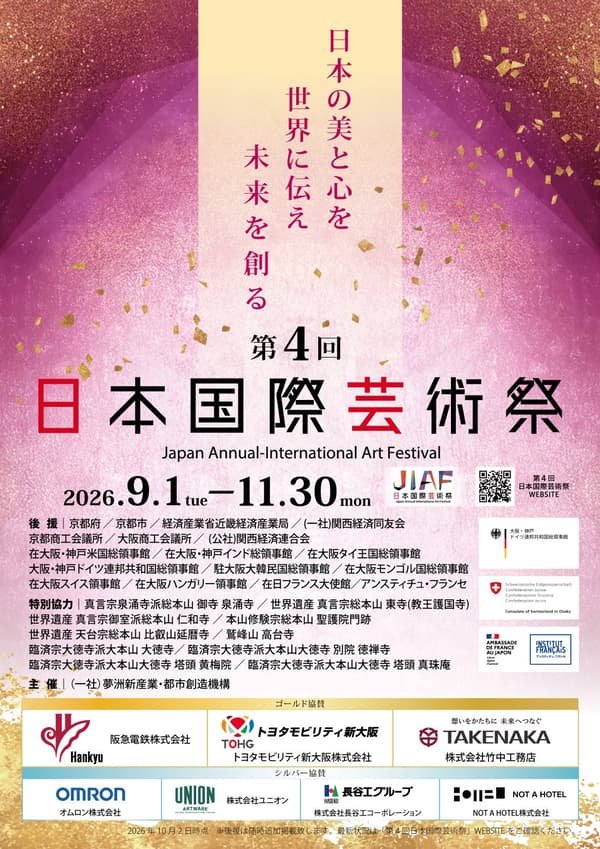
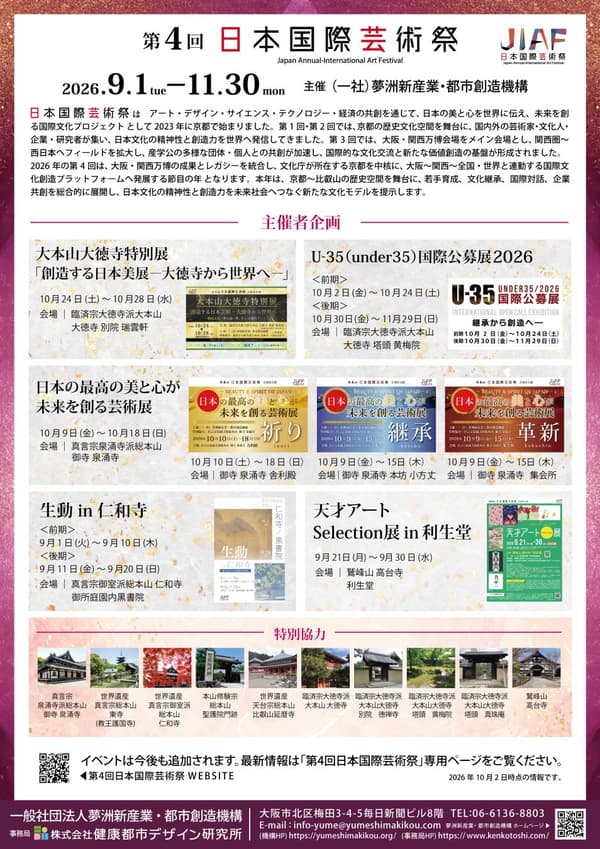
The Japan Annual-International Art Festival has been held since 2023 with the mission of "co-creation of art, design, science, technology, and the economy — conveying Japan's beauty and spirit to the world and creating the future." Based in Kyoto, the thousand-year capital and capital of culture, it aims to connect all of Japan and the world.
Since the first festival in 2023, it has been held mainly in Kyoto. For the third festival, the Osaka-Kansai Expo site served as the main venue, and the festival expanded its field from the Kansai region to western Japan.
The 4th Japan Annual-International Art Festival integrates the results and legacy of the 3rd festival held in fiscal 2025 and the Osaka-Kansai Expo. With Kyoto, where the Agency for Cultural Affairs is located, as its core, it will be developed into an international cultural creation platform linked with Osaka, the Kansai region, the rest of Japan, and the world.
For three months, from September 1 to November 30, 2026, the festival will take place mainly at the major head temples and well-known shrines of Kyoto, in cooperation with cultural facilities such as art museums across Japan, universities, and companies.
- Period: Tuesday, September 1 to Monday, November 30, 2026
- Organizer: Yumeshima Organization to Create New Industry and City (一般社団法人夢洲新産業・都市創造機構)
- Special cooperation: Sennyu-ji (head temple of the Sennyu-ji school of Shingon Buddhism) / To-ji (Kyoogokoku-ji), head temple of Shingon Buddhism, World Heritage Site / Ninna-ji, head temple of the Omuro school of Shingon Buddhism, World Heritage Site / Shogoin Monzeki, head temple of the Honzan Shugen sect / Enryaku-ji on Mt. Hiei, head temple of Tendai Buddhism, World Heritage Site / Kodai-ji (Mt. Jubusan) / Daitoku-ji, head temple of the Daitoku-ji school of the Rinzai sect / Tokuzen-ji, a sub-temple of Daitoku-ji / Obai-in, a sub-temple of Daitoku-ji / Shinju-an, a sub-temple of Daitoku-ji
Official website of the 4th Japan Annual-International Art Festival
Daitoku-ji Special Exhibition "Creating Japanese Beauty Exhibition – From Daitoku-ji to the World –" (創造する日本美展ー大徳寺から世界へー)
Sengoku culture, tea ceremony, Zen, and contemporary art. This exhibition is currently being held at Zuiun-ken (瑞雲軒) at Daitoku-ji.
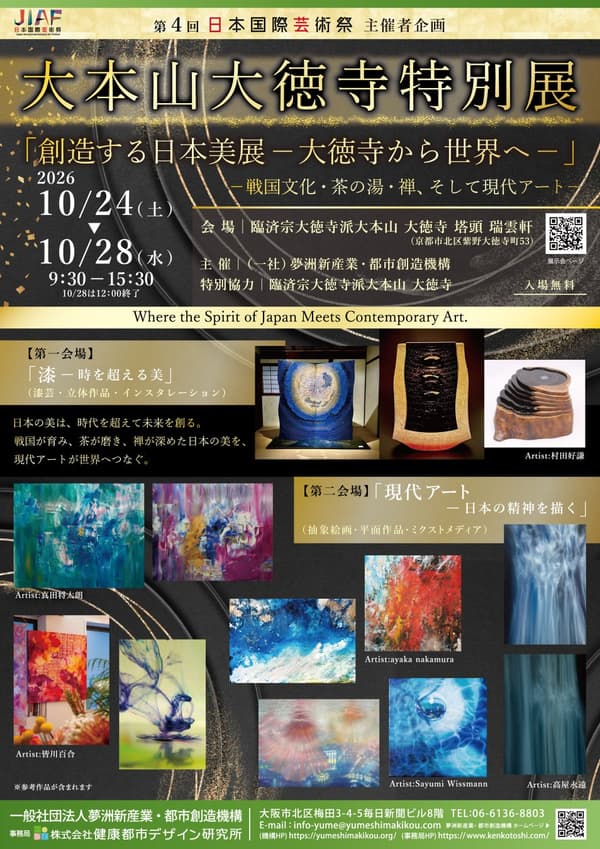

- Dates and hours: Saturday, October 24 to Wednesday, October 28, 2026, 9:30 AM to 3:30 PM (closes at 12:00 PM on Wednesday, October 28 only)
- Venue: Zuiun-ken (瑞雲軒) at Daitoku-ji, head temple of the Daitoku-ji school of the Rinzai sect
- Organizer: Yumeshima Organization to Create New Industry and City (一般社団法人夢洲新産業・都市創造機構)
- Special cooperation: Daitoku-ji, head temple of the Daitoku-ji school of the Rinzai sect
About Daitoku-ji
Daitoku-ji is the head temple of the Daitoku-ji school of the Rinzai sect, founded in 1315 by Daito Kokushi Shuho Myocho. It received the devotion of Emperor Hanazono and Emperor Go-Daigo and prospered as an imperial prayer temple for both the Northern and Southern Courts. After falling into ruin in the Onin War, it was revived by Priest Ikkyu, and it flourished in the Momoyama period with the support of Toyotomi Hideyoshi. The grounds include the National Treasure Hojo and Karamon, as well as the Important Cultural Properties Sanmon, Buddha Hall, and Lecture Hall. The Hojo garden is known as a famous dry landscape garden, and the temple holds many National Treasures and cultural properties.
There are also many sub-temples, forming a variety of temple complexes that convey the tea ceremony culture and the spirit of Zen to the present day and give visitors a deep sense of history. The tranquil grounds are a space that embodies the beauty of Zen.
Address: 53 Murasakino Daitokuji-cho, Kita-ku, Kyoto
Official website of the 4th Japan Annual-International Art Festival Daitoku-ji Special Exhibition
U-35 International Open Call Exhibition 2026 "From Inheritance to Creation – Inheriting the Future"
This exhibition is currently being held at Obai-in (黄梅院), a sub-temple of Daitoku-ji.
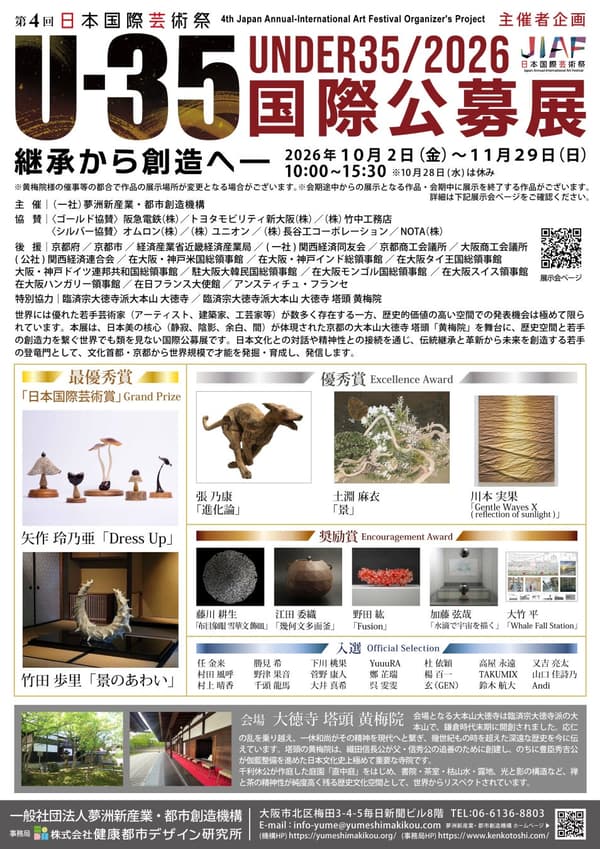

- Dates: Friday, October 2 to Sunday, November 29, 2026 (closed on Wednesday, October 28)
- Venue: Obai-in (黄梅院), a sub-temple of Daitoku-ji, head temple of the Daitoku-ji school of the Rinzai sect
- Organizer: Yumeshima Organization to Create New Industry and City (一般社団法人夢洲新産業・都市創造機構)
- Special cooperation: Daitoku-ji, head temple of the Daitoku-ji school of the Rinzai sect / Obai-in, a sub-temple of Daitoku-ji, head temple of the Daitoku-ji school of the Rinzai sect
About Obai-in
Obai-in, a sub-temple of Daitoku-ji, is a temple with ties to Oda Nobunaga, and its temple complex was developed by Toyotomi Hideyoshi. The garden "Jikichu-tei" (直中庭), said to have been designed by Sen no Rikyu, and the Important Cultural Property buildings have a quiet charm. It is a famous temple where tea ceremony culture and the history of the warrior class live on, with high cultural value.
The spirit of warrior culture lives on in the hojo and shoin, and the garden is highly regarded as a space that symbolizes Rikyu's aesthetics.
Address: 83-1 Murasakino Daitokuji-cho, Kita-ku, Kyoto