A new yakiniku restaurant, Yakiniku Shiraishi Shibakoen (焼肉 しら石 芝公園), opened on November 5, 2026, in Shiba Park, Tokyo, at the foot of Tokyo Tower. It is located in part of a building that architect Kengo Kuma (隈研吾) was involved in designing, and it brings together wagyu, Japanese cuisine, and Japanese-style hospitality.
Its concept is "yakiniku with the hospitality of a ryotei (traditional Japanese restaurant)" (焼肉なのに、料亭のようなおもてなし。). The restaurant is intended for anniversaries, meals with loved ones, important business entertaining, and special evenings with guests from overseas.
Five-Star Hotels as the Benchmark
The restaurant states, "Our competitor is not other high-end yakiniku restaurants. It is the world's five-star hotels." Behind this is a wish to create value not only in the taste of the food but also in the service, the space, the tableware, and all of the time guests spend there.
The restaurant says that good wagyu and skilled cooking are essential for a high-end yakiniku restaurant but are not enough on their own. It points to a series of small details that build a special time: the moment guests are welcomed, being shown to their seats, the timing of each dish, keeping an eye on guests' glasses, keeping a distance that does not interrupt conversation, and the farewell. The five-star hotel benchmark does not mean comparing the size or facilities of a building. It refers to an attitude of hospitality that understands each guest's expectations and offers an experience that exceeds them.
The restaurant aims to bring the "omotenashi" (hospitality) that Japanese ryotei and ryokan have developed over a long history, together with the refined service that the world's luxury hotels pursue, into Japan's yakiniku food culture. Its stated goal is to move from "a restaurant where I ate good meat" to "a restaurant where I can't forget that time," competing not only on the quality of the food but on the value of the experience itself.
Wagyu Meets Kappo Techniques
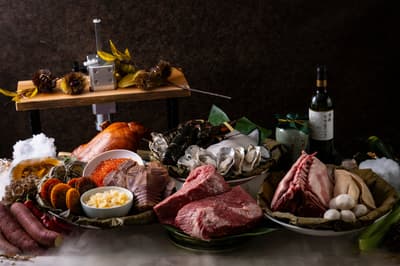
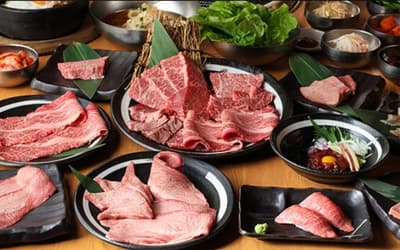
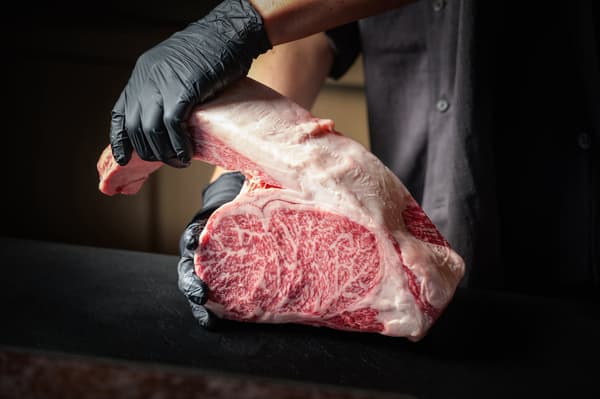
Wagyu is at the center of the menu, including aged beef tongue, fillet, harami (skirt steak), and carefully selected lean cuts. To bring out the texture and flavor of each cut, the restaurant pays attention to details from slicing, grilling, and seasoning to how the meat is served.
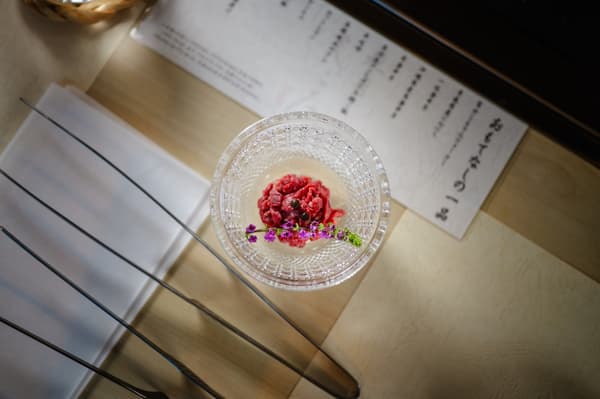
A distinctive feature is that yakiniku incorporates the techniques of Japanese cuisine and kappo (a style of Japanese cooking served at the counter). The meal begins with a small yukhoe rice bowl made with kuroge wagyu (Japanese Black beef) and a carefully prepared soup. The grilled dishes that follow are cooked according to the thickness and characteristics of each cut. The meal also includes seasonal vegetables, dishes that make use of dashi broth, freshly cooked donabe (clay pot) rice, and a dish to finish.
By reflecting the flavors of spring, summer, autumn, and winter in the dishes, the restaurant aims to offer a lineup that gives guests something new to discover on every visit. It combines the strength of yakiniku with the delicacy of kappo cuisine to offer a wagyu experience that goes beyond conventional yakiniku.
At the Foot of Tokyo Tower, in a Building Kengo Kuma Was Involved In
Tokyo Tower, Zojoji Temple, and Shiba Park together form a set of scenery that symbolizes Tokyo. Although it is in the city center, the area lets visitors feel the changing seasons: cherry blossoms in spring, deep green in summer, autumn leaves in fall, and Tokyo Tower shining in the clear night sky in winter.
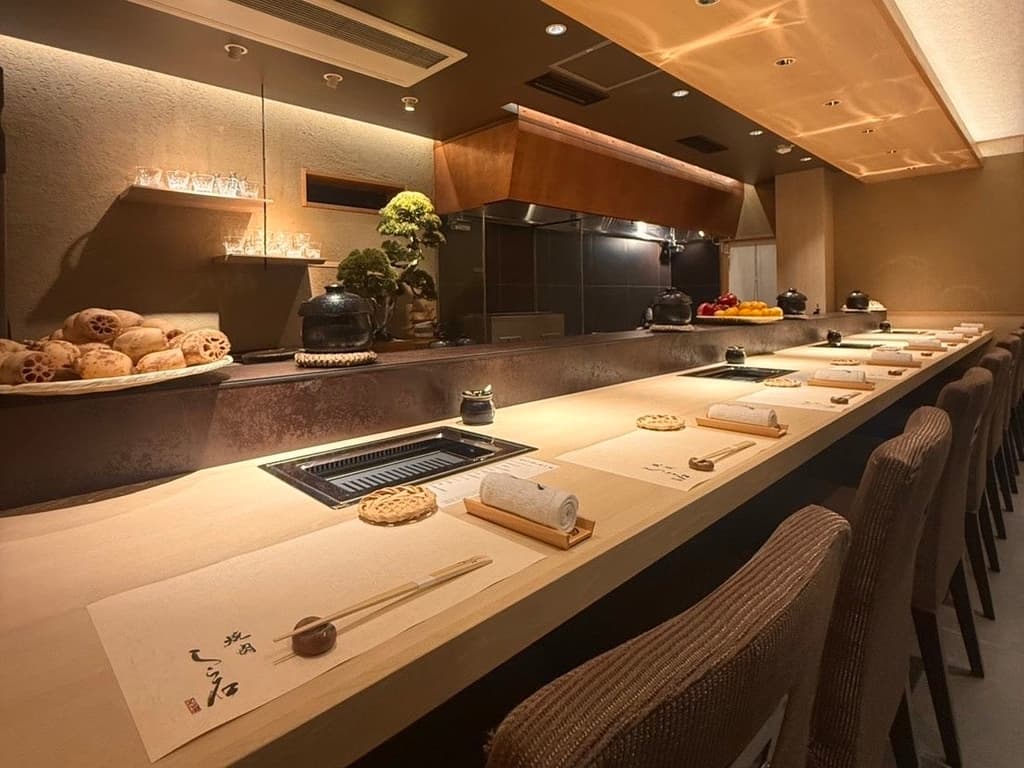
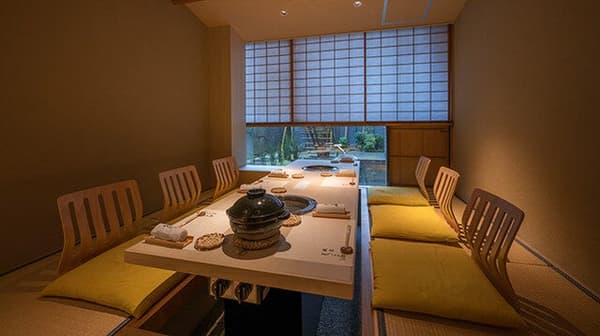
The restaurant is in a building that Kengo Kuma was involved in designing. The space, which has the warmth and calm of wood, has 8 counter seats where guests can enjoy watching the chef at work up close, and a private room for spending private time. At the counter, guests can feel the appeal of the ingredients and the chef's skills up close. In the private room, they can take their time enjoying conversation with someone important to them. Rather than relying on lavish decoration, the restaurant expresses a calm luxury through the beauty of its ingredients, the quiet of the space, and the movements of the chefs.
Baccarat Glasses and Japanese Traditional Crafts
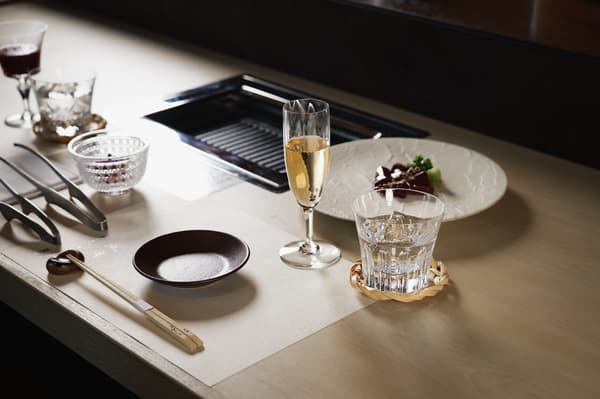
At Yakiniku Shiraishi Shibakoen, the tableware and glasses that serve the food are also considered an important part of the guest experience. Drinks are served in glasses from Baccarat, the French crystal brand.
The restaurant says that even a single glass has a role in setting the scene for a special time, through its weight in the hand, its beautiful brilliance, and its delicate feel on the lips. Dishes are served on traditional Japanese tableware, including Arita ware, with plating that conveys the season and brings out the beauty of the wagyu. At a table where French crystal and Japanese traditional crafts come together, the restaurant expresses an aesthetic sense that crosses national and cultural boundaries. Rather than showing off luxury, it focuses on bringing authentic items into every detail.
For Visitors From Overseas: Four Japanese Cultures in One Meal
For visitors to Japan, meals are one of the important ways to get to know the country's culture. At Yakiniku Shiraishi Shibakoen, the aim is for guests to experience four cultures through a single meal: architecture, wagyu, Japanese cuisine, and omotenashi.
- Architecture: Japan's aesthetic sense. A building that Kengo Kuma was involved in, in a location at the foot of Tokyo Tower. It is a space where guests can feel Japan's architectural culture and the cityscape.
- Wagyu: an ingredient Japan is proud of. Carefully selected wagyu is served with cooking methods suited to its quality and cut, conveying Japan's livestock culture and the depth of wagyu.
- Japanese cuisine: the four seasons and delicate technique. Kappo techniques, dashi, seasonal ingredients, donabe rice, and tableware made with traditional crafts express the culture that Japanese cuisine has valued.
- Omotenashi: service aiming for a world-class standard. Attentive care that stays close to each guest and does not rely on words alone aims to provide a time that stays in the heart.
So that guests can enjoy Japanese wagyu regardless of differences in religion or food culture, the restaurant also plans to work toward obtaining Halal certification.
Rather than explaining Japanese culture, the restaurant wants guests to experience it, offering a special evening in Japan to guests from around the world.
Restaurant Information
- Name: Yakiniku Shiraishi Shibakoen (焼肉 しら石 芝公園)
- Genre: High-end yakiniku and wagyu kappo
- Address: 4-8-12 Shibakoen, Minato City, Tokyo
- Opening date: Thursday, November 5, 2026
- Seats: 8 counter seats, 1 private room
- Hours: 5:00 PM to 11:00 PM
- Concept: Yakiniku with the hospitality of a ryotei (焼肉なのに、料亭のようなおもてなし。)
- Website: yakiniku-shiraishi.j-silver.co.jp
Details on business hours, how to make reservations, and the menu are scheduled to be announced in due course.