A new bakery brand, D.baguette by parigot & DIA, is set to open on Monday, April 20 at the "Cafe & Bakery" zone in the basement east area of Daimaru Umeda, currently undergoing a major renovation. Located in the heart of Osaka's Umeda district — a hub where some 300,000 people pass through every day — the bakery sets its sights on becoming the best in Kansai.
The brand is a collaboration between Chef Ryuzo Abe of Boulangerie parigot in Uehonmachi, Osaka, and the veteran baking team of Dia Corporation, led by master baker Koji Nakanishi. Their shared mission: "authentic bread-making that draws out the maximum flavor of wheat."
Around 60 Products Built Around Baguette and Shokupan
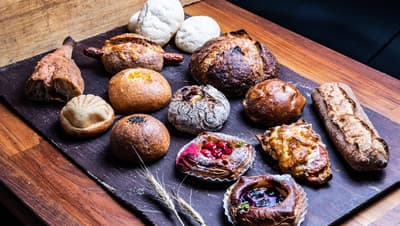
The lineup aims to deliver "bread that enriches the everyday," with roughly 60 products centered on a baguette and a shokupan (Japanese-style milk bread). Additional offerings include croissants, danishes, and brioches — all prepared with D.baguette's signature approach.
Chef Abe has devoted himself to baguette-making since his training days in France — crafting dough from carefully selected wheat, then allowing it to ferment slowly at low temperatures for an extended period before baking. The same technique is applied to the shokupan, which uses select domestic wheat and a directly cultivated yeast starter, slow-fermented to bring out the wheat's natural aroma and sweetness.
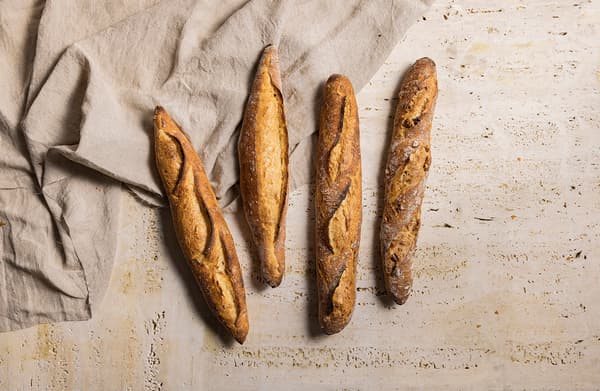
D.baguette Traditionelle
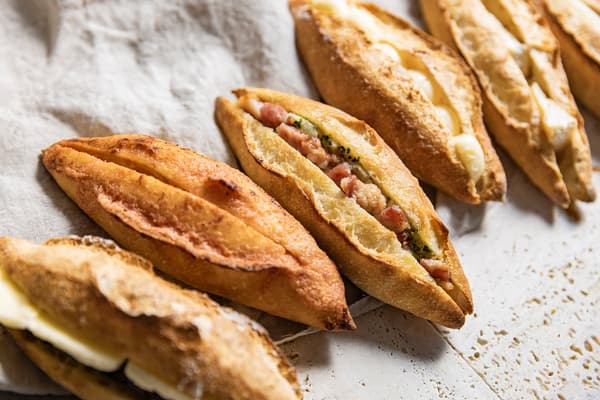
The signature baguette uses four types of wheat — including domestic and French varieties — along with whole wheat flour. The extended fermentation process amplifies the wheat's natural sweetness. Thanks to a thin gluten membrane, the crust comes out thin and lightly crisp, while the crumb inside is white and pleasantly chewy.
Tenpaku Shokupan (Japanese Milk Bread)
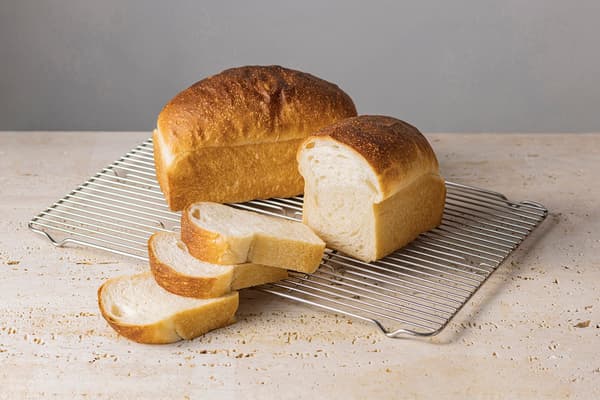
The Tenpaku Shokupan applies the Traditionelle technique to a Japanese-style loaf. Made with select domestic wheat, the dough is slow-fermented to develop the wheat's fragrance and sweetness, producing a moist and tender loaf that is best enjoyed plain — without toasting.
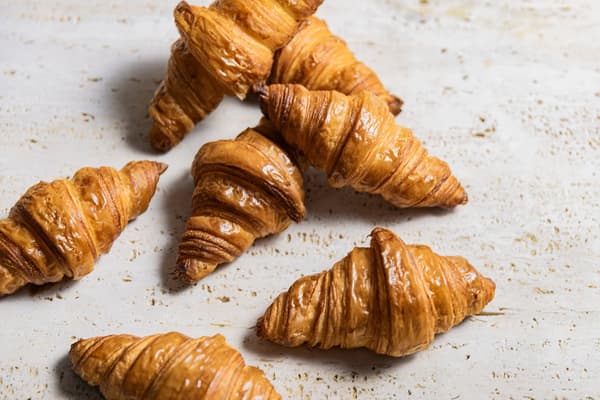
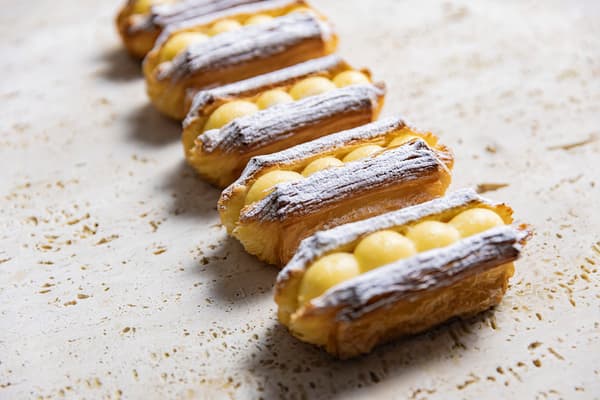
Beyond the two flagship breads, the croissant uses French A.O.P. butter (*) with fewer fold-ins than a typical croissant, creating thicker layers of butter for a more pronounced buttery aroma. The custard danish pairs a danish dough made with Hokkaido Yotsuba butter with a smooth, melt-in-the-mouth custard cream. The cinnamon brioche uses mochi wheat for a stretchy, moist crumb; rolled with a house-blended cinnamon sugar, the butter seeps into the base during baking, resulting in a crispy bottom with a rich, juicy bite.
*A.O.P. butter: A premium fermented butter certified by the EU, guaranteeing a specific geographical origin and traditional production method, prized for its rich aroma and depth of flavor.
Chef Ryuzo Abe
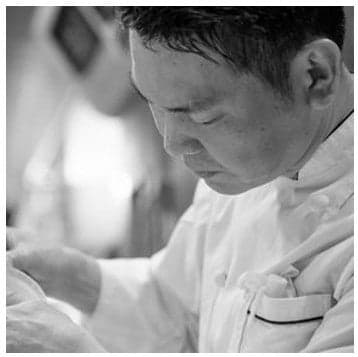
Chef Abe entered the world of bread at the age of 15 and went on to study the science and logic of baking at French bread schools and research institutions. He has earned recognition both domestically and internationally, including a prize at a baguette competition in Paris. His craft is focused entirely on "drawing out the maximum flavor of wheat" — a philosophy that commands strong respect within the industry.
"The buyer from Daimaru Umeda visited my shop many times and passionately asked me to be part of their renovation," he explains. "To maintain the highest quality in such an iconic location in Osaka, I felt I needed a reliable partner — and I proposed the collaboration with Dia. I had already tasted their bread and was convinced of their technical skill and the artisan integrity that drives their desire to make something truly good."
On his baking method: "My recipes look deceptively simple — short, low-speed mixing, then leaving everything to nature with a long, slow, cold ferment. The dough that emerges looks almost liquid, so much so that even veteran bakers wonder if something has gone wrong. But as you gently fold it over time, you can feel it come alive. What I'm aiming for is not a special-occasion treat but an everyday luxury — something that makes daily life a little richer. From this hub in Umeda, I want to share that joy with as many people as possible."
Master Baker Koji Nakanishi
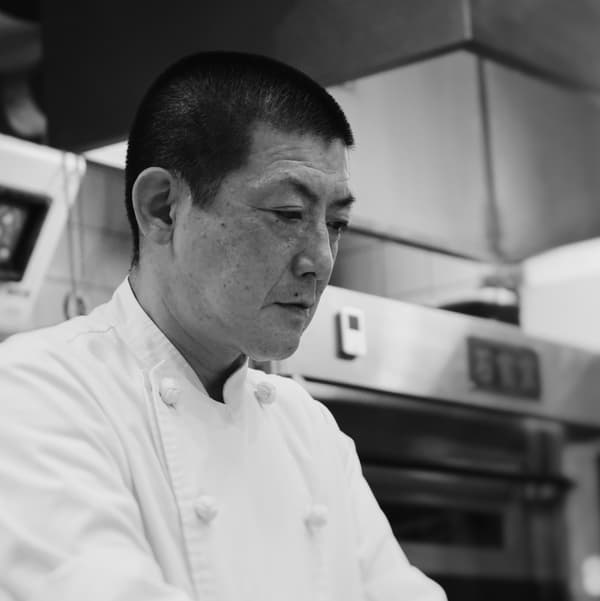
Nakanishi, head of product development at Dia Corporation in his 41st year with the company, oversees a team that handles around 30 different doughs daily — adjusting techniques every day based on flour, yeast, temperature, and humidity, never cutting corners.
"Honestly, my first reaction was to decline," he admits. "Chef Abe's approach — minimizing machine intervention, leaving everything to nature — was the complete opposite of our method of efficiently and consistently delivering delicious bread. But when I saw the dough come out of the mixer looking like a puddle, and then, through careful folding, slowly start connecting as if it were breathing, I was reminded all over again: bread-making is fundamentally about trusting nature and having the patience to wait. At this stage of my career, being challenged to discover a new way of making bread is the greatest joy of being a craftsman. I'm convinced that when the warmth of our handcraft meets the depth of Chef Abe's wheat-forward flavor, something genuinely new will emerge."