Japan's Only Century-Old Imperial Snow Crab Offering
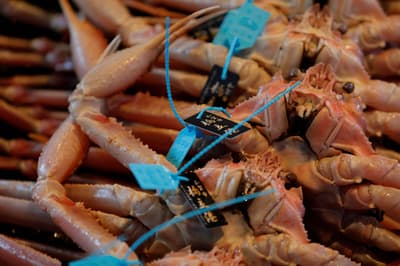
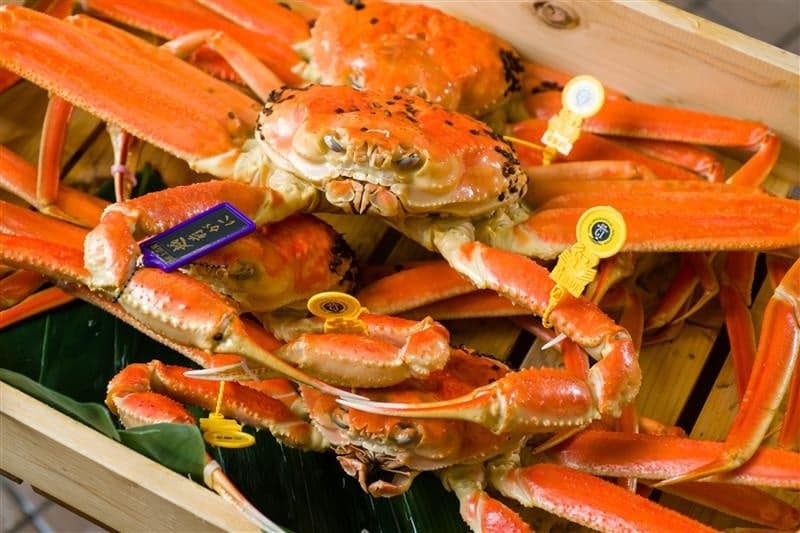
Sakai City in Fukui Prefecture is renowned for its culinary excellence, with "Echizen crab" (snow crab) as its premier food brand. Besides the yellow tag certifying Fukui Prefecture origin, Mikuni Port's Echizen crab carries an exclusive purple tag. Do you know about it? Fishermen carefully attach this tag to each high-quality Echizen crab weighing 1.1 kg or more at the time of catch. The tag reads "Imperial Quality Echizen Crab." In other words, "Imperial Quality" certifies that this crab meets the same standards as the snow crab offered to the Imperial Family—a tradition exclusive to Mikuni Port in Sakai City nationwide. The "Imperial Offering Echizen Crab" takes place annually during the coldest months of January and February, with this year's offering scheduled for around late January 20th. The offering from Mikuni Port has continued since 1922 (Taisho 11), making this year a milestone 100th offering. For local fishermen and Echizen crab dealers in the city, being part of this century-long tradition is a source of great pride. Industry insiders unanimously agree: "The Echizen crab truly tastes best in January and February when the cold tightens the meat." Firm meat tightened by low water temperatures, rich and concentrated miso—if you want to taste supreme Echizen crab, "the season is just beginning."
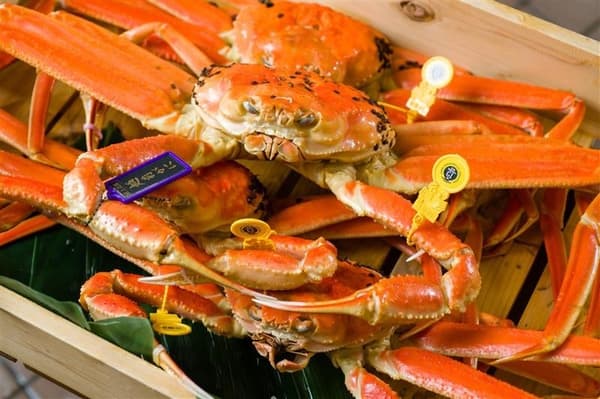
According to Fukui Prefecture, the imperial offering of crab from Mikuni Port began in 1922 (Taisho 11). Over the past century, the offering has continued annually in January and February, except for five occasions including the Emperor's passing and wartime periods. Currently, four companies from the Mikuni Fish Merchants Association—Tajima Fishmonger, Daimaru Suisan, Ino Fishmonger, and Yamani Suisan—handle the offerings on a rotating basis. These four companies salt-boil the crabs and offer them to the Emperor's family, the Retired Emperor's family, the Akishino family, the Hitachi family, and the Mikasa family.
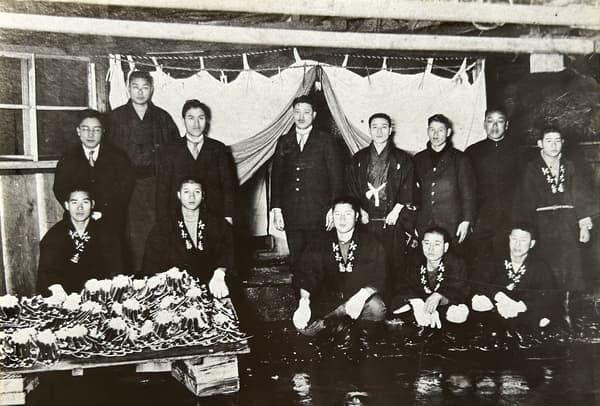
However, examining old records reveals a newspaper article stating that in 1909 (Meiji 42), the governor at the time sent crabs caught in Shikakuura Village (now Echizen Town) in Nyu District. However, the prefecture has no records of this, and the circumstances of why they began sending crabs from Mikuni Port remain unknown.
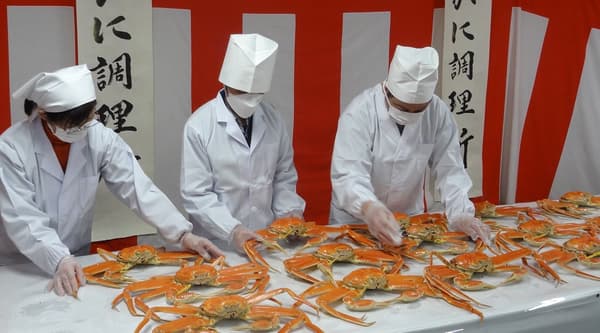
According to Ichiro Sawazaki (74), representative member of the long-established fresh fish wholesaler "Daimaru Suisan" founded in the early Showa period, based on a photo from 1932 (Showa 7) remaining at his home and stories heard from his grandfather and first-generation predecessors, "Perhaps back then, they discarded the male crab's shell (carapace) and miso, putting only the leg and body parts in bamboo baskets and transporting them by freight car. With limited refrigeration technology and transportation means at the time, they probably worried about the crab miso and internal organs spoiling."
Sawazaki, who has been involved in crab boiling for nearly 50 years, says, "Handling the imperial offering crab requires great care. Especially the boiling time and salt seasoning. But I judge these through years of experience. We can assess whether it's a good crab by its size and appearance. All four shops deliver flawless crabs. Being involved for generations in the imperial crab offering that has continued for 100 years is an honor for our business."
Furthermore, Hitoshi Yamano (56), president of "Yamani Suisan," which will handle this year's 100th imperial offering preparation, says, "We've been handling the imperial offering since Heisei 1, which is a great honor." Yamano says his most careful scrutiny in preparation is selecting the crabs, even more than cooking. "I ask the bottom-trawl ship captains to provide imperial-class crabs and verify them with my own eyes. Whether the belly has a yellowish tint, whether the shell is unscratched, whether the meat is firm... I want to select evenly from eight ships, but in the past, there were times when no suitable crabs were found." He pays meticulous attention. Regarding crabs during this season, "After all, compared to right after the fishing season opens, with colder water, the meat tightens more and the miso's firmness differs," he says, and as a specialist handling large quantities of Echizen crab, "I especially recommend the snow crab in January and February to general customers."
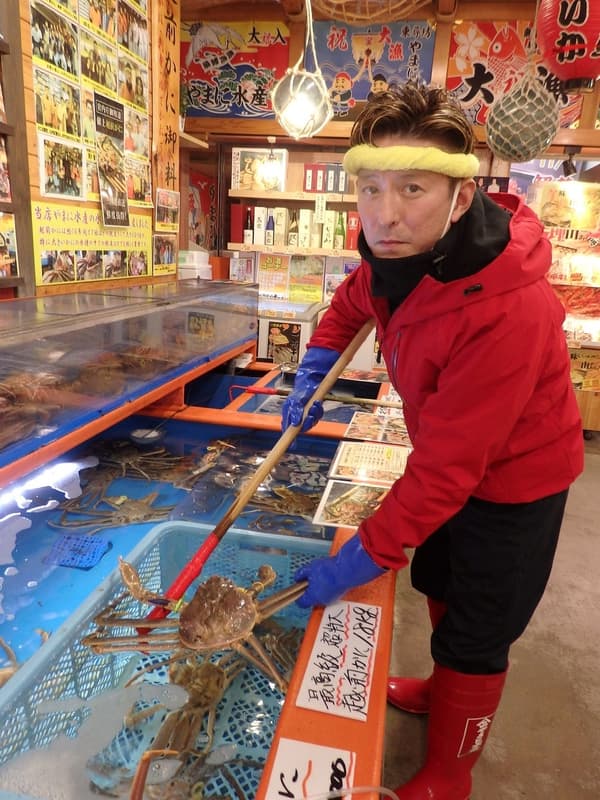
Meanwhile, the imperial offering crab from Mikuni Port is also a source of great pride for local fishermen. The Mikuni Port Motor Trawl Fishery Cooperative, made up of fishermen engaged in crab fishing, began attaching a purple, luxurious "Imperial Quality Echizen Crab" tag 18 years ago exclusively to snow crabs weighing 1.1 kg or more with excellent shape to differentiate from other crabs. These tagged Echizen crabs represent about 5% of the total Mikuni Port catch per season. According to Kazumi Hirano (70), representative director and union president, "About 3,000 crabs get this tag per season—that's how well-formed they are. A fisherman can tell at a glance when pulling up the net, 'This one's imperial quality.' They fetch good prices." This season's catch in November-December was slightly over 18 tons of male snow crabs at Mikuni Port, maintaining a fairly stable catch volume. "This season seems to have many smaller-sized crabs," Hirano observes, but regarding securing crabs worthy of imperial offering, he laughs, "Well, that should be fine."
Imperial offering of snow crab to the Imperial Family is recognized only from Mikuni Port in Sakai City nationwide. As such, the region takes pride in having long protected the "ultimate brand crab" through unified efforts of fishermen, fish dealers, and inns and ryokan. Hirano also says, "Even the cooperative struggled to create the 'Imperial Quality' tag to promote that quality," which also reflects "confidence" in the crabs reaching the market during this extreme cold period. "During the cold season, crabs store fat in their bodies to accumulate nutrition, so the miso should be full of rich flavor," he guarantees.
In Fukui, media coverage of Echizen crab concentrates immediately after the November season opening, and after the new year, people tend to think the crab season has ended, but the fishing season continues until March 20th. Sakai City offers Echizen crab at over 30 ryokan, inns, and restaurants centered in Echizen-Mikuni town, promoting that "This midwinter period is when you should absolutely taste authentic Echizen crab."