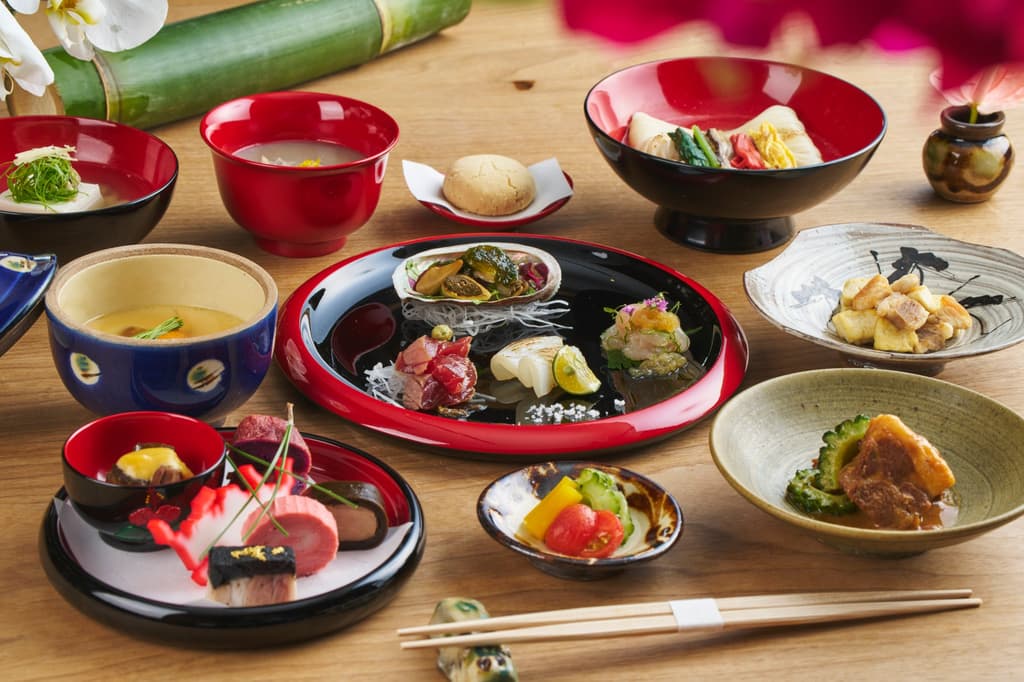
Hyatt Regency Seragaki Island, Okinawa (ハイアット リージェンシー 瀬良垣アイランド 沖縄) in Onna Village, Okinawa, has started serving the "New Ryukyu Japanese Kaiseki" (新・琉球和会席) at its specialty restaurant, Shirakachi Japanese Restaurant (シラカチ 日本料理), from Monday, November 9, 2026. The course costs ¥15,400 and is limited to 10 servings a day.
Okinawa has a rich food culture handed down from the days of the Ryukyu Kingdom, but with changing times, many of those dishes are now rarely part of everyday life even for people in the prefecture. Court cuisine of that era developed as food for entertaining envoys from China (sappōshi, 冊封使) and officials from Satsuma, and was closely tied to diplomatic protocol.
The New Ryukyu Japanese Kaiseki includes traditional dishes long enjoyed at celebrations, such as "Minudaru" (ミヌダル), "Kubumachi" (クーブマチ), jimami tofu, and "Rui-zomin" (ルーイゾーミン). It also brings in ingredients that are seldom eaten today, including "irabu" (イラブ, Erabu sea snake) and Ryukyu soft-shelled turtle (琉球すっぽん).
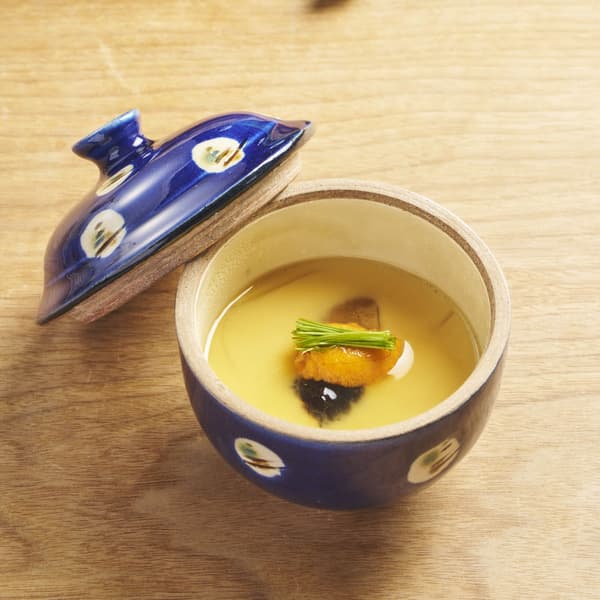
Irabu was prized as court cuisine in the Ryukyu Kingdom era, but because it requires a complicated preparation, it is now almost never eaten at home. In this course, tender simmered irabu and tebichi (pig's trotters) are made into a "tamaji-mushi" (玉地蒸し, steamed egg custard) and topped with a sauce made from carefully extracted irabu shinji (イラブシンジ, irabu broth), so that guests today can enjoy it more easily.
This course is a renewal intended to make Ryukyu cuisine more approachable. Executive Chef Kakazu (嘉数順), who holds the Ryukyu Cuisine Transmitter certification (琉球料理伝承人認証), reworks Okinawan ingredients, traditional dishes, tableware, and hospitality culture with a modern sensibility, so that it can be enjoyed casually as a dinner while traveling. It also comes as interest in Ryukyuan history and culture grows ahead of the public opening of the main hall of Shuri Castle on Monday, November 23, 2026 (a national holiday).
Ingredients Found Only in Okinawa, and Wisdom Passed Down Through the Generations
The dishes made for the Ryukyu Kingdom's court and for celebrations and annual events use ingredients found only in Okinawa and carry origins and meanings of their own. While respecting the background of each dish, the New Ryukyu Japanese Kaiseki turns Okinawan ingredients into seven dishes in total using Japanese culinary techniques.
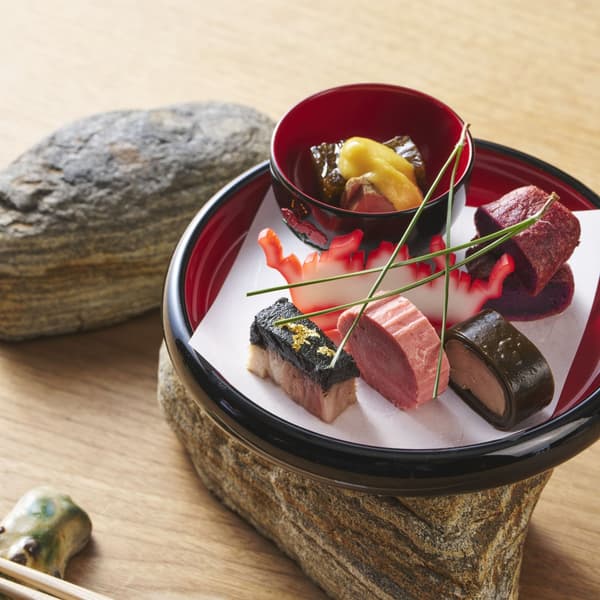
Appetizers (前菜)
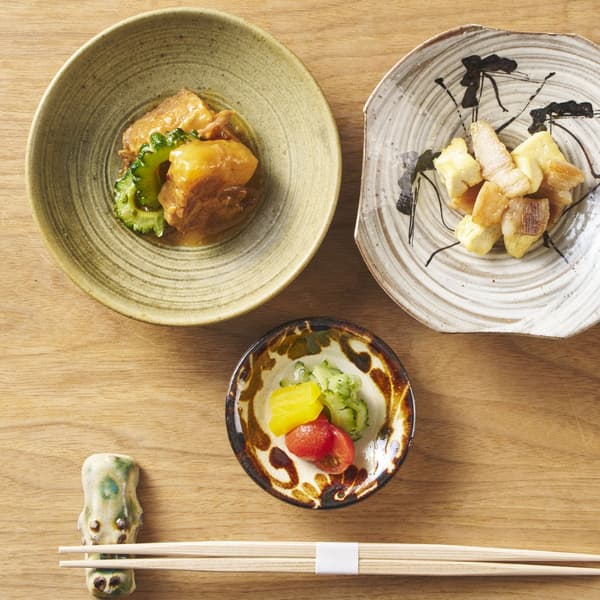
A selection of Ryukyu dishes handed down for celebrations and for welcoming guests. It includes "hanaika" (花鳥賊), which shows off the chef's knife skills, and "Minudaru," a black sesame sauce-glazed steamed dish that takes so much effort that it is sometimes called a phantom dish. Also on the plate are "Kubumachi," fish wrapped in kelp and simmered, and "shishi kamaboko" (シシかまぼこ), which combines pork with fish paste. Okinawan mozuku seaweed and chimu (pork liver, チム) with vinegared miso, and "mmukuji andagi" (ンムクジアンダギー), a fried sweet made from purple sweet potato, round out the dish. It carries on from the original Ryukyu Japanese Kaiseki and conveys the spirit of Ryukyu hospitality.
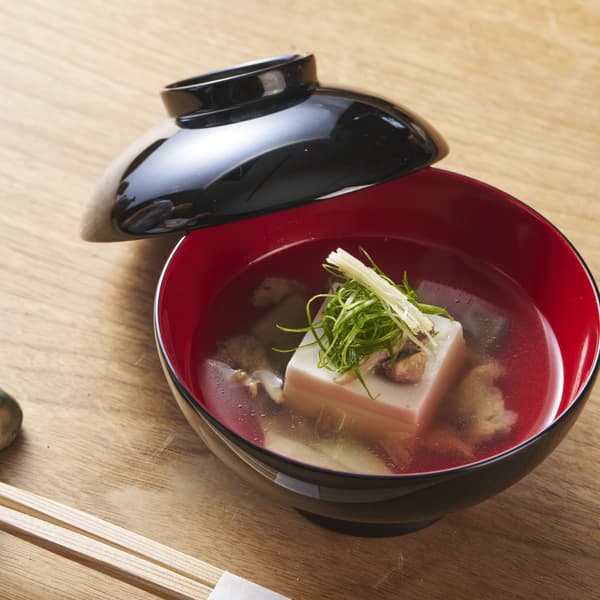
Soup (椀物)
Jimami tofu (ジーマミ豆腐) is made by kneading the pressed juice of jimami (peanuts) with sweet potato starch, and is served with a broth made from Ryukyu soft-shelled turtle. The richness of the jimami tofu blends with the umami of the turtle broth.
Seafood (魚介)
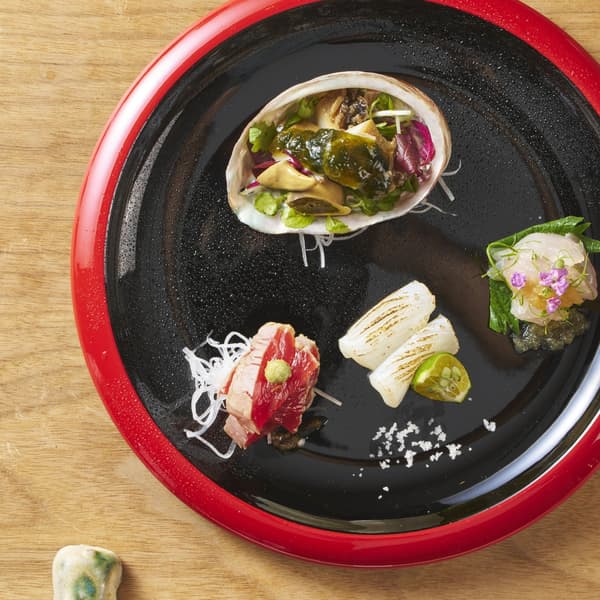
Tender, simmered abalone is topped with an Okinawan aosa seaweed sauce. The sashimi features Okinawan tuna, sei-ika squid (セーイカ), and local fish, each paired with a different Okinawan ingredient, so every piece offers a different taste and aroma.
Meat (肉料理)
Yanbaru Shimabuta Agu pork (やんばる島豚あぐー) is served two ways. One is miso-simmered pork, cooked in white miso, which differs from rafute, the pork simmered in sugar and soy sauce, and adds the aroma and richness of peanuts. The other is an irichii (イリチー) of island tofu and "suchiki" (スーチキ), pork scented with salt and awamori. The two preparations let diners compare differences in umami and aroma.
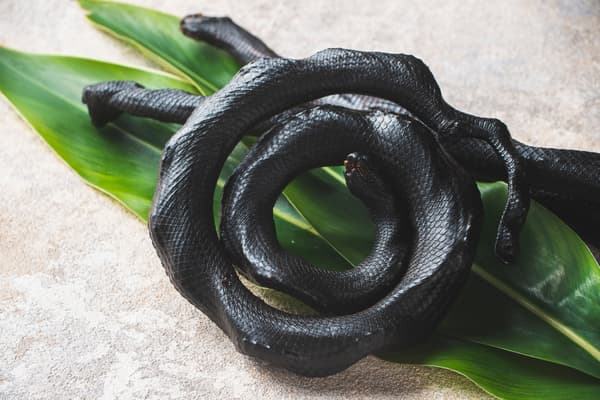
Smoked irabu (before cooking)
Steamed Dish (蒸し物)
Irabu (Erabu sea snake, エラブウミヘビ) is rarely eaten today. Since the Ryukyu Kingdom era, it was used in court cuisine and in dishes to entertain envoys from China, and was prized as a nourishing food. Irabu shinji is a broth made by simmering smoked irabu for about eight hours. For this dish, tender simmered irabu and tebichi (pig's trotters) are made into a tamaji-mushi and topped with a fragrant sauce made from slowly extracted irabu shinji. It is a flavor that holds the wisdom and history of the people of Okinawa.
Staple Course (お食事)
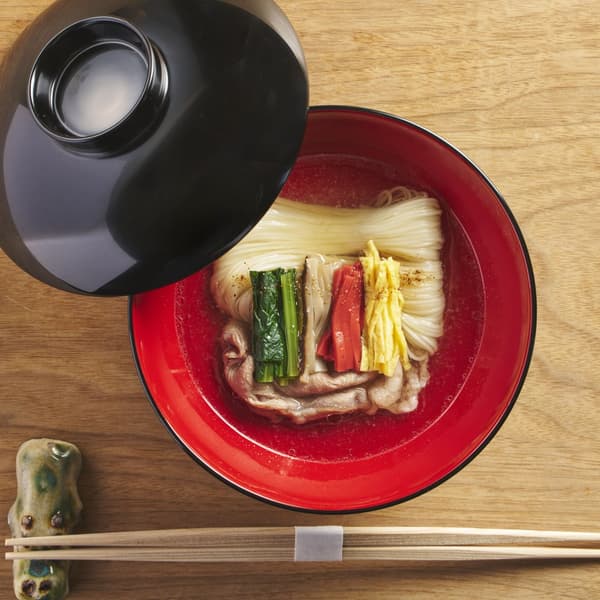
"Rui-zomin" (ルーイゾーミン) is a dish that has been made for celebrations and for entertaining guests. Somen noodles are folded like a folding screen, topped with colorful ingredients, and served with hot dashi poured over them. In this version, Japanese Black beef is used in place of pork, and the dish is given depth with the aroma of truffle oil and an accent of black pepper.
Dessert (甘味)
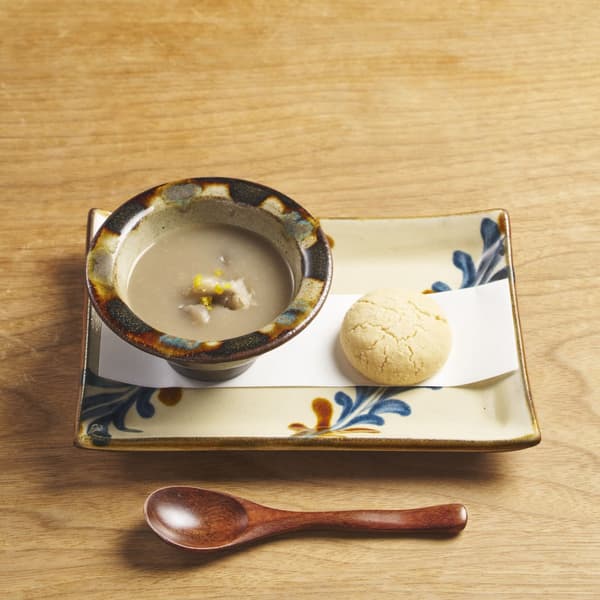
"Tanmu dengaku" (ターンムディンガク) is made from sweetly kneaded taro (田芋, tanmu), which is indispensable at celebratory meals as a symbol of prosperity for descendants because small taro grow around the parent taro. It is served as a sweet soup in the style of shiruko, scented with brown sugar and ginger. Alongside comes "chinsuko" (ちんすこう), a traditional Ryukyu sweet familiar as a souvenir. Because pig farming is widespread in Okinawa, and there is a food culture of using every part of the pig, it is made with lard. This version is seasoned with Aguni salt (粟国の塩), a salt from Okinawa.
More Than Food: Meeting the Tableware
The appeal of Ryukyu cuisine is not only in the food itself. In the hospitality culture of the Ryukyu Kingdom era, food and tableware together welcomed the guest.
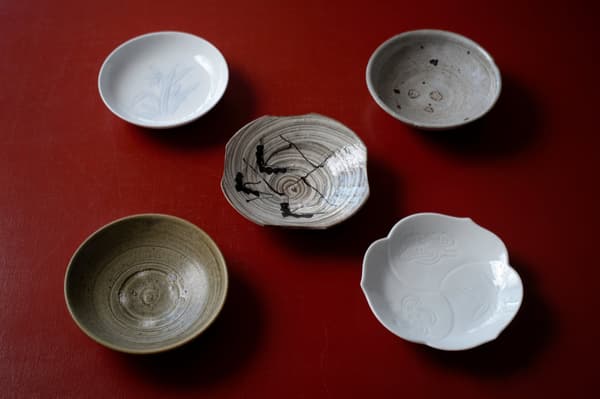
Keeping this tradition of food and tableware as one, Executive Chef Kakazu has personally selected the vessels. They include Ryukyu lacquerware with a beautiful contrast of vermilion and black, yachimun pottery from the Yukutaya kiln (横田屋窯) and the Toshin kiln (陶眞窯), white porcelain by Manji Inoue (井上萬二), a Living National Treasure of Arita ware, and works by Takashi Nakazato (中里隆) of Karatsu ware. Encountering a different vessel with each dish is another pleasure of this course.
An Evening to Encounter Okinawan Food Culture
On Monday, November 23, 2026 (a national holiday), the main hall of Shuri Castle, which was lost in a fire in 2019, will open to the public after restoration. This autumn, as the history and culture of the Ryukyu Kingdom draw renewed attention, the course carries on Ryukyu cuisine, which has also been designated a Japan Heritage. Rather than reproducing traditional dishes as they were, it incorporates modern sensibilities and ways of enjoying food to make their appeal easier to experience. Through flavors and stories found only while traveling, it offers a chance to touch Okinawa's food culture.
About the Chef
Profile: Executive Chef Kakazu (嘉数順) of Shirakachi Specialty Restaurant
Born in Naha, Okinawa. After graduating from Okinawa Cooking Technical College (沖縄調理師専門学校), he honed his skills at hotels in the prefecture and served as head chef at several of them. He joined as a founding member when the hotel opened in August 2018, and has served as Shirakachi's executive chef since November of that year. He holds the Ryukyu Cuisine Transmitter certification and is an awamori meister. (As of November 2026, he is stationed at Grand Hyatt Jeju (グランド ハイアット 済州) as supervisor of Japanese cuisine. This menu was devised by Kakazu, the hotel's executive chef, and is served by the staff of Shirakachi Japanese Restaurant.)
Message From Executive Chef Kakazu
"Ajikuuta" (あじくーたー) is an indispensable keyword when talking about Okinawan cooking. Literally it means "strong seasoning," but its original meaning is closer to "a deep flavor with the richness of a strong dashi." By making a strong dashi, the umami can be drawn out while keeping down salt and seasonings.
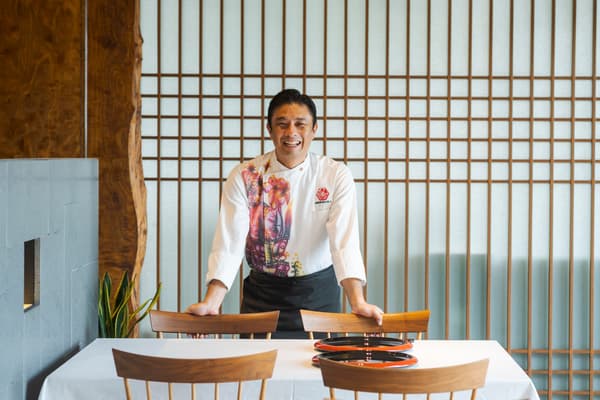
For this course, we went back to basics so that guests can feel Okinawa through the umami and aroma of ingredients that are ajikuuta. That means the umami of soft-shelled turtle, Agu pork, Japanese Black beef, and honkarebushi (本枯節, dried bonito), together with aromas that pass from the mouth to the nose, such as black sesame, jimami, aosa, and goya (bitter melon). As a chef from Okinawa, I want to keep facing these ingredients so that guests can spend a time that is worth visiting for. Although it is limited to 10 servings a day, it can be ordered on the day without a reservation, and I hope it will be enjoyed as a casual way to experience Ryukyu and Okinawan cuisine.
What Is a Ryukyu Cuisine Transmitter?
Okinawa Prefecture certifies those who hold a cook or dietitian qualification and have at least 10 years of practical experience, and who have completed all courses of the "Ryukyu Cuisine Bearer Training Course" (琉球料理担い手育成講座). Transmitters study comprehensively everything from historical and geographical background and the origins of ceremonial foods to tableware, and acquire the knowledge and skills to pass on cooking methods and flavors. They work on passing the cuisine to the next generation and on using it as a tourism resource.
Course Details
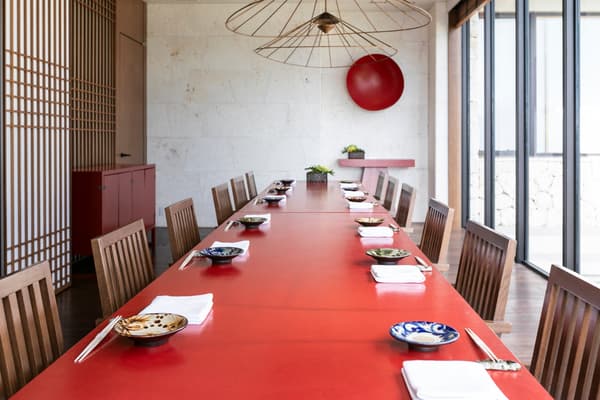
- Course: New Ryukyu Japanese Kaiseki (新・琉球和会席)
- Available from: Monday, November 9, 2026
- Servings: Limited to 10 per day
- Price: ¥15,400 (tax included, plus a 15% service charge)
- Venue: Shirakachi Japanese Restaurant (シラカチ 日本料理), specialty restaurant
- Hours: 5:00 PM to 10:00 PM (last order 9:00 PM)
- Menu (PDF): https://www.hyatt.com/content/dam/hotel/propertysites/assets/regency/okaro/documents/en_us/dining/shirakachi/Shirakachi-Ryukyu-Japanese-Kaiseki-Menu.pdf
- Video: https://videos.hyatt.com/regency_okaro_shirakachi_ryuku_video_0525.mp4
The course is a full seven dishes, from the appetizers to the dessert.
Notes:
- Sales may be suspended during periods such as the New Year holidays, Golden Week, and the Obon holidays.
- The menu may change without notice depending on the season and the availability of ingredients.
- Images and videos are for illustration purposes.
To reserve, use the restaurant reservation page or call the restaurant reservations line at 098-960-4311.