The Fujifilm Square Photo History Museum in Tokyo Midtown West will hold a special photo exhibition of works by Ken Domon, one of the leading photographers of the Showa era, from Monday, January 4 to Wednesday, March 31, 2027. The exhibition, titled "Ken Domon: Faces of Showa through the Lens of a Demon," presents about 27 portraits selected from the roughly 25 years between 1935 and 1959. Admission is free.
Exhibition Highlights
- The exhibition focuses on the roughly quarter century from 1935, when Domon began his career as a press photographer at the age of 26, to 1959, when he was 50. About 27 portraits, selected from a new perspective, are on display.
- Domon, known as the "demon of photography" (写真の鬼), lived through the Showa era. His portraits taken over a quarter century bring out the eye of one individual and a consistent, unwavering point of view.
About the Exhibition
Ken Domon (1909–1990) was a photographer who represented the Showa era, active from the wartime years through the postwar period. After joining Nippon Kobo (日本工房), led by Yonosuke Natori, in 1935 and acquiring the skills of press photography, he established himself as a professional press photographer during the war. While working on national policy propaganda, he also photographed old temples and ancient Buddhist statues, which later became his lifework, as well as portraits that were later collected in the photobook Fubo (風貌, 1953). After the war he became a freelance photographer and produced many major works.
In the 1950s, out of self-reflection on his involvement in propaganda, Domon strongly argued that the social role of a photographer is to face the reality of postwar Japanese society and capture subjects as they are, and he published many snapshots in that spirit. At the same time, he encouraged amateur photographers with powerful phrases such as "a direct connection between the camera and the motif" and "absolute snapshots with absolutely no staging," and led the "Realism photography movement" together with Ihei Kimura. His charisma and passionate guidance nurtured many photographers, including Kikuji Kawada, Shomei Tomatsu, and Masahisa Fukase, and had a significant influence on Japanese photography that followed.
The exhibition focuses on the roughly quarter century from 1935, when Domon began as a press photographer at the age of 26, to 1959, when he was 50, and shows about 27 portraits selected from a new perspective. Portraits are a mirror that eloquently reflects an era. From works published in propaganda magazines for domestic and overseas audiences and in photo magazines during the war, to well-known works of the 1950s and 1960s such as Fubo (風貌), Children of Koto (江東のこども, 1955), Hiroshima (ヒロシマ, 1958), and The Children of Chikuho (筑豊のこどもたち, 1960), Domon confronted people, famous and unknown alike, with a sharp realist viewpoint. His portraits, captured with an audacious passion and a pure eye, reflect the society of their time and continue to draw viewers in long after they were taken.
Taken together, the portraits that Domon, the "demon of photography" who lived through the Showa era, made over a quarter century bring out the eye of one individual and a consistent, unwavering point of view.
Selected Works on Display (Planned)
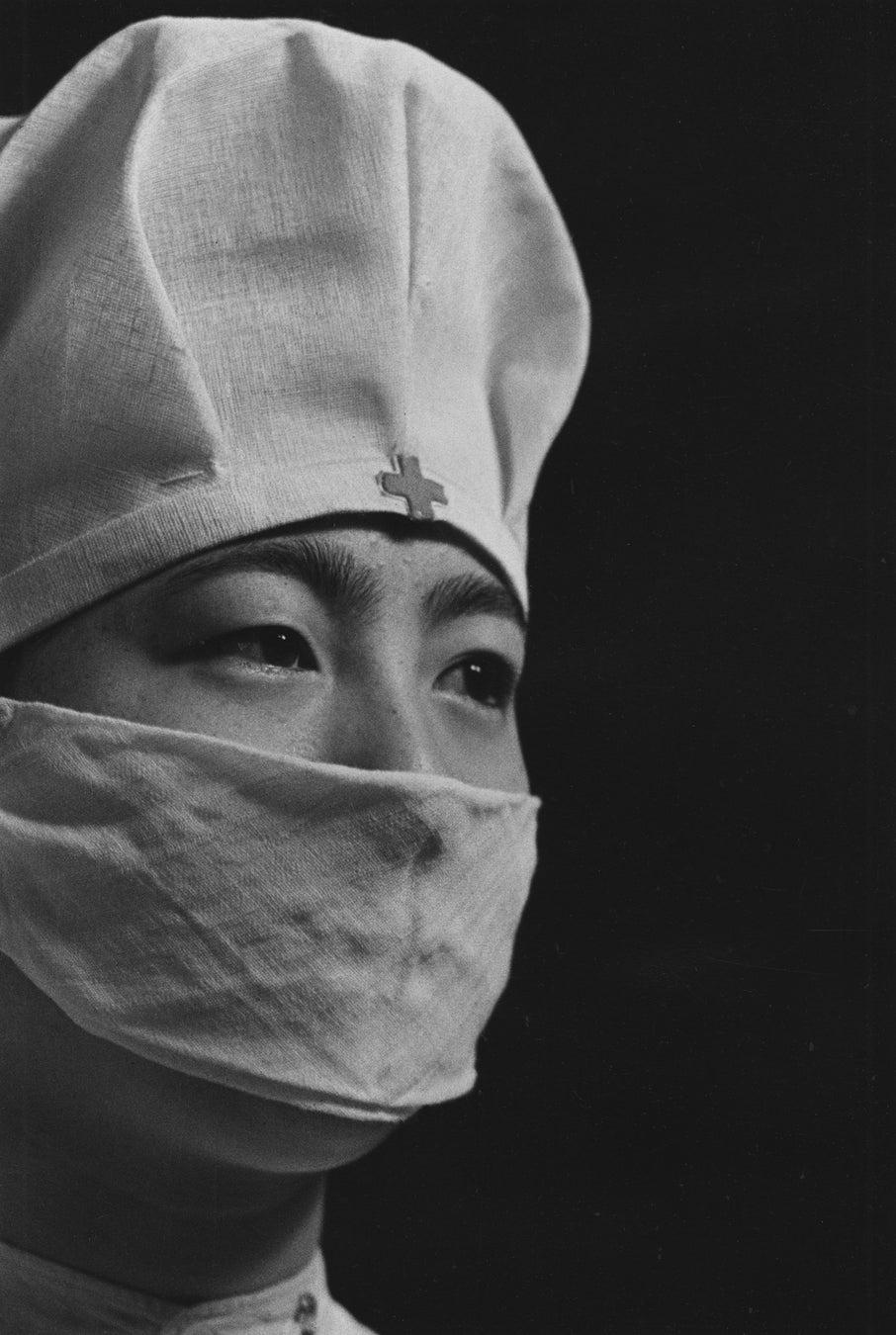
Works planned for display include Young Nurse, Azabu (若い看護婦 麻布, 1938, from the series Red Cross Nurses (赤十字看護婦)) and the following.
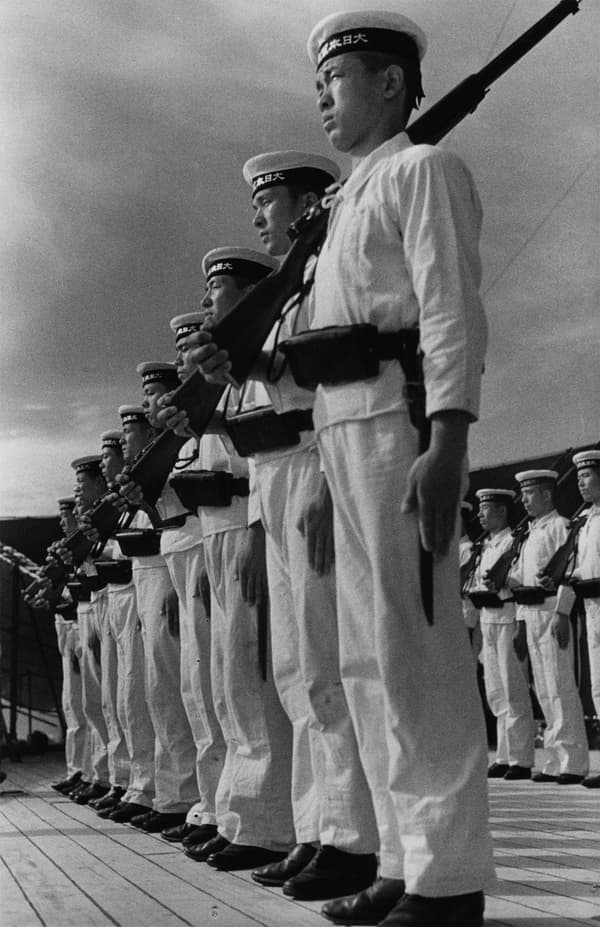
Ken Domon, "Lined Up" (整列), 1936, from "Yokosuka Naval Corps" (横須賀海兵団). Collection of the Ken Domon Museum of Photography
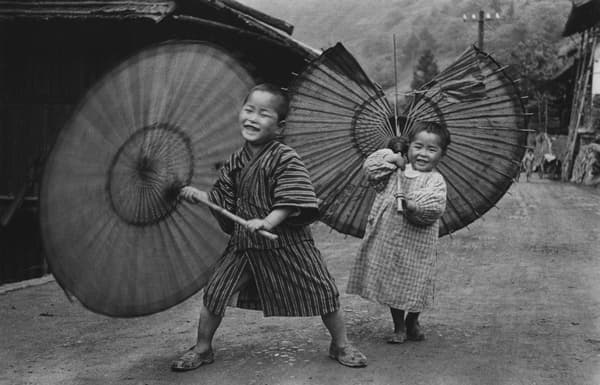
Ken Domon, "Child Twirling an Umbrella, Ogochi Village, Tokyo" (傘を回す子供 東京・小河内村), around 1939. Collection of the Ken Domon Museum of Photography
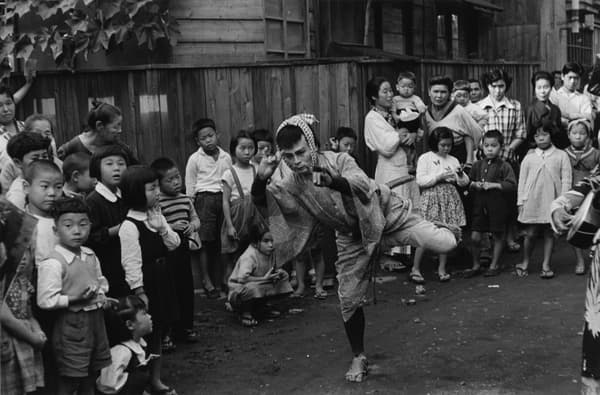
Ken Domon, "Chindon-ya Street Performers, Tsukiji" (チンドン屋 築地), 1954. Collection of the Ken Domon Museum of Photography
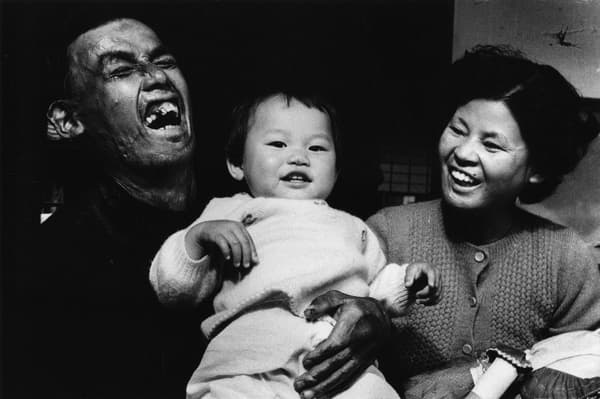
Ken Domon, "Marriage Between Two Atomic Bomb Survivors" (被爆者同士の結婚), 1957, from "Hiroshima" (ヒロシマ). Collection of the Ken Domon Museum of Photography
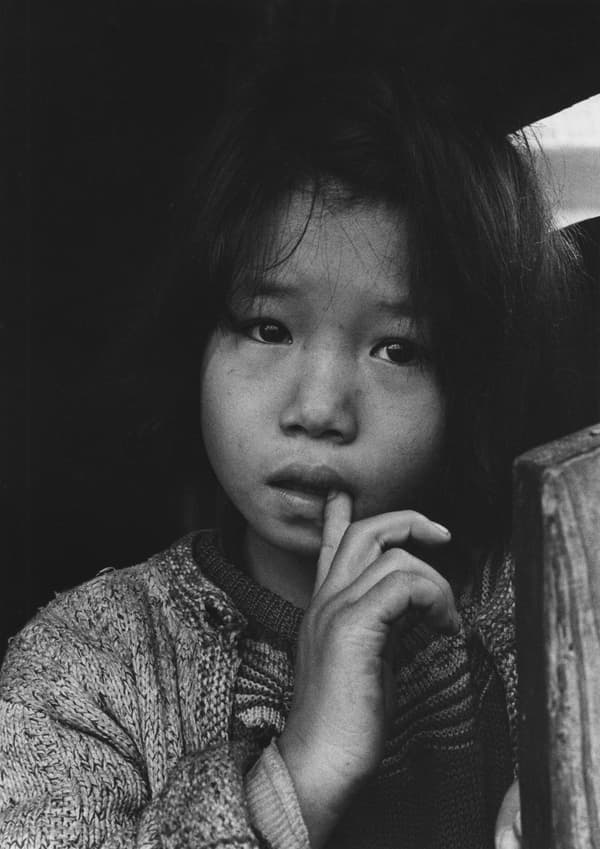
Ken Domon, "Rumie-chan" (るみえちゃん), 1959, from "The Children of Chikuho" (筑豊のこどもたち). Collection of the Ken Domon Museum of Photography
Exhibition Overview
- Exhibition Name: Fujifilm Square Photo History Museum Special Photo Exhibition "Ken Domon: Faces of Showa through the Lens of a Demon"
- Dates: Monday, January 4 to Wednesday, March 31, 2027 (open every day during the exhibition period)
- Hours: 10:00 AM to 7:00 PM (until 4:00 PM on the last day; admission closes 10 minutes before closing)
- Venue: Fujifilm Square Photo History Museum
- 9-7-3 Akasaka, Minato-ku, Tokyo 107-0052 (Tokyo Midtown West 1F)
- TEL: 03-6271-3350 (reception hours: 10:00 AM to 6:00 PM)
- URL: https://fujifilmsquare.jp/guide/museum.html
- Admission: Free (the exhibition is held as part of the company's corporate cultural support activities, known as mécénat, and admission is free so that more people can enjoy it)
- Number of Works: About 27 (planned)
- Works shot on film
- The exhibited works use silver gelatin prints from the collection of the Ken Domon Museum of Photography
- Organized by: Fujifilm Corporation
- Special Cooperation: Ken Domon Museum of Photography
- Supported by: Minato City Board of Education
- Planning: Photoclassic (フォトクラシック)
Notes:
- The exhibition may be cancelled or changed due to unavoidable circumstances. Please check the website or call the museum before visiting.
- Exhibition information is posted on the Fujifilm Square website from the month before the opening date.
About Ken Domon
Ken Domon (1909–1990)
Domon was born in Sakata, Yamagata Prefecture, and moved to Tokyo with his family in 1916. He joined Nippon Kobo in 1935 and worked in press photography, leaving in 1939. After the war he became a freelance photographer. Serving as a judge for monthly contests, he led the Realism photography movement, and with a highly mobile small camera he published many snapshots that captured postwar Japanese society in a straightforward way.
After collapsing from a cerebral hemorrhage in 1959, he switched to shooting with a large-format camera and worked on the Koji Junrei (古寺巡礼) series. Even after collapsing from a second cerebral hemorrhage in 1968, he persisted in shooting from a wheelchair. In 1979 he collapsed from a cerebral thrombosis, and he died in 1990 at the age of 80 after remaining unconscious for 11 years.
In 1983, the Ken Domon Memorial Museum (土門拳記念館), Japan's first museum of photography, was established in his hometown of Sakata, Yamagata Prefecture, and many of his works were donated to it. The museum was renamed the Ken Domon Museum of Photography in 2025 and continues to actively present Domon's work today.
About the Fujifilm Square Photo History Museum
The Fujifilm Square Photo History Museum displays rare antique cameras and Fujifilm's past cameras, and regularly holds exhibitions of historically valuable photographs. It offers a look at the culture of photography and the historical evolution of cameras, tracing more than 190 years of photographic history.
In 2026, the museum was certified as a "THIS IS MECENAT 2026" program by the Association for Corporate Support of the Arts (公益社団法人企業メセナ協議会) as a "social creation activity through the promotion of arts and culture."