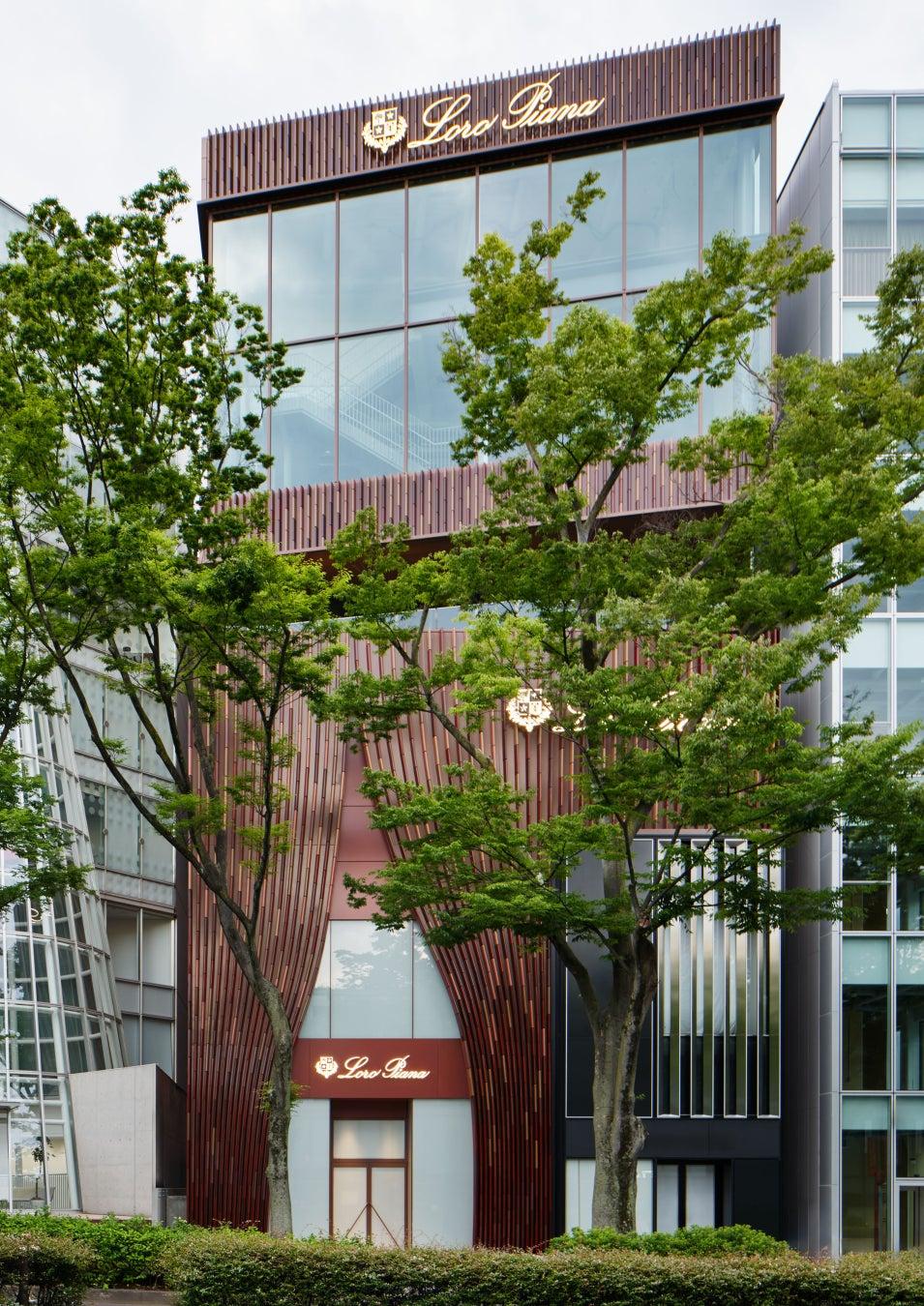
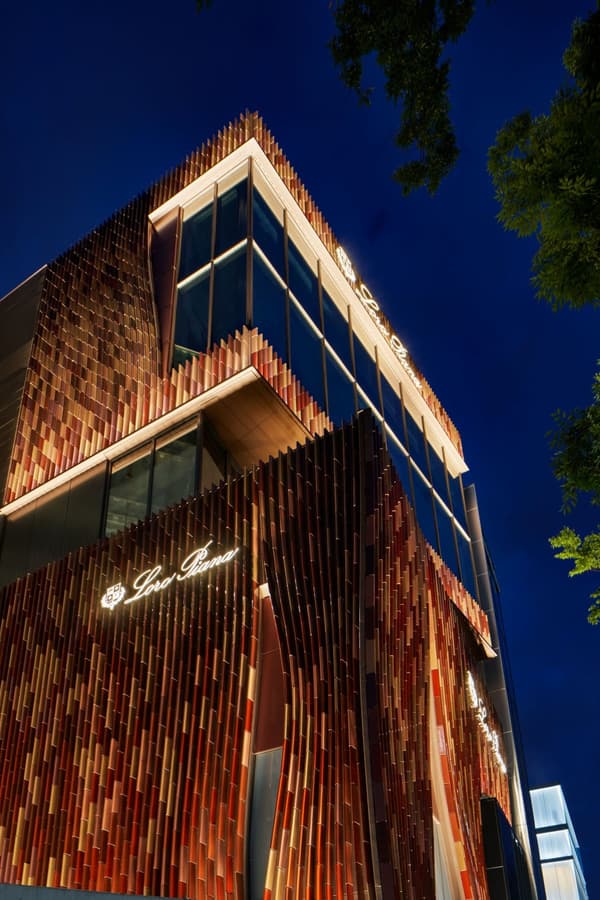
Loro Piana is opening a new flagship store in Omotesando, Tokyo in October 2026. The Loro Piana Omotesando store will be spread across four floors of a building specially designed and constructed for the maison. The facade was created by Jun Aoki, one of Japan's most prominent architects, whose design evokes the beauty of Loro Piana's fabrics and pays homage to the maison's textile traditions.
Loro Piana CEO Frédéric Arnault commented: "The opening of the Loro Piana Omotesando store is a milestone that embodies our commitment to Japan, following the Loro Piana Record Bale Award ceremony held at the Tokyo National Museum Hyokeikan in April of this year. This is not merely a store. It is a testament to our unwavering dedication to unparalleled craftsmanship. The facade designed by Jun Aoki has emerged at the heart of Tokyo with grace and refinement — a tribute to Loro Piana's textile traditions and Italian artisanship."
On his facade design, Aoki said: "The new exterior of the Loro Piana Omotesando store is a facade made of softly curved rows of terracotta specially fired in Italy — like the warp threads of a fabric — releasing the maison's signature 'ultimate suppleness' into the urban landscape. As the natural rhythm of the materials gently opens like a curtain, Loro Piana's world of refined quality quietly unfolds, drawing passersby to stop in their tracks. At once as delicate as the touch of cashmere and powerfully present as architecture, this exterior expresses, at an unprecedented scale, the 'elevation born from authentic materials' that the maison has long cherished."
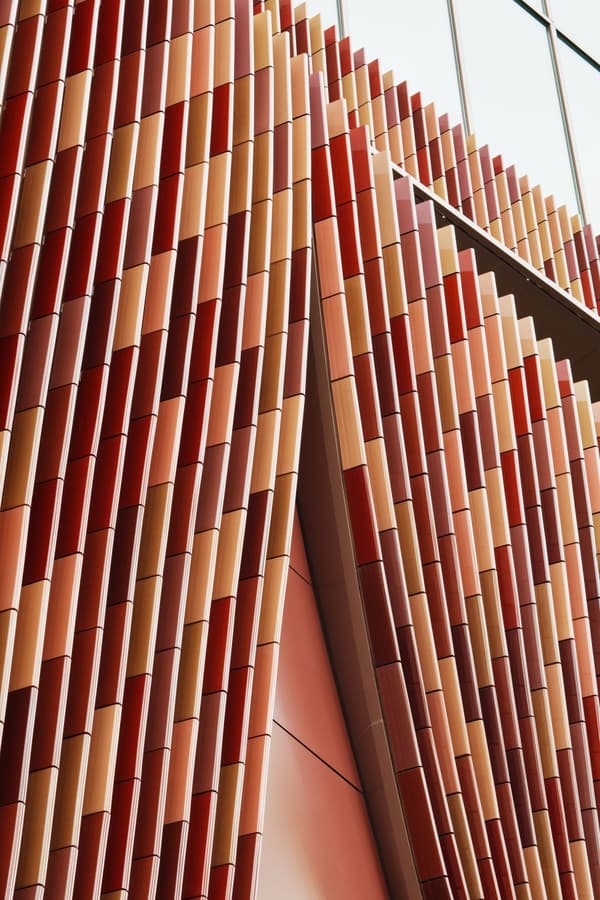
The facade incorporates more than 1,400 terracotta tiles specially made in Tuscany, Italy, bringing Italian craftsmanship to the Tokyo cityscape. This design, embodying Loro Piana's artisanal spirit, merges artistry with advanced technique, elevating the maison's mastery of natural materials into an architectural expression.
The tiles are crafted one by one through a meticulous process. After clay is carefully kneaded, shaped, and cut, it is left to dry for three weeks. Once dry, the curved tiles are fired for the first time in a static kiln. Seven distinct color tones are used for coloring, including the maison's signature Kümmel color. Creating these seven shades, developed exclusively for Loro Piana, requires highly specialized knowledge in precisely compounding mineral powders. After color is carefully applied to the terracotta, the tiles are fired again — the minerals melt and transform into a glaze, revealing vivid hues.
The tiles were transported to Japan and assembled by hand with exceptional precision to complete the Omotesando store's facade. Of the more than one year of production process from when work began in Italy to the completion of the facade, over three months were dedicated to tile production alone. This intricate work demonstrates deep expertise and craftsmanship, embodying the maison's attention to detail and pursuit of the highest quality.
Loro Piana has cultivated a deep and longstanding relationship with Japan, a country that holds a special place for the maison. This enduring bond is reflected in the 14 stores currently operating across Japan. The first Japan store opened at Isetan Shinjuku in Tokyo in August 1999. Loro Piana's commitment to craftsmanship aligns with Japanese cultural values of quality and respect for tradition, making the bond a natural and strong one.
About Jun Aoki
Born in Yokohama in 1956, Jun Aoki received his master's degree from the University of Tokyo in 1982. He founded Jun Aoki & Associates (restructured as AS in 2020) in 1991. He served as a professor at Tokyo University of the Arts from 2019 to 2024, and currently serves as director of the Kyoto City KYOCERA Museum of Art. In 2025, he was appointed curator of the Japan Pavilion at the 19th Venice Biennale International Architecture Exhibition. He also designed the facades for Loro Piana's Dubai and Ginza stores.
Aoki sees the world as something inherently rich — not fixed and predetermined, but capable of revealing entirely different faces and brilliance with just a slight shift in perspective. In daily life, people are often constrained by unconscious assumptions and fixed ideas, making it difficult to notice that richness. For this reason, he emphasizes creating subtle displacements and dissonances in space to unsettle how familiar things are perceived. At the center of Aoki's creative philosophy is the belief that architecture is not merely a vessel, but a potential catalyst for transforming perception and relationships — a medium that opens up new possibilities for living.
In his approach to architecture and facade design projects, Aoki begins not by deciding on a form in advance, but by "reinterpreting the place." He repeatedly walks the surroundings, immersing himself in the light, sound, scale, and behavior of people to grasp the characteristics of the place physically. At the same time, he emphasizes intuitively capturing the "atmosphere" that the project calls for, drawing out the spatial possibilities through subtle displacements and tensions. Aoki believes that design unfolds by moving back and forth between interior and exterior — reweaving relationships themselves.