The Bunkyo Ward Mori Ogai Memorial Museum, built on the former residence of writer Mori Ogai in the Sendagi neighborhood of Bunkyo Ward, Tokyo, will present a special exhibition titled "Kanchoro Kakai — Ogai's Observations of the Tanka World" from October 10 (Saturday), 2026 to January 11 (Monday, national holiday), 2027.
What Was the Kanchoro Kakai?
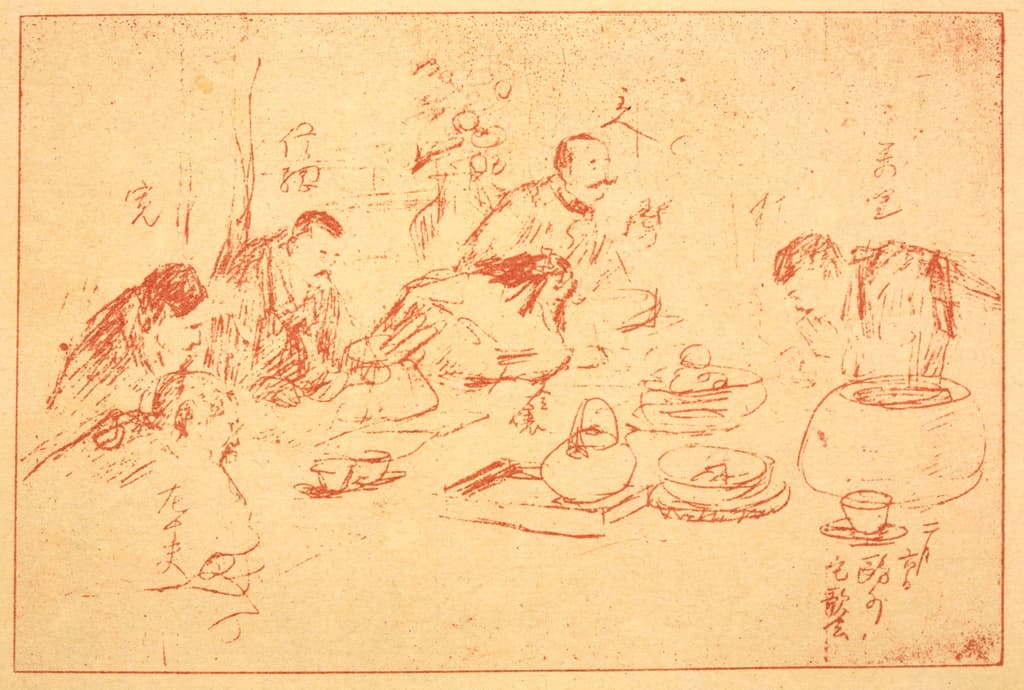
The Kanchoro Kakai refers to a series of tanka poetry sessions that Mori Ogai hosted at his own residence, Kanchoro (now the site of the museum), for about three years starting in March 1907. Ogai, who had a strong interest in tanka, wanted to bridge the divides between rival poetry circles of the day, and invited leading figures of the contemporary tanka world — among them Ito Sachio of the Negishi Tanka Society, Yosano Hiroshi of the Tokyo Shinshisha, and Sasaki Nobutsuna of the Chikuhakukai — to take part. Attendance varied from session to session, but across the gatherings a total of 21 participants took part over time, including poets still well known today such as Ueda Bin, Kitahara Hakushu, Yoshii Isamu, Ishikawa Takuboku, Kinoshita Mokutaro, and Saito Mokichi.
As Yosano Hiroshi described it in the journal Bungei Iho, the Kanchoro Kakai was "a gathering where people of differing tastes and styles brought their own work once a month and exchanged frank criticism." Poems were written anonymously on paper called eiso, circulated among the group, selected, and then discussed in lively critique. The shifts in poetic style prompted by this mutual evaluation, along with literary discussions that ranged well beyond the poems themselves, became a stimulating exchange that pushed Ogai and the other participants toward new creative work.
No official record of the Kanchoro Kakai survives, but roughly 30 sessions have been confirmed to have taken place, and the atmosphere of the gatherings can be traced through the diaries, letters, and reminiscences of Ogai and the participants. This exhibition follows those traces to piece together an overall picture of the Kanchoro Kakai.
Exhibition Overview
- Exhibition: Special Exhibition "Kanchoro Kakai — Ogai's Observations of the Tanka World"
- Dates: October 10 (Saturday), 2026 to January 11 (Monday, national holiday), 2027 (82 days total)
- Closed: October 26 (Monday) and 27 (Tuesday); November 24 (Tuesday) and 25 (Wednesday); December 21 (Monday) and 22 (Tuesday); December 29 (Tuesday) through January 3 (Sunday)
- Hours: 10:00 AM to 6:00 PM (last admission 5:30 PM)
- Venue: Bunkyo Ward Mori Ogai Memorial Museum
- Admission: General ¥600 (free for junior high school students and younger; free for visitors with a disability certificate and one accompanying caregiver)
- Organizer: Bunkyo Ward Mori Ogai Memorial Museum
- Lending institutions: the Kanagawa Prefectural Museum of Modern Literature, the Japan Museum of Modern Literature, the Gunma Prefectural Tsuchiya Bunmei Memorial Museum of Literature, the Sanmu City Museum of History and Folklore, the Chino City Yatsugatake General Museum, the University of Tokyo General Library, and others
Main Exhibits
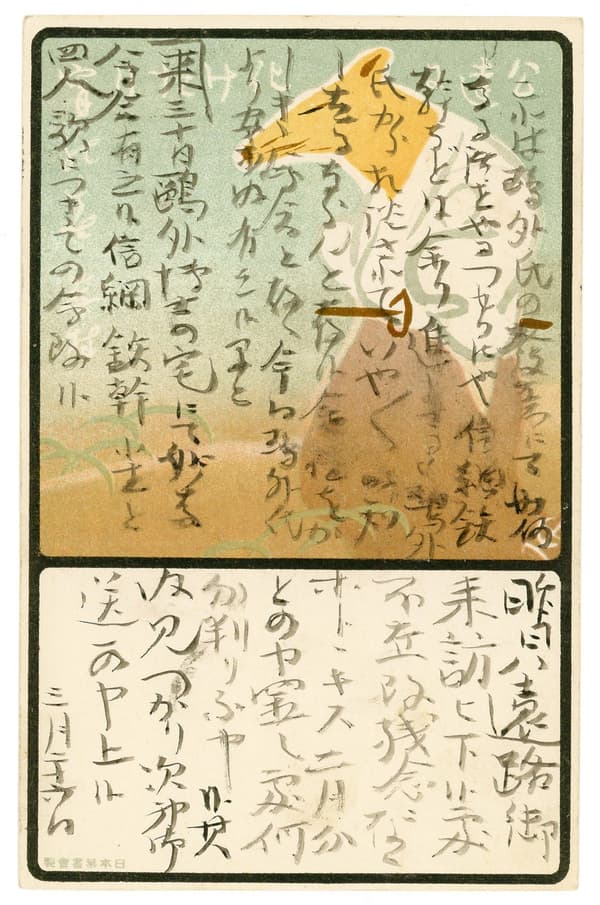
Postcard from Ito Sachio to Ishihara Jun, March 26, 1907 (Sanmu City Museum of History and Folklore) — reports that an invitation has arrived for a gathering proposed by Ogai, to be held on the 30th (the first Kanchoro Kakai session).
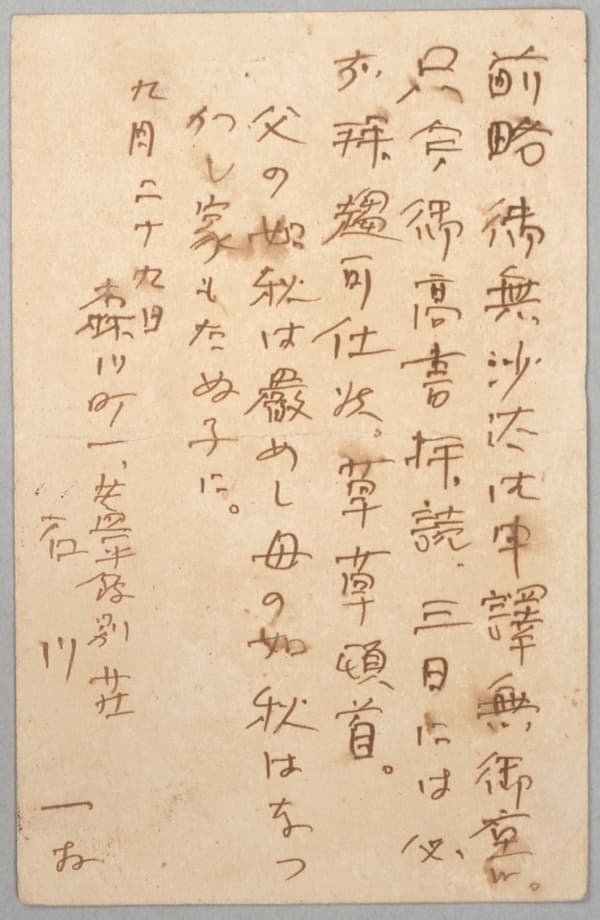
Postcard from Ishikawa Takuboku to Ogai, September 29, 1908 — confirms receipt of an invitation to a gathering and promises to attend without fail on October 3.
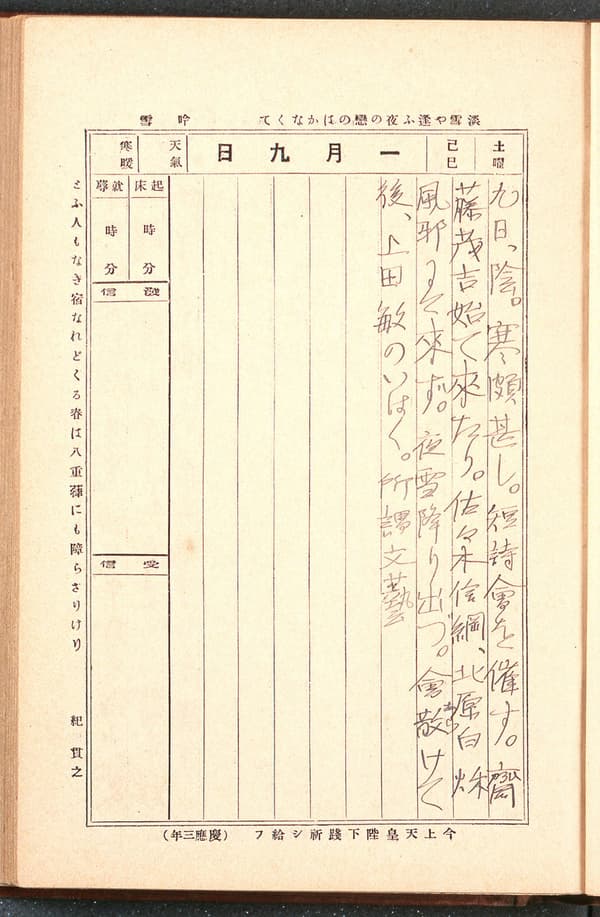
Ogai's Diary, January 9, 1909 — records that a Kanchoro Kakai session was held and that Saito Mokichi took part for the first time.
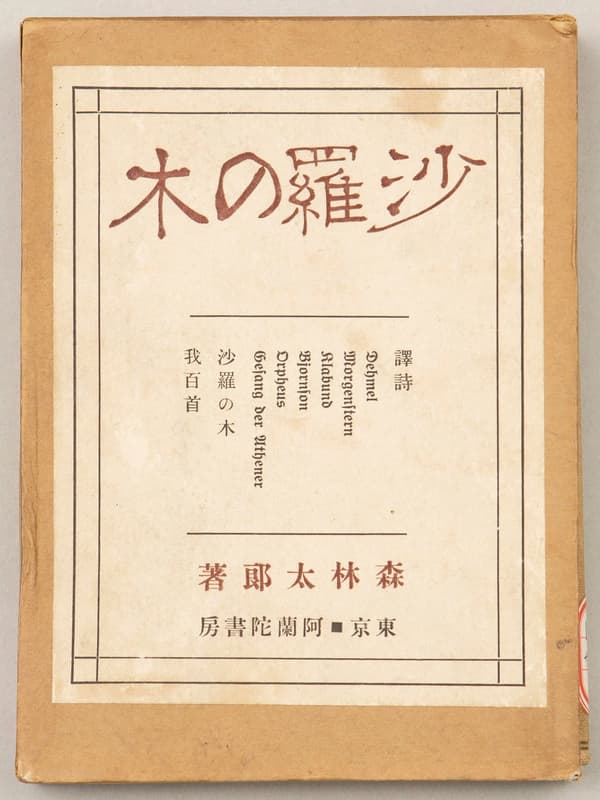
Mori Ogai, Sara no Ki, published by Oranda Shobo, 1915 — includes Waga Hyakushu ("My Hundred Poems"), a collection of tanka composed at the Kanchoro Kakai; the preface looks back on the days of the gatherings.
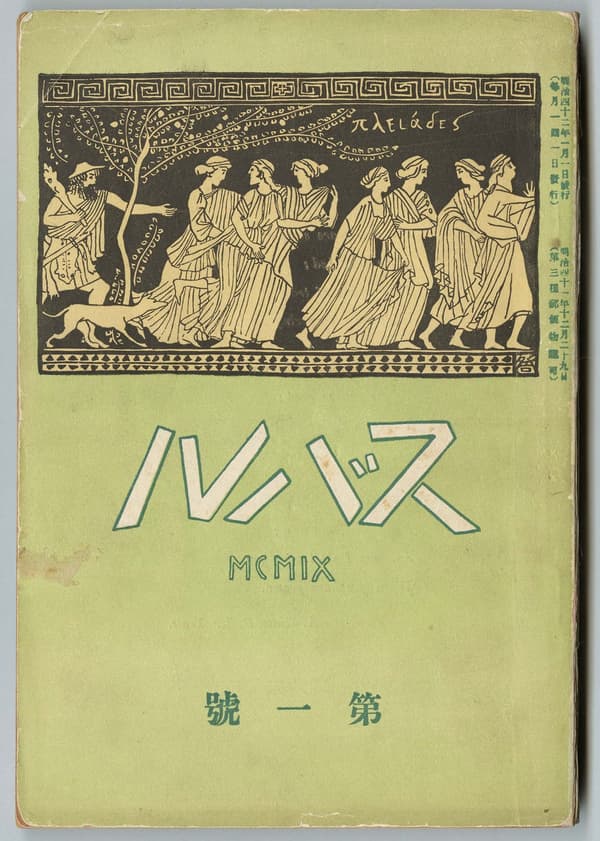
Subaru, inaugural issue, January 1909 — founded by Ishikawa Takuboku, Kinoshita Mokutaro, Kitahara Hakushu, and other Kanchoro Kakai participants; Ogai took a guiding role and contributed to every issue.
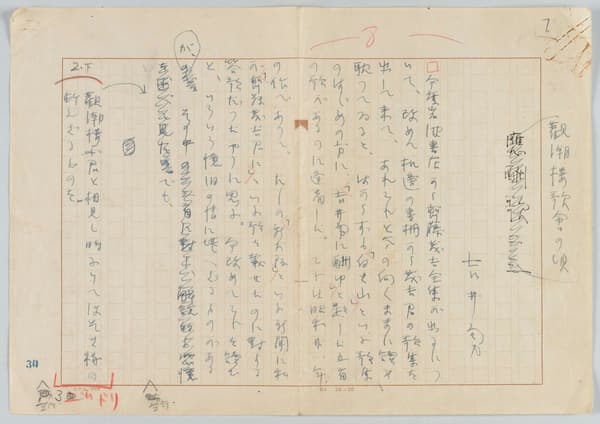
Yoshii Isamu, handwritten manuscript "The Days of the Kanchoro Kakai," 1952 — describes the atmosphere of the gatherings while recounting his encounter with Saito Mokichi.
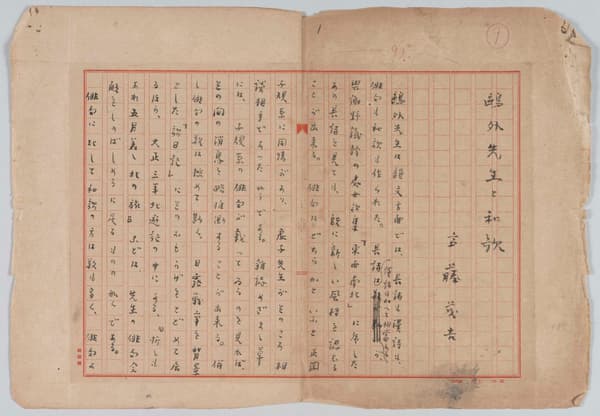
Saito Mokichi, handwritten manuscript "Master Ogai and Waka," 1943 — traces the evolution of Ogai's waka poetry, quoting from his collection Uta Nikki (Poem Diary) and from verses composed at the Kanchoro Kakai.
Participants of the Kanchoro Kakai (21 in Total, in Order of Joining)
Each entry lists years of birth and death, occupation, birthplace (using present-day place names), and major works.
- Ito Sachio (1864–1913) — tanka poet, novelist. Born in Sanmu, Chiba. Nogiku no Haka (The Grave of the Wild Chrysanthemum), Sachio Kashu (Collected Poems of Sachio)
- Sasaki Nobutsuna (1872–1963) — tanka poet, scholar of Japanese literature. Born in Suzuka, Mie. Omogusa, Shingetsu (New Moon)
- Yosano Hiroshi (1873–1935) — tanka poet, poet; also known by the pen name Tekkan. Born in Kyoto. Umoregi (Buried Wood), Somon (Love Poems)
- Hirano Banri (1885–1947) — tanka poet, engineer at the Ministry of Agriculture and Commerce. Born in Soka, Saitama. Wakaki Hi (Young Days)
- Ueda Bin (1874–1916) — poet, scholar of English and French literature. Born in Chuo, Tokyo. Kaichoon (The Sound of the Tide), Bungei Ronshu (Essays on Literature)
- Nagatsuka Takashi (1879–1915) — tanka poet, novelist. Born in Joso, Ibaraki. Tsuchi (Earth), Hari no Gotoku (Like a Needle)
- Ishikawa Takuboku (1886–1912) — tanka poet, poet. Born in Morioka, Iwate. Akogare (Longing), Ichiaku no Suna (A Handful of Sand)
- Kitahara Hakushu (1885–1942) — poet, tanka poet. Born in Yanagawa, Fukuoka. Jashumon (The Heretic's Faith), Omoide (Memories), Kirara-shu (雲母集)
- Yoshii Isamu (1886–1960) — tanka poet, playwright. Born in Minato, Tokyo. Sakahogai (Toast to Wine), Gion Kashu (Gion Poetry Collection), Gogo Sanji (Three O'Clock in the Afternoon)
- Tsuzuki Jinnosuke (1869–1933) — army medical officer, bacteriologist. Born in Kariya, Aichi.
- Kako Tsurudo (賀古鶴所) (1856–1931) — army medical officer, otolaryngologist. Born in Hamamatsu, Shizuoka.
- Kinoshita Mokutaro (1885–1945) — poet, playwright, professor of medicine. Born in Ito, Shizuoka. Shokugo no Uta (Songs After a Meal)
- Koizumi Chikashi (1886–1927) — tanka poet. Born in Kamogawa, Chiba. Kawa no Hotori (By the River), Okujo no Tsuchi (Soil on the Roof), Zuiensho
- Hattori Motoharu (1875–1925) — tanka poet, scholar of Japanese literature. Born in Sukagawa, Fukushima. Kagutsuchi, Shunkashuto Meikasen (Selected Poems of the Four Seasons)
- Hiraide Shu (1878–1914) — tanka poet, novelist, lawyer. Born in Niigata. Gyakuto (Rebels), Chikushodo (The Realm of Beasts)
- Saito Mokichi (1882–1953) — tanka poet, physician. Born in Kaminoyama, Yamagata. Shakko (Red Lights), Doba Mango
- Hirafuku Hyakusui (1877–1933) — Japanese-style painter, tanka poet. Born in Semboku, Akita. Kanchiku (Cold Bamboo), Kagan Shokeicho (Album of Fleeting Scenes)
- Ishii Hakutei (1882–1958) — Western-style painter. Born in Taito, Tokyo.
- Morita Sohei (1881–1949) — novelist. Born in Gifu. Baien (Smoke), Rinne (Samsara), Kirake no Hitobito (People of the Kira Family)
- Takamura Kotaro (1883–1956) — poet, sculptor. Born in Taito, Tokyo. Dotei (The Road), Chieko-sho (Chieko's Sky)
- Yosano Akiko (1878–1942) — tanka poet, poet. Born in Sakai, Osaka. Midaregami (Tangled Hair), Koigoromo (Robe of Love), Shinyaku Genji Monogatari (New Translation of The Tale of Genji)
Exhibition Catalog
A catalog featuring images of the exhibited works, essays, and a related chronology will go on sale at the museum shop from the opening day, October 10 (Saturday). Mail order will also be available.
- Format: A4, approximately 60 pages (planned)
- Price: ¥880, tax included (planned)
- Publication date: October 10 (Saturday), 2026
Related Events
Exhibition Lectures
Lecture 1: "Transformation, Twists, and Turns: Ogai's Tanka"
How should tanka, as a traditional poetic form, be positioned within the achievements of the literary giant Mori Ogai? This lecture explores what the Kanchoro Kakai truly was.
- Speaker: Konno Sumi (tanka poet; selector for the Imperial New Year's Poetry Reading)
- Date: November 7 (Saturday), 2026, 2:00 PM to 3:30 PM
- Fee: Free (a participation ticket and an exhibition admission ticket — a ticket stub is acceptable — are required)
Lecture 2: "Young People Who Gathered at the Kanchoro Kakai — Tracing Their Exchanges Around Kinoshita Mokutaro"
This lecture traces the exchanges among the young people who came into close contact with Ogai at the Kanchoro Kakai, focusing on Kinoshita Mokutaro.
- Speaker: Marui Shigetaka (former staff member, Ito City Kinoshita Mokutaro Memorial Museum)
- Date: November 28 (Saturday), 2026, 2:00 PM to 3:30 PM
- Fee: Free (a participation ticket and an exhibition admission ticket — a ticket stub is acceptable — are required)
Related Event: New Kanchoro Kakai — "Showdown! Stars Who Gathered at the Kanchoro Kakai, Part 2"
Two poets active in today's tanka world will each select tanka composed by participants of the Kanchoro Kakai and pit them against each other in a five-round contest.
- Performers: Ishikawa Minami (tanka poet), Sasaki Sadatsuna (tanka poet)
- Date: November 15 (Sunday), 2026, 2:00 PM to 4:00 PM
- Fee: ¥2,000
Both lectures and the related event are limited to 50 participants each and require advance application; application details will be announced on the museum's website and elsewhere.
Gallery Talks
- Dates: October 28 (Wednesday) and December 9 (Wednesday), 2026, and January 6 (Wednesday), 2027, starting at 2:00 PM (approximately 30 minutes)
- No advance application needed; a same-day exhibition admission ticket is required.
Museum Anniversary Day — November 1 (Sunday), 2026
To mark the anniversary of the museum's opening, visitors who view the exhibition that day will receive an original postcard.
About Mori Ogai
Mori Ogai (1862–1922) was an army medical officer, novelist, translator, and doctor of medicine, born Mori Rintaro. He was the eldest son of the Mori family, hereditary physicians to the Kamei clan, lords of the Tsuwano domain, and was born in what is now Tsuwano, Kanoashi District, Shimane Prefecture. He moved to Tokyo at age 10 in 1872, and after graduating from the medical faculty of the University of Tokyo became an army medical officer. He studied in Germany starting in 1884, and after returning to Japan built his literary reputation with the co-translated poetry anthology Omokage in 1889 and the novel Maihime (The Dancing Girl) the following year. In 1907 he was appointed Surgeon General of the Army and head of the Army Medical Bureau, and alongside his official duties wrote works including Seinen (Youth), Gan (The Wild Geese), Sansho Dayu, Takasebune, and Shibue Chusai.